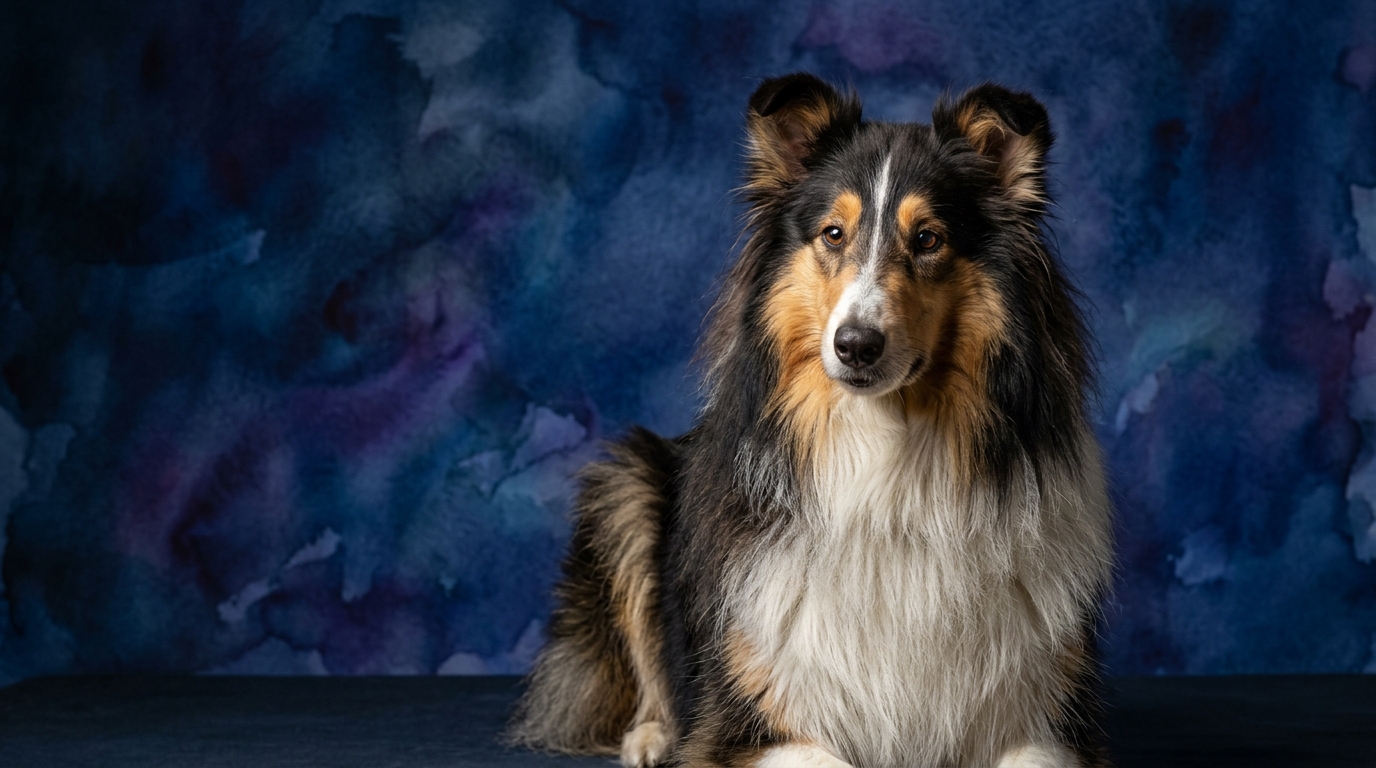
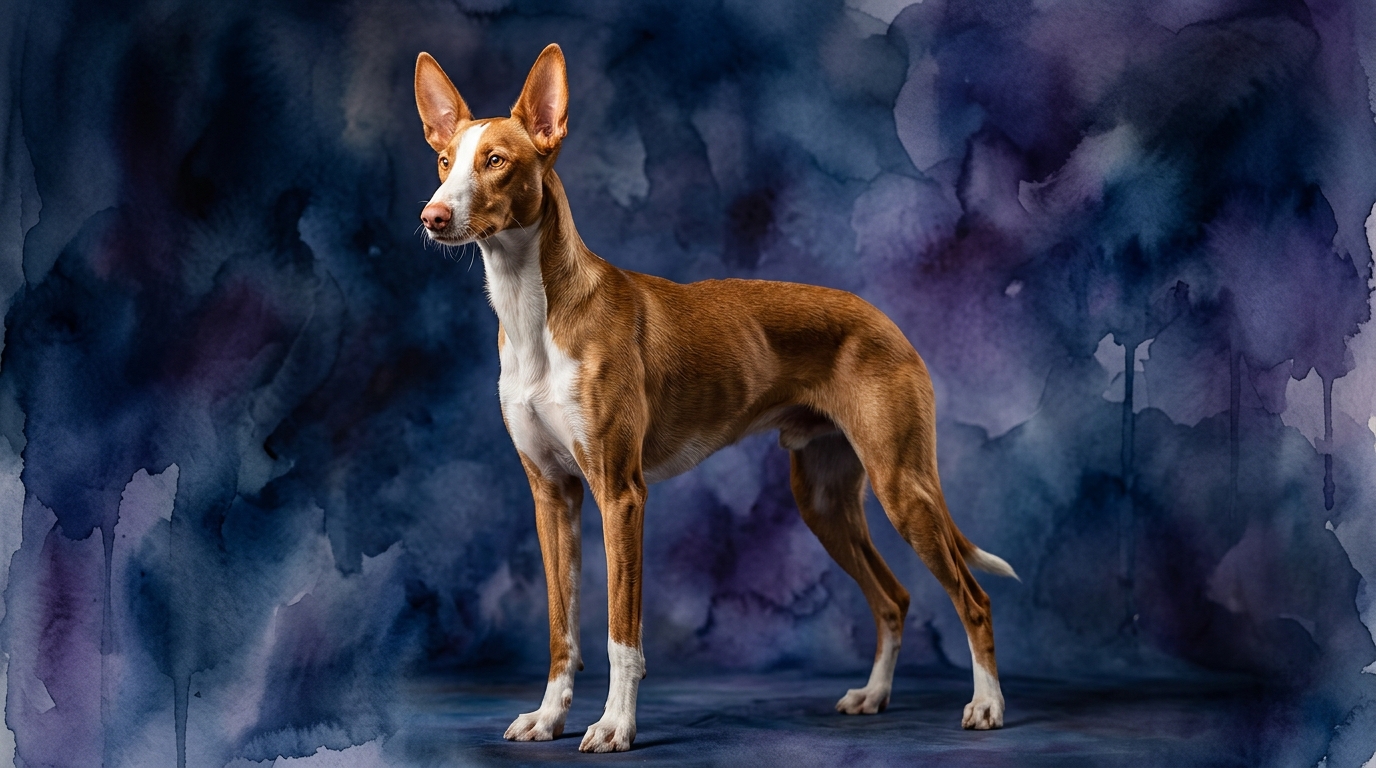
Side-by-Side Cognitive Profiles
The Cosmic Pet Pet IQ Lab provides a structured lens through which to examine the cognitive landscapes of these distinct breeds. The Rough Collie, ranking #16 on Coren's scale, demonstrates a cognitive profile optimized for cooperative work, while the Ibizan Hound, at #53, showcases strengths aligned with independent pursuit.
For the Rough Collie, Problem Solving scores 4/5, indicating a strong capacity for navigating complex situations and devising strategies. Training Speed also sits at 4/5, reflecting their readiness to learn and execute commands. Their Social Intelligence is 3/5, suggesting a good understanding of human cues and a cooperative nature. Instinctive Drive is 3/5, primarily focused on their herding instincts, which are often channelled into directed tasks. A standout feature is their Memory, earning a perfect 5/5, signifying an exceptional ability to recall sequences, routines, and past lessons.
The Ibizan Hound presents a different set of strengths. Their Problem Solving is rated 3/5, suggesting they can tackle challenges but perhaps with less intricate planning than the Collie, often relying on direct action. Training Speed is 3/5, meaning they are capable learners, though their independent spirit might require more consistent engagement. Social Intelligence, like the Collie, is 3/5, indicating they are observant of their human companions but often follow their own motivations. Instinctive Drive is also 3/5, driven primarily by their sighthound heritage and an impulse to chase. Their Memory is 3/5, sufficient for essential learning but potentially less robust for complex, multi-step recall compared to the Collie.
Where the Rough Collie Excels Cognitively
The Rough Collie's cognitive prowess shines brightest in areas demanding sustained mental engagement and precise recall. Their 5/5 Memory score is a significant advantage, allowing them to master and retain long sequences of commands, complex routines, and intricate obstacle courses with remarkable consistency. This exceptional memory underpins their success in competitive obedience and agility, where recalling a series of actions is paramount.
Their 4/5 Problem Solving ability means they are adept at figuring out novel situations, whether it's navigating a new environment or understanding how to manipulate objects to achieve a goal. This isn't just about brute force; it's about strategic thinking, which historically allowed them to manage livestock by anticipating movements and blocking escape routes. Coupled with a 4/5 Training Speed, Collies grasp new concepts and commands quickly, often appearing to anticipate their handler's next instruction, making them highly responsive and a joy for owners who enjoy teaching new skills.
Cognitive Strengths of the Ibizan Hound
While the Ibizan Hound's numerical scores might appear lower in some dimensions, their cognitive profile is uniquely suited to their sighthound heritage, emphasizing independent action and acute sensory perception. Their 3/5 Problem Solving, though not as high as the Collie's, is applied differently; it's focused on immediate environmental assessment and rapid decision-making in pursuit scenarios, such as finding the quickest path to a perceived target or navigating varied terrain during a chase. This form of problem-solving is less about cooperative strategy and more about self-reliant execution.
The Ibizan Hound’s instinctive drive, also rated 3/5, is a powerful cognitive force in itself, channeling their focus and energy into activities that mimic their ancestral hunting role. This drive, combined with exceptional visual acuity, allows them to process visual stimuli rapidly and maintain focus on moving objects over long distances, a cognitive strength crucial for a sighthound. Their independent nature, while sometimes posing training challenges, also reflects a cognitive self-sufficiency, meaning they are less reliant on constant human direction to engage with their environment and satisfy their curiosity.
Trainability: A Tale of Two Temperaments
When it comes to trainability, the differences between the Collie and the Ibizan Hound are pronounced, largely due to their inherent temperaments and historical roles. The Rough Collie, with its 4/5 Training Speed and 5/5 Memory, is generally considered easier to train. They possess a strong desire to cooperate and please their handlers, making them eager participants in learning sessions. Their herding background instilled a need for structure and a willingness to follow direction, meaning they often respond well to positive reinforcement and consistent methods, quickly internalizing commands and routines.
The Ibizan Hound, scoring 3/5 in Training Speed and Memory, presents a different training dynamic. While capable of learning, their independent nature and powerful instinctive drive (3/5) mean they often prioritize their own interests, such as chasing a distant squirrel, over human commands. Training an Ibizan requires immense patience, creativity, and a deep understanding of their sighthound traits. They are not 'difficult' but require high-value motivators and a trainer who can make learning more appealing than self-directed exploration. Consistency is key, along with a recognition that their responses might be slower or require more repetition due to their independent streak rather than a lack of understanding.
Matching Breeds to Lifestyles: Active vs. Relaxed Owners
Understanding their cognitive needs is crucial for matching these breeds with suitable owners. The Rough Collie, with its background as a working herding dog, thrives with an active owner who can provide consistent mental stimulation and structured physical activity. They require a purpose, whether it's daily walks with engaging tasks, competitive dog sports like agility or obedience, or even just learning new tricks. Owners who appreciate a canine partner eager to work alongside them and engage in problem-solving activities will find the Collie a rewarding companion. A truly 'relaxed' owner who offers minimal mental or physical engagement might find a bored Collie developing undesirable behaviors.
The Ibizan Hound, while undeniably athletic and requiring bursts of intense exercise, can paradoxically suit owners who appreciate a calm, elegant presence indoors once their exercise needs are met. They need opportunities for high-speed running in a securely fenced area to satisfy their instinctive drive and sighthound heritage. However, unlike the Collie's continuous mental 'work' requirement, the Ibizan often transitions to a more relaxed, quiet state indoors. An owner who enjoys taking their dog to safe, spacious areas for exhilarating sprints but also values a serene companion at home might find the Ibizan Hound a good fit. They are not for owners seeking a sedentary pet, but their activity needs are often concentrated rather than continuous.
The Verdict
Choose a Rough Collie if you seek a highly trainable, cooperative companion eager for structured activities and a deep, reciprocal bond, thriving on mental engagement and consistent interaction.
Opt for an Ibizan Hound if you appreciate an independent, elegant companion capable of intense athletic bursts and a quiet demeanor indoors, understanding their unique training approach and sighthound nature.
🧠 Find Your Pet's IQ Score
Our Pet IQ Lab assessment covers 25+ tests across 5 cognitive dimensions — personalized to your breed.
Take the Full IQ Test →Frequently Asked Questions
Are Rough Collies good family dogs?
Yes, their social intelligence (3/5) combined with their excellent memory and trainability makes them adaptable family members, often gentle with children, provided they receive proper mental and physical stimulation and consistent guidance.
Do Ibizan Hounds need a lot of exercise?
Ibizan Hounds require regular opportunities for high-speed running in a secure area to satisfy their instinctive drive (3/5) and sighthound heritage; however, they are often quite calm and relaxed indoors once their exercise needs are met, typically not requiring constant activity.
How do the Herding and Hound group traits influence their IQ scores?
Herding dogs like the Collie are bred for cooperation and complex task execution, reflected in higher problem-solving and training speed, while sighthounds like the Ibizan focus on independent hunting, influencing their drive and a different kind of problem-solving centered on pursuit and environmental assessment.