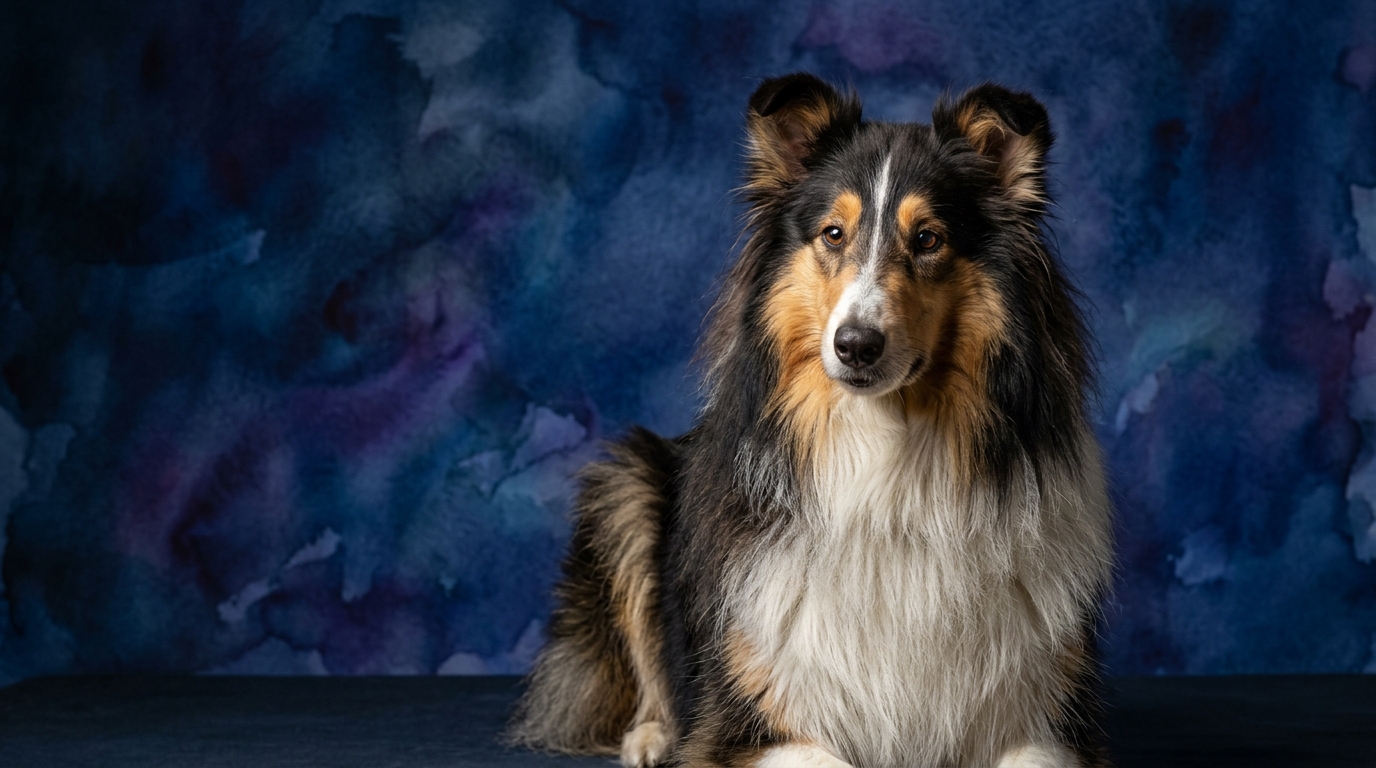
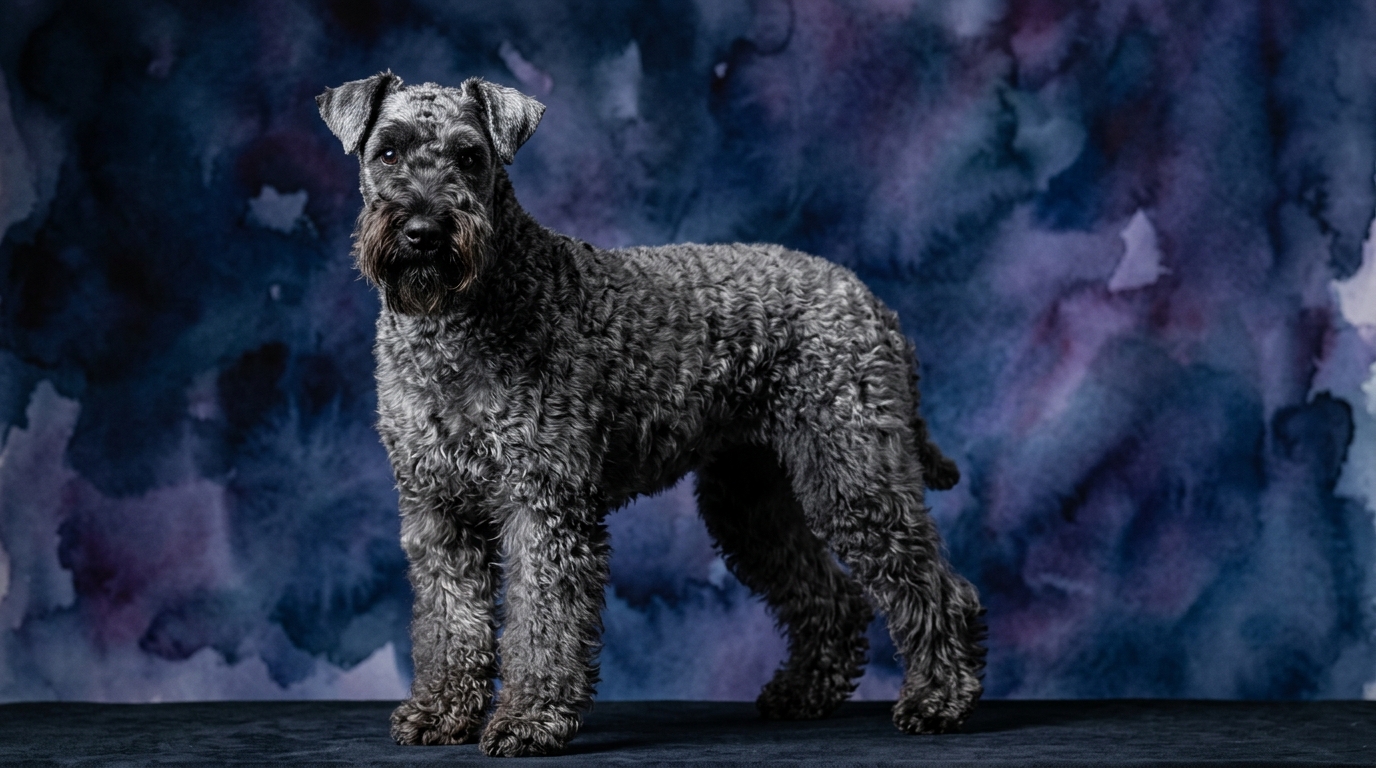
Side-by-Side IQ Profile: Collie (Rough) vs. Kerry Blue Terrier
The Cosmic Pet Pet IQ Lab employs a five-dimensional framework to assess canine intelligence, providing a nuanced view of each breed's cognitive landscape. Let's delve into how the Collie (Rough) and Kerry Blue Terrier measure up across these crucial areas.
The Collie (Rough), holding a Coren rank of #16, presents a cognitive profile shaped by its herding legacy. Its Problem Solving is rated 4/5, indicating a strong capacity for analyzing situations and devising effective solutions, often with a thoughtful, strategic approach. Training Speed stands at 4/5, reflecting a quick uptake of new commands and routines, often requiring fewer repetitions. Social Intelligence is 3/5, showing an understanding of human emotions and family dynamics, though they can be discerning with new acquaintances. Their Instinctive Drive, also 3/5, manifests as a purposeful herding inclination that can be channeled into structured activities. Crucially, their Memory is exceptional at 5/5, allowing them to retain complex information and learned behaviors over long periods.
The Kerry Blue Terrier, not Coren-ranked, brings a different set of cognitive strengths rooted in its terrier heritage. Its Problem Solving is 3/5, characterized by persistence and a trial-and-error approach, often relying on physical prowess to overcome obstacles. Training Speed is 3/5; they can learn well, but their independent streak means consistent and engaging methods are key to maintaining focus. Social Intelligence is 3/5, indicating strong bonds with their immediate family and a good understanding of their moods, though they may display more assertiveness in broader social contexts. Instinctive Drive is 3/5, reflecting a keen predatory drive for small prey and a readiness to investigate and engage with challenges. Their Memory, at 3/5, is solid for frequently reinforced commands and routines, though it may not match the Collie's long-term retention without regular practice.
Where Collie (Rough) Wins Cognitively
The Collie (Rough) distinctly excels in two interconnected cognitive dimensions: Memory and Training Speed. Their remarkable 5/5 Memory rating means they can recall intricate sequences of commands and learned behaviors with impressive accuracy, even after significant time has passed. This superior retention makes them particularly adept at advanced obedience, complex agility courses, or roles requiring a precise set of remembered actions, where revisiting lessons is rarely necessary. Paired with a 4/5 Training Speed, this breed absorbs new information rapidly, translating to fewer repetitions needed during initial instruction and quicker progression to more sophisticated tasks. Furthermore, their 4/5 Problem Solving often involves a more analytical and strategic approach, allowing them to grasp abstract concepts and anticipate outcomes more readily than the Kerry Blue Terrier's often more physical, exploratory method.
Where Kerry Blue Terrier Wins Cognitively
While the Kerry Blue Terrier may not surpass the Collie in traditional metrics of rapid learning or memory retention, its unique cognitive strengths lie in its tenacious application of Problem Solving and Instinctive Drive. Their 3/5 Problem Solving is characterized by an unwavering determination; they are less likely to abandon a task, even if it requires repeated, physically demanding attempts. This sheer persistence can be a cognitive advantage in scenarios where grit and resilience are paramount, such as figuring out a challenging puzzle toy or retrieving an object from a difficult-to-reach spot. Their 3/5 Instinctive Drive fuels a bold curiosity and a strong desire to explore and engage with their environment, which, when channeled, can make them formidable in activities requiring independent thought and robust engagement. Their social intelligence, though rated similarly, often manifests with a confident self-assurance that helps them navigate new situations with a robust, rather than cautious, assessment.
Which is Easier to Train and Why
The Collie (Rough) typically proves easier to train due to its higher scores in Training Speed (4/5) and Memory (5/5), coupled with an inherent desire to cooperate with its handler. They quickly understand and retain new commands, significantly reducing the amount of time and repetition required for mastery. Their background as herding dogs fosters an innate attentiveness to human direction and a willingness to work collaboratively, making them highly responsive to cues and eager to please. For instance, teaching a Collie (Rough) a complex sequence of tricks or a multi-stage scent detection task will often involve fewer training sessions and quicker, more reliable execution due to their exceptional recall and focus.
The Kerry Blue Terrier, with its 3/5 ratings in both Training Speed and Memory, presents a different training dynamic. Their terrier heritage instills a strong sense of independence and a tendency to test boundaries, meaning training must be consistently engaging, positive, and firm to maintain their focus. They might comprehend a command but choose to prioritize a more stimulating distraction, unlike the more handler-focused Collie. An owner teaching a Kerry Blue Terrier a reliable recall in a busy park, for example, might find the dog more inclined to follow its nose or investigate a perceived challenge, necessitating more creative and persistent reinforcement strategies to solidify the desired behavior. Their problem-solving, while tenacious, is often driven by a strong will, which requires careful guidance in a training context.
Which Suits Active Owners vs. Relaxed Owners
For **active owners** who enjoy structured activities and consistent mental engagement, the Collie (Rough) is an excellent fit. They thrive in dog sports such as agility, obedience, rally, and even herding trials, where their superior memory, rapid training speed, and thoughtful problem-solving skills are put to good use. An owner providing regular mental challenges, alongside varied physical exercise like long walks or interactive play, will find the Collie (Rough) a deeply engaged and rewarding companion. Their moderate instinctive drive means they appreciate having a 'job' but are also content to relax after exertion, making them versatile.
While no dog thrives on complete inactivity, the Collie (Rough) can adapt better to a slightly more **relaxed household**, provided their fundamental needs for mental stimulation and daily exercise are consistently met through walks and interactive play. Their social intelligence allows them to be content observers within the family unit, and their less intense instinctive drive compared to some working breeds means they are less likely to engage in destructive behaviors if not constantly occupied. The Kerry Blue Terrier, however, with its robust terrier instincts and persistent nature, generally demands a more engaged and active owner. Without sufficient physical exercise and consistent mental challenges, a Kerry Blue Terrier is more prone to creating its own entertainment, which might include digging, chasing, or exploring in ways that a more relaxed owner might find challenging to manage. They require an owner prepared for consistent interaction and assertive guidance to channel their strong will and boundless curiosity constructively.
The Verdict
Opt for a Collie (Rough) if you prioritize a highly trainable companion with exceptional memory, a strong desire to please, and a thoughtful approach to problem-solving, ideal for advanced obedience, dog sports, or a family seeking a deeply bonded and responsive partner.
Select a Kerry Blue Terrier if you admire a tenacious, confident, and spirited companion who approaches life with determination, thrives on consistent engagement, and offers a loyal, independent presence for an experienced, active owner.
🧠 Find Your Pet's IQ Score
Our Pet IQ Lab assessment covers 25+ tests across 5 cognitive dimensions — personalized to your breed.
Take the Full IQ Test →Frequently Asked Questions
Is the Collie (Rough) good with children?
Yes, the Collie (Rough) often exhibits a gentle and protective nature, making them suitable family companions. Their social intelligence allows them to integrate well into family dynamics, though supervision is always advised with any dog and child interaction. They tend to be patient and observant with younger family members.
What kind of exercise does a Kerry Blue Terrier need?
Kerry Blue Terriers require consistent daily exercise to satisfy their active nature and instinctive drive. This includes vigorous walks, playtime in a secure yard, and activities that challenge them mentally, helping to prevent boredom and channeling their energy positively. They thrive on having a 'job' or purpose, even if it's just a structured play session.
Do Kerry Blue Terriers bark a lot?
Kerry Blue Terriers can be vocal, often using their bark to alert their owners to new sounds or visitors, reflecting their protective instincts. Consistent training and socialization from a young age can help manage excessive barking, teaching them when it's appropriate to vocalize. Their alertness and territorial nature contribute to their vocal tendencies.