
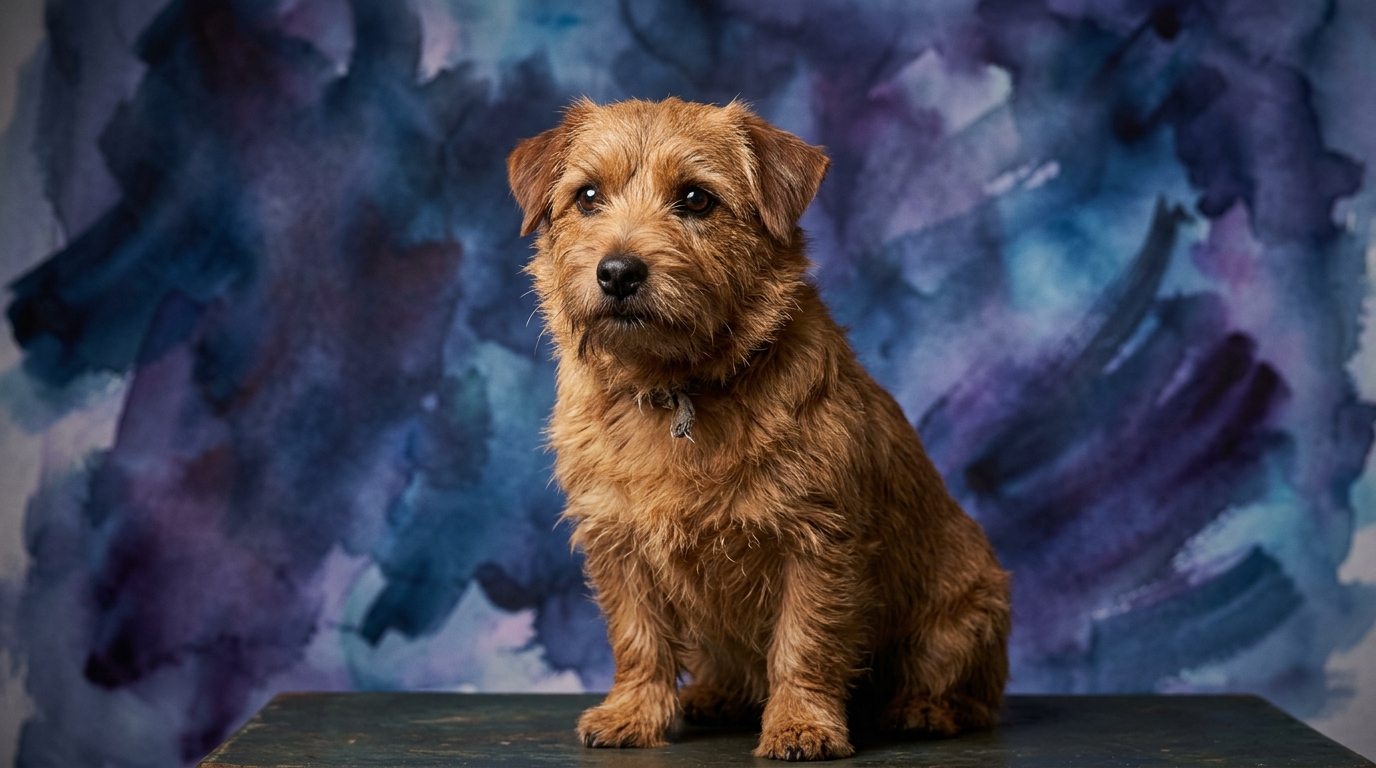
Side-by-Side Cognitive Profiles: Dogo Argentino vs. Norfolk Terrier
The Dogo Argentino, a robust working dog, exhibits a 'problem solving' score of 3/5. For this breed, this aptitude often translates into strategic thinking required for tracking and confronting large game. Their cognitive processes are geared towards assessing environmental cues, identifying threats, and executing complex hunting sequences with focus and determination. A 'training speed' of 3/5 means they are capable learners, absorbing commands and routines effectively, but their immense power and strong drives necessitate consistent, clear direction from a confident handler. Their 'social intelligence' at 3/5 is often expressed through deep loyalty to their established 'pack' and a discerning nature towards strangers, requiring careful, early socialization to ensure appropriate interactions. The 'instinctive drive' score of 3/5 is paramount, reflecting their profound ancestral programming for scenting, tracking, and engaging prey, which profoundly influences their perception and responses to stimuli. Finally, their 'memory' at 3/5 ensures they retain complex learned behaviors, recognize familiar individuals, and recall past experiences, which is vital for maintaining consistent performance in varied situations.
In contrast, the Norfolk Terrier, a small yet tenacious terrier, also scores 3/5 in 'problem solving.' For this breed, however, this skill manifests as clever ingenuity in navigating confined spaces, outsmarting small vermin, or devising creative methods to achieve a desired outcome, such as retrieving a hidden toy. Their problem-solving is often quick, independent, and focused on immediate, tangible challenges. A 'training speed' of 3/5 indicates they can learn quickly, but their inherent terrier tenacity and independent spirit mean that training must be engaging and varied to maintain their focus. They are capable of mastering many commands but may choose to prioritize their own agenda if not adequately motivated. Their 'social intelligence' at 3/5 allows them to read subtle cues from their human companions and other dogs, skillfully navigating household dynamics. This intelligence is often paired with a charming persistence. The 'instinctive drive' score of 3/5 is powerfully evident in their keen interest in chasing, digging, and exploring, reflecting their history as vermin hunters. This drive is a fundamental part of their terrier identity. Their 'memory' at 3/5 serves their inquisitive nature well, allowing them to recall routines, preferred digging spots, and the locations of interesting scents, reinforcing their independent explorations.
Where the Dogo Argentino's Cognition Shines Brightest
While both breeds share identical IQ scores, the Dogo Argentino's cognitive strengths are distinctly shaped by its heritage as a big-game hunter. Their 3/5 in problem-solving translates into an impressive capacity for sustained, strategic thinking in high-stakes environments. Unlike the quick, opportunistic problem-solving of a terrier, the Dogo is equipped for methodical tracking, assessing complex terrains, and making measured decisions when confronting a formidable target. This involves a calculated approach to risk and reward, weighing options before committing to action. Their social intelligence, also 3/5, is particularly robust in its expression of loyalty and protective instincts towards their chosen family unit. They excel at discerning familiar individuals from perceived threats, acting as a vigilant guardian. This cognitive strength is less about charming social navigation and more about unwavering dedication and a clear understanding of their role within a hierarchical structure. Furthermore, their memory, at 3/5, is particularly adept at recalling the intricate patterns of large-scale events and the consistent behaviors of their human companions, fostering a deep, reliable bond founded on trust and predictable interactions.
Unpacking the Norfolk Terrier's Cognitive Strengths
The Norfolk Terrier, despite sharing the same 3/5 scores, demonstrates a unique set of cognitive advantages tailored to its historical role. Their problem-solving prowess, rated 3/5, shines in its agility and adaptability to immediate, often confined, challenges. They are masters of creative maneuvering, whether it's finding a way under a fence, extracting a toy from a tight space, or outwitting a small rodent. This is a quick, independent form of intelligence focused on ingenious solutions rather than sustained strategic planning. Their social intelligence, also 3/5, is expressed through a remarkable ability to integrate into diverse human households, charming their way into laps and hearts while subtly asserting their preferences. They are astute observers of human routines and emotions, using their understanding to navigate social situations effectively. Moreover, their instinctive drive, a 3/5, is a powerful engine for exploration and discovery. This cognitive trait fuels their relentless curiosity and tenacity, compelling them to investigate every scent and sound. Their memory, at 3/5, supports this by allowing them to meticulously recall details of their environment, such as the location of hidden treasures or the best routes for a quick dash, reinforcing their independent and adventurous spirit.
Training Dynamics: Which Breed Learns with More Ease?
Assessing which breed is 'easier' to train, given both score 3/5 in training speed, requires understanding their inherent behavioral differences. The Dogo Argentino, with its powerful physique and strong protective instincts, thrives on clear, consistent leadership and purpose-driven tasks. They are eager to please their handler and excel when given a 'job' that channels their substantial energy and focus. While they may not grasp every command instantly, their dedication and desire for structure mean they can achieve high levels of obedience with a patient, firm approach. Their training benefits from early and extensive socialization to ensure their protective instincts are well-managed. Mistakes in training a Dogo Argentino can have significant consequences due to their size and strength, emphasizing the need for an experienced owner. In contrast, the Norfolk Terrier, while equally capable of learning at a 3/5 speed, presents a different training challenge due to its independent and sometimes stubborn terrier temperament. They learn quickly when motivated by engaging activities, treats, or praise, but their strong will means they might selectively obey if they perceive a command as less interesting than their current pursuit. Training a Norfolk requires creativity, humor, and persistence, turning sessions into a game to capture their attention and overcome their innate desire to follow their nose or their own agenda. While physically less imposing, their vocal nature and digging instincts require consistent redirection.
Matching Breeds to Lifestyles: Active vs. Relaxed Owners
When considering lifestyles, the distinction between these two breeds becomes pronounced, even with similar IQ scores. The Dogo Argentino is unequivocally suited for highly active owners who can commit to substantial daily exercise and mental engagement. Their 3/5 instinctive drive and problem-solving capacity demand outlets like long runs, structured training, or canine sports. A Dogo Argentino that lacks sufficient physical and mental stimulation can become bored, leading to destructive behaviors or an overabundance of pent-up energy that manifests inappropriately. They are not content to be mere companions; they require a partnership with an owner who understands their working heritage and provides consistent leadership. They are ill-suited for relaxed, sedentary households. The Norfolk Terrier, while smaller, is far from a relaxed lapdog. Their 3/5 instinctive drive and problem-solving skills mean they also require regular activity and mental challenges. Daily walks, vigorous playtime, and opportunities for scent work or digging (in designated areas) are essential. They can adapt to apartment living more readily than a Dogo, provided their needs for exercise and mental stimulation are consistently met. A 'relaxed' owner might find the Norfolk's persistent curiosity, digging tendencies, and occasional vocalizations more demanding than anticipated. They thrive with owners who are active in their own right and enjoy engaging with a spirited companion.
The Verdict
Opt for the Dogo Argentino if you are an experienced, active owner seeking a profoundly loyal, protective companion for a highly structured lifestyle, prepared to invest heavily in consistent training and early socialization to channel their powerful drives effectively.
Select the Norfolk Terrier if you appreciate a spirited, independent companion with a charming personality, willing to engage in playful, persistent training and provide ample outlets for their curiosity and innate terrier drive, adaptable to slightly more varied living situations.
🧠 Find Your Pet's IQ Score
Our Pet IQ Lab assessment covers 25+ tests across 5 cognitive dimensions — personalized to your breed.
Take the Full IQ Test →Frequently Asked Questions
Are Dogo Argentinos suitable for first-time dog owners?
Dogo Argentinos are generally not recommended for first-time dog owners due to their size, strength, and powerful protective instincts, which require experienced handling and consistent training. They thrive with confident, knowledgeable leaders who understand their specific needs.
Do Norfolk Terriers get along well with children?
Norfolk Terriers can be excellent family companions and generally get along well with respectful children, especially if raised with them. However, their terrier tenacity means interactions should always be supervised, and children taught how to interact gently.
How much grooming does a Dogo Argentino require?
Dogo Argentinos have short, smooth coats that are relatively low maintenance, requiring weekly brushing to remove loose hair and occasional baths. Their grooming needs are minimal compared to long-haired breeds.
Are Norfolk Terriers prone to excessive barking?
Norfolk Terriers can be prone to barking, especially if bored, left alone for extended periods, or if they perceive something unusual. Consistent training and mental stimulation can help manage this tendency, but their alert nature means some barking is natural.
What kind of mental stimulation benefits a Dogo Argentino?
Dogo Argentinos benefit greatly from mental stimulation that taps into their problem-solving and instinctive drives, such as advanced obedience training, scent work, puzzle toys, and structured "work" tasks that give them a sense of purpose.