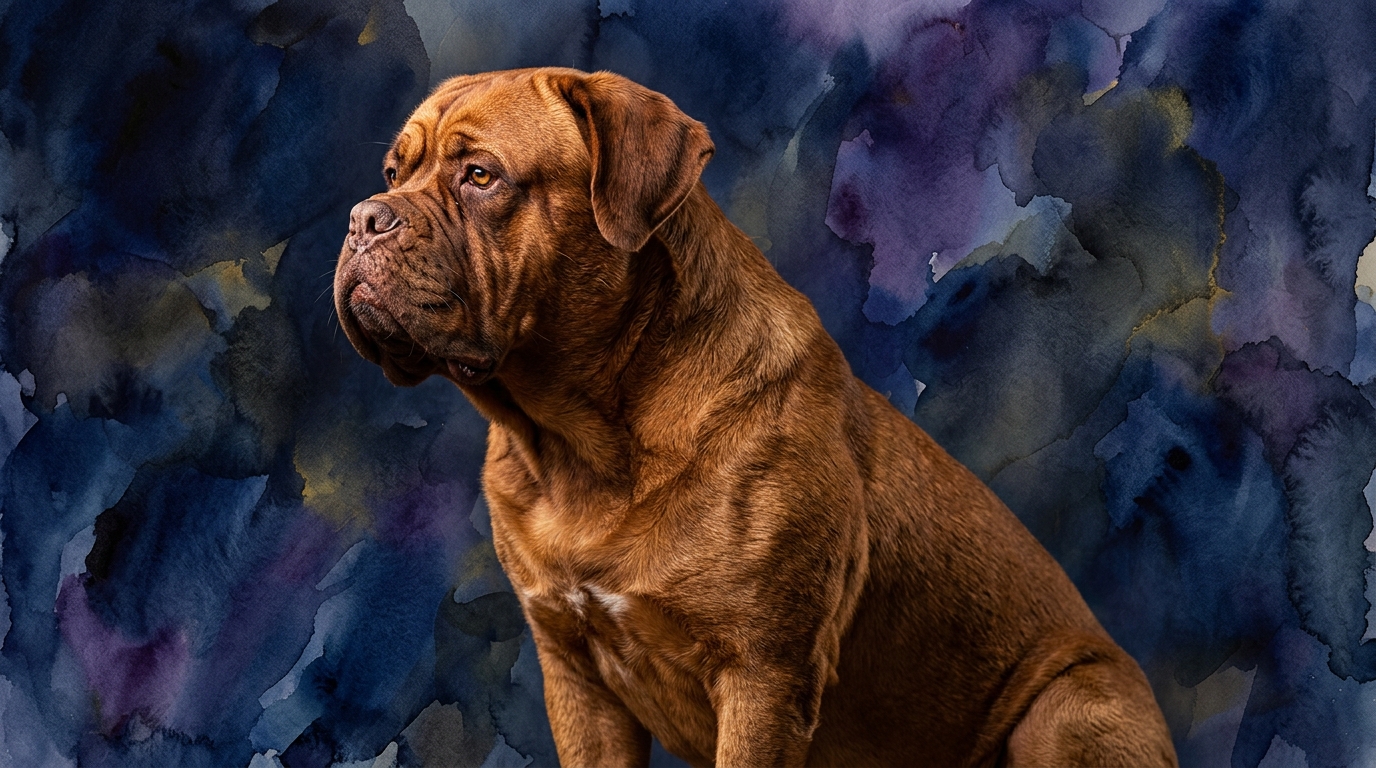
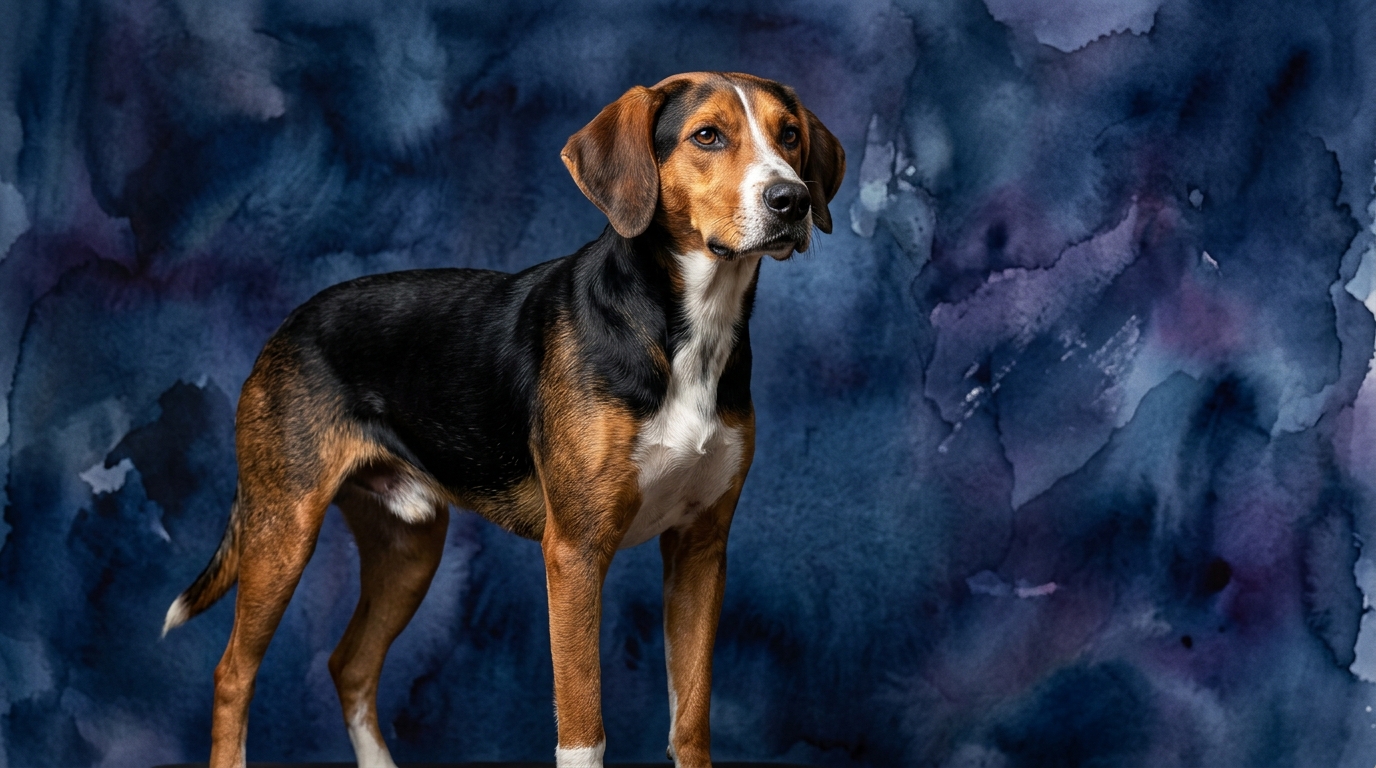
Side-by-Side IQ Profile: Dogue de Bordeaux vs. American Foxhound
Despite both the Dogue de Bordeaux (Working group) and the American Foxhound (Hound group) registering a consistent 3/5 across all five of The Cosmic Pet Pet IQ Lab's cognitive dimensions, the manifestation of these aptitudes is profoundly influenced by their distinct breed histories and purposes. Understanding these nuances is key to appreciating their individual cognitive strengths.
For the Dogue de Bordeaux, 3/5 problem-solving often involves a thoughtful, unhurried approach to navigating their home environment or understanding family dynamics. Their solutions tend to be practical, aimed at comfort or maintaining routine, rather than abstract challenges. The American Foxhound's 3/5 in problem-solving is intrinsically linked to their hunting heritage, excelling at intricate scent-following, navigating varied terrain, and working within a pack. Their cognitive strengths lie in efficient, instinct-driven solutions for dynamic outdoor pursuits.
A Dogue de Bordeaux at 3/5 training speed is capable but requires consistent, patient, and positive reinforcement; their strong will can lead to selective hearing without a clear, rewarding purpose. The American Foxhound also scores 3/5, but their independent nature and powerful scent drive often mean focus on human instruction is fleeting, especially outdoors. Training demands immense patience, recognizing instincts frequently override learned behaviors.
The Dogue de Bordeaux's 3/5 social intelligence is often profoundly directed towards their immediate family, reading moods and intentions with deep loyalty, while showing cautious observation with strangers. For the American Foxhound, 3/5 social intelligence primarily involves pack dynamics, fostering amiable interactions with other dogs and a generalized friendliness towards their human "pack," though with less focus on individual human emotional nuances.
The Dogue de Bordeaux's 3/5 instinctive drive centers on protection and guardianship, exhibiting calm vigilance over territory and family, alongside a strong desire for companionship. The American Foxhound's 3/5 instinctive drive is overwhelmingly tied to their incredible scenting ability and the relentless pursuit of game, a powerful, all-consuming drive for independent work and endurance.
A Dogue de Bordeaux's 3/5 memory retains routines, learned behaviors, and social interactions well, shaping responses to people and places, contributing to their consistent temperament. The American Foxhound's 3/5 memory is particularly strong for scent trails, hunting grounds, and resources, also recalling commands, though their application can be superseded by instinctive drives, fueling their persistence in the field.
Where the Dogue de Bordeaux Wins Cognitively
The Dogue de Bordeaux, a magnificent member of the Working group, often demonstrates cognitive strengths rooted in their historical role as guardians and companions. Their 3/5 problem-solving, though not lightning-fast, is characterized by a thoughtful, methodical approach to navigating their home environment or understanding complex social situations within their human family. This deliberate cognitive style, combined with their 3/5 social intelligence, allows them to form incredibly profound bonds, intuitively reading the emotional landscape of their immediate human companions and responding with unwavering loyalty and appropriate protective behaviors. Their memory, also at 3/5, solidifies these bonds by allowing them to consistently recall past interactions and apply learned lessons about their family's preferences and boundaries, fostering a stable and predictable home life.
Where the American Foxhound Wins Cognitively
The American Foxhound, a quintessential Hound, showcases cognitive brilliance in domains directly related to their ancestral purpose: the hunt. Their 3/5 problem-solving shines brightest when faced with the intricate challenge of a scent trail, requiring them to independently assess variables like wind direction, terrain, and the age of a scent to pursue quarry effectively. This isn't abstract puzzle-solving but a highly specialized form of cognitive mapping and deduction in real-time. Their 3/5 instinctive drive is the engine behind this, a relentless focus on scent and pursuit that demonstrates remarkable endurance and single-mindedness. Furthermore, their 3/5 social intelligence, while different from the Dogue de Bordeaux's family-centric focus, allows them to operate cohesively within a pack, understanding subtle cues and working collaboratively to achieve a shared goal.
Which is Easier to Train and Why
Despite both breeds scoring 3/5 in training speed, the practical experience of training a Dogue de Bordeaux versus an American Foxhound can diverge significantly due to their inherent motivations and distractions. The Dogue de Bordeaux, while possessing a strong will, often thrives on pleasing their human companion and forming a close working partnership. Their 3/5 social intelligence means they are often attuned to their handler’s expectations and desire to maintain harmony within their family unit. Training them typically requires consistency, firm but gentle guidance, and plenty of positive reinforcement, leveraging their desire for connection and their deliberate problem-solving approach. They learn best when the purpose of the command is clear and contributes to their sense of order and security.
In contrast, the American Foxhound's 3/5 training speed is heavily influenced by their powerful 3/5 instinctive drive for scent and chase. While they are capable of learning commands, their independent nature and overwhelming desire to follow a captivating scent can make them appear less responsive. Training an American Foxhound demands extraordinary patience, a creative approach to making training more rewarding than any environmental distraction, and an acceptance that off-leash reliability, especially in stimulating areas, may always be a challenge due to their profound natural inclinations. Their cognitive strengths lie in independent field work, not necessarily in eager compliance with human commands when a compelling scent beckons.
Which Suits Active Owners vs. Relaxed Owners
When considering an owner's lifestyle, the Dogue de Bordeaux and American Foxhound present distinct profiles. The Dogue de Bordeaux, while large and powerful, often fits well with owners who appreciate a calm, deliberate presence indoors, coupled with structured outdoor activity. Their 3/5 instinctive drive is focused on guardianship rather than constant motion, meaning a Dogue de Bordeaux generally enjoys a comfortable home life, but still requires regular, moderate exercise to maintain physical and mental well-being, such as brisk walks or controlled play sessions. They are not typically suited for extreme athletic endeavors but benefit from consistent engagement that stimulates their 3/5 problem-solving and social intelligence within their family context.
Conversely, the American Foxhound is unequivocally a breed for active owners. Their 3/5 instinctive drive, fueled by an insatiable desire to follow a scent and run, necessitates extensive daily exercise. This isn't just a walk around the block; it demands long, vigorous runs, secure off-leash areas where they can stretch their legs, or participation in dog sports like scent work or tracking. Owners who lead a relaxed, sedentary lifestyle would find it challenging to meet the profound physical and mental stimulation needs of an American Foxhound, whose cognitive strengths are intrinsically linked to covering ground and pursuing a trail.
The Verdict
Choose the Dogue de Bordeaux if you seek a loyal, thoughtful companion who will integrate deeply into your family, offering a calm but watchful presence indoors and thriving on structured daily routines and moderate exercise. They are ideal for owners who appreciate a dog with a deliberate cognitive style, forming profound bonds and responding well to consistent, positive guidance within a stable home environment.
Opt for the American Foxhound if you are an exceptionally active individual or family, passionate about outdoor activities and prepared to meet the demands of a dog with an unparalleled drive for scent work and endurance. They are best suited for homes that can provide vast opportunities for vigorous exercise and mental stimulation through tracking or long runs, appreciating their independent spirit and specialized cognitive focus on the pursuit.
🧠 Find Your Pet's IQ Score
Our Pet IQ Lab assessment covers 25+ tests across 5 cognitive dimensions — personalized to your breed.
Take the Full IQ Test →Frequently Asked Questions
Are Dogue de Bordeaux good with children?
The Dogue de Bordeaux's 3/5 social intelligence and protective instincts often make them patient and tolerant with children in their own family, provided they are well-socialized and supervised. Their calm demeanor and sturdy build can be an asset, but their size means interactions should always be managed to prevent accidental bumps.
Can American Foxhounds live in apartments?
Due to their profound 3/5 instinctive drive for activity and space, American Foxhounds are generally not well-suited for apartment living. They require significant outdoor exercise and room to roam, which is difficult to provide adequately in a confined urban dwelling, leading to potential frustration and destructive behaviors.
How do their protective instincts differ?
The Dogue de Bordeaux's 3/5 instinctive drive for protection manifests as a watchful guardian, often assessing situations deliberately before acting, primarily focused on their family and home. The American Foxhound's 3/5 instinctive drive is for hunting; while they might alert to strangers, their primary protective instinct is not territorial in the same way, and they are generally more focused on their environment's scents.