
Side-by-Side IQ Profile
German Shepherd (Coren Rank #3): This breed exhibits exceptional cognitive prowess across the board. Their Problem Solving is rated 5/5, indicating a remarkable capacity to analyze novel situations and formulate effective solutions, often demonstrating ingenuity in overcoming obstacles. Training Speed is also 5/5, meaning they grasp complex commands with minimal repetition, making them highly adaptable to intricate tasks. Social Intelligence at 5/5 reflects their profound understanding of human cues, emotions, and intentions, fostering deep cooperative bonds. An Instinctive Drive of 5/5 highlights their powerful inherent motivation for tasks like herding, guarding, or protection work, driven by a strong desire for purpose. Their Memory is a perfect 5/5, allowing them to retain vast amounts of learned information, experiences, and complex sequences over extended periods.
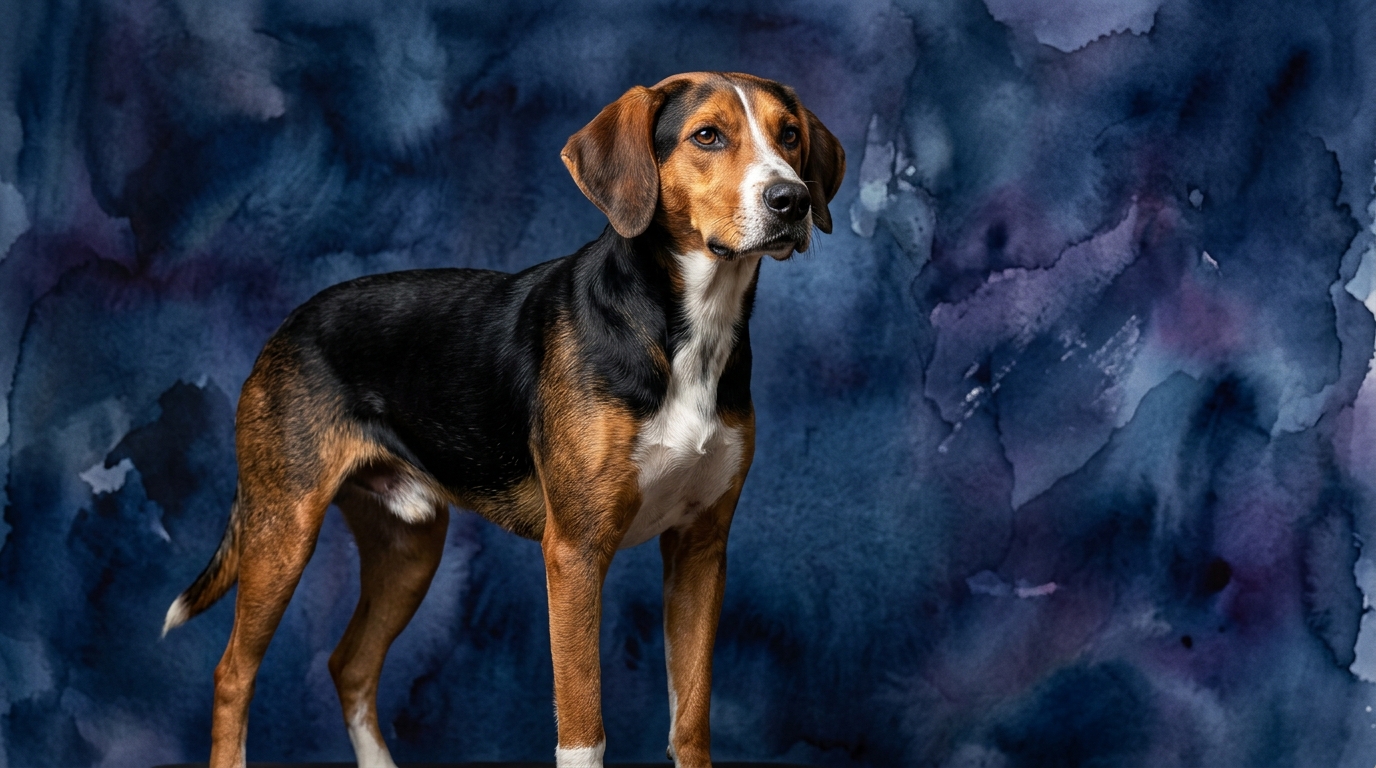
American Foxhound (Not Coren-Ranked): The American Foxhound possesses a distinct set of cognitive strengths, primarily centered around their ancestral role. Their Problem Solving is rated 3/5, suggesting they can navigate straightforward challenges but might require more time or human intervention for complex, multi-step problems not related to scent. Training Speed at 3/5 indicates they are capable of learning, yet they typically require more consistent repetition and patience compared to breeds eager for human direction. Social Intelligence is 3/5, meaning they recognize human interactions but often prioritize their own sensory experiences, particularly scent, over subtle social cues. Their Instinctive Drive, also 3/5, is powerfully focused on scent tracking and pursuit, making them tireless in their primary function but less broadly driven by human-assigned tasks. Memory at 3/5 allows them to recall established trails and familiar routines, but complex, non-instinctive sequences might require more reinforcement to become ingrained.
Where German Shepherd Wins Cognitively
The German Shepherd's cognitive supremacy lies in its unparalleled cognitive versatility and capacity for complex, cooperative work. Their 5/5 Problem Solving allows them to excel in dynamic environments, rapidly assessing threats or challenges and devising strategic responses, a trait invaluable in police or search and rescue operations. This isn't just about following commands; it's about independent thought within a framework of cooperation. Their superior Social Intelligence (5/5) means they are exquisitely attuned to human body language, tone, and even subtle emotional shifts, enabling a level of partnership where they can anticipate needs or react appropriately without explicit verbal cues. This profound understanding of their human handler, combined with their potent Memory (5/5), allows them to master and retain extensive repertoires of commands, intricate routines, and varied protocols, making them adaptable across diverse working roles from service dog to competitive obedience champion. Their instinctive drive, while strong, is often channeled into serving a human partner's goals, making their powerful intellect a tool for collaborative achievement.
Where American Foxhound Wins Cognitively
The American Foxhound's cognitive strengths are specifically honed for endurance, independence, and unparalleled olfactory prowess. Their "win" is in their singular, unwavering focus when engaged in their primary instinctive drive: scent trailing. While their Problem Solving is rated 3/5 generally, within the context of tracking a complex scent trail, their ability to navigate varied terrain, ignore distractions, and persistently follow a fading odor demonstrates a specialized form of problem-solving that few breeds can match. This isn't about solving a puzzle box, but about interpreting an invisible, ephemeral data stream across miles. Their independent nature, often perceived as a challenge in training, is a cognitive asset in the field, allowing them to make critical decisions about a trail without constant human direction. They possess an incredible "working memory" for scent, holding complex olfactory information and comparing it against new input as they progress. This sustained, singular focus, driven by an instinct (3/5) that overrides many other stimuli, showcases a highly specialized intelligence adapted perfectly for their historical purpose, making them masters of the chase and the trail.
Which is Easier to Train and Why
Without question, the German Shepherd is significantly easier to train due to a confluence of their cognitive attributes. Their 5/5 Training Speed means they absorb new commands and behaviors rapidly, often requiring only a few repetitions before understanding. This is bolstered by their 5/5 Social Intelligence, which makes them inherently eager to please and highly receptive to human direction and feedback. They actively seek to understand what is expected of them and derive satisfaction from fulfilling those expectations. Their high Problem Solving (5/5) also means they can generalize learned behaviors to new situations and troubleshoot when a command isn't immediately clear. In contrast, the American Foxhound's 3/5 Training Speed indicates a more deliberate learning pace, often requiring extensive patience and repetition. Their lower Social Intelligence (3/5) means they are less motivated by human approval and more by their own sensory world, particularly compelling scents. This can lead to a perceived "stubbornness" where a powerful scent overrides any learned command. Their independent nature, while valuable in the field, translates to a greater challenge in establishing consistent obedience in a domestic setting, as they are less inclined to defer to human authority when their instincts are engaged. Effective training for a Foxhound often involves leveraging their scent drive rather than trying to suppress it entirely, making it a more specialized and often slower process.
Which Suits Active Owners vs. Relaxed Owners
The German Shepherd is an ideal companion for active owners who are prepared to engage deeply with their dog's mental and physical needs. Their 5/5 instinctive drive, combined with high problem-solving and memory, means they thrive on purpose-driven activities. They excel with owners who can provide consistent training, participate in dog sports like agility, obedience, or protection work, and offer complex mental stimulation through puzzle toys and varied learning opportunities. They require a job, whether formal or informal, to truly flourish, making them less suitable for a relaxed owner seeking a low-maintenance companion. A German Shepherd without sufficient engagement can become bored, potentially leading to undesirable behaviors.
Conversely, the American Foxhound, while requiring substantial physical exercise, can suit a different kind of "active" owner, or even a more relaxed owner with specific interests. Their 3/5 instinctive drive is intensely focused on scent, meaning they need owners who appreciate long, consistent walks or runs, ideally in secure, varied environments where they can explore with their nose. They are not typically suited for complex obedience routines or dog sports requiring intricate cooperation, so a relaxed owner who enjoys simple, long outdoor excursions and is content with a dog that primarily follows its nose might find a good match. They are generally less demanding of constant mental "work" from their owner beyond allowing them to indulge their scenting instinct. They are not ideal for owners who prefer a sedentary lifestyle, but their independence means they don't constantly demand interactive games or intricate training sessions like a German Shepherd might.
The Verdict
Choose a German Shepherd if you seek a highly trainable, versatile, and deeply cooperative partner capable of mastering complex tasks and thriving on a strong, communicative bond, suitable for active, purpose-driven lifestyles.
Choose an American Foxhound if you appreciate an independent, resilient companion with an unparalleled drive for scent work, ideal for owners who enjoy long outdoor adventures and understand the unique challenges and rewards of a hound's focused instincts.
🧠 Find Your Pet's IQ Score
Our Pet IQ Lab assessment covers 25+ tests across 5 cognitive dimensions — personalized to your breed.
Take the Full IQ Test →Frequently Asked Questions
Can an American Foxhound be a good family pet despite its independent nature?
Yes, American Foxhounds can be affectionate and loyal family pets, especially with proper socialization from a young age. Their independence means they might not be as overtly demonstrative as a German Shepherd, but they enjoy being part of the family, particularly if their exercise needs are met.
How do the exercise needs differ between a German Shepherd and an American Foxhound?
Both breeds require substantial exercise, but the type differs. German Shepherds need both physical exertion and mental stimulation, like training sessions or puzzle games, while American Foxhounds primarily need extensive physical exercise, often involving long runs or walks where they can follow scents, to satisfy their strong hunting drive.
Is it possible to train an American Foxhound for complex tasks like a German Shepherd?
While an American Foxhound can certainly be trained, their 3/5 training speed and social intelligence mean they are generally not suited for the same level of complex, cooperative tasks as a German Shepherd. Their independent nature and primary motivation for scent work make intricate obedience or service roles much more challenging to achieve consistently.