
Side-by-Side Cognitive Profiles: Dogue de Bordeaux vs. Borzoi
The Cosmic Pet Pet IQ Lab evaluates canine cognition across five crucial dimensions, and both the Dogue de Bordeaux and the Borzoi present an intriguing case with identical 3/5 scores across the board. This doesn't mean their minds operate identically, but rather that their baseline capacity for certain cognitive functions is comparable, with the nuances lying in how these capacities are utilized within their breed-specific contexts.
For the Dogue de Bordeaux, a working dog, a 'Problem Solving' score of 3/5 indicates a steady ability to navigate straightforward environmental challenges and learn routines, but they are less inclined towards complex, abstract puzzles. Their 'Training Speed' at 3/5 suggests they absorb new commands at a moderate pace, thriving on consistency and clear direction rather than rapid-fire learning. 'Social Intelligence' at 3/5 means they are generally perceptive of human emotions and family dynamics, forming deep bonds while often maintaining a reserved demeanor with strangers. Their 'Instinctive Drive' of 3/5 is primarily expressed through a strong protective instinct for their family and territory, rather than an intense drive for retrieving or herding. Finally, 'Memory' at 3/5 shows they retain learned behaviors and experiences adequately, remembering their training and routines over time without being exceptionally detail-oriented.
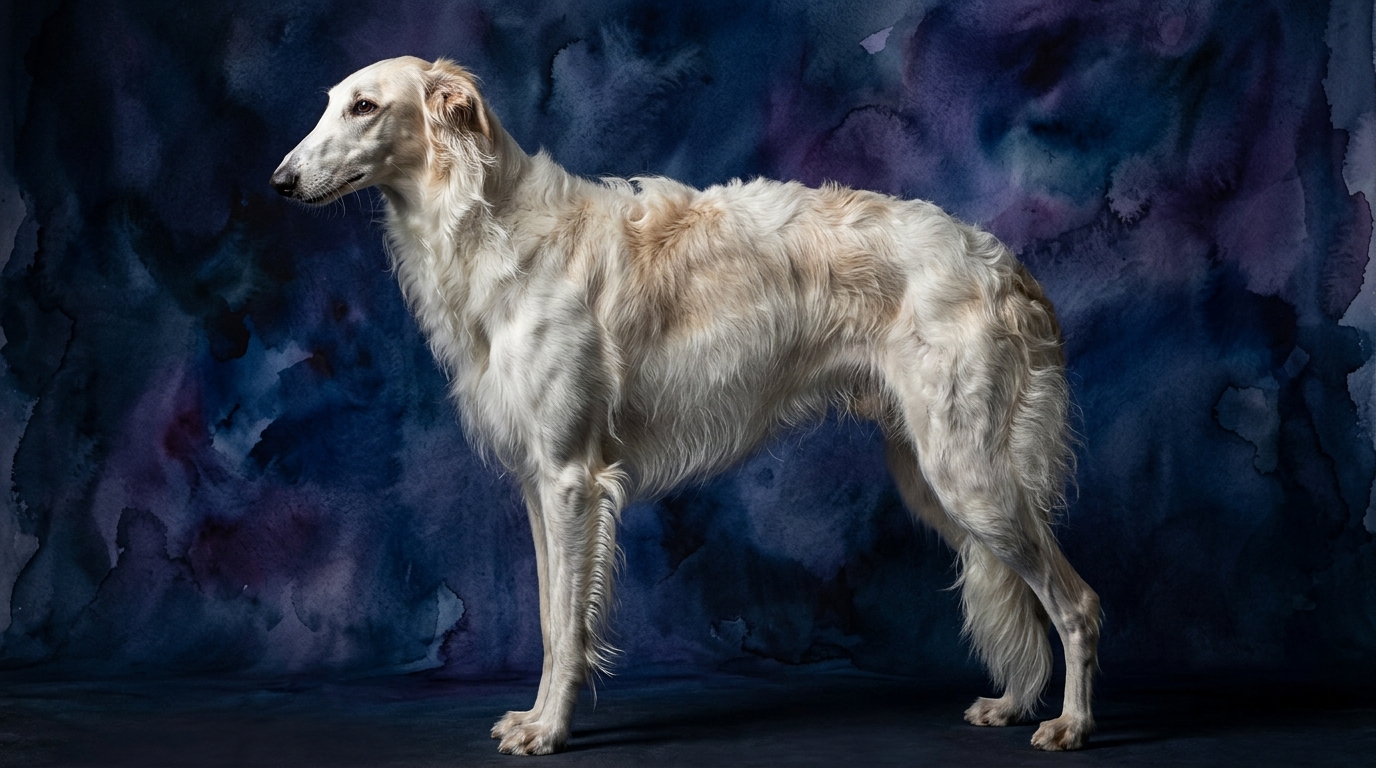
The Borzoi, a sighthound, also scores 3/5 in 'Problem Solving,' demonstrating a practical ability to strategize during a chase or navigate their surroundings, though they might not engage enthusiastically in human-devised brain games. Their 'Training Speed' of 3/5 means they are capable of learning, but their independent nature often requires creative motivation and patience, as they are not inherently driven by a desire to please. 'Social Intelligence' at 3/5 reflects their discerning nature; they are observant and form strong attachments to their inner circle, often appearing aloof or indifferent to outsiders. Their 'Instinctive Drive' of 3/5 is overwhelmingly concentrated on their powerful prey drive, specifically for chasing and coursing, a deeply ingrained behavioral pattern. Lastly, 'Memory' at 3/5 indicates they remember commands and experiences, but their independent streak might sometimes lead to selective recall, especially if a more compelling stimulus, like a squirrel, presents itself.
Where the Dogue de Bordeaux Shines Cognitively
Despite matching scores, the Dogue de Bordeaux exhibits a cognitive advantage in areas tied to their historical role as guardians and companions. Their 'Problem Solving' at 3/5, while not exceptional, is often applied to practical, real-world scenarios, such as understanding household routines or figuring out how to get comfortable in a preferred spot. This breed often displays a grounded, steady approach to tasks, benefiting from clear instructions and a predictable environment. Their 'Social Intelligence' of 3/5 often translates into a more overtly demonstrative loyalty and protective instinct towards their family, making them keenly aware of their human pack's presence and potential needs. This isn't about complex emotional manipulation, but a straightforward, robust understanding of their social hierarchy and role within it. They tend to be more 'present' in interactions, offering a more direct form of companionship.
Where the Borzoi Holds a Cognitive Edge
The Borzoi, with its sighthound heritage, presents a different cognitive strength, particularly in its independent thought and perceptive awareness. Their 'Problem Solving' at 3/5 often manifests in their ability to make quick, independent decisions in open spaces, a legacy of their hunting days where they had to strategize on the fly without human direction. This isn't about solving a puzzle box, but about efficient, autonomous decision-making in pursuit. Their 'Social Intelligence' of 3/5, while perhaps less overtly affectionate than some breeds, is characterized by a subtle perceptiveness; they are acutely aware of their surroundings and family's moods, often observing from a distance before engaging. This keen observational skill allows them to navigate complex social situations with a quiet grace. The Borzoi's 'Instinctive Drive' of 3/5, specifically their unmatched prey drive for sight-based chasing, is a highly specialized cognitive strength, demonstrating an intense focus and unparalleled efficiency in that particular domain.
Training: Which is Easier and Why?
While both breeds score 3/5 in 'Training Speed,' the practical experience of training them diverges significantly due to their inherent temperaments and motivations. The Dogue de Bordeaux, rooted in a working group, generally responds well to consistent, positive reinforcement training. Their desire for companionship and a clear role within the family often makes them eager to please, meaning that while they may not grasp new commands instantly, they are typically willing participants in training sessions. Their steady nature and robust memory (3/5) mean that once a command is learned, it tends to stick, provided the training is fair and engaging. They thrive on routine and structure, making them amenable to a consistent training regimen.
In contrast, the Borzoi's 3/5 'Training Speed' is often tempered by their profound independence and sighthound instincts. They are perfectly capable of understanding commands, but their motivation often stems from what *they* find rewarding, rather than an inherent drive to please their human. This means training a Borzoi requires immense patience, creative motivation (often involving chasing games or high-value treats), and an understanding that their attention can be quickly diverted by visual stimuli. While they remember what they've learned (3/5 memory), their selective recall, particularly outdoors, means that 'easier to train' is a relative term. They demand a trainer who respects their independent spirit and can make training feel like a collaborative, rather than compulsory, activity.
Matching Breeds to Lifestyles: Active vs. Relaxed Owners
The Dogue de Bordeaux, despite its imposing size, is often described as a 'velcro dog' indoors, content to lounge near its family. However, their 'Working' group background and robust physique mean they require consistent, moderate exercise to maintain physical and mental well-being. This includes daily walks, engaging playtime, and opportunities for mental stimulation to prevent boredom. An owner who can provide structured activity, consistent training, and enjoys a steadfast, watchful companion will find the Dogue de Bordeaux a rewarding fit. They are best suited for owners who are prepared for a dog that needs to feel involved and have a purpose, even if that purpose is simply being a beloved family member.
The Borzoi, conversely, embodies a fascinating paradox: a breed of immense athleticism that can transform into a serene, almost cat-like presence indoors. Their 'Instinctive Drive' (3/5) for chasing necessitates secure, expansive off-leash areas for regular, high-speed sprints to fulfill their sighthound instincts. Without this outlet, they can become restless. However, once their exercise needs are met, they are typically calm, quiet, and elegant housemates, often preferring to recline on a soft surface. They are ideal for owners who appreciate an independent spirit, can provide safe, vigorous bursts of exercise, and enjoy a companion who is graceful and observant, rather than constantly demanding attention. Their reserved social intelligence also means they thrive with owners who understand and respect their more subtle forms of affection and communication.
The Verdict
Choose the Dogue de Bordeaux if you seek a formidable, loyal companion with a steady mind, who thrives on consistent training and a clear role within a devoted family. They offer robust protection and a deeply affectionate, albeit sometimes reserved, presence.
Opt for the Borzoi if you appreciate a graceful, independent spirit that combines explosive athleticism with serene indoor manners, and you can provide ample space for their instinctual running bursts. They offer a perceptive, reserved companionship for those who admire their unique elegance.
🧠 Find Your Pet's IQ Score
Our Pet IQ Lab assessment covers 25+ tests across 5 cognitive dimensions — personalized to your breed.
Take the Full IQ Test →Frequently Asked Questions
Are Dogue de Bordeaux good with children?
With proper socialization from a young age and consistent training, Dogue de Bordeaux can be gentle and protective companions for children. Their large size means supervision is always necessary to prevent accidental bumps, but their inherent loyalty often extends to the younger members of their family.
Do Borzoi require a lot of exercise?
Borzoi require regular opportunities for intense, short bursts of exercise, ideally in a securely fenced area where they can run at full speed. While they can be quite calm indoors, these sprints are crucial for their physical and mental well-being, fulfilling their sighthound drive.
How do their grooming needs compare?
The Dogue de Bordeaux has a short, dense coat that requires minimal grooming, primarily weekly brushing to remove loose hair and maintain coat health. The Borzoi, with its long, silky coat, demands more frequent attention, typically several times a week, to prevent matting and keep it pristine, especially around the feathering.