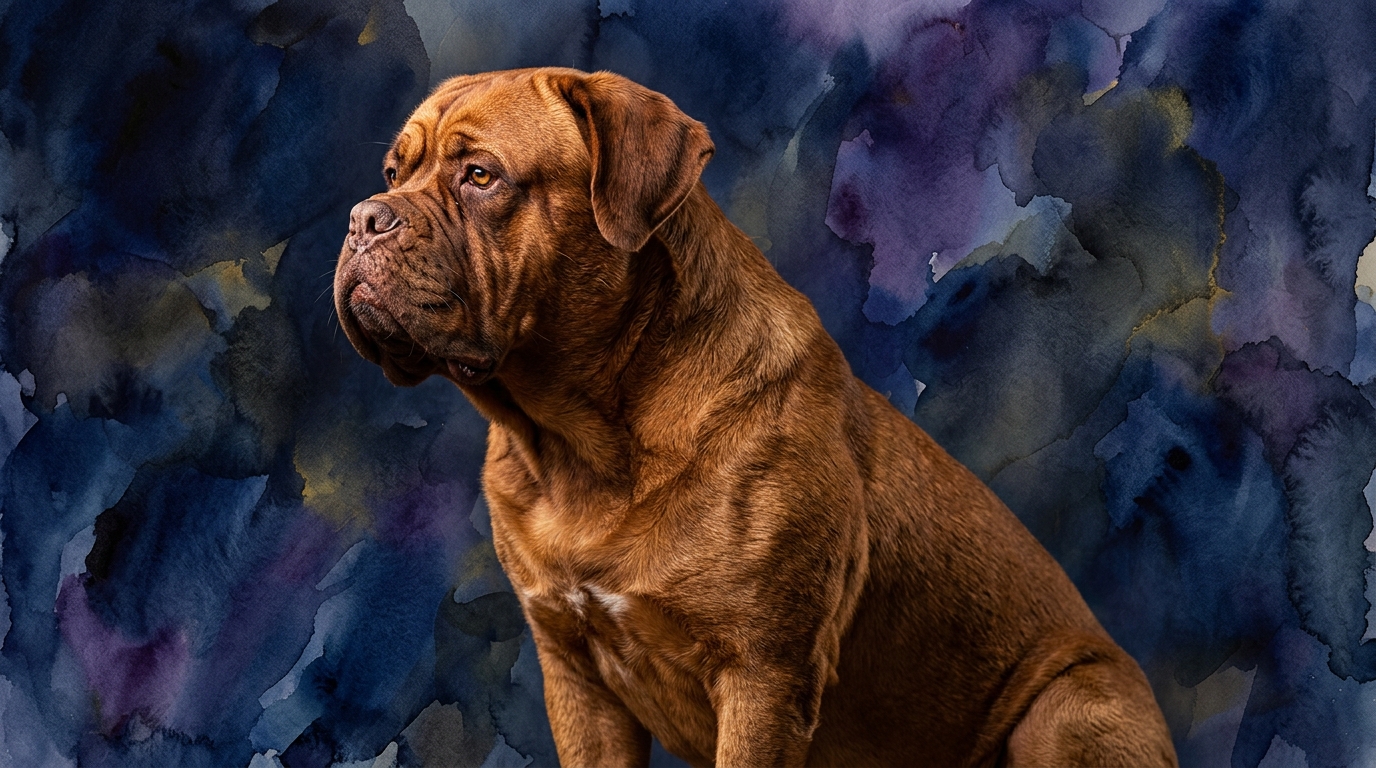
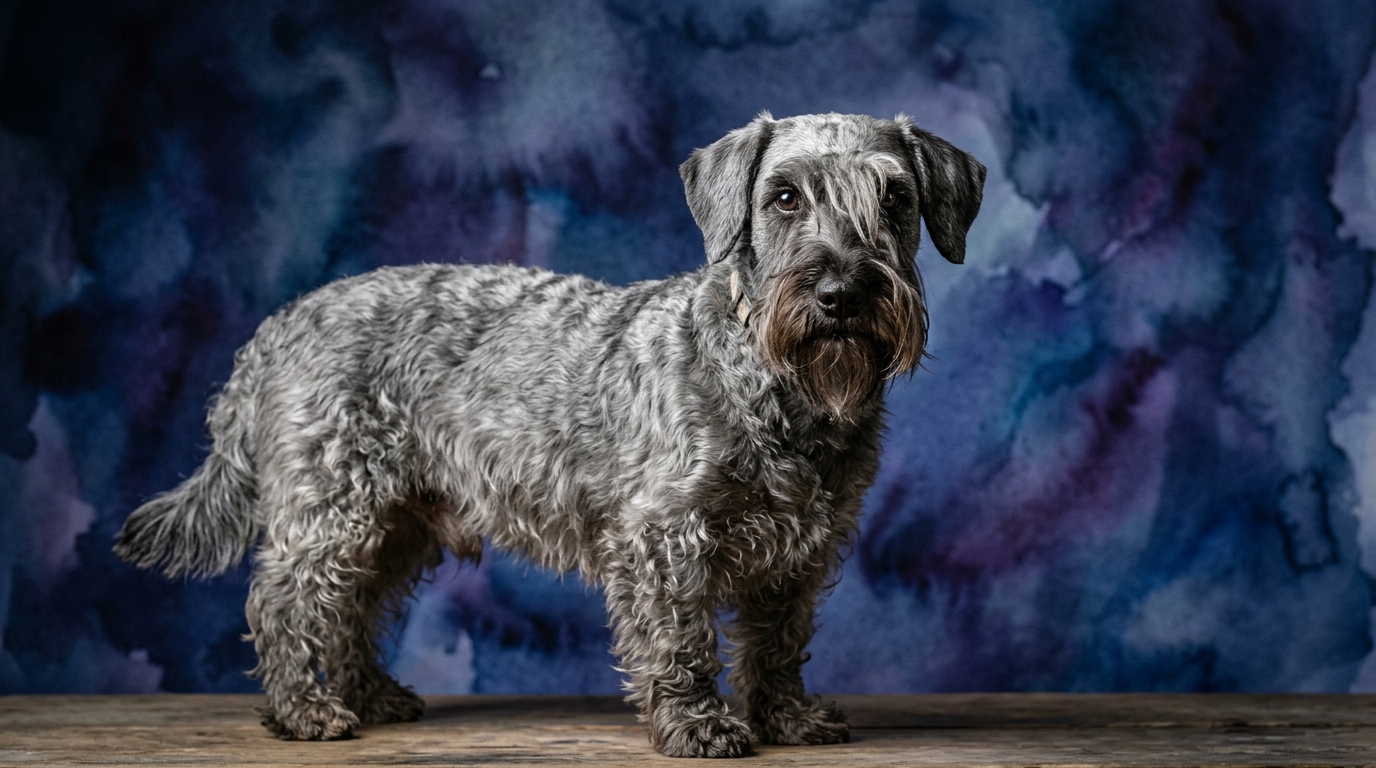
The Cosmic Pet IQ Lab: Dogue de Bordeaux vs. Cesky Terrier
The Cosmic Pet IQ Lab evaluates canine cognition across five key dimensions, assigning a score out of five for each. For both the Dogue de Bordeaux and the Cesky Terrier, these scores are consistently 3/5, suggesting a moderate capability in each area. However, these identical numbers belie the distinct ways their cognitive functions are applied, shaped by their breed history and physical attributes.
The Dogue de Bordeaux, a majestic Working dog, exhibits a Problem Solving score of 3/5, typically applied to assessing and managing their environment, often in a protective context. Their Training Speed, also 3/5, indicates a capacity to learn with consistent, patient guidance, though their independent spirit means they aren't always quick to comply without understanding the 'why.' Social Intelligence at 3/5 allows them to effectively read human cues and differentiate between welcome and unwelcome visitors. Their Instinctive Drive, 3/5, is largely channeled into guarding and territorial protection, rather than high-energy pursuits. Finally, their Memory, 3/5, supports their ability to recall routines and the status of family members, contributing to their steady presence.
Conversely, the Cesky Terrier, a tenacious Terrier, also scores 3/5 in Problem Solving, but this often involves navigating tight spaces, outsmarting small prey, or finding creative routes around obstacles. Their Training Speed of 3/5 means they are capable learners, but their inherent terrier stubbornness and drive necessitate engaging and varied training methods. Social Intelligence, 3/5, helps them interact effectively with their human companions and discern the intentions of other creatures, though they can be reserved with strangers. Their Instinctive Drive, 3/5, is profoundly rooted in hunting, digging, and tracking, a core part of their being. Their Memory, 3/5, is often employed in recalling scent trails, the locations of perceived 'prey,' or the sequence of steps in a stimulating game.
Dogue de Bordeaux's Cognitive Strengths
While both breeds share a 3/5 in Social Intelligence, the Dogue de Bordeaux's manifestation of this trait often centers on a profound understanding of their human family's dynamics and a keen awareness of their protective role. Their cognitive strength lies in their ability to subtly assess and respond to the emotional climate of the home, offering comfort or a watchful presence as needed. This nuanced social awareness enables them to act as discerning guardians, often making judgments about who belongs and who doesn't with quiet confidence, a critical application of their 3/5 Problem Solving in a social context.
Furthermore, their 3/5 Memory often translates into a reliable recall of household routines and the individual characteristics of family members and frequent visitors. This cognitive consistency contributes to their calm and predictable demeanor, allowing them to anticipate daily events and act as a steady anchor within the home. Their ability to retain information regarding their perceived 'territory' and its inhabitants is a cornerstone of their protective nature, making them highly attuned to their established environment.
Cesky Terrier's Cognitive Strengths
The Cesky Terrier's 3/5 Problem Solving capability shines brightest in scenarios requiring independent thought and persistent effort, particularly those involving spatial reasoning and obstacle mastery. Their terrier heritage imbues them with an innate drive to investigate and overcome challenges, whether it's navigating a complex puzzle toy or cleverly finding a way to access a desired object. This problem-solving prowess is typically directed towards goals that stimulate their natural curiosity and desire for 'discovery,' often in a tactile or exploratory manner.
Their 3/5 Instinctive Drive is a powerful cognitive asset, manifesting as unwavering focus and determination when engaged in tasks that mimic their historical purpose, such as scent work or 'hunting' games. This drive, coupled with their problem-solving abilities, makes them exceptionally adept at tasks requiring sustained, independent effort and a keen sense of their surroundings. They excel in activities where their persistence and sensory acuity can lead to a 'reward,' be it a hidden treat or the successful completion of a task.
Training Trajectories: Dogue de Bordeaux vs. Cesky Terrier
Both breeds register a 3/5 in Training Speed, indicating that neither is an instant learner of complex commands, but both are certainly capable. For the Dogue de Bordeaux, training success often hinges on consistent, calm, and positive reinforcement from a confident leader. Their social intelligence (3/5) allows them to understand expectations and their desire to be a well-integrated family member can make them quite receptive. However, their physical size demands early and meticulous training for basic manners and leash work to ensure they are manageable. They respond best to clear, firm, but fair methods, and their independent nature means they might not always see the point of repetitive drills if the motivation isn't compelling.
The Cesky Terrier, with its ingrained terrier tenacity, presents a different training dynamic. While they possess a 3/5 training speed, their strong instinctive drives (3/5) for digging, chasing, and independent exploration can easily become distractions. Training a Cesky requires creativity, variety, and an understanding of their independent spirit. They often thrive on engaging, game-based learning that taps into their problem-solving (3/5) skills rather than rote repetition. Overly harsh or boring methods can lead to stubbornness or disengagement, as their sensitivity to tone and their desire for mental stimulation are significant factors in their compliance.
Lifestyle Match: Activity Levels and Temperament
The Dogue de Bordeaux, despite its imposing stature, is generally not a high-energy breed. Their 3/5 instinctive drive is primarily focused on guarding and observation, rather than constant physical exertion. They are well-suited for relaxed owners who appreciate a calm, steady companion and can provide moderate daily exercise, such as a leisurely walk, coupled with secure outdoor space. Their 3/5 social intelligence makes them content observing family life, often preferring to be near their people rather than constantly on the go. They thrive in environments where they can be a comforting, watchful presence.
In contrast, the Cesky Terrier, while not requiring marathon runs, possesses a more active and inquisitive disposition. Their 3/5 instinctive drive for exploration and their problem-solving (3/5) nature mean they flourish with owners who enjoy structured play, puzzle toys, and activities that channel their terrier energy. Owners who can provide consistent mental and physical engagement, perhaps through Earthdog trials, agility, or extensive walks with opportunities for safe sniffing and exploration, will find a more harmonious partnership. They are better suited for active owners who understand the need to provide outlets for their inherent curiosity and drive to prevent boredom and potential undesirable behaviors.
The Verdict: Choosing Your Canine Companion
The Verdict
Choose the Dogue de Bordeaux if you seek a calm, steadfast companion whose cognitive strengths lie in loyal protection and a deep understanding of family dynamics, content with moderate activity and a watchful presence.
Opt for the Cesky Terrier if you appreciate a spirited, problem-solving companion who thrives on engaging activities, persistent exploration, and an owner willing to channel their strong instinctive drives.
🧠 Find Your Pet's IQ Score
Our Pet IQ Lab assessment covers 25+ tests across 5 cognitive dimensions — personalized to your breed.
Take the Full IQ Test →Frequently Asked Questions
Do Dogue de Bordeauxs make good family dogs?
Yes, their social intelligence (3/5) and protective instincts often make them devoted family members, especially with proper socialization. They typically form strong bonds and are gentle with children, though their size requires supervision and early training.
Are Cesky Terriers good for first-time dog owners?
Cesky Terriers can be suitable for first-time owners who are prepared for their independent nature and strong instinctive drives (3/5). Consistent, positive training and ample mental stimulation are crucial to manage their terrier traits effectively and prevent boredom.
How do the memory capabilities of these breeds differ in practical terms?
While both score 3/5, a Dogue de Bordeaux's memory often focuses on remembering routines and family members, contributing to their predictable behavior and sense of security. A Cesky Terrier's memory might be more geared towards recalling scent trails, training sequences in engaging activities, or the location of interesting digging spots, reflecting their exploratory nature.