
Side-by-side IQ Profile
The Cosmic Pet Pet IQ Lab evaluates canine cognition across five dimensions, offering a granular look at how breeds process information and interact with their environment. The Dogue de Bordeaux, a member of the Working Group, presents a balanced cognitive profile with consistent scores across the board. Its problem-solving ability, training speed, social intelligence, instinctive drive, and memory all register at 3 out of 5. This indicates a dog that is capable and steady, not prone to quick solutions but reliable in processing information and learning at a moderate pace. Their social intelligence at 3/5 suggests they are adequately attuned to human cues and social dynamics, while their instinctive drive at 3/5 points to a moderate inherent inclination towards their historical roles, such as guarding. Memory at 3/5 means they retain learned behaviors and experiences reasonably well.
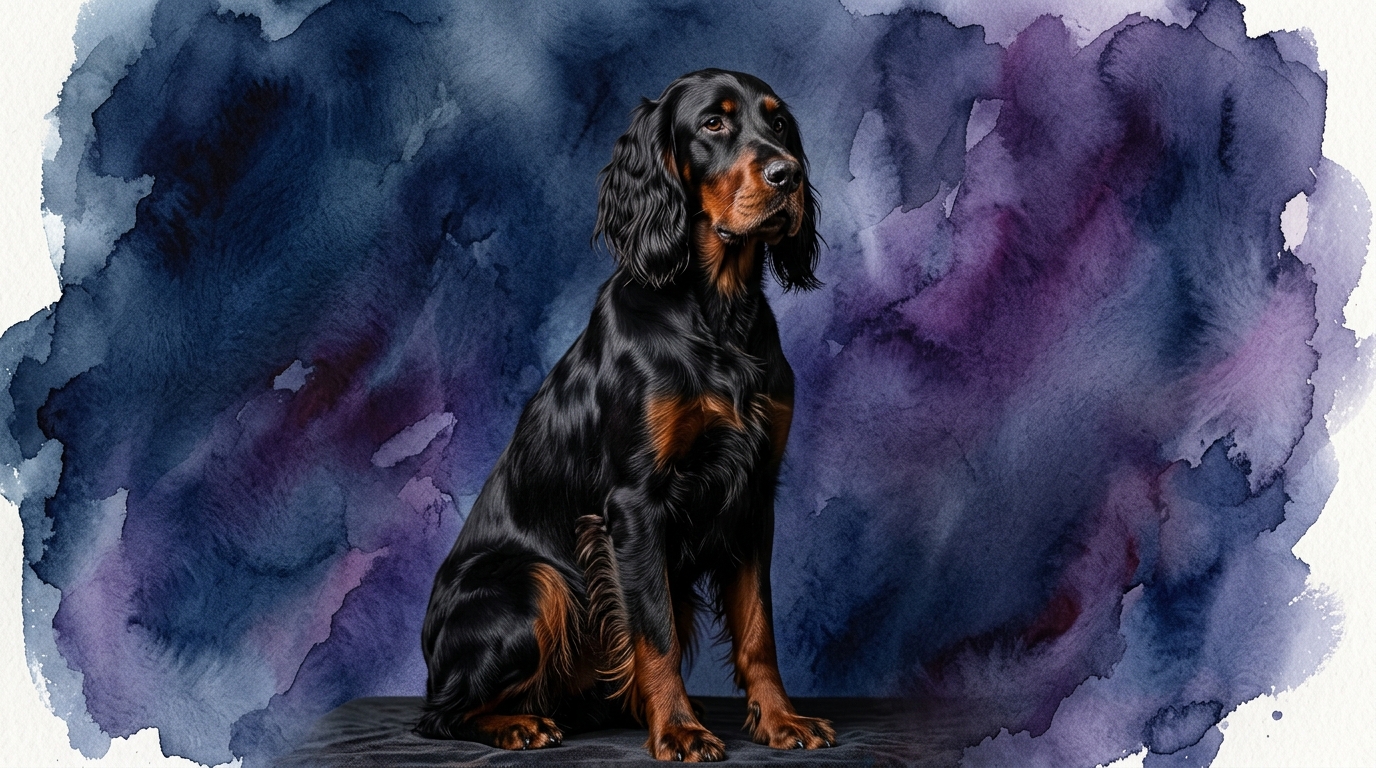
In contrast, the Gordon Setter, a Sporting Group breed and Coren-ranked #39, shows a distinctly different cognitive landscape with several elevated scores. This breed achieves a 4 out of 5 in problem-solving, indicating a greater capacity for independent thought and creative solutions to novel challenges. Their training speed also stands at 4 out of 5, suggesting they grasp new commands and routines with greater alacrity than the Dogue de Bordeaux. Like their counterpart, the Gordon Setter's social intelligence rates at 3 out of 5, implying a similar level of connection to their human companions and understanding of social structures. Their instinctive drive also matches at 3 out of 5, reflecting their inherent desire to hunt and retrieve, but not to an overwhelming degree. A notable strength is their memory, which scores 4 out of 5, meaning they are likely to recall complex sequences and past experiences with greater accuracy and for longer durations.
Where Dogue de Bordeaux Wins Cognitively
While the Gordon Setter boasts higher scores in several areas, the Dogue de Bordeaux’s consistent 3/5 ratings across all dimensions offer a distinct cognitive advantage in specific contexts. Their moderate problem-solving skills mean they are less likely to independently devise elaborate strategies to bypass rules or boundaries, making them predictable and less prone to 'outsmarting' their owners. This steady cognitive pace benefits owners preferring a predictable learner, less inclined to challenge routines. Furthermore, their 3/5 social intelligence, combined with their historical role as guardians, often translates into a discerning and thoughtful approach to new people and situations. They assess social cues calmly, offering a watchful presence rather than an effusive one. Their moderate instinctive drive also means that while they possess protective instincts, these are typically manageable and directed, rather than an overwhelming urge that needs constant channeling, making them reliable without overwhelming intensity.
Where Gordon Setter Wins Cognitively
The Gordon Setter's higher cognitive scores paint a picture of a more adaptable and quick-thinking companion, particularly beneficial for active lifestyles and complex training goals. Their 4/5 problem-solving ability means they are more adept at navigating novel situations, figuring out how to retrieve a toy from an awkward spot, or even learning complex agility courses that require sequential thinking. This makes them engaging partners for mental enrichment. The Gordon Setter's 4/5 training speed is a significant asset, allowing them to pick up new commands and multi-step routines with greater efficiency. This makes them excellent candidates for advanced obedience, field trials, or dog sports where rapid learning and precision are key. Moreover, their superior memory (4/5) ensures that once a lesson is learned, it is retained effectively, reducing the need for constant repetition and allowing for the building of an extensive repertoire of behaviors and commands. Their strong memory also supports tracking intricate scent trails, essential for their sporting heritage.
Which is Easier to Train and Why
Based on The Cosmic Pet Pet IQ Lab's metrics, the Gordon Setter is generally easier to train compared to the Dogue de Bordeaux. The Gordon Setter's training speed rating of 4/5 directly indicates a faster acquisition of new commands and behaviors. This breed typically exhibits a keen desire to work and a quick understanding, often requiring fewer repetitions. Their higher problem-solving score also contributes, as they can more readily figure out the desired action in a training scenario. In contrast, the Dogue de Bordeaux, with a training speed of 3/5, will learn, but at a more deliberate pace. They may require more patience and consistent repetition, and their strong, independent working dog nature means motivation must be carefully managed. While capable, their process is slower and more methodical, less suited for owners seeking rapid progress or complex, fast-paced training.
Which Suits Active Owners vs Relaxed Owners
The Dogue de Bordeaux, with its moderate instinctive drive and more deliberate cognitive pace, generally suits more relaxed owners or those seeking a steady, imposing companion rather than an athletic partner. While they require regular exercise to maintain health, their overall energy expenditure tends to be lower than many sporting breeds, making them content with moderate daily walks. Their cognitive profile supports a lifestyle where consistency and routine are valued, and intense, high-energy activities are not the primary focus. Conversely, the Gordon Setter, with its sporting background and higher cognitive scores in problem-solving and memory, thrives with active owners. This breed possesses a strong desire for engagement, both physically and mentally. They excel in activities like hiking, running, or participating in dog sports such as agility or obedience. Their mental acuity and drive demand consistent mental stimulation to prevent boredom, ideal for owners who integrate their dog into an active, stimulating lifestyle.
The Verdict
Choose the Dogue de Bordeaux if you seek a steadfast, predictable companion who learns at a measured pace and offers a calm, discerning presence. Their moderate cognitive needs align well with a relaxed home environment where consistency is key.
Choose the Gordon Setter if you desire an agile, quick-witted partner eager to learn and participate in dynamic activities, excelling with owners who provide consistent mental and physical challenges.
🧠 Find Your Pet's IQ Score
Our Pet IQ Lab assessment covers 25+ tests across 5 cognitive dimensions — personalized to your breed.
Take the Full IQ Test →Frequently Asked Questions
Does the Dogue de Bordeaux's 3/5 problem-solving mean it cannot be trained for complex tasks?
Not at all. A 3/5 problem-solving score indicates a solid capacity for learning, but perhaps not the same rapid innovation as a 4/5 breed. With consistent, patient training, a Dogue de Bordeaux can learn complex tasks, though it may take more repetitions and a structured approach.
How does the Gordon Setter's 4/5 memory impact its daily life for an owner?
A 4/5 memory means your Gordon Setter will likely remember commands, routines, and even specific locations or people with excellent recall. This can make training more efficient and helps them adapt quickly to established household rules, reducing the need for constant re-teaching.
Is a Dogue de Bordeaux less social than a Gordon Setter because of their similar social intelligence scores?
Both breeds score 3/5 in social intelligence, suggesting a comparable ability to understand and respond to social cues. However, their expression of this intelligence differs; Dogue de Bordeaux tend to be more reserved and discerning with strangers, while Gordon Setters might display more enthusiastic, though still appropriate, social interactions, reflecting their distinct historical roles.