Side-by-Side IQ Profile: Dogue de Bordeaux vs Saluki
At first glance, the Dogue de Bordeaux and Saluki appear to share identical cognitive profiles according to our Pet IQ Lab metrics, with both breeds scoring 3/5 across problem solving, training speed, social intelligence, instinctive drive, and memory. However, these identical scores don't imply identical minds; rather, they highlight a similar potential expressed through vastly different lenses, shaped by their ancient roles and breed characteristics.
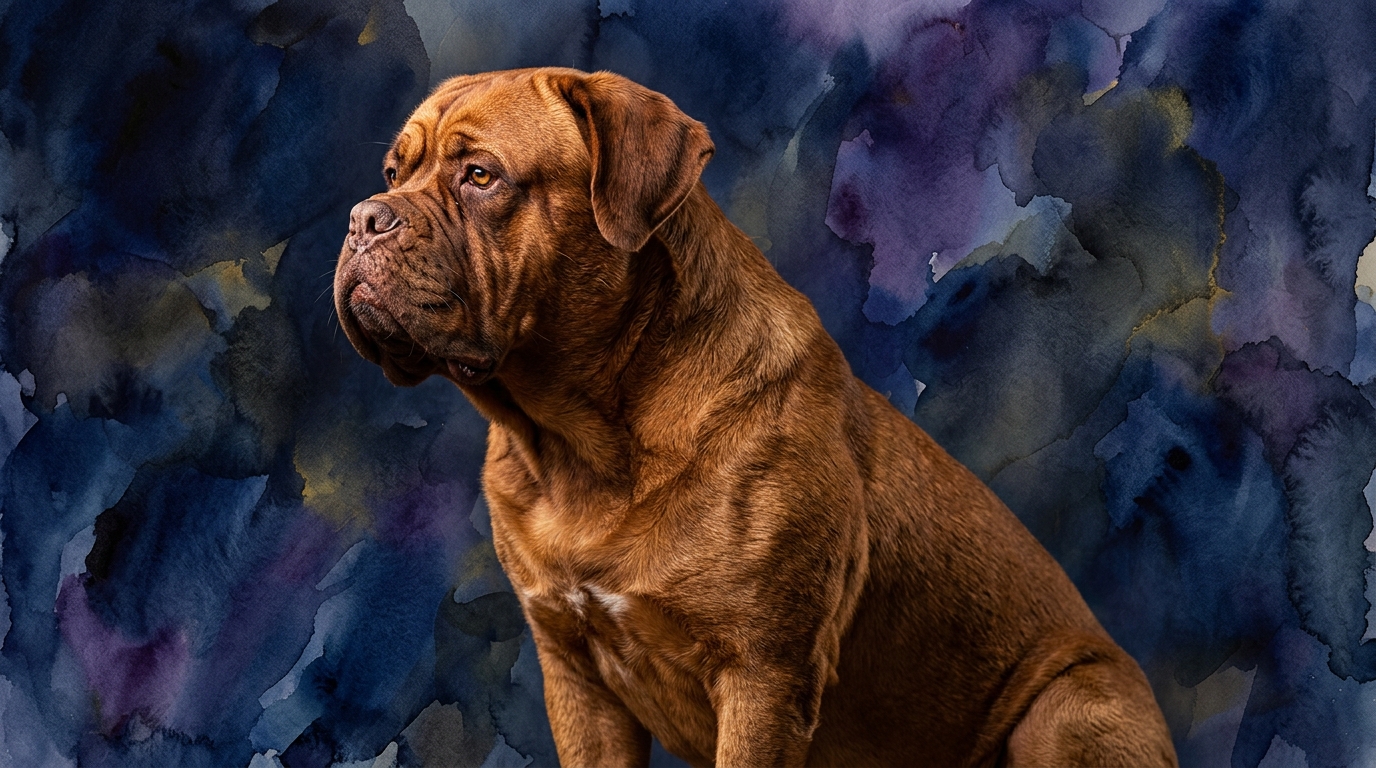
For the **Dogue de Bordeaux**, a formidable member of the Working Group, its 3/5 in **Problem Solving** often manifests in practical, security-focused scenarios. These dogs might excel at figuring out how to position themselves to observe an entire yard or how to subtly intervene if they perceive a family member is distressed, rather than excelling at complex puzzle toys. Their problem-solving is deeply rooted in their protective instincts and spatial awareness within their perceived territory. Their **Training Speed** (3/5) indicates a steady, deliberate process of learning. They absorb commands and routines with consistent repetition and clear, confident guidance; once a task is learned, it tends to be deeply ingrained, reflecting their commitment to duty and stability. The Dogue de Bordeaux’s **Social Intelligence** (3/5) is profoundly tied to its role as a family guardian. They are adept at reading the moods and intentions of their human family members, often showing profound empathy and loyalty, and their social problem-solving might involve mediating interactions within the family unit. Their **Instinctive Drive** (3/5) primarily centers on protection and companionship, reflecting a strong, innate desire to guard their family and home, coupled with a powerful need for close human bonding. Finally, their **Memory** (3/5) is solid for routines, people, and places, contributing significantly to their reliability as a guardian and companion.
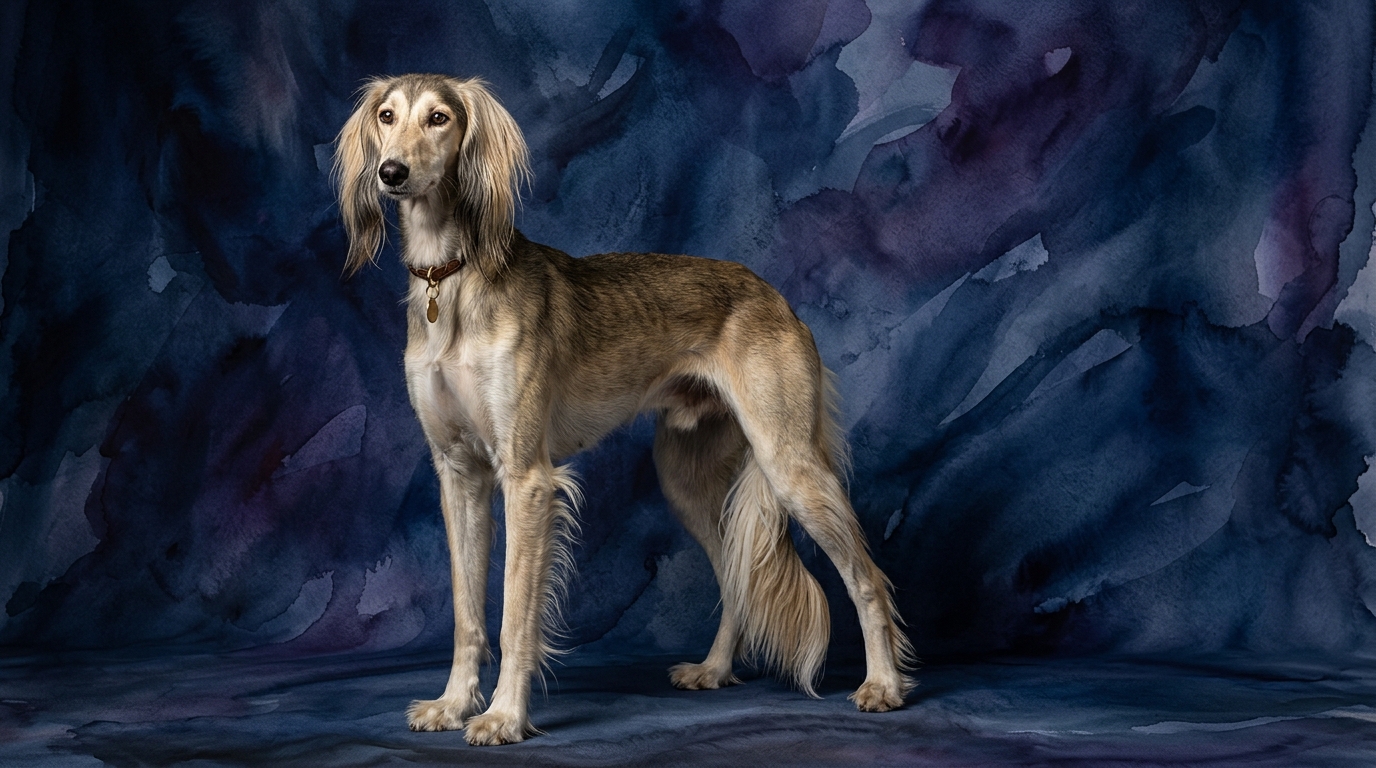
The **Saluki**, an elegant sighthound from the Hound Group, interprets its 3/5 scores through a very different framework. Its **Problem Solving** (3/5) often revolves around its ancient hunting heritage, indicating an ability to independently assess and navigate complex terrain at speed or to strategize how to cut off prey. Their cognitive strengths lie in rapid, on-the-fly decision-making in dynamic, visually stimulating environments. The Saluki's **Training Speed** (3/5) means they can learn commands quickly, especially if the training is engaging and incorporates their natural inclination for movement or chase. However, their independence means they often weigh the value of a command against their own immediate desires. Their **Social Intelligence** (3/5) is characterized by a discerning nature; they form deep bonds with their chosen family but can be reserved or aloof with strangers, carefully observing interactions before engaging. The Saluki's primary **Instinctive Drive** (3/5) is undoubtedly the chase, a powerful prey drive honed over millennia, reflecting an unwavering urge to pursue anything that moves quickly. Their **Memory** (3/5) is strong for locations, especially those associated with exciting chases or preferred running spots, often spatially oriented and tied to their visual experiences.
Where the Dogue de Bordeaux Wins Cognitively
The Dogue de Bordeaux excels in cognitive tasks requiring steadfast loyalty and a deep understanding of human social structures within a family unit. Their social intelligence, rated 3/5, translates into a profound ability to read subtle cues from their owners, anticipating needs or sensing distress, making them exceptional emotional anchors. Their problem-solving, also 3/5, often involves practical, context-specific solutions related to household harmony and protection, such as figuring out how to comfort a crying child or positioning themselves strategically to monitor the home. This blend of empathy and practical application of intelligence makes them uniquely attuned to family dynamics and a dedicated guardian.
Where the Saluki Wins Cognitively
The Saluki demonstrates distinct cognitive strengths in areas demanding independent thought, spatial reasoning, and rapid visual processing, all stemming from their sighthound heritage. Their 3/5 problem-solving manifests as an uncanny ability to navigate complex outdoor environments at high speeds, making split-second decisions to pursue a distant object or circumvent obstacles during a chase. Coupled with a 3/5 instinctive drive for pursuit, they possess an unparalleled capacity for focused, independent action in dynamic landscapes, requiring a different kind of cognitive agility than a home guardian. Their memory, also 3/5, is particularly adept at recalling specific routes and sensory details from their outdoor adventures, crucial for their hunting prowess.
Which is Easier to Train, and Why?
Despite both breeds scoring 3/5 in training speed, the Dogue de Bordeaux generally presents a more straightforward training journey for the average owner. Their inherent desire to please their family and their strong social intelligence (3/5) mean they typically respond well to consistent, positive reinforcement and clear leadership. While they can be stubborn, their motivation often aligns with maintaining order and pleasing their human companions, making them receptive to structured obedience and eager to integrate into family routines.
The Saluki, conversely, demands a more nuanced and patient approach to training, owing to its powerful 3/5 instinctive drive for chase and its independent nature. While capable of learning quickly, their primary motivation is often self-directed, meaning they may choose to ignore commands if something more stimulating, like a distant movement, captures their attention. Recall, in particular, is a significant challenge due to their intense prey drive, requiring extensive, specialized training in secure environments. Their training success hinges on making the desired behavior more rewarding than their independent impulses, often requiring creative methods to keep them engaged.
Which Suits Active Owners vs. Relaxed Owners?
The Dogue de Bordeaux, while possessing a working dog heritage, can surprisingly adapt to a more relaxed indoor lifestyle once their moderate exercise needs are met. They appreciate a comfortable spot on the sofa and are generally calm and composed within the home, making them suitable for owners who enjoy a relaxed evening after a good walk or play session. However, they still require consistent mental stimulation and daily physical activity to prevent boredom and channel their protective instincts constructively, so they are not ideal for entirely sedentary individuals.
The Saluki, despite their graceful and often quiet demeanor indoors, is unequivocally suited for highly active owners who can provide ample opportunities for their characteristic bursts of speed. Their 3/5 instinctive drive and powerful physique necessitate regular, extensive runs in securely fenced areas where they can truly stretch their legs and satisfy their need to chase. They are not content with short walks; their physical and mental well-being depends on fulfilling their deep-seated need for high-speed exercise, making them a poor fit for owners seeking a purely relaxed companion.
The Verdict
Select the Dogue de Bordeaux if you seek a deeply loyal, empathetic family guardian who thrives on social connection and steady routines, and you can provide consistent, confident training with moderate daily activity.
Opt for the Saluki if you are an active owner prepared to provide extensive, secure running opportunities for a graceful, independent companion who values space, speed, and a discerning social circle.
🧠 Find Your Pet's IQ Score
Our Pet IQ Lab assessment covers 25+ tests across 5 cognitive dimensions — personalized to your breed.
Take the Full IQ Test →Frequently Asked Questions
Do identical 3/5 IQ scores mean these breeds are equally 'smart' in every way?
Not exactly. While their potential across the five cognitive dimensions is rated similarly at 3/5, how that intelligence manifests is profoundly different. The Dogue de Bordeaux applies its cognitive abilities to guarding and social bonding, while the Saluki uses its similar potential for independent hunting and spatial reasoning.
Is the training difficulty similar since both have a 3/5 training speed score?
The speed at which they can learn might be similar, but the ease of training differs significantly due to their distinct motivations and instincts. Dogue de Bordeaux dogs often respond well to structure and pleasing their owners, whereas Salukis require highly engaging, reward-based training to overcome their independent nature and powerful prey drive.
How do their primary instinctive drives (both 3/5) impact their day-to-day home life?
The Dogue de Bordeaux's 3/5 instinctive drive for protection means they are naturally watchful and deeply bonded with their family, often displaying calm vigilance and a desire to be close. The Saluki's 3/5 instinctive drive for chase means they require secure outdoor spaces to fulfill this urge, and indoors, they may remain alert to visual stimuli, but are generally quiet and reserved.