
Side-by-Side IQ Profile: English Cocker Spaniel vs. Pharaoh Hound
The Cosmic Pet Pet IQ Lab employs a multi-dimensional framework to assess canine intelligence, moving beyond simple obedience to capture a breed's full cognitive spectrum. For the English Cocker Spaniel, ranked #18 by Stanley Coren, their profile reflects a dog engineered for collaboration and tasks. Their Problem Solving is rated 4/5, indicating an aptitude for navigating complex situations and understanding multi-step commands. Training Speed, also 4/5, highlights their readiness to absorb new information and cues quickly, often eager to please. Social Intelligence sits at 3/5, suggesting a capacity for connection but perhaps with a focus on their human handler rather than broad social dynamics. Instinctive Drive, at 3/5, acknowledges their sporting heritage but implies a manageable level for a family setting. A standout is their Memory, rated 5/5, showcasing an exceptional ability to retain learned behaviors, routines, and experiences.
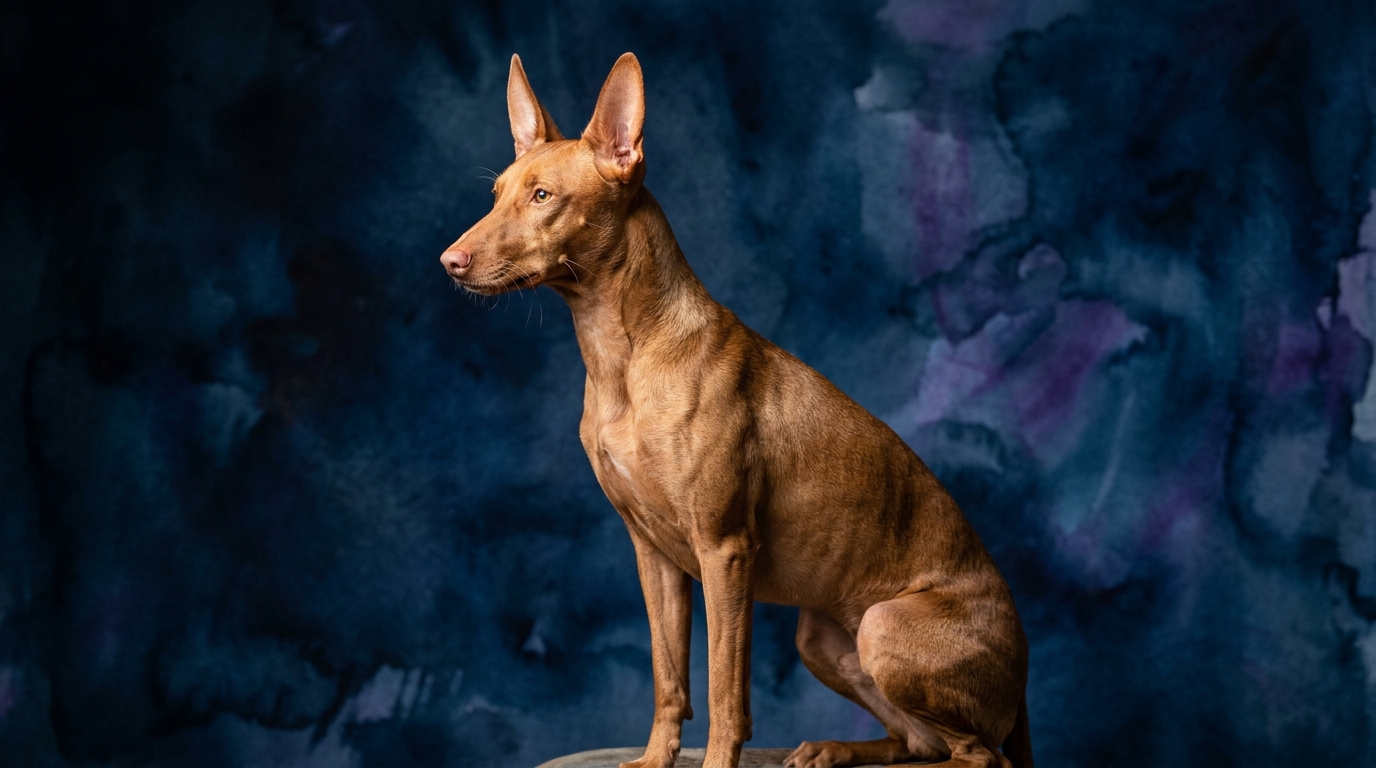
In contrast, the Pharaoh Hound, a breed not appearing on Coren's traditional ranking, presents a different cognitive landscape rooted in their ancient sighthound lineage. Their Problem Solving is rated 3/5; while capable, their approach is often self-directed and less inclined towards human-imposed puzzles. Training Speed is similarly 3/5, reflecting a more independent learning style that requires patience and understanding rather than eager compliance. Social Intelligence, also 3/5, points to a reserved nature that forms deep bonds with family but may be less effusive with strangers. Instinctive Drive is 3/5, primarily manifesting as a strong prey drive typical of sighthounds, necessitating careful management. Their Memory score of 3/5 indicates a functional recall of essential information but perhaps not the intricate retention seen in breeds specifically bred for complex, multi-stage tasks.
Where the English Cocker Spaniel Excels Cognitively
The English Cocker Spaniel's cognitive strengths distinctly lie in their cooperative problem-solving and memory capabilities. Their 4/5 Problem Solving score means they are adept at processing information presented by a handler, quickly learning to differentiate between objects, execute sequential tasks, or navigate agility courses with precision. This isn't just about following commands; it's about understanding the 'why' behind the task, making them excellent candidates for complex scent work or competitive obedience where nuanced interpretation is required. They demonstrate a remarkable ability to generalize learned behaviors to new situations, adapting established rules to novel challenges.
Furthermore, their perfect 5/5 Memory score gives them a significant advantage in retaining vast repertoires of commands, routines, and social cues. An English Cocker Spaniel will not only remember a specific trick taught months ago but also the precise sequence of steps in a complex routine or the location of a hidden toy from a previous game. This exceptional recall contributes directly to their Training Speed, allowing them to build upon prior knowledge rapidly and make training sessions highly productive and engaging. Their memory also extends to social interactions, allowing them to quickly learn which behaviors elicit positive responses from their human companions.
Unique Cognitive Strengths of the Pharaoh Hound
While the Pharaoh Hound's scores might appear lower in comparison, their cognitive profile reflects a different kind of operational intelligence, one honed for self-reliance and independent action. Their 3/5 Problem Solving, for instance, isn't a deficit but rather a preference for solving issues on their own terms, often through observation and strategic maneuvering in their environment. A Pharaoh Hound might not excel at a handler-directed puzzle box but will expertly track a scent trail or calculate the quickest route to catch a perceived prey, demonstrating a keen, instinct-driven intelligence that prioritizes survival and efficiency in open spaces. Their problem-solving is less about pleasing humans and more about navigating their world effectively.
The Pharaoh Hound's 3/5 Instinctive Drive is a profound aspect of their cognitive makeup, defining how they perceive and interact with their surroundings. This isn't just about a chase reflex; it's a sophisticated sensory processing system dedicated to spotting movement, assessing distance, and executing bursts of speed with remarkable precision. Their memory, while rated 3/5, is highly functional for their primary tasks, allowing them to remember hunting grounds, safe pathways, and the habits of local wildlife. This type of memory is less about recalling human commands and more about retaining environmental data crucial for their independent pursuits, making them resilient and capable self-starters in appropriate environments.
Training Dynamics: English Cocker Spaniel vs. Pharaoh Hound
Training an English Cocker Spaniel is generally a more straightforward and rewarding experience for novice and experienced owners alike, largely due to their 4/5 Training Speed and cooperative nature. These dogs are inherently motivated to engage with their handlers, often seeing training as a fun, bonding activity. They possess a strong desire to understand and execute commands, making them highly responsive to positive reinforcement methods. Behavioral nuances like their eagerness to retrieve or their focus on human cues mean they pick up new tricks and obedience commands with relative ease, often requiring fewer repetitions to solidify learning. Their excellent memory further ensures that once a command is learned, it is retained for the long term, making consistent, positive training highly effective.
Conversely, training a Pharaoh Hound demands a different approach, reflecting their 3/5 Training Speed and independent spirit. While certainly capable of learning, their motivation is less about pleasing the handler and more about what benefits them. They require patience, consistency, and a deep understanding of sighthound motivations. Pharaoh Hounds respond best to positive reinforcement that makes training feel like their idea or offers a high-value reward. They can be selectively deaf to commands if something more interesting (like a squirrel) captures their attention, a direct manifestation of their strong instinctive drive. Owners must be prepared for a dog that might 'think first' rather than 'obey first,' meaning training focuses more on building a strong relationship and managing their environment than on achieving precise, instant obedience in all situations.
Owner Suitability: Active Companionship vs. Independent Spirit
The English Cocker Spaniel is an ideal fit for active owners who seek a highly engaged, responsive companion for a variety of activities. Their higher Problem Solving and Training Speed make them excellent candidates for dog sports such as agility, obedience, rally, and scent work, where their focus and cooperative nature truly shine. Owners who enjoy consistent training sessions, daily walks, and interactive play will find the English Cocker Spaniel thrives on this shared mental and physical engagement. They are generally adaptable to different living situations as long as their need for companionship and activity is met, making them suitable for families who want a dog deeply integrated into their daily life.
The Pharaoh Hound, with its self-reliant cognitive style, appeals to owners who appreciate a dog with an independent streak and a more reserved demeanor. While they need regular exercise, including opportunities for safe, off-leash running to satisfy their sighthound instincts, they are not typically 'velcro' dogs that demand constant human interaction. They can be content to lounge quietly indoors after their exercise needs are met, making them suitable for owners who might have a more relaxed home life but can commit to providing specific outlets for their energy and chase drive. Owners should understand their unique problem-solving approach and be prepared to provide secure environments that cater to their instinct to pursue moving objects, rather than expecting a dog that will always prioritize human directives over their innate drives.
The Verdict
Choose an English Cocker Spaniel if you desire a biddable, highly trainable companion for dog sports and consistent interaction, valuing their exceptional memory and cooperative problem-solving. They thrive in environments offering frequent mental engagement and shared activities.
Opt for a Pharaoh Hound if you appreciate an independent, self-reliant dog with a unique, instinct-driven intelligence, provided you can accommodate their strong chase drive and patient training requirements. They suit owners who respect a dog's reserved nature and provide ample space for their specific exercise needs.
🧠 Find Your Pet's IQ Score
Our Pet IQ Lab assessment covers 25+ tests across 5 cognitive dimensions — personalized to your breed.
Take the Full IQ Test →Frequently Asked Questions
Is the English Cocker Spaniel good with children?
English Cocker Spaniels generally possess a gentle and affectionate nature, making them suitable companions for families with children. Their social intelligence, while rated 3/5, means they can form strong bonds, especially with their immediate family, and their biddable nature makes them responsive to training for appropriate interactions.
Do Pharaoh Hounds require a lot of exercise?
Yes, Pharaoh Hounds require a significant amount of exercise to satisfy their sighthound instincts and maintain their physical and mental well-being. This typically includes daily opportunities for safe, off-leash running in a securely fenced area where they can stretch their legs and indulge their natural chase drive.
What is the biggest training challenge with a Pharaoh Hound?
The primary training challenge with a Pharaoh Hound stems from their independent nature and strong prey drive, which can make them less inclined to respond instantly to commands when distracted. Patience, high-value rewards, and consistent, positive reinforcement are crucial to overcome their tendency to prioritize their instincts over human directives.