Side-by-Side Cognitive Profiles
The Cosmic Pet Pet IQ Lab's granular analysis reveals significant variations across five key cognitive dimensions for these two distinct breeds. Understanding these metrics provides a clearer picture of their inherent capabilities and inclinations.
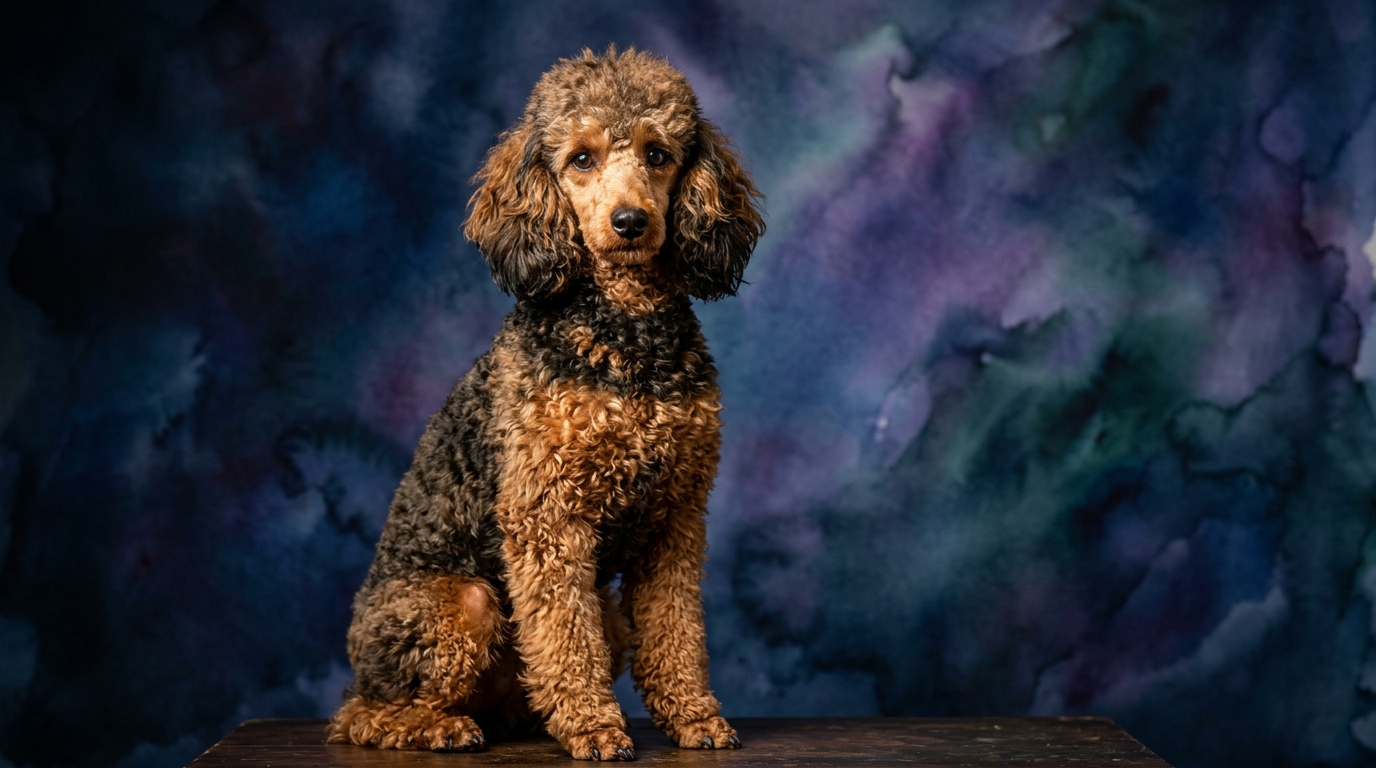
The **Standard Poodle** consistently demonstrates a high aptitude across most cognitive domains. Their Problem Solving is rated 5/5, indicating a strong capacity to analyze and navigate novel situations, from deciphering complex puzzle toys to adapting quickly in new environments. Training Speed, also at 5/5, highlights their rapid acquisition of new commands and behaviors, often requiring minimal repetitions. Social Intelligence, scoring 5/5, reflects a profound understanding of human cues, emotions, and social structures, enabling highly responsive and empathetic interactions. Their Instinctive Drive is a balanced 4/5, suggesting a moderate yet manageable inclination towards tasks like retrieving or water work, without being overwhelmingly focused on a single, self-directed instinct. Finally, Memory, at a perfect 5/5, ensures exceptional retention of learned skills, routines, and past experiences, contributing to consistent performance and reliability.
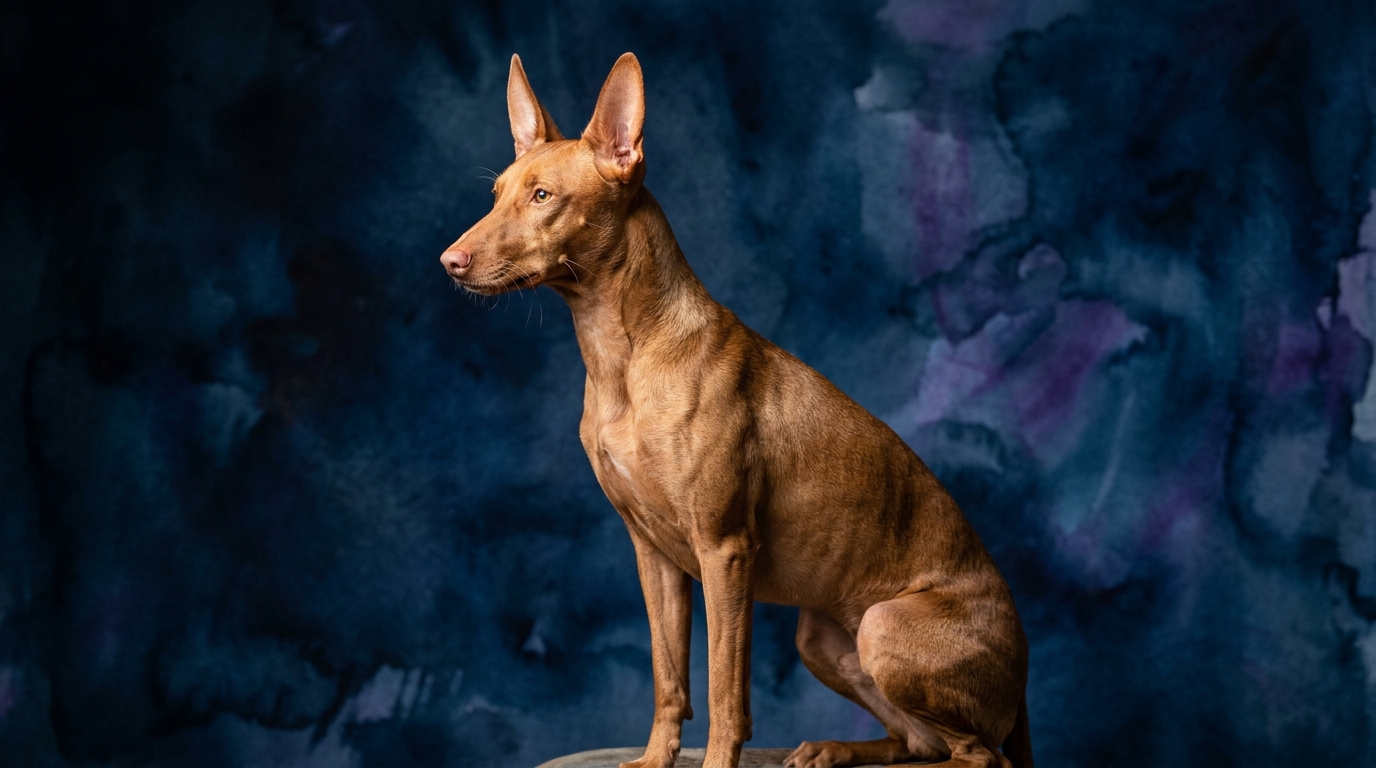
In contrast, the **Pharaoh Hound** exhibits a cognitive profile more aligned with its ancient sighthound heritage, showing scores of 3/5 across all evaluated dimensions. Their Problem Solving at 3/5 suggests ingenuity often directed towards independent pursuits, such as strategizing a chase or navigating outdoor terrain, rather than readily engaging with human-designed puzzles. Training Speed, also 3/5, indicates that while they are capable of learning, they may require more patience, repetition, and highly motivating rewards compared to breeds with a stronger drive to please. Social Intelligence at 3/5 points to an affectionate but often independent nature, where they may be less attuned to subtle human directives, preferring to operate on their own terms. Their Instinctive Drive, a 3/5, is powerfully focused on hunting by sight, a strong, self-sufficient drive that can override other considerations. Lastly, Memory, at 3/5, allows them to retain essential information and routines but perhaps without the intricate detail or long-term recall seen in breeds scoring higher, particularly concerning complex sequences of commands.
Where the Standard Poodle Excels Cognitively
The Standard Poodle's consistently high scores translate into specific cognitive strengths that make them remarkably versatile. Their 5/5 in Problem Solving means they don't just follow instructions; they actively figure things out, whether it's manipulating a complex treat dispenser or devising a workaround for a perceived obstacle during an agility run. This cognitive flexibility allows them to excel in diverse roles, from service work requiring adaptive decision-making to competitive obedience demanding intricate pattern recognition.
Their superior Training Speed (5/5) and Memory (5/5) combine to create a dog that not only learns new commands in remarkably few repetitions but also retains that knowledge for extended periods, making them exceptionally reliable in performance. A Poodle can master a multi-step routine and execute it flawlessly weeks later. Furthermore, their 5/5 Social Intelligence allows them to deeply connect with their human companions, anticipating needs, responding to subtle body language, and adapting their behavior to different social contexts, fostering a profound partnership built on mutual understanding.
Where the Pharaoh Hound's Cognitive Strengths Lie
While the Pharaoh Hound's scores are numerically lower in human-centric metrics, their cognitive strengths are powerfully aligned with their historical purpose. Their 3/5 in Problem Solving manifests as a self-reliant ingenuity crucial for a sighthound; this isn't about solving a human's puzzle, but rather about independently outmaneuvering prey or navigating challenging terrain during a chase. They possess a keen observational intelligence for their environment, crucial for spotting movement from a distance.
The Pharaoh Hound's Instinctive Drive, also 3/5, is a specific, potent force for the hunt, rather than a general drive to please or cooperate on command. This strong, self-directed motivation for pursuit is a hallmark of their breed, enabling them to operate with singular focus when engaged in a chase. Their memory, while rated 3/5, is entirely adequate for remembering key aspects of their hunting grounds, familiar routes, or the location of a comfortable sunspot, proving efficient for their ancestral needs without requiring the extensive recall of complex, multi-step human commands.
Training Dynamics: Poodle vs. Pharaoh Hound
When it comes to trainability, the differences between these two breeds become particularly pronounced, stemming directly from their cognitive profiles. The Standard Poodle, with its 5/5 Training Speed, Problem Solving, and Social Intelligence, is generally a dream to train. They rapidly grasp new concepts, actively engage with their trainer, and remember commands with remarkable consistency. Their eagerness to understand and cooperate means they often seek guidance and reinforcement, making positive reinforcement methods highly effective and rewarding for both dog and owner. They are adept at learning complex sequences of commands and performing intricate tasks, from advanced obedience to competitive dog sports.
The Pharaoh Hound, conversely, presents a more nuanced training experience due to its 3/5 scores across the board and strong independent nature. Training a Pharaoh Hound requires immense patience, consistency, and a deep understanding of their sighthound instincts. They are not 'stubborn,' but their priorities often lie with environmental stimuli, particularly anything that moves, over a human command. Their problem-solving might lead them to find ways around a command if it conflicts with their drive, rather than solving it as requested. Recall, for example, can be a significant challenge when their instinctive drive to chase is activated. Training success hinges on making the desired behavior more rewarding than the independent pursuit, often leveraging their love for running and chase games as motivators rather than relying solely on a 'drive to please' that is less prominent in their cognitive makeup.
Matching Breeds to Lifestyles: Active vs. Relaxed Owners
Both the Standard Poodle and the Pharaoh Hound can thrive with active owners, but their activity needs differ in nature. An active owner for a Standard Poodle will enjoy engaging them in structured activities like agility, rally obedience, competitive diving, or long hikes. Their high mental capacity means they require consistent intellectual stimulation alongside physical exercise; a bored Poodle may develop undesirable behaviors. They are excellent partners for owners who enjoy teaching new tricks or participating in canine sports that demand both physical and mental effort.
For the Pharaoh Hound, an active owner means someone who can provide ample opportunities for vigorous, off-leash running in secure areas, or participation in sighthound-specific activities like lure coursing. Their bursts of speed and endurance are built for the chase, and denying this outlet can lead to frustration. While they might not be as eager for structured obedience work, they will gratefully accept long, energetic sprints. A 'relaxed' owner for a Pharaoh Hound must still commit to providing these crucial physical outlets, as an underexercised Pharaoh Hound will not be a relaxed house companion. For the Standard Poodle, a 'relaxed' owner must still provide consistent mental engagement through training, puzzle toys, and interactive play, as their cognitive needs are paramount for their well-being, even if physical activity is less intense.
The Verdict
Choose the Standard Poodle if you seek a highly cooperative, intellectually versatile companion eager to learn, excel in various activities, and form a deeply responsive partnership.
Opt for the Pharaoh Hound if you appreciate an independent, elegant, and athletic sighthound with a strong ancestral drive, capable of bursts of speed, and are prepared to meet their specific exercise and training needs with patience and understanding.
🧠 Find Your Pet's IQ Score
Our Pet IQ Lab assessment covers 25+ tests across 5 cognitive dimensions — personalized to your breed.
Take the Full IQ Test →Frequently Asked Questions
Are Pharaoh Hounds difficult to train?
Pharaoh Hounds are not inherently difficult, but their training requires significant patience and an understanding of their independent sighthound nature. Their 3/5 training speed means they learn at a slower pace than breeds with a strong 'drive to please,' and their powerful instinctive drive can make them less inclined to obey if a more compelling environmental stimulus is present.
Do Standard Poodles need a lot of mental stimulation?
Yes, Standard Poodles absolutely require substantial mental stimulation due to their 5/5 problem-solving, social intelligence, and memory. Without consistent engagement through training, puzzle toys, and varied activities, their sharp minds can lead to boredom, manifesting in undesirable behaviors like destructive chewing or excessive barking. They thrive on learning and interaction.
Which breed is better for a first-time dog owner?
For a first-time dog owner, the Standard Poodle is generally a more suitable choice due to their high trainability (5/5 training speed) and social intelligence (5/5), making them more forgiving and easier to guide. The Pharaoh Hound's independent nature and strong instinctive drives (3/5 in most cognitive areas) require a more experienced hand and a deeper understanding of sighthound specific needs.