
Side-by-Side Cognitive Profile
**English Cocker Spaniel (Sporting Group, Coren Rank #18)**
**Problem Solving (4/5):** This breed demonstrates a good capacity for figuring out novel situations and adapting to new challenges, often employing learned behaviors or observing subtle environmental cues to achieve goals. Their working heritage means they are accustomed to tasks requiring sequential steps and adaptable thinking in varied environments, adept at navigating obstacles or retrieving objects from complex settings.
**Training Speed (4/5):** English Cocker Spaniels absorb new commands and routines with impressive efficiency, often picking up complex sequences relatively quickly. Their responsiveness is a hallmark of their collaborative nature, making them generally eager participants in structured learning sessions and keen to understand what is being asked of them, allowing for rapid progression through training levels.
**Social Intelligence (3/5):** They exhibit a moderate understanding of human and canine social cues, capable of forming strong bonds and interpreting emotional states within their immediate family unit. While generally amiable, their focus is often task-oriented or centered on their primary human companion, rather than solely on intricate social navigation with a wide range of individuals or other animals.
**Instinctive Drive (3/5):** Rooted in their hunting background, English Cocker Spaniels possess a moderate drive to follow scents, flush game, and retrieve, which manifests as curiosity, a desire for engagement, and a keen interest in their surroundings. This drive is manageable and can be channeled effectively into structured play, scent games, or retrieving activities, providing an outlet for their natural inclinations.
**Memory (5/5):** A truly standout cognitive trait, their memory is exceptionally robust, allowing them to retain vast amounts of information, from complex command sequences and intricate routes to the precise locations of hidden objects or past experiences. This strong, enduring recall is invaluable for their working roles and daily life, ensuring long-term retention of learned behaviors.
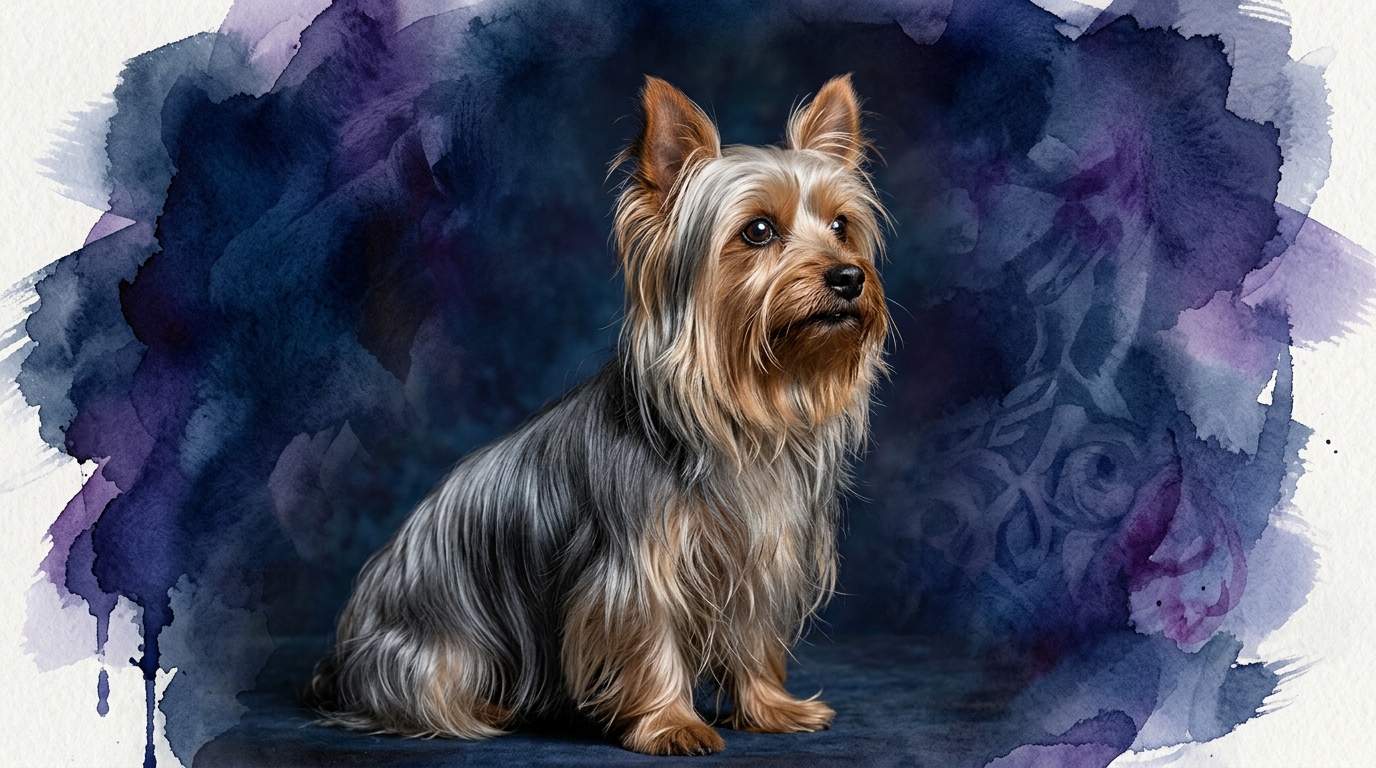
**Silky Terrier (Toy Group, Not Coren-Ranked)**
**Problem Solving (3/5):** Silky Terriers show a fair ability to solve problems, often utilizing their natural curiosity, persistence, and sometimes a clever streak to overcome minor obstacles or figure out how to access desired items. Their approach is often more trial-and-error, combined with an investigative spirit, rather than strategic planning or complex reasoning, making them resourceful in their own way.
**Training Speed (3/5):** These terriers learn at a moderate pace, capable of mastering basic commands and routines with consistent positive reinforcement and engaging methods. While they can be enthusiastic participants, their independent streak and occasional stubbornness sometimes means they require more repetition, varied motivation, and patience to solidify new behaviors and maintain focus during sessions.
**Social Intelligence (3/5):** Silky Terriers possess a moderate understanding of social dynamics, forming incredibly close and discerning attachments with their primary caregivers and recognizing familiar faces quickly. They can be quite selective with strangers, often relying on their human's reactions to gauge new social situations and determine their own comfort level, showing a protective loyalty.
**Instinctive Drive (3/5):** Reflecting their terrier heritage, they have a moderate drive for chasing small prey, digging, and exploring their environment, which translates into a lively, inquisitive, and sometimes feisty nature. This drive can be effectively directed towards engaging games, puzzle toys, and activities that satisfy their natural instincts for pursuit and investigation, preventing boredom.
**Memory (3/5):** Their memory is competent for retaining learned commands, routines, and important household rules, though perhaps not with the same depth or expansive breadth as breeds specifically bred for complex retrieval tasks or extensive working roles. They will remember their training and significant experiences but might require occasional refreshers for less frequently used cues or complex sequences.
Where the English Cocker Spaniel Wins Cognitively
The English Cocker Spaniel demonstrates clear cognitive advantages, particularly in areas demanding sustained focus, complex task execution, and superior recall. Their problem-solving capacity, rated 4/5, allows them to navigate intricate tasks and adapt to changing scenarios with greater fluidity and understanding than the Silky Terrier. This is vividly evident in their ability to learn intricate hunting patterns, navigate complex agility courses, or perform sequential obedience routines, where they must process multiple cues and execute a precise series of actions. Furthermore, their exceptional memory (5/5) means they can retain a vast repertoire of commands, environmental details, and past experiences for extended periods, making advanced training highly efficient and long-lasting. This superior recall is a cornerstone of their working capabilities, enabling them to remember precise locations of fallen game or complex instructions over extended periods, a dimension where the Silky Terrier's 3/5 memory rating suggests a less expansive and less enduring capacity for information retention.
Where the Silky Terrier Excels Cognitively
While not outscoring the English Cocker Spaniel in raw cognitive metrics across the board, the Silky Terrier exhibits a unique cognitive profile that allows them to excel in different, more intimate contexts. Their 3/5 social intelligence, combined with their compact size and keen observational skills, often translates into a particularly nuanced and intuitive understanding of their immediate human companions. They are adept at reading subtle shifts in owner mood, routine, or even unspoken desires, often adjusting their behavior to elicit attention, comfort, or play. This capacity for intimate social interaction, while rated similarly numerically, manifests differently; the Silky Terrier uses it for close, personal companionship, whereas the Cocker often applies it to collaborative tasks. Moreover, their inherent terrier tenacity, a key component of their 3/5 instinctive drive, gives them a persistent, investigative, and often clever approach to their immediate environment, allowing them to thoroughly explore and master their surroundings, a trait that can be highly beneficial for navigating household complexities or cleverly discovering hidden treats and toys.
Which is Easier to Train and Why
Based on The Cosmic Pet Pet IQ Lab data, the English Cocker Spaniel presents as the more straightforward breed to train, especially for formal obedience and complex tasks. Their training speed is rated 4/5, indicating a quicker grasp of new commands and a stronger intrinsic desire to collaborate with their handler. This efficiency stems from centuries of selective breeding for tasks requiring responsiveness to human direction and a drive to please. English Cockers often show a natural inclination to engage eagerly with their handler during learning sessions, readily picking up cues and demonstrating consistent performance once a behavior is established. Their superior memory (5/5) further cements learned behaviors, significantly reducing the need for constant repetition and enabling them to build upon prior knowledge. In contrast, the Silky Terrier's training speed is 3/5, suggesting they might require more patience, varied motivation, and creative approaches. While undoubtedly capable learners, their terrier independence and occasional selective hearing mean they can be more discerning about when and how they engage, sometimes requiring a higher reward value or more frequent positive reinforcement to maintain focus and enthusiasm. Their moderate memory (3/5) also means that less frequently practiced commands might fade more quickly without consistent reinforcement and refresher sessions.
Suitability for Active vs. Relaxed Owners
The English Cocker Spaniel, with its sporting background and moderate instinctive drive (3/5), generally suits more active owners who can provide consistent engagement. While not requiring extreme athleticism, they thrive on regular, engaging activities that stimulate both their body and their keen mind. Daily walks, interactive play sessions, and opportunities for scent work, retrieval games, or exploring new environments are crucial to their overall well-being. Owners who enjoy outdoor pursuits, even moderate ones like hiking, long park visits, or participating in dog sports, will find a willing, enthusiastic, and capable companion in the English Cocker. Their cognitive profile, especially their problem-solving and memory, makes them excellent candidates for advanced obedience, agility, or field trials, which satisfy their deep need for mental engagement and purpose. Conversely, the Silky Terrier, while possessing a moderate instinctive drive (3/5) for exploration and chase, is often better suited for relaxed owners who still provide consistent, albeit less strenuous, mental and physical engagement. Their smaller size means their exercise needs can often be met with shorter, brisk walks around the neighborhood, indoor play sessions, and puzzle toys, making them highly adaptable to apartment living. While they certainly enjoy activity and investigation, their preference often leans towards being close to their human companions, making them content with cuddles and interactive games within the home. Owners who prefer a more laid-back lifestyle but are committed to daily mental enrichment through puzzles, short training sessions, and plenty of quality interaction will find the Silky Terrier a delightful and spirited fit.
The Verdict
Choose an English Cocker Spaniel if you are an owner who values a highly trainable companion for engaging in structured activities, field work, or dog sports, and who can provide consistent mental and physical stimulation.
Choose a Silky Terrier if you seek a spirited, affectionate companion for a more relaxed home environment, but are prepared to engage their independent spirit with consistent, positive reinforcement training and interactive play.
🧠 Find Your Pet's IQ Score
Our Pet IQ Lab assessment covers 25+ tests across 5 cognitive dimensions — personalized to your breed.
Take the Full IQ Test →Frequently Asked Questions
How does the Coren rank influence the comparison?
The English Cocker Spaniel's Coren rank of #18 indicates a breed with a strong capacity for obedience and working intelligence, reflecting their ability to consistently learn and execute commands, a distinction not available for the Silky Terrier.
Are Silky Terriers difficult to train due to their independence?
Silky Terriers are capable learners, but their terrier independence means training requires consistency, positive reinforcement, and patience, as they might take longer to internalize commands compared to breeds with higher training speed ratings.
Which breed is better for a first-time dog owner?
For first-time dog owners, the English Cocker Spaniel's higher training speed and strong desire to please might make the initial training process feel more rewarding, assuming the owner can meet their activity needs and provide appropriate outlets for their energy.