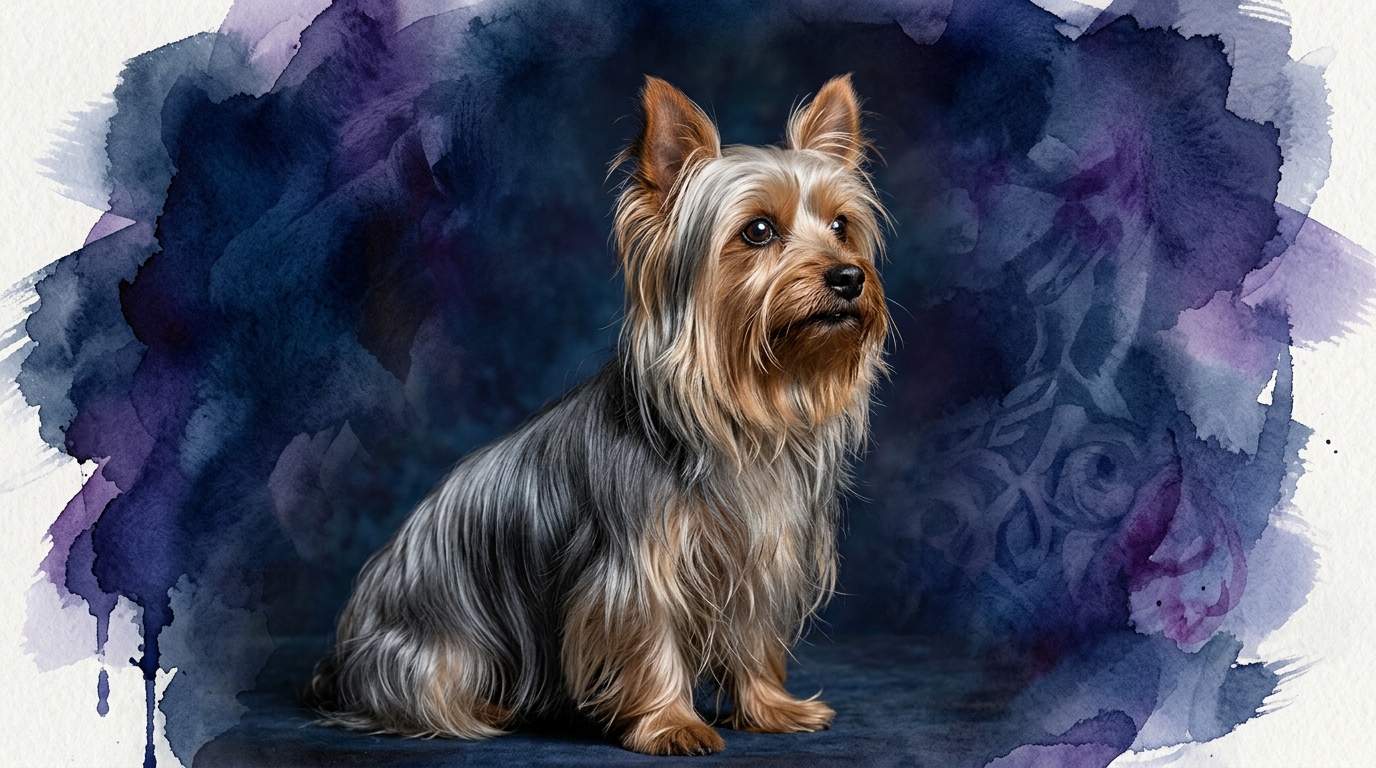
Silky Terrier at a glance
| IQ Rank / Score | 13/25 |
|---|---|
| Trainability | ★★★☆☆ (3/5) |
| Social Intelligence | ★★★★☆ (4/5) |
| Lifespan | 12-16 years |
| Shedding | Low to moderate |
| Exercise Needs | Moderate (30-45 min/day) |
| Origin | Australia |
Understanding the Silky Terrier Mind: Our Primary Angle
The Silky Terrier's intelligence is uniquely characterized by what we term 'Adaptive Domesticated Tenacity.' While categorized in the Toy Group, these dogs are far from fragile lap warmers; they embody a clever ability to channel their inherent terrier drive and alertness into a highly adaptable companion role. This cognitive blend allows them to be both tenacious problem-solvers and deeply integrated family members.
Their astuteness is evident in their observational capacity, quickly discerning household routines, family dynamics, and even individual moods. A Silky Terrier doesn't just react to their environment; they actively assess and navigate it, finding clever ways to engage with their human companions. This makes them remarkably capable of understanding complex social cues within a human household, often anticipating needs or desires.
This unique intelligence means a Silky is not merely a pet, but an active, often persuasive, participant in daily life. Their resourcefulness serves both their ingrained terrier instincts — like a subtle alert bark at a distant sound — and their strong companion role, such as 'nudging' for playtime. It's a nuanced form of intelligence that combines independent thought with a profound desire for interaction, leading to behaviors that are both clever and endearing.
Silky Terrier IQ Scores Explained
**Problem-Solving (3/5):** Silky Terriers are intelligent, but their problem-solving often manifests through persistence and clever tactics rather than complex strategic planning. They will vocalize, manipulate objects with their paws and muzzle, or persistently try different approaches to achieve a goal, like opening a cabinet or getting a dropped toy from under furniture. They learn through trial and error, quickly remembering what works.
**Training Speed (3/5):** These dogs are quick learners when motivated, often picking up new commands and tricks rapidly. However, their independent terrier spirit means they may not always be eager to comply, requiring consistent positive reinforcement and engaging training methods. They thrive when training feels like a fun game, but can become 'selectively deaf' if bored or uninterested in the task at hand.
**Social Intelligence (4/5):** Highly attuned to human emotions and social structures, Silky Terriers excel in social intelligence. They form strong bonds with their families, often displaying a charming, almost empathetic understanding of their owner's mood. They are adept at reading body language and vocal tones, using this insight to navigate interactions, seek attention, or even subtly 'convince' their humans to grant a desire.
**Instinctive Drive (4/5):** Despite their Toy Group classification, Silkies retain a significant portion of their terrier heritage. This manifests as a strong prey drive, a keen sense of alertness, and a natural inclination to be vocal watchdogs. They love to chase small animals (or toys simulating them), dig with enthusiasm, and will readily alert their household to any perceived anomaly, showcasing their innate protective instincts.
**Memory (4/5):** Silky Terriers possess excellent memory, quickly recalling routines, learned commands, and both positive and negative experiences. They remember specific people, places, and the outcomes of past actions. This strong memory contributes to their quick learning ability and helps them anticipate daily events, making them highly predictable in their reactions to familiar situations.
Historical Echoes: Intelligence Shaped by Origin
Originating in Australia in the late 19th century, the Silky Terrier was specifically developed by crossing the Australian Terrier and the Yorkshire Terrier. The intent was to create a companion dog that, despite its elegant appearance, retained the robust mental and physical vigor characteristic of terriers, distinguishing it from purely ornamental breeds. This deliberate selective breeding is key to understanding their unique cognitive makeup.
Our surprising fact: Despite being classified as a 'Toy' breed, the Silky Terrier was specifically developed in Australia not merely as a lapdog, but as an alert, vivacious companion capable of holding its own, often displaying the robust cognitive agility typically associated with larger, more 'working' terrier breeds. Their intelligence profile reflects a deliberate, successful selection for both close human bonding and distinct mental sharpness.
This historical context explains why Silky Terriers possess such a striking combination of affectionate companionship and sharp, independent intelligence. They were bred to be intelligent enough to thrive in a domestic setting, adapt to family life, and still offer the spirited engagement and protective alertness of their terrier ancestors. This dual-purpose breeding cemented their 'Adaptive Domesticated Tenacity' as a core cognitive trait.
The Silky Terrier Learner: Adaptability Meets Tenacity
Silky Terriers are highly adaptable learners, thriving on consistency and positive reinforcement. They quickly grasp new concepts when presented in an engaging manner, often responding best to short, fun training sessions that keep their active minds stimulated. Their ability to generalize commands across different environments is notable, demonstrating a comprehensive understanding rather than rote memorization.
Their tenacity in problem-solving means they won't easily give up on a challenge. If one approach doesn't work, a Silky will often try another, demonstrating a persistence that belies their small stature. This mental resilience is a hallmark of their terrier lineage, adapted for domestic application, whether it's figuring out a complex puzzle toy or convincing their owner to extend playtime.
The breed's intelligence also allows them to ingeniously adapt innate terrier behaviors. For instance, their natural prey drive, instead of manifesting solely in hunting, can be channeled into enthusiastic games of fetch or interaction with 'prey-like' squeaky toys. They learn to associate specific cues with these activities, making them highly engaged and responsive playmates.
Social Savvy: Navigating the Human World
A Silky Terrier’s high social intelligence makes them exceptionally adept at integrating into human families. They quickly learn who is who, who the primary caregiver is, and how each family member behaves. This deep understanding of social hierarchy and individual personalities allows them to tailor their interactions for maximum effectiveness, whether it’s showering affection or seeking specific attention.
They utilize their social intelligence to their advantage, often displaying charming, sometimes manipulative, behaviors to get what they want. A well-timed 'puppy-dog' gaze, a gentle nudge, or a soft whine can be employed with remarkable precision, demonstrating their understanding of how to influence their human companions. This isn't naughtiness; it's a testament to their sharp social perception.
Furthermore, their role as observant watchdogs is rooted in their social intelligence. They are quick to discern familiar faces from strangers and can differentiate between harmless sounds and potential threats. Their alerts are often intelligent, escalating or calming based on their assessment of the situation, providing a valuable layer of security while showcasing their discerning judgment.
Enhancing Silky Terrier Intelligence
To keep a Silky Terrier mentally sharp, owners should provide a variety of intellectual challenges. Puzzle toys that require manipulation to dispense treats are excellent, as are interactive games that demand problem-solving, such as 'hide and seek' with toys or treats. Learning new tricks regularly keeps their minds agile and prevents boredom, which can lead to unwanted behaviors.
Consistent training, extended beyond basic obedience, is crucial for fostering their cognitive abilities. Engaging them in advanced obedience, agility, or even trick training helps to reinforce their learning capacity and keeps their 'training speed' finely tuned. Varying the training environment also encourages adaptability and strengthens their ability to generalize commands.
Early and ongoing socialization is vital for their social intelligence and overall cognitive development. Exposing a Silky to diverse people, places, sounds, and other friendly animals in a positive manner helps them develop confidence, refine their observational skills, and enhance their ability to navigate complex social situations gracefully. A well-socialized Silky is a more well-rounded and mentally resilient companion.
Understanding Silky Terrier 'Stubbornness'
The perception of 'stubbornness' in Silky Terriers is a common myth, yet it often misunderstands their unique intelligence. What might seem like stubbornness is, in fact, an expression of their independent thought and discerning nature. They aren't 'defiant' because they don't understand; they are often evaluating whether complying serves their best interest or if there's a more appealing alternative.
This independent streak is a direct manifestation of their 'Adaptive Domesticated Tenacity.' They possess the cognitive capacity to make choices and, if not sufficiently motivated, may choose not to comply. It requires a different training approach—one that focuses on building trust, establishing clear communication, and consistently making desired behaviors highly rewarding and irresistible.
When a Silky Terrier appears 'stubborn,' it's an invitation for the owner to rethink their approach. Instead of force, focus on fun, positive reinforcement, and understanding their individual motivations. Harnessing their intelligence means engaging their mind and making them active participants in the learning process, transforming perceived stubbornness into willing cooperation and enthusiasm.
Training for Success: Tapping into Their IQ
Given their intelligence and independent spirit, training a Silky Terrier requires patience, consistency, and a sense of humor. Short, frequent training sessions (5-10 minutes) are most effective, leveraging their quick 'training speed' and preventing boredom. Positive reinforcement, such as high-value treats, praise, and favorite toys, is paramount, as they respond exceptionally well to rewards.
Addressing specific challenges requires tailored strategies. For house-training, meticulous consistency is key due to their small size and sometimes short attention spans; frequent potty breaks and lavish praise for success work wonders. For leash manners, early training and consistent reinforcement are crucial to manage their 'instinctive drive' and curiosity for chasing small creatures, ensuring safe and enjoyable walks.
Clicker training can be highly effective with Silkies, as it precisely marks desired behaviors and helps them understand what they're being rewarded for. Their excellent 'memory' means they will quickly associate the click with positive outcomes. Remember, training is an ongoing conversation with a Silky, fostering their intelligence and strengthening the bond through continuous engagement and mutual understanding.
3 At-Home Tests to Measure Your Silky Terrier's IQ
These tests are adapted from peer-reviewed ethology research. No equipment is needed beyond items you have at home. Run each test 5–10 times for reliable results.
The Myth: "Silky Terriers are merely decorative lapdogs with limited mental capacity or are too stubborn to be truly intelligent."
✅ Silky Terriers possess a keen, adaptable intelligence, combining terrier tenacity with profound social awareness and excellent memory. Their perceived 'stubbornness' is often an expression of independent thought and discerning choice, not a lack of cognitive ability, making them far more mentally capable and engaging than often credited.
Silky Terrier vs. Similar Breeds
🧠 What's Your Dog's IQ Score?
Our full Pet IQ Lab assessment includes 12+ tests across 5 cognitive dimensions, calibrated for Silky Terriers specifically.
Take the Full IQ Test →Frequently Asked Questions
How smart is a Silky Terrier?
Our Pet IQ Lab framework scores cognition across five dimensions (max 25). The Silky Terrier totals 13/25 — above-average for a domestic dog. The full article breaks down each dimension with at-home tests.
Are Silky Terriers easy to train?
Silky Terriers can learn most cues, but expect to repeat lessons and keep sessions short. They score 3/5 on Training Speed in our breed profile.
Are Silky Terriers good with children and other pets?
Yes — their Social Intelligence rates 4/5 in our Pet IQ Lab framework. With early socialization and supervised play, most Silky Terriers integrate well into families with respectful children and other pets.
Do Silky Terriers need a lot of mental stimulation?
Silky Terriers benefit from 10-15 minutes of focused enrichment a day: food puzzles, short training drills, or novel toys rotated weekly.
How much exercise does a Silky Terrier need?
Silky Terriers do well with 20-40 minutes of daily walks and play plus a few short training moments.
How good is a Silky Terrier's memory?
Silky Terriers score 3/5 on memory. They remember high-value associations well; less-used cues fade without refresher sessions.
What is the typical lifespan of a Silky Terrier?
Silky Terriers commonly live 12-16 years when kept at a healthy weight.
The Silky Terrier stands as a testament to the complex and multifaceted nature of canine intelligence, proving that true cognitive brilliance isn't confined by size or group classification. Their adaptive tenacity, keen social awareness, and spirited independence make them not just charming companions, but deeply intelligent, active participants in the human world.