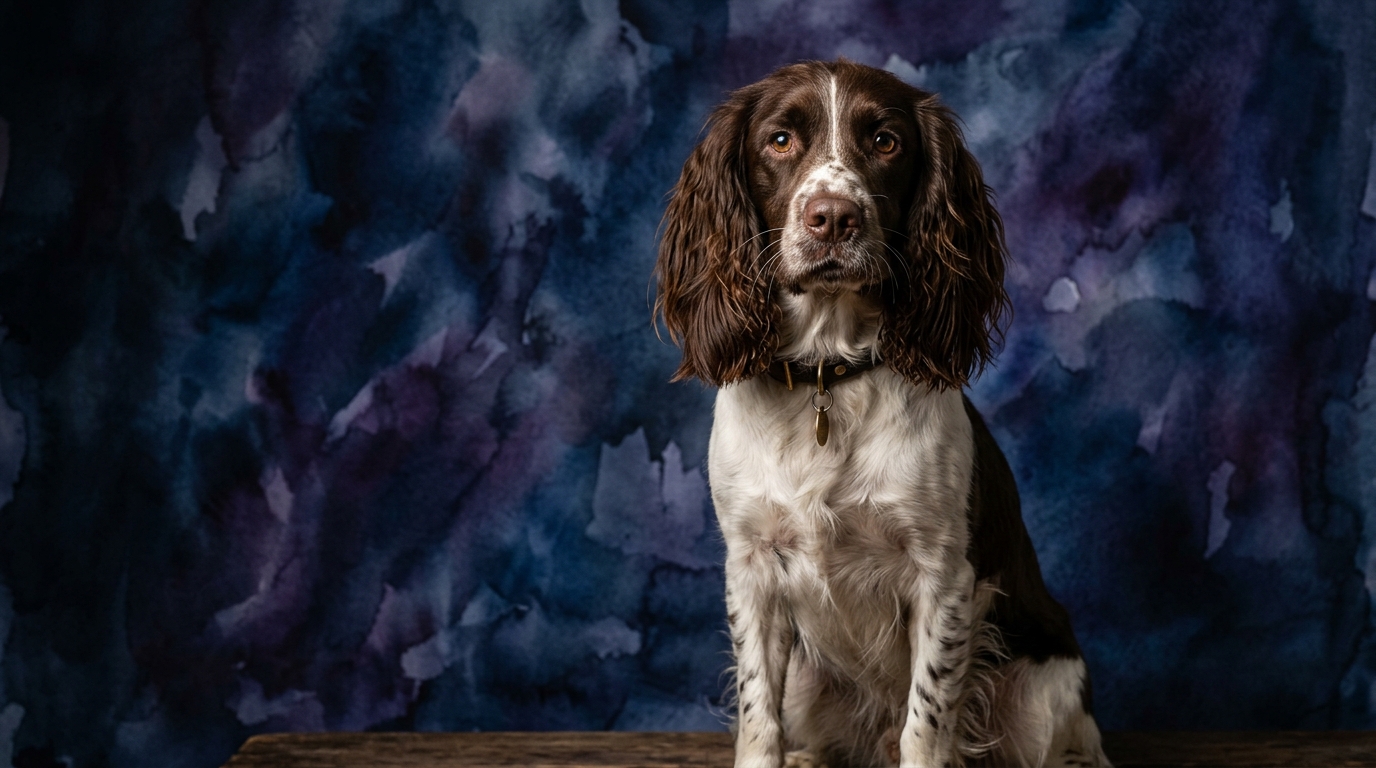
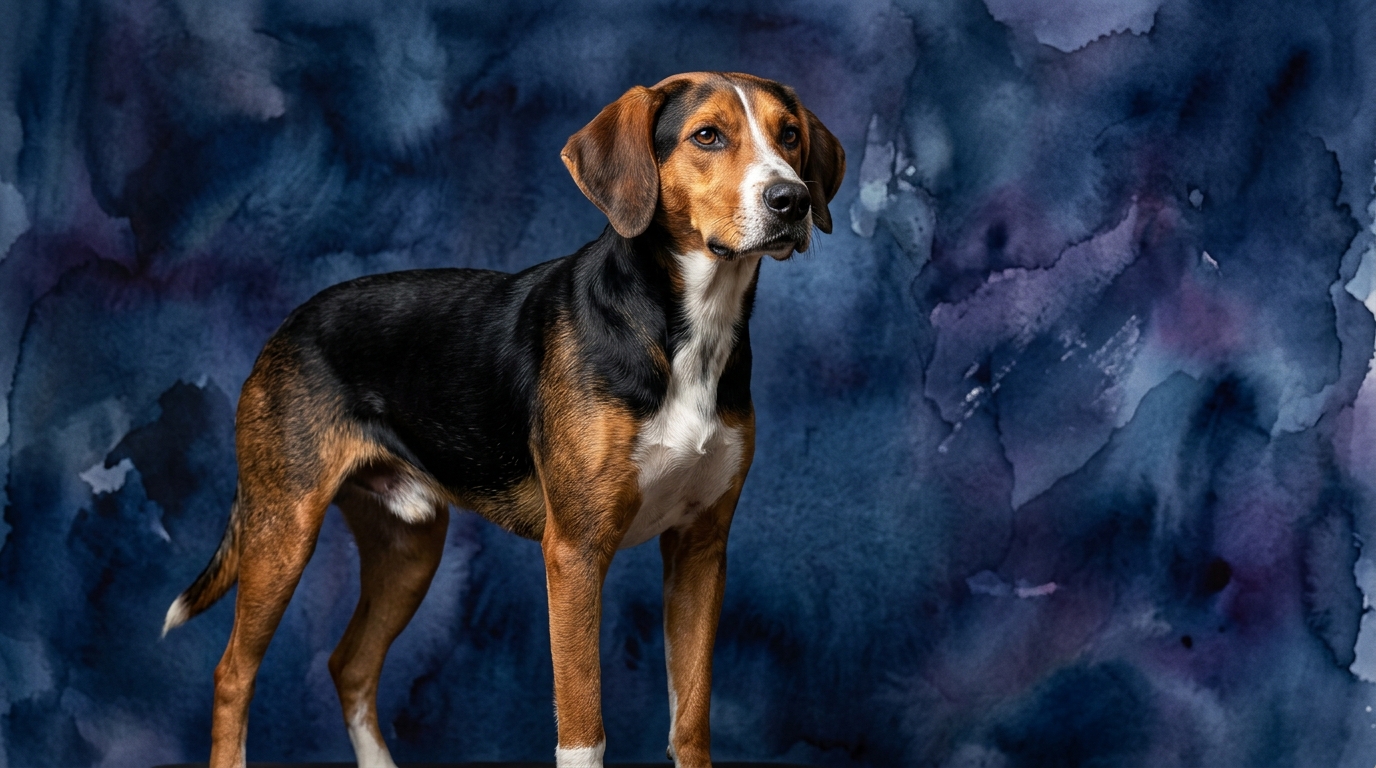
Side-by-Side IQ Profile: English Springer Spaniel vs. American Foxhound
The Cosmic Pet Pet IQ Lab employs a multi-dimensional approach to assess canine cognition, moving beyond a single 'smartness' score. For the English Springer Spaniel, a Sporting Group dog, we observe a robust cognitive profile often associated with cooperative working breeds, reflected in its Coren rank of #13.
**English Springer Spaniel IQ Breakdown:** Their Problem Solving rates at 4/5, indicating an ability to adapt strategies and navigate complex tasks efficiently. Training Speed is a standout at 5/5, showcasing rapid learning and an eagerness to absorb new commands. Social Intelligence scores 4/5, reflecting their strong attunement to human cues and cooperative nature. Instinctive Drive is high at 5/5, channeling their natural aptitudes for flushing and retrieving into goal-oriented behavior. Finally, Memory is solid at 4/5, supporting their capacity to recall sequences and learned behaviors.
In contrast, the American Foxhound, a member of the Hound Group, presents a cognitive profile optimized for independent, scent-driven work, which doesn't typically align with traditional obedience metrics, hence its absence from the Coren rankings.
**American Foxhound IQ Breakdown:** Their Problem Solving is rated 3/5, suggesting a reliance on persistent, instinct-driven methods rather than novel, flexible solutions. Training Speed also sits at 3/5, indicating a slower uptake of commands, often due to their independent focus. Social Intelligence is 3/5, meaning while they bond with their families, they are less inclined to constantly seek human direction. Instinctive Drive, at 3/5, is powerfully directed towards scent and pursuit, making them less generally driven for human-assigned tasks. Memory is 3/5, sufficient for tracking and routines, but perhaps less for abstract concepts or complex obedience sequences.
Where the English Springer Spaniel Wins Cognitively
The English Springer Spaniel’s cognitive strengths are deeply rooted in its heritage as a gundog, requiring close collaboration with human handlers. Their 4/5 Problem Solving ability shines in dynamic environments where they need to quickly assess situations, like locating downed game in varied terrain or navigating an agility course. They don't just follow; they adapt and make tactical decisions within a human-directed framework.
Their exceptional 5/5 Training Speed is a clear cognitive advantage, allowing them to form strong associations between commands and actions with remarkable efficiency. This rapid learning curve means they can master a wide repertoire of behaviors, from intricate field commands to complex tricks, faster than many other breeds. This quick uptake is coupled with their 4/5 Social Intelligence, enabling them to keenly read human body language and vocal inflections, fostering a highly responsive partnership.
Furthermore, the Springer Spaniel's 5/5 Instinctive Drive is channeled into cooperative tasks. This isn't just a general energy level; it's a profound motivation to work alongside their person, to complete tasks, and to engage in purposeful activity. Their 4/5 Memory supports this by allowing them to retain multi-step commands and recall specific locations or objects with precision, making them highly reliable working companions. This combination of traits makes them exceptionally trainable and adaptable to a variety of human-led activities, from competitive obedience to search and rescue.
Where the American Foxhound Wins Cognitively
While the American Foxhound's cognitive profile might appear less 'trainable' by conventional standards, its strengths are profound and highly specialized. The Foxhound's primary cognitive victory lies in its unparalleled olfactory processing and the tenacious application of this sense. Their 3/5 Problem Solving, though lower than the Springer, is intensely focused on deciphering scent trails, a complex analytical task requiring discrimination, pattern recognition, and the ability to ignore distracting environmental odors.
The Foxhound exhibits a unique form of independent decision-making that is a hallmark of its specialized intelligence. Unlike the cooperative Springer, the Foxhound is bred to follow a scent trail for miles, often out of sight and earshot of its handler, making autonomous choices about direction, obstacles, and the integrity of the trail. This requires immense cognitive autonomy and a self-directed motivation that doesn't rely on constant human validation.
Their 3/5 Instinctive Drive is not about pleasing a human, but about fulfilling their deep-seated urge to pursue a scent. This drive translates into incredible persistence and mental stamina, allowing them to maintain focus on their task for hours. This specialized cognitive endurance, combined with a memory (3/5) perfectly suited for recalling complex scent patterns and established hunting grounds, means the Foxhound excels in its niche. Their social intelligence, while rated 3/5, is more oriented towards pack dynamics and independent action rather than overt human-canine collaboration, allowing them to thrive in their self-appointed role.
Which is Easier to Train and Why
Based on their cognitive profiles, the English Springer Spaniel is unequivocally easier to train for most human-directed tasks. Their 5/5 Training Speed means they grasp commands rapidly, often requiring fewer repetitions to solidify a behavior. This is compounded by their 4/5 Social Intelligence, which makes them highly attuned to human desires and eager to please, translating into a strong motivation for cooperative learning. Springers thrive on positive reinforcement and structured training sessions, forming a responsive partnership with their handler.
The American Foxhound, with its 3/5 Training Speed and 3/5 Social Intelligence, presents a greater training challenge. Their powerful, self-directed 3/5 Instinctive Drive for scent work often overrides their interest in human commands, especially when a compelling scent is present. Their independence means they are less inherently motivated by human approval and more by their own sensory world. Training a Foxhound requires immense patience, consistency, and a deep understanding of their primary motivators, often leveraging their scent drive in a controlled manner. They are not 'stubborn' in a negative sense, but rather 'single-minded' in pursuit of their genetic programming, which makes general obedience a slower, more deliberate process.
Which Suits Active Owners vs. Relaxed Owners
The English Springer Spaniel is an ideal match for active owners who relish structured engagement and shared activities. Their high 5/5 Instinctive Drive and 4/5 Problem Solving mean they require consistent mental stimulation and physical exercise, thriving in roles that give them a 'job' to do. Owners who enjoy dog sports like agility, obedience, field trials, or even just long, purposeful walks and hikes will find a dedicated and enthusiastic partner in a Springer. They are not suited for relaxed owners who cannot provide daily outlets for their energy and cooperative intelligence, as boredom can lead to undesirable behaviors.
The American Foxhound also requires an active owner, but one with a different approach to activity. Their high energy and strong 3/5 Instinctive Drive for scent work necessitate extensive opportunities for running and exploring, ideally in safe, fenced areas or on long-line walks where they can follow their nose. They are not typically suited for highly structured dog sports that demand intricate human-canine cooperation due to their independent nature. Relaxed owners who prefer minimal outdoor activity will find the Foxhound's need for vigorous exercise and mental stimulation (via scent) overwhelming, as their drive to run and track is profound, irrespective of human preference.
The Verdict: When to Choose Each Companion
The Verdict
Choose an English Springer Spaniel if you seek a highly cooperative, eager-to-please companion for active, structured training, dog sports, or a family life enriched by a responsive, engaged canine partner.
Opt for an American Foxhound if you appreciate an independent, resilient companion with an extraordinary nose, are prepared for extensive, self-directed outdoor exercise, and value a dog whose primary motivation is its own unique, scent-driven world.
🧠 Find Your Pet's IQ Score
Our Pet IQ Lab assessment covers 25+ tests across 5 cognitive dimensions — personalized to your breed.
Take the Full IQ Test →Frequently Asked Questions
Are American Foxhounds less intelligent than English Springer Spaniels?
Not necessarily less intelligent, but their cognitive strengths are specialized. Foxhounds excel in independent problem-solving related to scent tracking and endurance, while Springer Spaniels demonstrate a more generalized, cooperative intelligence for human-directed tasks and rapid learning.
Do English Springer Spaniels make good family pets?
Yes, English Springer Spaniels can be excellent family pets due to their 4/5 social intelligence and eagerness to engage. They thrive on being part of family activities and are generally patient and playful, provided their significant needs for mental and physical stimulation are met consistently.
What kind of exercise does an American Foxhound need?
American Foxhounds require substantial exercise, ideally long, consistent runs or walks where they can utilize their strong instinctive drive for scent work. They benefit from secure, large areas where they can stretch their legs and follow interesting trails, fulfilling their natural need to explore and track.