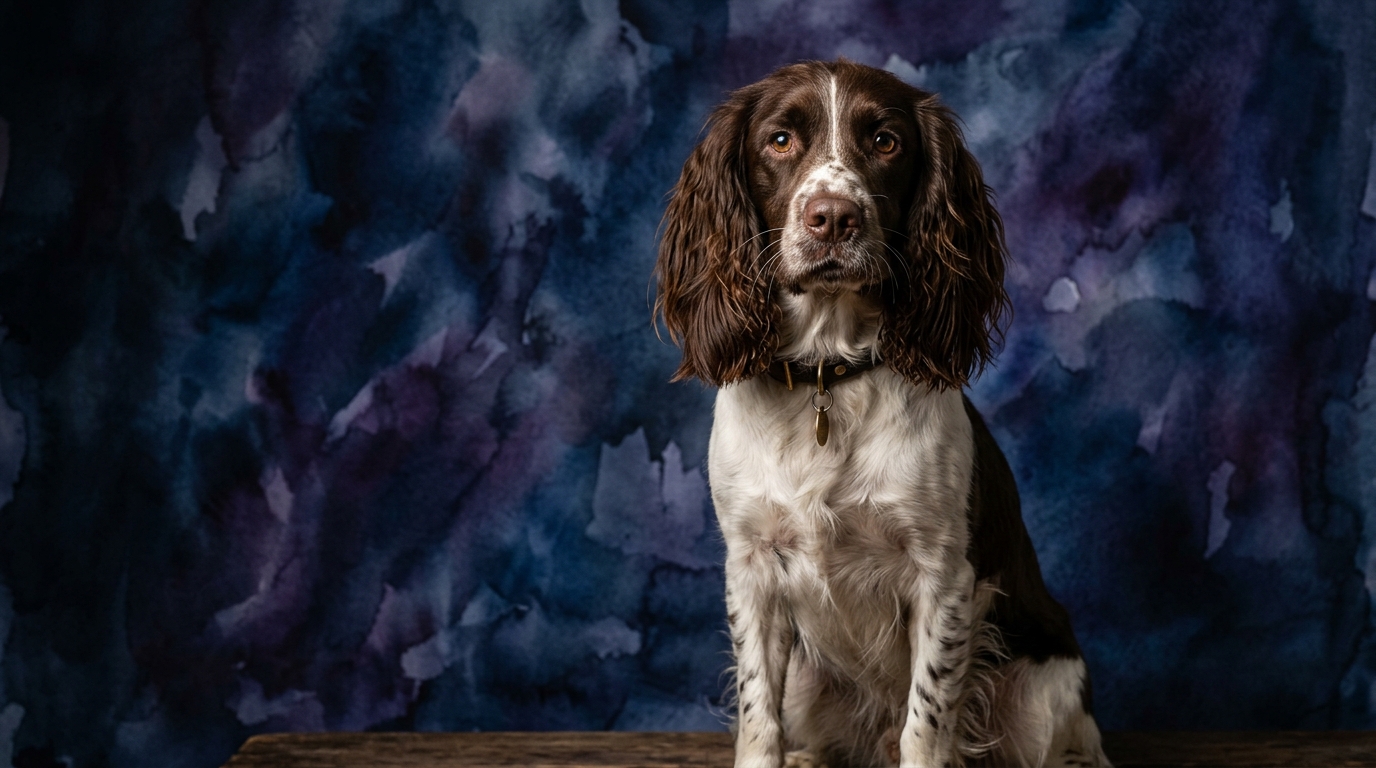
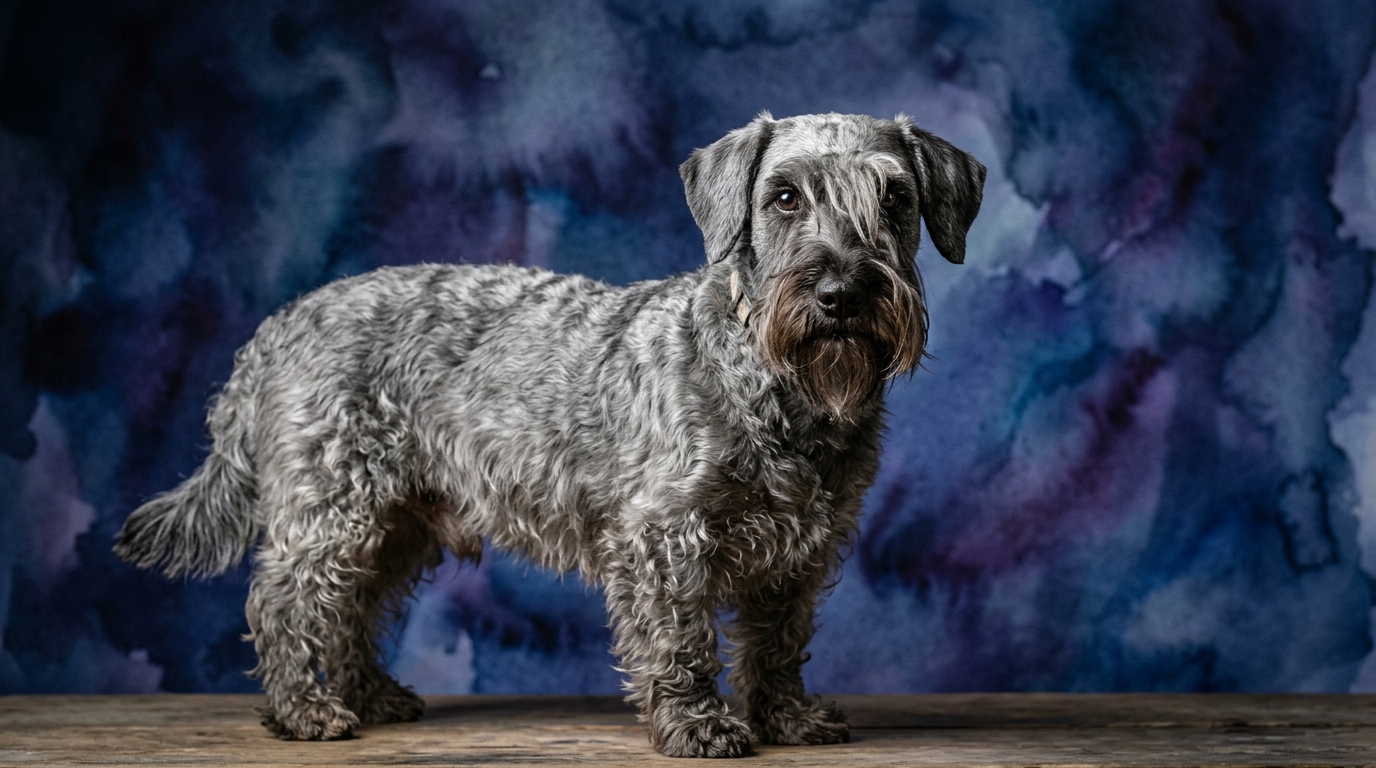
Side-by-Side Cognitive Profile: Springer Spaniel vs. Cesky Terrier
The English Springer Spaniel, holding a respectable Coren rank of #13, demonstrates a cognitive architecture built for partnership and performance. Their problem-solving capacity is rated at a robust 4/5, reflecting an ability to quickly assess and navigate complex environments, such as a varied field during a retrieve or a novel obedience course. Training speed stands at an impressive 5/5, indicating an exceptional eagerness and quickness to grasp new commands and routines, often thriving on the opportunity to engage with their handler. Social intelligence, at 4/5, underscores their adeptness at reading human cues and intentions, making them highly attuned partners in collaborative tasks. Their instinctive drive is a perfect 5/5, a clear manifestation of their strong heritage in scenting, flushing, and retrieving game, requiring intense focus and perseverance. Finally, their memory, rated 4/5, allows them to retain intricate sequences of commands and learned behaviors over time, essential for consistent performance in demanding roles.
In contrast, the Cesky Terrier presents a distinctly different cognitive blueprint, shaped by its role as a tenacious, independent vermin hunter. While not featured on Coren's ranking, the breed's internal IQ metrics provide valuable insight. Their problem-solving ability is rated 3/5, suggesting a capacity to independently figure out solutions, often through persistence and trial-and-error, rather than immediate collaborative insight. Training speed also sits at 3/5, meaning they are capable of learning, but typically require more consistent reinforcement and patience, reflecting a terrier's characteristic self-reliance. Social intelligence is similarly rated 3/5; Ceskys observe their environment and handlers, but their primary mode of operation isn't necessarily focused on constant human collaboration. Their instinctive drive, at 3/5, points to a functional but not overwhelming urge for hunting small prey, manifesting as curiosity and a drive to explore. Memory, at 3/5, indicates they retain information adequately, but might not recall complex, multi-step tasks with the same immediate precision as a Springer without regular refreshers.
Where the English Springer Spaniel Excels Cognitively
The English Springer Spaniel consistently outperforms the Cesky Terrier across all five cognitive dimensions, particularly in areas demanding cooperative intelligence and rapid assimilation of information. Their superior problem-solving (4/5 vs 3/5) allows them to adapt more fluidly to new situations and interpret complex environmental cues, making them adept at navigating challenging terrains or intricate agility courses with minimal handler intervention once trained. This translates into a dog that can make intelligent, on-the-fly decisions within the framework of a task, demonstrating a remarkable capacity for situational awareness and adaptive behavior.
The most pronounced advantage lies in their training speed (5/5 vs 3/5) and social intelligence (4/5 vs 3/5). Springers possess an innate desire to work alongside their human companions, making them exceptionally receptive to instruction. They quickly form associations between commands and actions, often needing fewer repetitions to master new skills. This cooperative spirit, coupled with their excellent memory (4/5 vs 3/5), means they not only learn rapidly but also retain those lessons effectively, building a vast repertoire of understood behaviors and cues over their lifetime. Their powerful instinctive drive (5/5 vs 3/5) is also a cognitive strength, as it provides a strong internal motivation that can be expertly channeled into productive tasks like scent work, retrieving, or competitive dog sports, making them highly focused and driven learners in a collaborative setting.
Cognitive Strengths of the Cesky Terrier
While the Cesky Terrier's individual cognitive scores may appear lower than the Springer's, framing "wins" requires appreciating their unique intellectual strengths within their specific breed context. The Cesky's problem-solving at 3/5, combined with its 3/5 instinctive drive, represents a distinct advantage in independent, tenacious pursuit. Unlike the collaborative problem-solving of a Springer, a Cesky is bred to think for itself when hunting vermin in burrows, where direct human guidance is impossible. This means they excel at persistent, self-directed exploration and overcoming obstacles through sheer determination, often relying on their own ingenuity to achieve a goal.
Their moderate social intelligence (3/5) and training speed (3/5), while requiring more patience from an owner, can be viewed as an intellectual win for those who value a dog with a strong sense of self. A Cesky isn't constantly looking for direction; instead, it processes information and makes decisions based on its own assessment, fostering a unique bond built on mutual respect rather than constant compliance. This independent streak allows them to be resourceful and resilient in situations where a more handler-dependent dog might falter, demonstrating a cognitive profile geared towards self-sufficiency and focused, singular tasks rather than broad, cooperative endeavors.
Ease of Training: Behavioral Differences
The English Springer Spaniel is unequivocally easier to train, a fact clearly reflected in its training speed score of 5/5, coupled with its social intelligence of 4/5. These dogs possess an inherent "biddability" – a strong desire to please and work in concert with their human handler. Behavioral differences manifest in their quick response to cues, their enthusiasm for positive reinforcement, and their remarkable ability to generalize learned behaviors to new situations. A Springer will often offer behaviors proactively, eager to understand what is expected of them, making the training process feel like a shared project where progress is often swift and rewarding. Their high memory (4/5) ensures that once a command is learned, it is retained, reducing the need for constant reteaching and allowing for the rapid building of a complex behavioral repertoire.
Conversely, the Cesky Terrier, with its 3/5 training speed and social intelligence, presents a more significant training challenge. Their terrier heritage fosters independence and persistence in tasks they deem intrinsically rewarding, but not necessarily in tasks directed by a human simply for the sake of compliance. This means training often requires more repetition, varied motivation, and a deep understanding of the breed's sometimes stubborn nature. A Cesky might understand a command but choose not to execute it if it doesn't see the immediate benefit or if something more interesting has captured its attention. Owners must employ consistent, positive, and engaging methods, often breaking down training into smaller, more rewarding steps to maintain interest and overcome their inherent self-reliance, recognizing that their motivation comes from within rather than solely from human direction.
Matching Canine Intelligence to Owner Lifestyle
For active owners seeking a highly engaged and energetic canine partner, the English Springer Spaniel is the clear choice. Their instinctive drive of 5/5 means they possess an unflagging desire for physical activity and mental stimulation. These dogs thrive when given a purpose, whether it's long hikes, retrieving games, agility, obedience trials, or actual field work. Owners must be prepared to provide significant daily exercise, structured training sessions that challenge their problem-solving (4/5) and memory (4/5) abilities, and ample opportunities for social interaction. A Springer that isn't sufficiently exercised or mentally engaged can become bored, potentially leading to undesirable behaviors, making them ideal for individuals or families with an active, outdoor-oriented lifestyle who can dedicate substantial time to their dog's physical and mental well-being.
The Cesky Terrier, with its more moderate instinctive drive of 3/5, is better suited for owners who are active but perhaps not to the same intense degree as a Springer owner. While they are not couch potatoes and still require regular daily exercise – including walks, playtime, and opportunities for mental engagement – their needs are less demanding. A Cesky will enjoy a brisk walk, a game of fetch in the yard, or exploring a new scent, but they are generally content with a slightly less rigorous schedule. Their independent nature also means they might be more satisfied with periods of self-directed exploration in a secure yard, rather than constantly seeking human-led activities. This makes them a suitable companion for individuals or families who enjoy consistent, moderate activity and appreciate a dog that can also settle calmly indoors, provided their intellectual and physical needs are met through thoughtful engagement.
The Verdict
Choose the English Springer Spaniel if you desire a highly biddable, cooperative, and energetic companion eager to participate in demanding activities like dog sports, hunting, or complex obedience, thriving on shared purpose and consistent engagement.
Opt for the Cesky Terrier if you appreciate an independent, persistent, and somewhat self-reliant companion with a more moderate energy level, suitable for a home that values a unique temperament and can provide consistent, patient guidance without requiring constant collaborative efforts.
🧠 Find Your Pet's IQ Score
Our Pet IQ Lab assessment covers 25+ tests across 5 cognitive dimensions — personalized to your breed.
Take the Full IQ Test →Frequently Asked Questions
Is the English Springer Spaniel good with children?
Yes, English Springer Spaniels are generally known for their affectionate and playful nature, often making them excellent family dogs who enjoy interacting with children, provided they receive proper socialization and training from a young age.
How much grooming does a Cesky Terrier require?
Cesky Terriers have a unique coat that requires specific grooming, including hand-stripping a few times a year to maintain its texture and regular brushing to prevent matting, making them a moderate-to-high maintenance breed in terms of grooming effort.
Can a Cesky Terrier live in an apartment?
While Cesky Terriers are adaptable, they do best with regular exercise and mental stimulation; an apartment can work if owners commit to daily walks, playtime, and consistent training to meet their moderate energy and intellectual needs, ensuring they don't become bored or destructive.