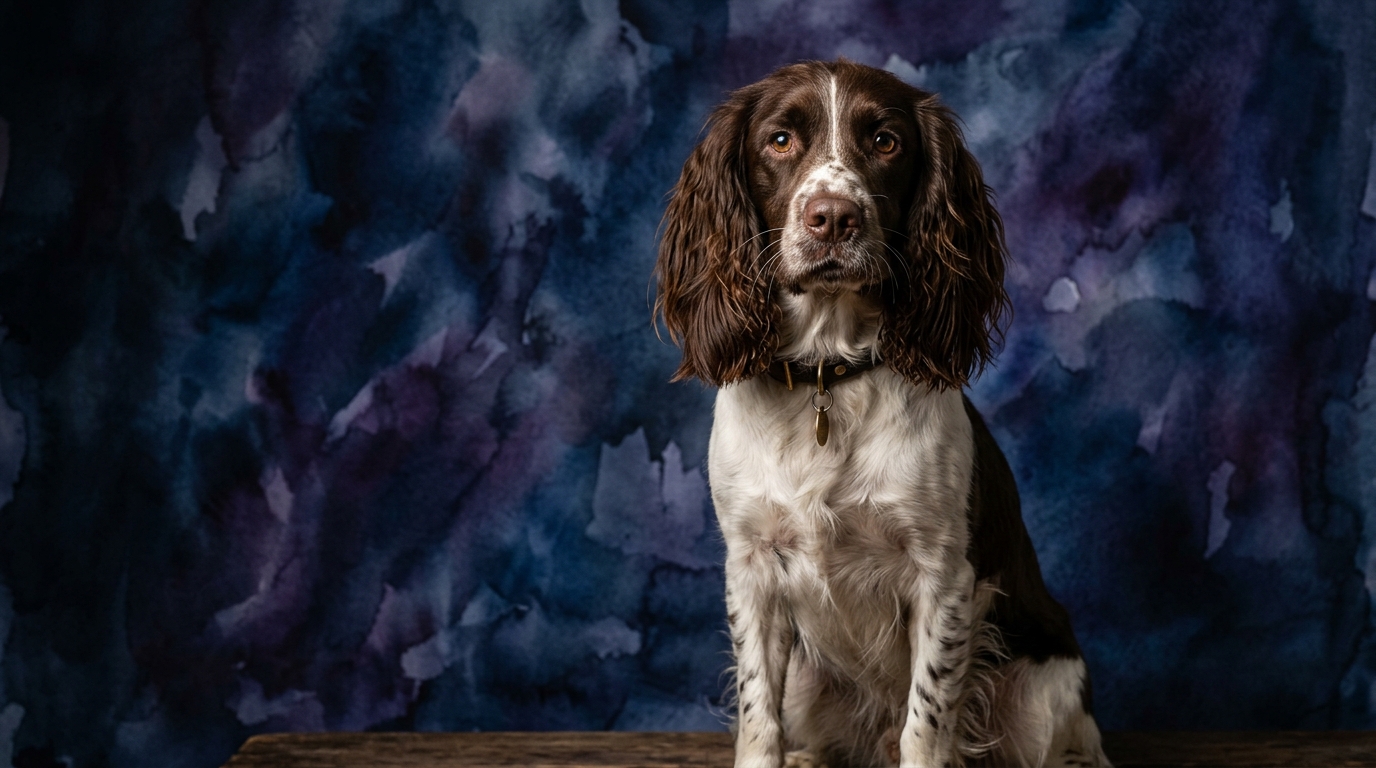

Side-by-Side Cognitive Profiles: English Springer Spaniel vs. Chinook
The Cosmic Pet Pet IQ Lab offers a nuanced perspective on canine intelligence, moving beyond simple 'smart' labels to dissect specific cognitive dimensions. For the English Springer Spaniel, a breed celebrated for its field prowess, the scores paint a picture of an agile and perceptive mind. Their Problem Solving is rated at 4/5, indicating a strong capacity to navigate novel situations and figure out solutions independently. Training Speed, at an impressive 5/5, highlights their exceptional ability to grasp and retain new commands quickly, often with few repetitions. Social Intelligence, at 4/5, suggests they are adept at reading human cues and responding appropriately within social contexts, fostering strong bonds. An Instinctive Drive of 5/5 underscores their powerful innate impulses, particularly for tasks like retrieving and tracking, which are deeply ingrained. Finally, their Memory, at 4/5, points to a reliable ability to recall learned behaviors and past experiences over time.
The Chinook, a robust working breed with a storied history in sledding, presents a different, yet equally compelling, cognitive profile. Their Problem Solving capability is rated 3/5, suggesting they can tackle challenges but might require more guidance or a more methodical approach compared to their Spaniel counterpart. Training Speed also stands at 3/5, indicating they are capable learners but may benefit from more consistent repetition and a patient teaching style to solidify new commands. Their Social Intelligence, at 3/5, implies they are responsive to their human companions but might not possess the same level of nuanced social perceptiveness as some breeds. An Instinctive Drive of 3/5 reflects a purposeful, steady motivation, particularly suited for endurance tasks, rather than the explosive, reactive drive seen in some sporting breeds. Their Memory, rated 3/5, means they can retain information effectively, though perhaps not with the same immediate recall or long-term precision as a breed scoring higher.
Where the English Springer Spaniel Excels Cognitively
The English Springer Spaniel demonstrates a clear cognitive advantage in several key areas. Their 5/5 Training Speed is a standout, meaning they absorb new commands with remarkable swiftness, often appearing to anticipate what is being asked of them. This is not merely obedience; it reflects a rapid neural processing ability, allowing them to form strong associations between cues and actions almost instantly. This quick learning curve makes them highly adaptable to complex training regimens, excelling in activities like agility, obedience trials, and field work where a vast repertoire of commands is essential.
Furthermore, their combined 4/5 Problem Solving and 5/5 Instinctive Drive make them exceptional at task-oriented challenges. An English Springer Spaniel, when faced with a barrier to a desired object, is more likely to experiment with different approaches – pushing, nudging, or even attempting to manipulate latches – rather than waiting for assistance. This proactive, goal-directed problem-solving is intrinsically linked to their strong drive, ensuring they don't give up easily when pursuing a 'prey' item or a hidden treat. Their 4/5 Social Intelligence also means they are highly attuned to human body language and vocal intonation, often picking up on subtle cues that might be missed by less socially perceptive breeds, making them highly responsive partners in any activity.
Where the Chinook's Cognitive Traits Shine
While the Chinook's numerical scores might appear more modest, their cognitive profile is perfectly suited for specific roles and environments, revealing a different kind of strength. Their 3/5 Instinctive Drive, for example, translates into a steady, enduring work ethic rather than an impulsive, high-intensity burst. This makes them less prone to overstimulation and more capable of sustained, focused effort over long periods, which is critical for tasks like long-distance sled pulling or consistent companionship. They are less likely to be distracted by sudden environmental changes, maintaining their focus on the task at hand.
The Chinook's 3/5 in Problem Solving and Memory, combined with their moderate Social Intelligence, suggests a more deliberate and thoughtful approach. They may not devise solutions as quickly as an English Springer Spaniel, but their methods are often consistent and reliable once learned. This steady learning style means that while they might take longer to master a new skill, they are less likely to forget it, and their performance tends to be consistent. This steadfastness makes them excellent partners for owners who appreciate a dog that is predictable and dependable, thriving on routine and structured tasks rather than constant novelty.
Ease of Training: Behavioral Differences
When it comes to ease of training, the English Springer Spaniel generally presents a more straightforward experience for most owners due to their exceptional 5/5 Training Speed and 4/5 Problem Solving. They are eager to please and quick to understand what is expected, often making training sessions feel like a rapid-fire exchange of new information. Their innate desire to work and retrieve, coupled with their high social intelligence, means they are highly motivated by positive reinforcement and human interaction. They quickly connect verbal cues with actions and can generalize learned behaviors to new situations with minimal effort. This translates into fewer repetitions needed to solidify commands and a faster progression through training levels, allowing them to tackle advanced tasks sooner.
The Chinook, with a 3/5 Training Speed and 3/5 Problem Solving, requires a more patient, consistent, and perhaps more creative approach to training. They are not unwilling learners, but they process information at a different pace. Owners might find that a Chinook needs more repetitions to truly embed a new command, and consistency across all family members is paramount. While they may not spontaneously problem-solve a novel puzzle with the same speed as a Spaniel, they are capable of learning complex sequences if taught methodically. Their training benefits from clear, calm instruction and a focus on building a strong foundational understanding of each command before moving on, appealing to owners who enjoy the process of deliberate, steady progress.
Owner Compatibility: Active vs. Relaxed Lifestyles
For active owners, especially those who enjoy outdoor pursuits, dog sports, or a highly engaged companion, the English Springer Spaniel is an exceptional fit. Their 5/5 Instinctive Drive means they possess a deep-seated need for physical and mental engagement, thriving on activities like hunting, agility, flyball, or long hikes. Their 4/5 Problem Solving and 4/5 Social Intelligence ensure they are not just physically capable but also mentally agile and eager to participate in complex, interactive activities with their human partners. They excel when given a 'job' to do, and a lack of appropriate outlets for their energy and cognitive abilities can lead to boredom and undesirable behaviors. They are perfect for owners who can dedicate significant time to training, exercise, and interactive play daily.
The Chinook, with its more moderate scores across the board, particularly its 3/5 Instinctive Drive, is better suited for owners who seek a steady, dependable companion that enjoys activity but doesn't demand constant, high-intensity engagement. While they are a working breed and certainly require regular exercise, their drive is more geared towards endurance and companionship rather than explosive bursts or complex problem-solving games every hour. They enjoy long walks, hiking, and perhaps some casual sledding or carting, but they are also content to relax with their family once their exercise needs are met. They fit well with owners who appreciate a dog that is calm indoors but ready for adventure outdoors, without the relentless cognitive demands of a higher-drive sporting breed. They thrive on consistent routines and a loving, stable home environment.
The Verdict
Choose an English Springer Spaniel if you are an active owner seeking a highly trainable, quick-witted partner for dog sports, hunting, or a dynamic, engaged lifestyle that includes regular mental and physical challenges.
Opt for a Chinook if you desire a steady, reliable, and affectionate companion for outdoor adventures and a structured home life, valuing a dog with enduring loyalty and a calm, deliberate approach to learning and interaction.
🧠 Find Your Pet's IQ Score
Our Pet IQ Lab assessment covers 25+ tests across 5 cognitive dimensions — personalized to your breed.
Take the Full IQ Test →Frequently Asked Questions
Which breed is better for first-time dog owners?
The English Springer Spaniel's high trainability and eagerness to please can make them rewarding for first-time owners willing to commit to their significant exercise and mental stimulation needs. The Chinook, while devoted, might require a more patient and consistent approach to training that some first-time owners might find more challenging without prior experience.
Do English Springer Spaniels or Chinooks adapt better to apartment living?
Neither breed is ideally suited for small apartment living without significant owner commitment. However, the Chinook's more moderate instinctive drive and calmer indoor demeanor might make them marginally more adaptable if their substantial daily exercise requirements are consistently met outside the apartment. The English Springer Spaniel's high drive and need for constant engagement can make apartment living more challenging for both dog and owner.
Which breed is more prone to separation anxiety based on their IQ profile?
The English Springer Spaniel's higher Social Intelligence (4/5) and strong desire for companionship, coupled with their high Instinctive Drive, can make them more prone to separation anxiety if not properly socialized or if left alone for extended periods without sufficient mental and physical outlets. The Chinook's more moderate social intelligence and steady nature might make them slightly less prone, provided their need for routine and family presence is met, though any dog can develop anxiety.