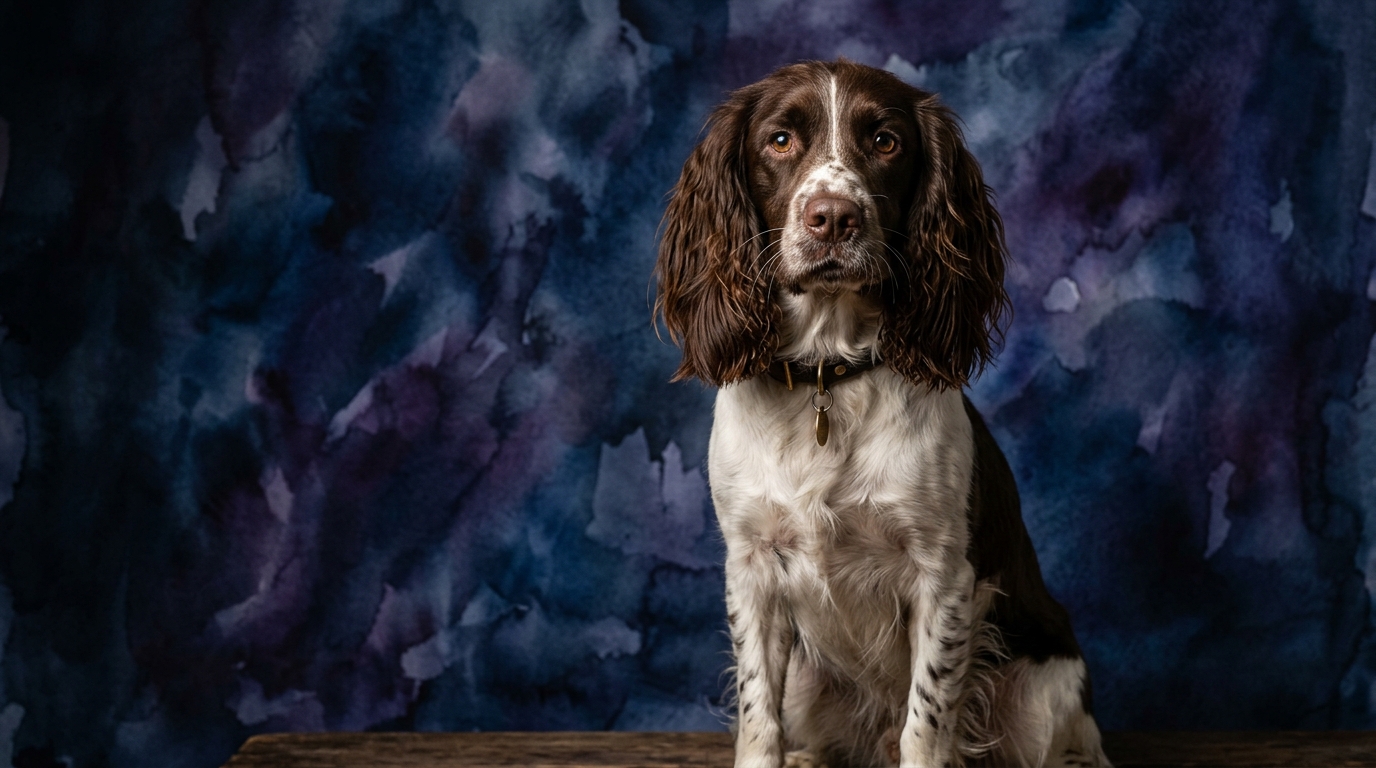
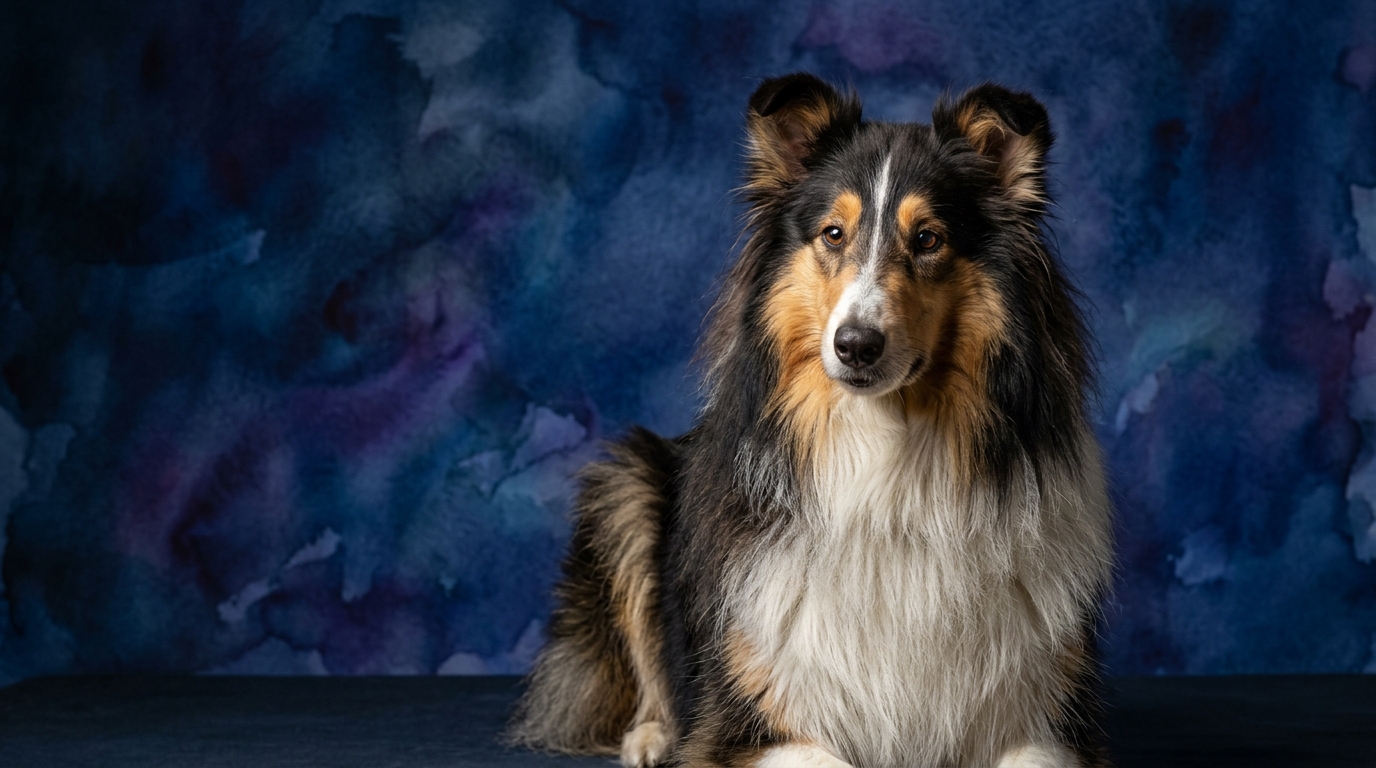
Side-by-Side Cognitive Profiles
The Cosmic Pet Pet IQ Lab assesses canine intelligence across five key dimensions, providing a nuanced understanding of each breed’s mental aptitudes. While both the English Springer Spaniel and the Collie (Rough) demonstrate impressive cognitive abilities, their strengths are allocated differently.
For the English Springer Spaniel (Sporting Group, Coren Rank #13): Problem Solving is rated 4/5, reflecting their aptitude for figuring out how to achieve goals, like locating hidden objects or navigating complex terrain during a retrieve. Training Speed stands at a perfect 5/5, indicating their remarkable ability to rapidly grasp and execute new commands and routines. Their Social Intelligence is 4/5, showcasing a strong capacity to read human cues and form amiable bonds within a family or group. Instinctive Drive is a powerful 5/5, highlighting an inherent, intense urge to engage in their ancestral work of hunting and retrieving, propelling their actions with vigor. Memory is rated 4/5, demonstrating solid retention of learned behaviors, locations, and past experiences.
Turning to the Collie (Rough) (Herding Group, Coren Rank #16): Problem Solving also scores 4/5, indicating a capacity for strategic thought, particularly in scenarios involving the management of other animals or navigating environmental challenges. Their Training Speed is 4/5, suggesting efficient learning, though perhaps requiring a slightly more patient and consistent approach than a Springer. Social Intelligence is 3/5, often meaning they form deep bonds with their immediate family but can be more reserved or cautious with strangers. Instinctive Drive is 3/5, reflecting a herding instinct centered on oversight and gentle guidance rather than high-octane pursuit, leading to a more composed demeanor. Memory is an exceptional 5/5, signifying an outstanding ability to recall routes, routines, specific commands over long periods, and intricate past interactions.
Where the English Springer Spaniel Excels Cognitively
The English Springer Spaniel's cognitive strengths distinctly align with its historical role as a flushing and retrieving gundog. Their perfect 5/5 in Training Speed means they are exceptionally quick to learn, absorbing new commands and complex sequences with remarkable alacrity. This rapid acquisition of skills makes them highly adaptable to varied training disciplines, from obedience to advanced field work, often requiring fewer repetitions than many other breeds.
Furthermore, their robust 5/5 Instinctive Drive provides an unparalleled enthusiasm for work and tasks. This isn't just about physical energy; it’s a mental drive that fuels their focus and persistence, allowing them to remain engaged and motivated through challenging training sessions or prolonged scent work. Their problem-solving acumen (4/5) often manifests in dynamic scenarios, such as efficiently locating a hidden retrieve or navigating dense cover, where quick decision-making under high motivation is paramount.
Their 4/5 Social Intelligence also contributes to their cognitive edge in cooperative tasks. Springers are typically very attuned to their handler’s mood and intentions, making them highly biddable and eager to please. This ability to read and respond to human cues swiftly enhances their trainability and makes them exceptionally responsive partners in activities where close collaboration is key, such as competitive obedience or assistance work.
Where the Collie (Rough) Shows Cognitive Superiority
The Collie (Rough) shines brightest with its outstanding 5/5 Memory, a cognitive asset that profoundly shapes its learning and long-term behavior. This exceptional recall means that once a routine, a command, or a boundary is established, it is retained with remarkable permanence. This allows for the development of highly reliable and consistent behaviors over time, requiring less frequent reinforcement for previously learned skills.
While their Problem Solving is rated equally at 4/5, the Collie's approach often leans towards strategic observation and nuanced control, reflecting their herding heritage. Instead of a high-energy chase, their problem-solving in managing livestock involves anticipating movements, understanding group dynamics, and subtle positioning. This indicates a cognitive style that prioritizes thoughtful planning and pattern recognition, which can be invaluable in complex, dynamic environments where immediate, forceful action is not always the best solution.
The Collie’s Instinctive Drive, rated 3/5, while lower than the Springer's, contributes to a more composed and less impulsive cognitive processing style. This can lead to a dog that is less prone to over-arousal by external stimuli, capable of a more deliberate assessment of situations. Their herding drive is often expressed through oversight and protective vigilance, requiring a different kind of mental engagement—one focused on responsibility and careful management rather than relentless pursuit.
Training Dynamics: Which is Easier and Why?
When considering ease of training, the English Springer Spaniel generally presents a more straightforward path for many owners due to its superior Training Speed (5/5) and potent Instinctive Drive (5/5). Springers possess an inherent eagerness to work and a strong desire to please, making them highly receptive to instruction. They grasp new commands with remarkable speed, often picking up concepts after just a few repetitions, and their high motivation ensures they remain engaged during training sessions. This combination means they are often quick to generalize learned behaviors to new situations.
The Collie (Rough), with a Training Speed of 4/5, is certainly capable of learning efficiently, but their process might differ. They may require a bit more patience and consistent, positive reinforcement to solidify new behaviors. Their lower Social Intelligence (3/5) compared to the Springer's (4/5) can mean they are less universally eager to engage with new people or in novel training environments, necessitating a gentler, trust-building approach. However, once a Collie has learned something, their exceptional Memory (5/5) ensures deep retention, meaning less need for re-training established commands over time, making them very reliable long-term companions.
Ultimately, the 'easier' breed depends on the trainer's style and expectations. For rapid acquisition and enthusiastic execution of a wide range of tasks, the Springer often takes the lead. For a dog that meticulously retains information and performs with thoughtful consistency once trained, the Collie's cognitive architecture provides a distinct advantage, though it might demand a more nuanced initial training investment.
Matching Breeds to Lifestyles: Active vs. Relaxed Owners
Owners with an active lifestyle, who thrive on outdoor adventures and structured canine activities, will find an exceptional match in the English Springer Spaniel. Their robust Instinctive Drive (5/5) and high energy levels necessitate regular, vigorous physical exercise and consistent mental stimulation. These dogs excel in activities such as scent work, agility, field trials, hiking, and long retrieving sessions, where their boundless enthusiasm and rapid learning can be fully utilized. An owner who enjoys participating in these demanding pursuits will find a Springer to be an eager, tireless partner.
Conversely, the Collie (Rough) often suits owners seeking a more relaxed yet engaged companionship. While they still require daily exercise for their physical and mental well-being, their Instinctive Drive (3/5) is less intense than a Springer's, translating to a more composed demeanor once their needs are met. They appreciate structured walks, mental games, and opportunities to observe their surroundings, but they do not typically demand the same level of constant, high-octane 'work.' Their strong Memory (5/5) makes them excellent at adhering to household routines, contributing to a predictable and harmonious home environment, making them ideal for owners who enjoy a thoughtful, devoted companion without the need for extreme athletic commitment.
The Verdict: When to Choose Each
Choosing between an English Springer Spaniel and a Collie (Rough) ultimately comes down to aligning a dog's specific cognitive strengths and needs with an owner's lifestyle and aspirations.
If you are an owner seeking a highly biddable, energetic companion eager for task-oriented activities like scent work, field trials, or agility, and who values rapid learning and enthusiastic participation, the English Springer Spaniel will be an ideal match. Their quick training speed and powerful drive make them exceptional partners for active, engaged individuals.
If you appreciate a thoughtful, composed companion with exceptional memory, suitable for consistent routines and less intensely driven activities, offering devoted companionship, the Collie (Rough) is likely your preferred choice. Their capacity for long-term retention and strategic problem-solving makes them a reliable and gentle presence in the home.
The Verdict
Choose the English Springer Spaniel for owners seeking a highly biddable, energetic companion eager for task-oriented activities like scent work, field trials, or agility, valuing rapid learning and enthusiastic participation.
Choose the Collie (Rough) for owners who appreciate a thoughtful, composed companion with exceptional memory, suitable for consistent routines and less intensely driven activities, offering devoted companionship.
🧠 Find Your Pet's IQ Score
Our Pet IQ Lab assessment covers 25+ tests across 5 cognitive dimensions — personalized to your breed.
Take the Full IQ Test →Frequently Asked Questions
Is the English Springer Spaniel better at agility than the Collie (Rough)?
The English Springer Spaniel's superior training speed (5/5) and high instinctive drive (5/5) often make them excel in agility, as they quickly learn complex courses and maintain high motivation. While Collies can perform well, their slightly lower drive might mean they don't approach it with the same explosive enthusiasm.
Which breed is more adaptable to different living situations?
The English Springer Spaniel's higher social intelligence (4/5) and eager-to-please nature can make them more adaptable to various environments and social settings, provided their exercise and mental stimulation needs are met. The Collie (Rough)'s slightly lower social intelligence (3/5) might mean they take longer to adjust to new people or places, preferring established routines.
Does the Collie (Rough)'s memory (5/5) make it easier to live with long-term?
The Collie (Rough)'s exceptional memory (5/5) means they retain house rules, routines, and commands very effectively once learned, contributing to a harmonious long-term living situation. This strong recall minimizes the need for repeated training on established behaviors, though initial training may require consistent effort.