
A Side-by-Side Look at Cognitive Profiles
At The Cosmic Pet Pet IQ Lab, we delve beyond general observations to quantify specific aspects of canine intelligence. For the English Springer Spaniel, ranked #13 in Coren's intelligence scale, and the Mastiff, ranked #72, their cognitive profiles present distinct strengths.
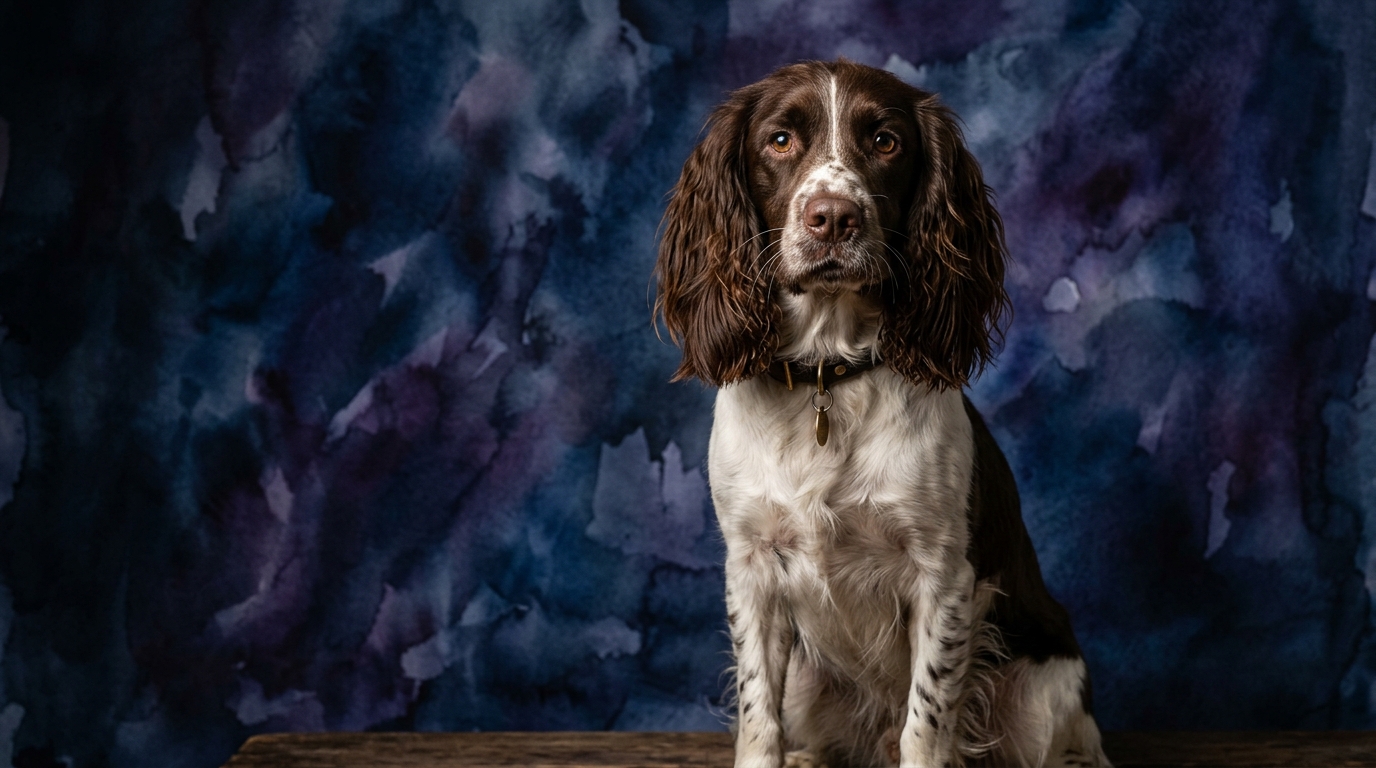
The English Springer Spaniel, a Sporting breed, demonstrates exceptional cognitive agility across several dimensions. Their Problem Solving is rated at 4/5, indicating a strong capacity to figure out complex sequences, such as opening latches or navigating challenging terrain during a retrieve. They approach new puzzles with an enthusiastic, trial-and-error method, often finding solutions efficiently. Their Training Speed is an impressive 5/5, reflecting an outstanding ability to grasp new commands quickly, frequently needing minimal repetitions. This responsiveness makes them highly receptive to consistent instruction and eager to please their handlers. Social Intelligence for the Springer is 4/5; they are adept at reading human cues and intentions, fostering strong collaborative bonds and understanding family dynamics. Their Instinctive Drive is a perfect 5/5, showcasing a powerful genetic predisposition for retrieving, scent work, and working closely with humans, translating into focused, purposeful activity. Finally, their Memory is 4/5, allowing them to retain learned commands, routines, and past experiences over considerable periods, recalling complex action sequences with accuracy.
In contrast, the Mastiff, a Working breed, presents a profile rooted in deliberation and protective instincts. Their Problem Solving is rated 3/5, meaning they are capable of solving direct challenges but may take more time or require clearer guidance than more agile breeds. Their approach is often more considered and less impulsive. Training Speed for a Mastiff is 3/5; they learn at a moderate pace, necessitating patience and consistent, positive reinforcement. While they will master commands, it often requires more repetitions over time. Their Social Intelligence scores 3/5; they are good at understanding their family's emotions and dynamics, forming deep, loyal bonds, though they might be more reserved or less overtly expressive in their social interactions compared to some breeds. The Mastiff's Instinctive Drive is 3/5, primarily revolving around guardianship and protection of their territory and family. This drive is profound but manifests differently than a Sporting dog's task-oriented focus. Their Memory is also 3/5, providing a solid recall for routines, people, and places, though perhaps not with the same intricate detail or speed as breeds with higher scores.
Where the English Springer Spaniel Excels Cognitively
The English Springer Spaniel's cognitive strengths are deeply intertwined with their historical role as a flushing and retrieving gun dog. Their 5/5 Training Speed and 4/5 Problem Solving mean they acquire new skills with remarkable alacrity, processing information and executing commands faster than many other breeds. This rapid cognitive processing allows them to adapt quickly to novel situations, making immediate decisions in dynamic environments, which is crucial in field work or competitive dog sports. Their exceptional Instinctive Drive (5/5) means they possess an innate, powerful motivation for sustained, focused tasks, particularly those involving scent work and retrieving, which they approach with tireless enthusiasm and precision. This combination leads to a dog that thrives on consistent engagement and complex mental challenges, always eager to participate and learn.
Where the Mastiff's Cognition Shines
The Mastiff's cognitive profile, while different from the Springer, highlights a unique set of strengths tailored to their role as a guardian. Their 3/5 Problem Solving manifests as a more deliberate decision-making process, making them less prone to impulsive actions. This considered approach contributes to their calm, watchful demeanor. While their general Social Intelligence is 3/5, it particularly excels in discerning threats and acting as a formidable, protective presence for their family and territory, often relying on subtle cues that might be missed by less discerning breeds. Their cognitive style is more self-contained; they are not constantly seeking external tasks or high-octane engagement but rather find fulfillment in maintaining a vigilant, stable presence. This deliberate cognitive processing, coupled with their inherent protective instincts, creates a dog that offers a profound sense of security and unwavering loyalty.
Training Dynamics: Responsiveness vs. Deliberation
When it comes to training, the differences between these two breeds are quite pronounced, largely due to their disparate Training Speed and Instinctive Drive scores. The English Springer Spaniel is generally considered much easier to train. Their 5/5 Training Speed means they pick up commands quickly, often needing only a few repetitions. This is bolstered by their high Instinctive Drive (5/5) and eagerness to please, which makes them highly motivated by positive reinforcement and the opportunity to work alongside their handler. Behavioral differences include their lower propensity for stubbornness and a strong focus on the handler, making training a cooperative and rewarding experience. Their boundless energy also means they thrive on structured activity, making training an excellent outlet.
The Mastiff, with a 3/5 Training Speed, requires a more patient and consistent approach. They learn, but at a more moderate pace, and can sometimes be perceived as stubborn if their motivation isn't properly engaged. Their training benefits from short, positive sessions and clear, consistent commands. Unlike the Springer, who is driven by an innate desire for task completion, the Mastiff's motivation often stems from their desire for comfort and companionship, rather than an intense drive for external tasks. Their larger size and less agile physique also mean that complex physical commands may take longer to perfect. Understanding their deliberate nature and leveraging their desire for a stable, comfortable environment is key to successful Mastiff training.
Matching Breeds to Owner Lifestyles
The cognitive and physical needs of these breeds naturally align with different owner lifestyles. The English Springer Spaniel is an ideal match for active owners. Their high Instinctive Drive (5/5) and excellent Problem Solving (4/5) mean they thrive on consistent physical activity and mental challenges. They need long walks, engaging training sessions, and ample opportunities to use their exceptional nose and retrieving skills. Owners who enjoy hiking, field work, dog sports like agility or scent work, or simply want a dynamic partner for daily adventures will find the Springer Spaniel to be an enthusiastic and tireless companion. Their need for engagement means they are not content to be couch potatoes.
Conversely, the Mastiff is well-suited for more relaxed owners. While they still require moderate daily exercise to maintain health, their energy levels are generally lower than a Springer's, and they are quite content with a leisurely walk followed by ample time lounging contentedly with their family. Their social intelligence, while focused on guarding, supports a calm and devoted presence within the home. Owners who appreciate a quiet, watchful, and steadfast companion, and who are prepared for a large but relatively sedate presence, will find a Mastiff to be a perfect fit. They offer deep companionship without the constant demand for high-intensity activity.
The Verdict
Choose the English Springer Spaniel for an energetic, highly trainable, and interactive companion perfect for outdoor adventures, dog sports, or as a partner eager to participate actively in daily life.
Opt for the Mastiff if you desire a calm, devoted, and protective family member who thrives in a relaxed home environment with moderate daily exercise, offering a steadfast and gentle presence.
🧠 Find Your Pet's IQ Score
Our Pet IQ Lab assessment covers 25+ tests across 5 cognitive dimensions — personalized to your breed.
Take the Full IQ Test →Frequently Asked Questions
Do Mastiffs need less mental stimulation than English Springer Spaniels?
While Mastiffs may not require the same intensity of task-oriented mental work as a Springer, they still benefit from consistent training, puzzle toys, and social interaction to keep their minds engaged. Their stimulation often revolves around their family and environment rather than complex, repetitive tasks.
Can an English Springer Spaniel adapt to a less active lifestyle?
An English Springer Spaniel can adapt to a less active lifestyle to some extent, but it's crucial that their cognitive and physical needs are still met through regular training, play, and mental puzzles. Without sufficient outlets for their high drive and energy, they may develop undesirable behaviors like excessive barking or destructive chewing.
How does the social intelligence difference manifest in daily life?
The Springer Spaniel's higher social intelligence often means they are quicker to pick up on subtle human cues, eager to interact, and generally more outwardly expressive in their communication with people. A Mastiff's social intelligence, while strong within their family unit, might manifest as a more reserved, watchful presence, deeply bonded but less overtly demonstrative, especially with strangers or new situations.