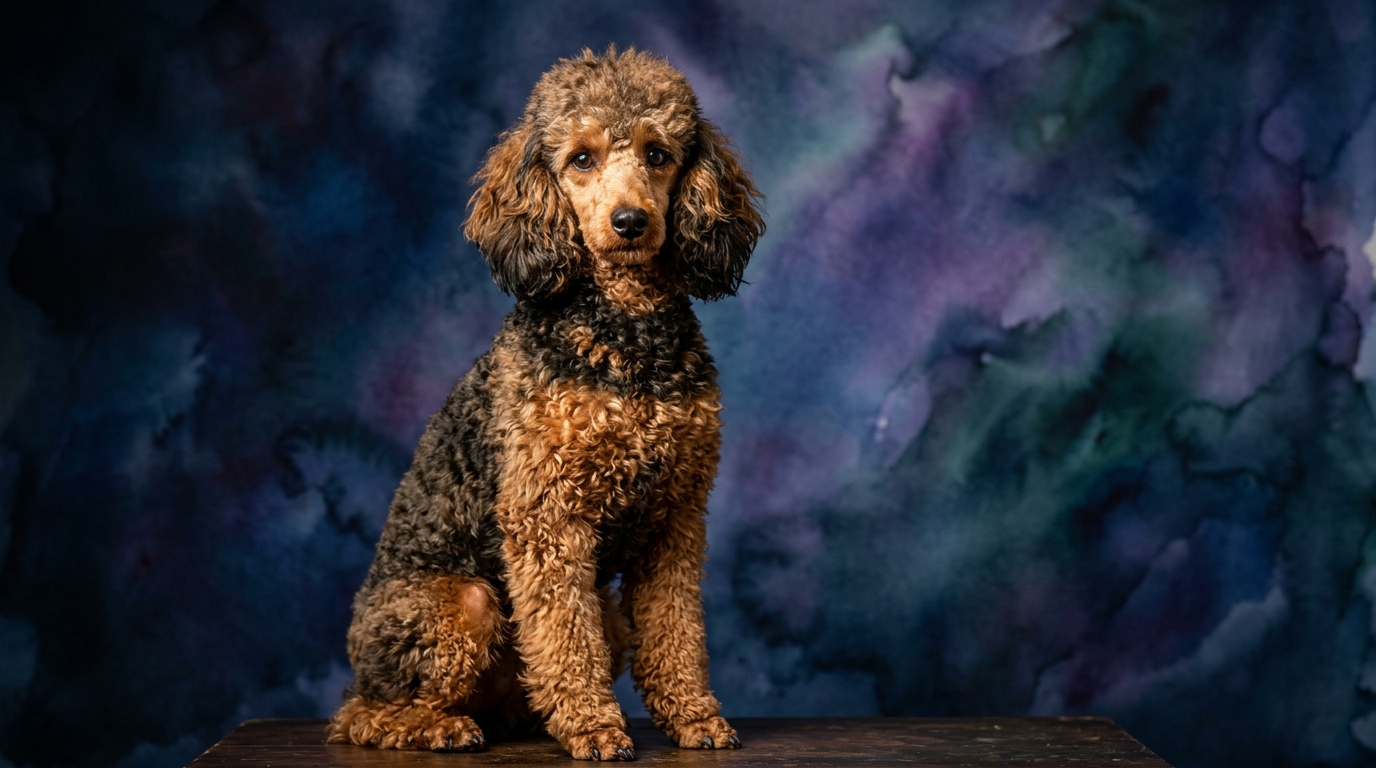
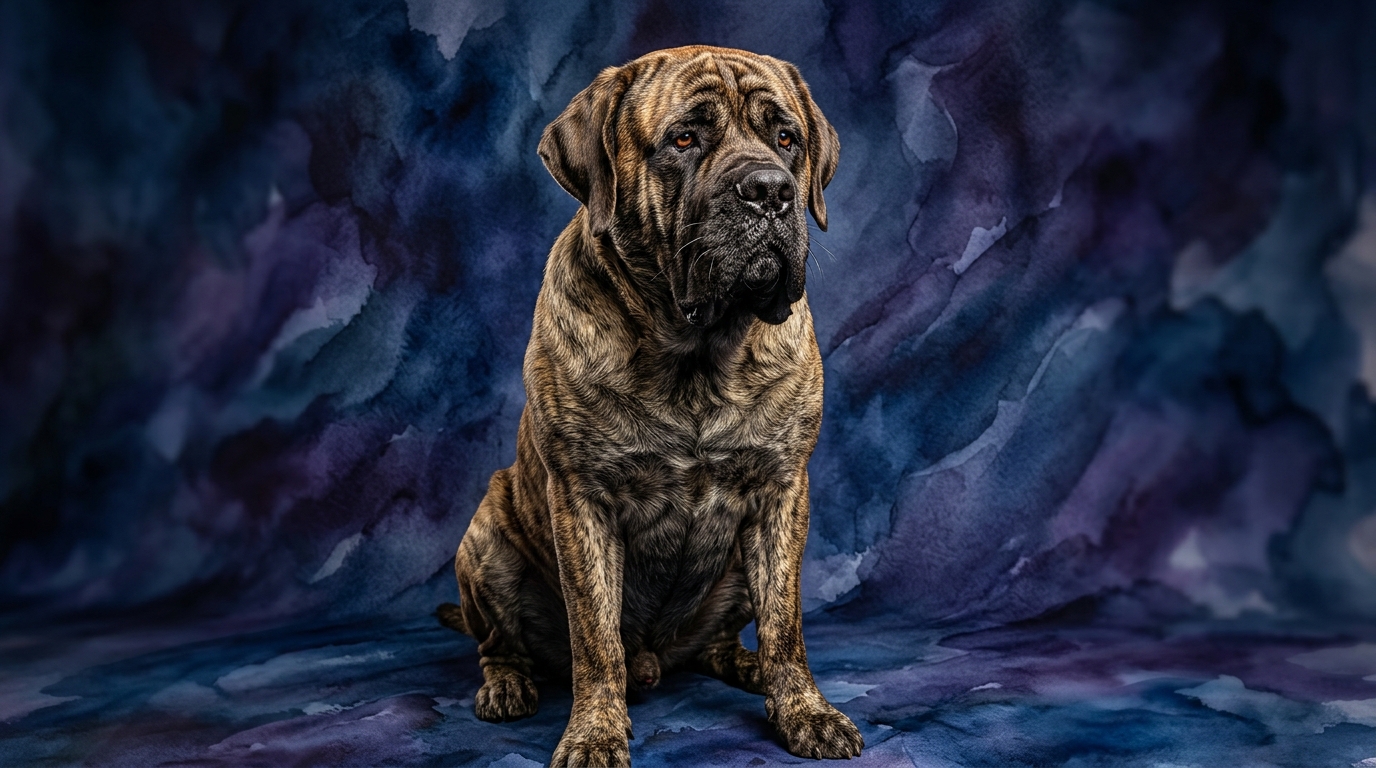
Side-by-Side IQ Profile: Standard Poodle vs. Mastiff
The Cosmic Pet Pet IQ Lab provides a comprehensive five-dimensional framework to understand canine cognition, offering a nuanced view beyond simple labels. Let's delve into how the Standard Poodle and the Mastiff stack up across these critical areas.
The Standard Poodle, holding a Coren rank of #2, demonstrates a consistently elevated cognitive capacity:
Problem Solving (5/5): This breed often exhibits a remarkable capacity for understanding complex sequences and devising novel solutions to environmental challenges. They frequently engage in strategic thinking when faced with obstacles or puzzles.
Training Speed (5/5): Standard Poodles typically grasp new commands and routines with exceptional speed, often requiring fewer repetitions to solidify a behavior. Their eagerness to learn contributes to a rapid acquisition of skills.
Social Intelligence (5/5): Their acute awareness of human emotions and social cues allows them to adapt their behavior fluidly in various social contexts. They often form deep bonds and respond sensitively to their companions.
Instinctive Drive (4/5): While not primarily a hunting breed, Standard Poodles retain a notable drive for engagement and activity, often manifesting as enthusiasm for retrieving or scent work. This drive fuels their active participation.
Memory (5/5): Possessing a strong capacity for recall, Standard Poodles typically remember learned commands, routines, and even specific events over extended periods. This contributes to their consistent performance in training.
The Mastiff, with a Coren rank of #72, presents a cognitive profile characterized by a more deliberate and steady approach:
Problem Solving (3/5): Mastiffs approach problem-solving with a more deliberate and often direct strategy, preferring straightforward solutions over complex manipulations. Their method is typically unhurried and practical.
Training Speed (3/5): This breed learns at a moderate pace, requiring consistent and patient repetition to ingrain new behaviors. While capable, they do not typically exhibit the rapid acquisition seen in some other breeds.
Social Intelligence (3/5): Mastiffs display a solid, albeit reserved, understanding of social dynamics, often forming strong bonds within their immediate family. They tend to be less overtly expressive of their social awareness with strangers.
Instinctive Drive (3/5): Their drive is typically moderate, centered around protective instincts for their home and family rather than high-energy activities or constant engagement. They are generally content with a calmer existence.
Memory (3/5): Mastiffs possess a functional memory for established routines and familiar people, though they may not retain intricate details or infrequent commands with the same precision as breeds with higher scores.
Where Poodle (Standard) Wins Cognitively
The Standard Poodle excels in environments demanding rapid adaptation and nuanced responses. Their superior Problem Solving (5/5) means they can quickly assess new situations, like navigating a novel obstacle course or figuring out how to open a child-proof gate. This proactive mental engagement often leads them to initiate interactions or even subtly 'train' their owners. Their Training Speed (5/5) is not just about learning commands; it's about forming complex behavioral chains, like performing intricate freestyle routines or excelling in advanced obedience trials with minimal practice. The Poodle's Social Intelligence (5/5) allows them to pick up on the slightest shifts in human mood or tone, making them exceptionally responsive companions who can anticipate needs or offer comfort without explicit cues. This acute sensitivity fosters a deeply intuitive bond, where communication transcends simple commands. Furthermore, their Memory (5/5) ensures that once a lesson is learned or a boundary established, it tends to stick, requiring less reinforcement over time.
Where Mastiff Wins Cognitively
While scoring lower in some IQ dimensions, the Mastiff's cognitive profile is a distinct advantage for owners seeking a specific temperament and role. Their more measured Problem Solving (3/5) means they are less likely to engage in mischievous, complex schemes to outwit their environment or their people; they prefer clear, consistent boundaries. The Mastiff's moderate Instinctive Drive (3/5) is a significant win for those desiring a calm, less demanding companion; they are generally content with a relaxed pace of life, reducing the need for constant mental or physical redirection often required by breeds with higher drives. Their Social Intelligence (3/5) translates to a dignified, reserved demeanor, making them less prone to over-exuberance or anxiety in new social settings. This steady temperament makes them excellent, stoic guardians who observe rather than react impulsively. Their functional Memory (3/5) is perfectly adequate for retaining essential household rules and family recognition, ensuring a predictable and stable presence without the need for constant novel stimulation.
Which is Easier to Train and Why
The Standard Poodle generally presents a much smoother training journey due to its exceptional Training Speed (5/5) and high Problem Solving (5/5). They often seek out learning opportunities and quickly connect actions with desired outcomes, meaning fewer repetitions are needed for a new command to become ingrained. Their high Social Intelligence (5/5) also makes them acutely responsive to handler cues and eager to please, reducing resistance during training sessions. Conversely, the Mastiff's Training Speed (3/5) suggests a more gradual learning curve. While perfectly capable of learning, they require more patience, consistency, and repetition to master new behaviors. Their lower Instinctive Drive (3/5) means they may not always possess the same intrinsic motivation for engagement found in the Poodle, necessitating a more reward-driven and shorter, positive training approach to maintain their focus. Real behavioral differences include the Poodle's tendency to anticipate commands and offer behaviors, while the Mastiff might require more encouragement to initiate an action.
Which Suits Active Owners vs. Relaxed Owners
For active owners who relish regular engagement in activities like dog sports, complex trick training, or extended outdoor adventures, the Standard Poodle is an ideal match. Their high Instinctive Drive (4/5) combined with their superior Problem Solving and Training Speed means they thrive on consistent mental and physical stimulation. They enjoy having a 'job' and can become restless or invent their own entertainment if under-stimulated. In contrast, the Mastiff is a superb fit for relaxed owners who appreciate a calm, settled presence. Their moderate Instinctive Drive (3/5) and preference for a predictable routine mean they are generally content with leisurely walks, quiet companionship, and ample napping opportunities. They do not demand constant activity or intricate mental puzzles, making them a less demanding companion for those seeking a more tranquil lifestyle.
The Verdict
Choose the Standard Poodle if you seek a highly engaged, responsive companion eager for consistent mental challenge and active participation in family life.
Opt for the Mastiff if you desire a dignified, calm, and devoted companion who thrives on a predictable routine and offers a steady, reassuring presence without constant demands for stimulation.
🧠 Find Your Pet's IQ Score
Our Pet IQ Lab assessment covers 25+ tests across 5 cognitive dimensions — personalized to your breed.
Take the Full IQ Test →Frequently Asked Questions
Do Mastiffs experience separation anxiety more than Poodles?
While individual dogs vary, Mastiffs, with their deep family bonds and reserved social intelligence, can be prone to separation anxiety if left alone for extended periods. Poodles, with their high social intelligence, also form strong attachments and require companionship, but their adaptability might help them cope better if properly conditioned.
Are Poodles better at learning complex tasks like service dog work?
Yes, the Standard Poodle's exceptional Problem Solving (5/5), Training Speed (5/5), and Memory (5/5) make them particularly adept at learning and retaining the intricate sequences and nuanced responses required for service dog work. Their capacity for advanced learning is a significant advantage.
How does the Mastiff's lower instinctive drive manifest in daily life?
A Mastiff's lower instinctive drive typically means they are less inclined towards impulsive chasing, digging, or high-energy play. They often prefer to observe their surroundings calmly, requiring less strenuous exercise and being more content with a relaxed, predictable daily routine.