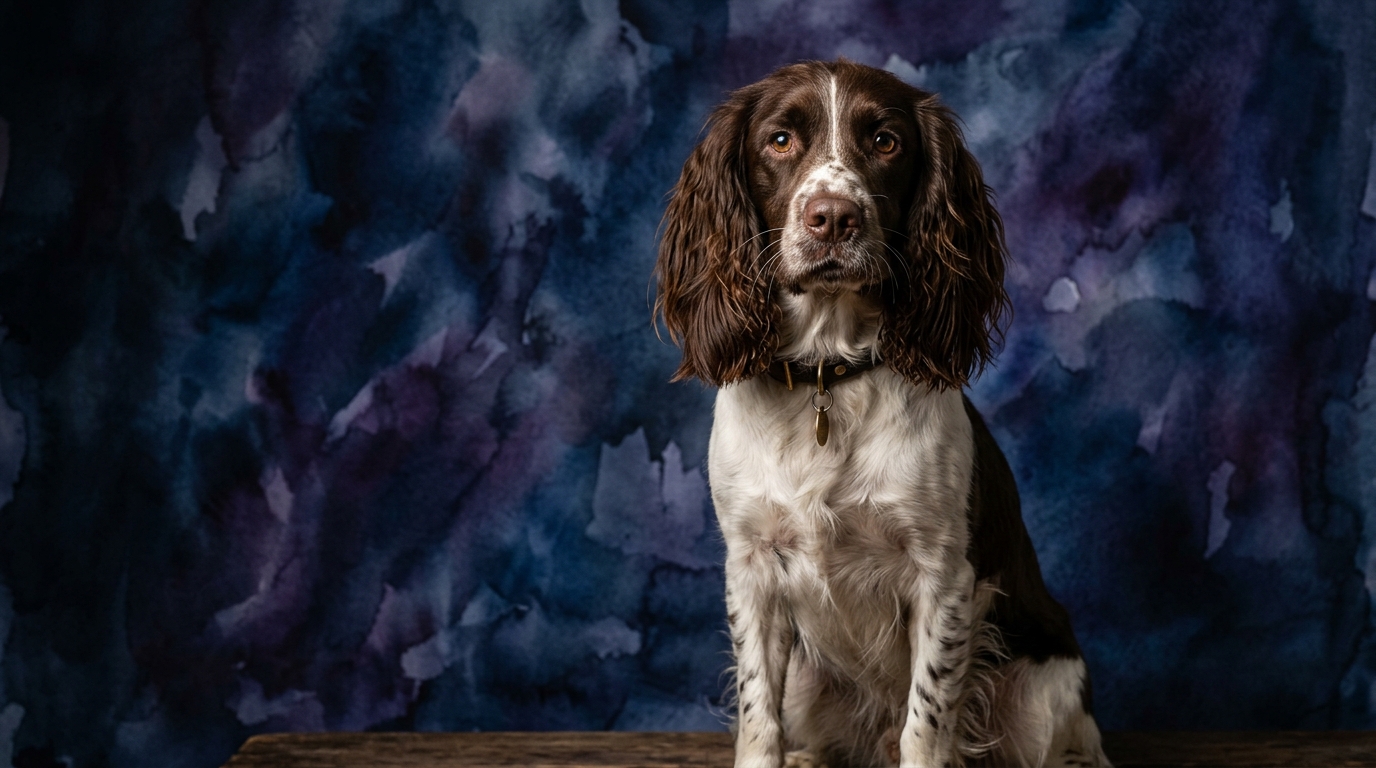

Side-by-Side Cognitive Profiles: English Springer Spaniel vs. Norfolk Terrier
The Cosmic Pet Pet IQ Lab provides a structured framework for understanding canine cognition, breaking down intelligence into five key dimensions. Let’s examine how the English Springer Spaniel and Norfolk Terrier measure up, revealing their distinct mental landscapes.
The English Springer Spaniel, a Sporting Group member, boasts a Coren rank of #13, indicating a breed that quickly understands and obeys commands. Their cognitive profile is robust: Problem Solving 4/5, Training Speed 5/5, Social Intelligence 4/5, Instinctive Drive 5/5, and Memory 4/5. This suggests a dog with a strong capacity for learning complex tasks, a deep desire to work cooperatively, and a powerful, directed natural drive.
In contrast, the Norfolk Terrier, from the Terrier Group, is not Coren-ranked, suggesting a different cognitive emphasis. Their IQ scores are consistent across the board: Problem Solving 3/5, Training Speed 3/5, Social Intelligence 3/5, Instinctive Drive 3/5, and Memory 3/5. This profile points to a dog that is capable and practical, but perhaps more independent in its approach to learning and interaction, with a more moderate expression of its innate drives.
Where the English Springer Spaniel’s Cognition Shines
The English Springer Spaniel's cognitive strengths are deeply rooted in their history as cooperative hunting partners. Their perfect 5/5 score in Training Speed means they grasp new commands and routines with remarkable efficiency, often requiring minimal repetition. This rapid learning, coupled with their 4/5 Memory, makes them exceptionally adept at mastering complex sequences for advanced obedience, agility, or scent work, retaining detailed instructions over extended periods.
Their superior Social Intelligence (4/5) further enhances their ability to work alongside humans. They are highly attuned to handler cues, body language, and vocal tones, enabling them to interpret subtle signals and adjust their behavior accordingly. This cooperative spirit, combined with their 4/5 Problem Solving, allows them to excel in collaborative tasks, such as navigating intricate scent trails or performing multi-stage retrieves, where they actively engage with their handler to achieve a common goal.
Furthermore, their powerful 5/5 Instinctive Drive isn't just raw energy; it's a focused, purposeful intensity. This manifests as an unwavering concentration on tasks related to flushing, retrieving, and tracking, making them tireless and dedicated partners in field sports or other working roles. This drive, channeled constructively, makes them highly motivated participants in activities that challenge their natural abilities.
Cognitive Advantages of the Norfolk Terrier
While the Norfolk Terrier's scores might appear lower on paper, their cognitive profile reveals distinct advantages, particularly when viewed through the lens of their terrier heritage. Their Problem Solving at 3/5, combined with their inherent independence, often means they approach challenges with a pragmatic, self-reliant mindset. Instead of always seeking human direction, they frequently attempt to figure things out on their own, whether it's navigating a tricky obstacle or finding a way to access something interesting. This independent problem-solving can be a strength for owners who appreciate a dog capable of making its own decisions in certain situations.
Their Instinctive Drive, rated 3/5, is characterized by a tenacious focus on specific tasks, particularly those involving small prey or intriguing scents. While not as broadly intense as a Spaniel's, this focused persistence means they can be remarkably single-minded when pursuing a scent trail or digging. This concentrated drive allows them to maintain interest in specific, engaging activities, demonstrating a cognitive strength for their original purpose as vermin hunters.
Moreover, their moderate Social Intelligence (3/5) contributes to a certain resilience and self-reliance. While affectionate with their families, they are generally less prone to needing constant validation or suffering from extreme separation anxiety than some more highly cooperative breeds. This self-contained nature can be a cognitive advantage for owners seeking a companion that is comfortable with periods of independent activity, capable of entertaining itself without constant human intervention.
Trainability: A Tale of Two Approaches
When it comes to ease of training, the English Springer Spaniel generally presents a more straightforward path. Their exceptional Training Speed (5/5) and strong Social Intelligence (4/5) mean they are typically eager to please and highly responsive to commands. They quickly form associations between actions and desired outcomes, thriving on positive reinforcement and handler engagement. Their high Instinctive Drive can be readily channeled into training, making them enthusiastic participants in activities that stimulate their natural retrieving and scenting abilities. Behavioral differences like their strong desire for cooperative work make them keen to learn and adapt.
The Norfolk Terrier, with a Training Speed of 3/5, requires a different approach. While perfectly capable of learning, their inherent terrier independence and occasional stubborn streak mean they often require more consistent patience and creative motivation. They may not always see the immediate value in complying with a command if their own interests, such as investigating a compelling scent or digging, are more pressing. Their problem-solving often involves a degree of self-determination, which can translate into selective hearing if they deem a task less interesting than their own pursuits. Success with a Norfolk often relies on making training fun, varied, and reinforcing their desire to engage on their terms, rather than solely through rote obedience.
Matching Canine Cognition to Lifestyle: Active vs. Relaxed Owners
For owners with a genuinely active lifestyle, the English Springer Spaniel is an ideal match. Their profound 5/5 Instinctive Drive means they require significant daily physical exercise and consistent mental stimulation to remain content and well-behaved. They thrive in environments where they can engage in long walks, runs, hikes, or participate in dog sports like agility, flyball, or advanced obedience. Their cognitive profile makes them exceptional partners for owners who enjoy shared outdoor adventures and purposeful activities, preventing boredom that could lead to redirecting their drives into less desirable behaviors.
Conversely, the Norfolk Terrier, while certainly not a sedentary breed, generally suits owners with a more moderately active lifestyle. Their 3/5 Instinctive Drive and smaller stature mean their exercise requirements are more manageable. They enjoy regular walks, playtime in a secure yard, and engaging indoor activities, but they are often content with shorter, more focused bursts of activity rather than prolonged, strenuous outings. Their independent nature also means they might be less demanding of constant interaction, allowing for periods of self-entertainment, which can be advantageous for owners who appreciate a companion capable of periods of calm independence.
The Verdict
Choose the English Springer Spaniel if you desire a highly cooperative, trainable, and driven partner for extensive outdoor activities, dog sports, or a working role, thriving on shared tasks and engagement.
Choose the Norfolk Terrier if you prefer a spirited, independent companion with a moderate activity level, appreciating a dog that can entertain itself while still forming a deep bond, and you value a tenacious personality.
🧠 Find Your Pet's IQ Score
Our Pet IQ Lab assessment covers 25+ tests across 5 cognitive dimensions — personalized to your breed.
Take the Full IQ Test →Frequently Asked Questions
Are English Springer Spaniels good for first-time dog owners?
Their eagerness to please and high trainability (Training Speed 5/5) make them good candidates, but their significant exercise and mental stimulation needs (Instinctive Drive 5/5) require a committed owner ready for an active lifestyle.
Do Norfolk Terriers bark a lot?
Norfolk Terriers, with their terrier instincts and alert nature, can be prone to barking, especially when sensing intruders or interesting outdoor stimuli. Consistent training and early socialization can help manage this behavior.
Which breed is better with children?
Both breeds can be good with respectful children. English Springer Spaniels, with their high Social Intelligence (4/5) and cooperative nature, often integrate well into family dynamics. Norfolk Terriers are sturdy and playful but may prefer older, more considerate children due to their smaller size and independent streak.