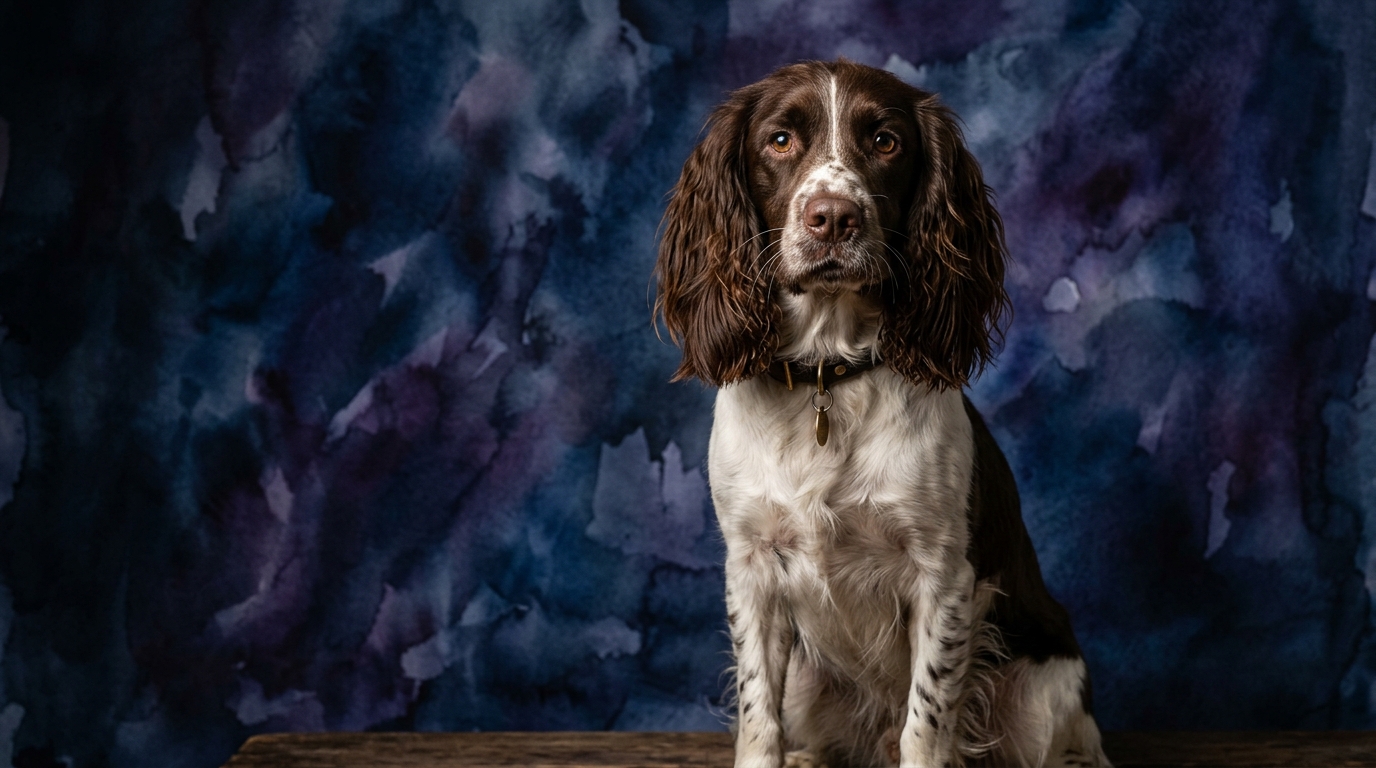

Side-by-Side Cognitive Profiles: Springer Spaniel vs. Sheepdog
The Cosmic Pet Pet IQ Lab's framework provides a detailed lens through which to examine these two breeds. The English Springer Spaniel, a Sporting group member, holds an impressive Coren rank of #13, indicating its capacity for understanding and obedience. Its Problem Solving is rated 4/5, reflecting an ability to navigate complex situations and adapt to new challenges. Training Speed is a stellar 5/5, suggesting rapid command acquisition. Social Intelligence stands at 4/5, denoting a good grasp of human cues and interactions. Instinctive Drive is also 5/5, highlighting its strong natural predispositions for work, while Memory is a solid 4/5, signifying robust retention of learned information and experiences.
In contrast, the Old English Sheepdog, a member of the Herding group, occupies a Coren rank of #44, placing it in a different tier of working intelligence. Its Problem Solving scores 3/5, indicating a more deliberate approach to novel situations. Training Speed is 3/5, suggesting that while capable, it requires more repetition and patience in learning new commands. Social Intelligence is 3/5, implying a moderate responsiveness to social cues. Instinctive Drive is also 3/5, reflecting a functional but perhaps less intense urge towards its historical herding tasks, and notably, its Memory matches the Springer Spaniel at 4/5, demonstrating a strong capacity for recalling past events and learned behaviors.
Where the English Springer Spaniel Excels Cognitively
The English Springer Spaniel's cognitive strengths are particularly evident in its rapid processing and application of information. With a Training Speed of 5/5, it absorbs new commands and routines with remarkable efficiency, making it an ideal candidate for advanced obedience, agility, or field work where quick responses are paramount. This swift learning is often paired with its 5/5 Instinctive Drive, which fuels its desire to work and retrieve, allowing it to quickly connect learned behaviors with natural predispositions, such as scent tracking or flushing game. This breed's 4/5 Problem Solving score means it adeptly navigates dynamic environments, quickly assessing situations and making decisions, whether it's finding a hidden toy or maneuvering through an obstacle course.
Furthermore, its 4/5 Social Intelligence allows the Springer Spaniel to keenly interpret human intentions and moods, facilitating a highly cooperative working relationship. This cognitive harmony between high drive, quick learning, and social awareness makes them exceptionally responsive partners. They anticipate commands and enjoy engaging in tasks that challenge both their physical and mental capacities, often demonstrating a proactive approach to understanding and fulfilling requests.
Cognitive Strengths of the Old English Sheepdog
While the Old English Sheepdog's scores might appear lower across several dimensions, its cognitive profile boasts unique advantages, particularly in areas demanding consistency and long-term retention. Its Memory score of 4/5, matching the Springer Spaniel, is a significant asset; once a lesson is learned or a routine established, the Sheepdog is likely to retain it for the long haul. This steadfast memory is crucial for a breed historically tasked with guarding and guiding livestock over extended periods, where consistent application of learned boundaries and routes is essential rather than lightning-fast improvisation.
The Old English Sheepdog’s 3/5 Problem Solving ability, while not as rapid, often manifests as a thoughtful and methodical approach. They may take longer to process new information but tend to arrive at a stable, reliable solution. Their 3/5 Instinctive Drive, though less intense, means they are less prone to frantic energy or constant demands for high-octane work, instead preferring a steady pace. This can be a cognitive 'win' for owners seeking a calmer companion, as their mental energy is directed more towards observation and consistent execution rather than constant, high-speed engagement. Their 3/5 Social Intelligence suggests a discerning nature, forming deep bonds but perhaps not with the overt eagerness of a spaniel.
Training Dynamics: Which Breed is Easier?
When it comes to ease of training, the English Springer Spaniel generally presents a smoother path due to its 5/5 Training Speed and 5/5 Instinctive Drive. These attributes mean Springers often pick up new commands with minimal repetition and eagerly engage in training sessions, especially when tasks align with their natural retrieving and scenting instincts. Their high social intelligence also makes them highly attuned to handler cues, translating into enthusiastic participation and a strong desire to please, making positive reinforcement exceptionally effective. They are quick to generalize learned behaviors to new situations, rapidly building a diverse repertoire of skills.
The Old English Sheepdog, with its 3/5 Training Speed, requires a more patient and consistent approach. While capable of learning, they may take longer to process and internalize commands, necessitating more repetitions and clear, unambiguous instructions. Their herding background means they respond well to structure and firm, yet gentle, guidance. Owners should be prepared for a more independent streak; an OES might evaluate a command before complying, rather than offering immediate, eager compliance. However, their 4/5 Memory ensures that once a behavior is learned and solidified through consistent reinforcement, it is deeply ingrained, making them reliable companions once training is established.
Matching Breeds to Lifestyles: Active vs. Relaxed Owners
The English Springer Spaniel is an ideal match for active owners who thrive on outdoor adventures and enjoy highly interactive engagement with their canine companions. Their 5/5 Instinctive Drive and 4/5 Problem Solving mean they excel in activities like hiking, running, agility, flyball, and advanced obedience. Owners who can provide daily outlets for their Springer's boundless energy and sharp mind, whether through long walks, scent work, or retrieval games, will find a truly fulfilled and cooperative partner. They need a lifestyle that accommodates their need for both physical exertion and mental stimulation, preventing boredom which can lead to unwanted behaviors.
The Old English Sheepdog, conversely, suits owners who appreciate a more relaxed, yet structured, pace of life. While they benefit from regular walks and play, their 3/5 Instinctive Drive means they don't demand the same intensity of activity as a Springer. They are content with consistent routines and enjoy being a part of family life, often preferring to observe or engage in calm companionship after their exercise needs are met. Owners should be prepared for their significant grooming requirements, which is a different kind of commitment, and be able to provide consistent, patient training to shape their thoughtful nature into a well-mannered household member. They are well-suited for families who enjoy a steady rhythm rather than constant high-energy pursuits.
The Verdict
Choose the English Springer Spaniel if you seek a highly energetic, quick-witted partner for dynamic activities and enjoy a rapid, engaging training process.
Opt for the Old English Sheepdog if you prefer a thoughtful, steady companion who thrives on consistent routines, appreciates a calmer pace, and retains lessons reliably over time.
🧠 Find Your Pet's IQ Score
Our Pet IQ Lab assessment covers 25+ tests across 5 cognitive dimensions — personalized to your breed.
Take the Full IQ Test →Frequently Asked Questions
Is the English Springer Spaniel easy to train for first-time dog owners?
Yes, with a Training Speed of 5/5 and high social intelligence, English Springer Spaniels are generally considered an excellent choice for first-time dog owners. Their eagerness to please and rapid learning curve make the training process rewarding, though their high energy and drive require consistent engagement.
Do Old English Sheepdogs require a lot of mental stimulation despite their lower activity drive?
While their instinctive drive is 3/5, Old English Sheepdogs still benefit from consistent mental stimulation, though it may be less intense than a Springer's. Puzzle toys, routine-based tasks, and consistent, patient training sessions help keep their 4/5 memory and thoughtful problem-solving engaged without demanding frantic energy.
Which breed is better for apartment living, considering their cognitive profiles?
Neither breed is ideally suited for small apartment living without significant owner commitment, but the Old English Sheepdog might adapt slightly better if its exercise needs are diligently met. Its lower instinctive drive (3/5) means it's less prone to destructive boredom than a high-drive Springer (5/5), provided it receives regular, structured outdoor activity and its need for a steady routine is fulfilled.