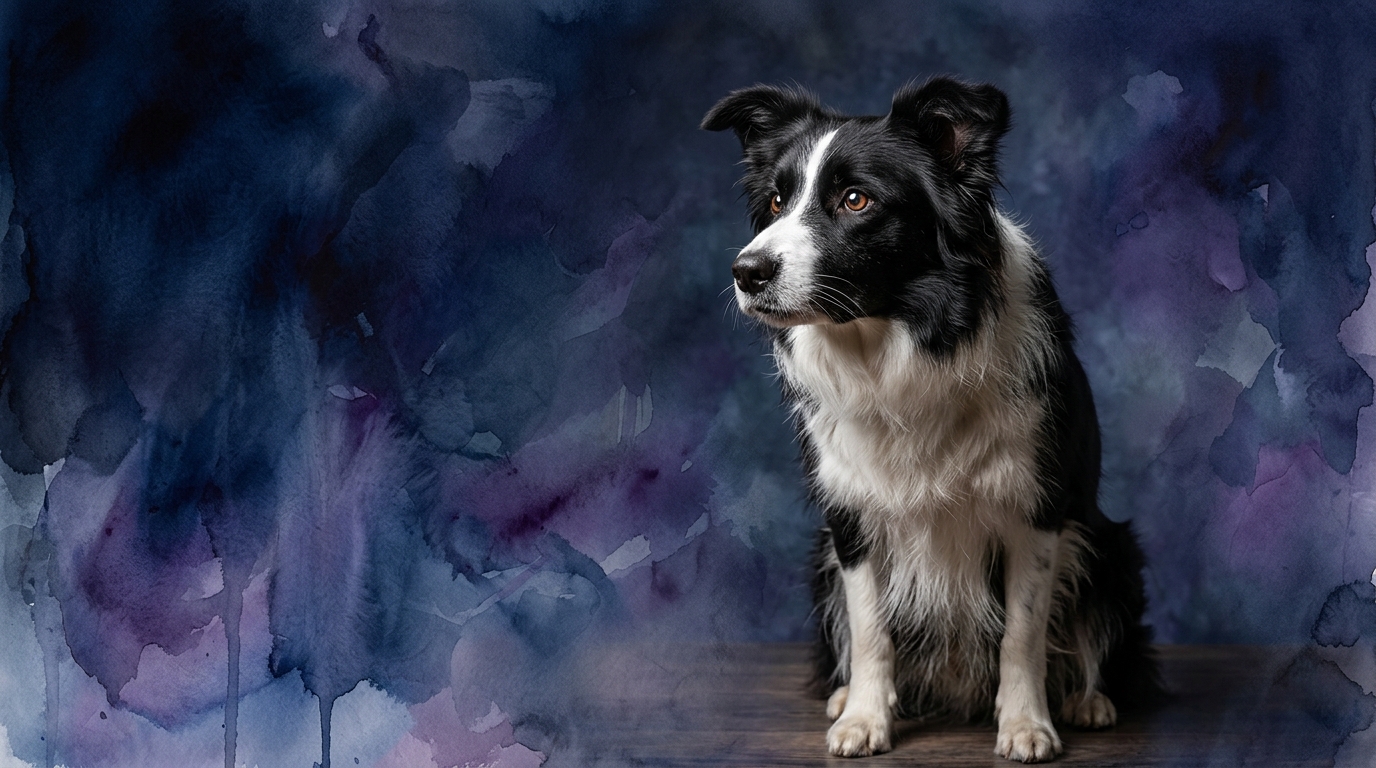

Side-by-Side IQ Profile: Border Collie vs. Old English Sheepdog
The Cosmic Pet Pet IQ Lab employs a comprehensive five-dimensional framework to assess canine intelligence, offering a nuanced view beyond simple rankings. Here's how the Border Collie (Coren rank #1) and the Old English Sheepdog (Coren rank #44) compare across these critical cognitive dimensions.
For the Border Collie:
Problem Solving (5/5): This breed exhibits a remarkable capacity for rapid analysis of novel situations, often devising innovative solutions to complex environmental challenges or tasks. They are adept at understanding cause-and-effect relationships and adapting their strategies on the fly.
Training Speed (5/5): Border Collies absorb new commands and routines with exceptional swiftness, often requiring only a few repetitions to master a concept. Their eagerness to engage and process information makes them incredibly responsive learners.
Social Intelligence (4/5): While highly attuned to human cues and capable of understanding complex social dynamics within their family unit, their intense focus on tasks can sometimes overshadow purely social interactions. They excel at understanding expectations and roles.
Instinctive Drive (5/5): Possessing an intense herding instinct, Border Collies display a relentless work ethic and profound persistence in pursuing their objectives, whether it's gathering livestock or mastering an agility course.
Memory (5/5): Their recall capabilities are outstanding, allowing them to retain a vast repertoire of commands, sequences, and past experiences over extended periods, contributing to their consistent performance.
For the Old English Sheepdog:
Problem Solving (3/5): Old English Sheepdogs are capable of solving problems, but they tend to approach challenges with a more measured pace, often preferring established methods over spontaneous innovation. They can learn to navigate complex situations but may require more guidance.
Training Speed (3/5): While certainly trainable, this breed generally requires more patience and repetition to solidify new commands and behaviors. They respond best to clear, consistent instruction rather than expecting rapid concept generalization.
Social Intelligence (3/5): These dogs are affectionate and devoted family members, forming strong bonds. However, they might not interpret subtle human emotional shifts with the same nuance as some breeds, often displaying a calm, steady social presence rather than intense responsiveness.
Instinctive Drive (3/5): Their herding instinct is present but manifests differently, often with a focus on guarding and guiding rather than the intense, predatory eye of a Border Collie. Their drive is generally moderate, allowing for a more relaxed disposition.
Memory (4/5): Once an Old English Sheepdog learns a command or routine, they tend to retain it reliably. While initial learning might take longer, their memory ensures that well-established behaviors persist effectively.
Where the Border Collie Wins Cognitively
The Border Collie's cognitive prowess is most evident in its unparalleled capacity for complex task mastery and adaptive learning. Their 5/5 Problem Solving score means they are not merely repeating actions but actively analyzing situations, such as rapidly discerning patterns in an unfamiliar agility course or devising novel strategies to gather scattered livestock efficiently. This breed's 5/5 Training Speed allows them to absorb a vast vocabulary of commands and execute intricate multi-step sequences with minimal prompting. Coupled with a 5/5 Memory, a Border Collie can recall dozens of distinct tricks or complex routines years after initial learning, demonstrating an exceptional ability to generalize learned behaviors to new contexts. Their 5/5 Instinctive Drive fuels a relentless pursuit of purpose, making them exceptionally focused and persistent in any mental challenge presented.
Where the Old English Sheepdog Wins Cognitively
While not matching the Border Collie in raw processing speed or problem-solving innovation, the Old English Sheepdog's cognitive profile offers distinct advantages for certain lifestyles. Their 3/5 Instinctive Drive, for instance, means they are less prone to the obsessive behaviors or constant mental demand that a Border Collie might exhibit, fostering a calmer home environment. This breed's 4/5 Memory, combined with a more moderate 3/5 Problem Solving score, suggests an excellence in reliable retention of consistent routines rather than a constant need for novel adaptations; they thrive on predictability. Their 3/5 Social Intelligence often translates into a steady, unflappable companionship, less prone to anxiety from subtle human mood shifts, making them wonderfully stable family members who offer a comforting, dependable presence rather than an acutely responsive one.
Which is Easier to Train and Why
From a sheer efficiency standpoint, the Border Collie is undeniably easier to train for complex tasks, primarily due to its 5/5 Training Speed and 5/5 Problem Solving. They grasp new concepts with astonishing rapidity, often requiring only a handful of repetitions before a command is internalized. Their desire to work and innate ability to understand and anticipate human intent, stemming from their 4/5 Social Intelligence and 5/5 Instinctive Drive, means they actively seek to participate in training. However, this ease comes with a significant caveat: their profound cognitive needs demand consistent, challenging training to prevent the development of destructive behaviors born from boredom or understimulation.
In contrast, the Old English Sheepdog, with its 3/5 Training Speed and 3/5 Problem Solving, requires a more patient and repetitive approach. They are not as quick to generalize new information or innovate solutions independently. Training an OES relies heavily on clear, consistent positive reinforcement and establishing routine. Their lower 3/5 Instinctive Drive means they might not possess the same fervent desire to work for work's sake, but they are eager to please their family. While less prone to 'thinking for themselves' in a way that might challenge a trainer, their slower processing means that foundational obedience takes more time and sustained effort to embed reliably.
Which Suits Active Owners vs. Relaxed Owners
The Border Collie is an ideal match for active owners who thrive on constant engagement, complex training, and participation in demanding dog sports such as agility, obedience, herding trials, or flyball. These owners typically possess the time and dedication to provide daily mental and physical challenges that align with the Border Collie's 5/5 Instinctive Drive and 5/5 Problem Solving capacity. They need an owner who views dog ownership as a partnership requiring deep cognitive interaction and continuous learning.
Conversely, the Old English Sheepdog is better suited for more relaxed owners seeking a steadfast, affectionate companion for consistent daily walks and less intense but regular mental stimulation. These owners appreciate a dog content with established routines, puzzle toys, and occasional refreshers of basic obedience, rather than needing constant novel challenges. Their moderate 3/5 Instinctive Drive and 3/5 Problem Solving capacity mean they are less likely to become agitated or destructive if not constantly engaged in high-level intellectual work, making them a better fit for a calmer, more predictable home environment.
The Verdict
Choose a Border Collie if you are prepared for a profound partnership demanding continuous cognitive engagement, rigorous training, and the dedication to channel an intense drive into productive, stimulating outlets.
Opt for an Old English Sheepdog if you desire a devoted, steady companion who thrives on routine, consistent guidance, and a more relaxed pace of life, without the incessant demand for complex mental challenges.
🧠 Find Your Pet's IQ Score
Our Pet IQ Lab assessment covers 25+ tests across 5 cognitive dimensions — personalized to your breed.
Take the Full IQ Test →Frequently Asked Questions
Can an Old English Sheepdog participate in dog sports?
Yes, Old English Sheepdogs can certainly participate in dog sports like obedience and rally, but they might not achieve the same speed or precision as a Border Collie. Their participation is often more about enjoyment and bonding rather than competitive top-tier performance, reflecting their 3/5 Training Speed.
How does the Border Collie's high instinctive drive impact daily life?
A Border Collie's 5/5 instinctive drive means they possess an intense need for purpose and mental stimulation, which, if unmet, can lead to herding children or objects, obsessive behaviors, or destructive tendencies. This drive requires an owner to provide consistent outlets such as training, work, or structured play.
Is an Old English Sheepdog a good choice for a first-time dog owner?
An Old English Sheepdog can be a good choice for a first-time owner who is committed to consistent, patient training and understands their need for routine. While they require more repetitions (3/5 Training Speed), their generally calmer disposition and lower demand for constant complex mental work can be less overwhelming than a Border Collie's intense needs.