
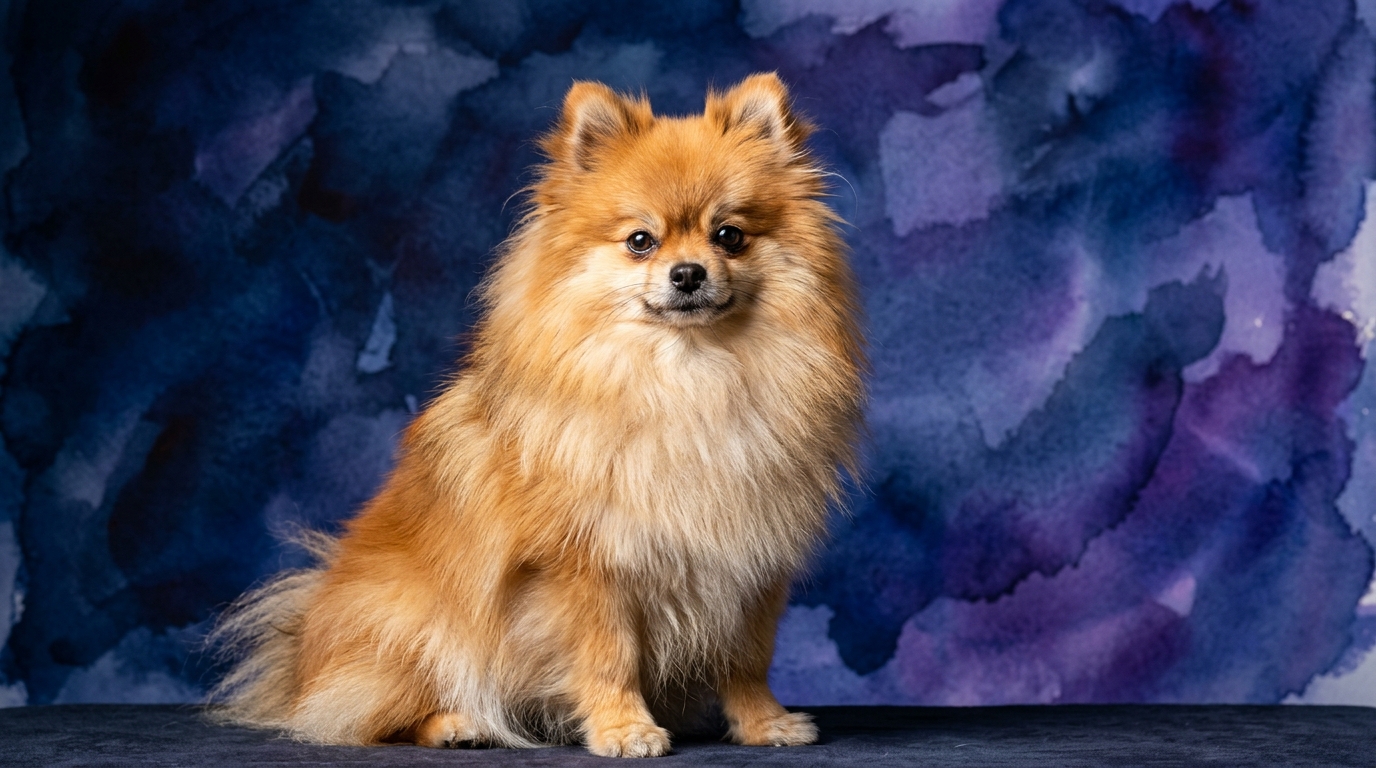
Side-by-Side IQ Profile: English Springer Spaniel vs. Pomeranian
The English Springer Spaniel, ranking #13 on the Coren intelligence scale, presents a formidable cognitive profile. Its problem-solving capabilities are rated 4/5, indicating a strong capacity for navigating new challenges and figuring out solutions independently. Training speed is exceptional at 5/5, suggesting a rapid grasp of new commands and routines, a trait honed by generations of working alongside humans. Social intelligence, at 4/5, reflects their adeptness at understanding human cues and integrating into family dynamics. An instinctive drive score of 5/5 highlights their powerful natural urges for retrieving, scenting, and working, deeply rooted in their sporting heritage. Finally, their memory is rated 4/5, allowing them to retain learned behaviors and spatial information effectively over time.
In contrast, the Pomeranian, holding the #23 spot on the Coren scale, offers a unique set of cognitive strengths. Their problem-solving score matches the Springer Spaniel at 4/5, demonstrating a surprising capacity for resourcefulness despite their small stature. Training speed is a respectable 4/5, meaning they learn new commands efficiently, though perhaps requiring a few more repetitions than their larger counterpart. Social intelligence also stands at 4/5, indicating they are equally attuned to human emotions and social structures, often leveraging this understanding for their benefit. Their instinctive drive, however, is a moderate 3/5, reflecting a lesser emphasis on traditional working roles and more on companionship traits. Memory, like the Springer, is strong at 4/5, enabling them to remember routines, people, and boundaries.
Where the English Springer Spaniel Wins Cognitively
The English Springer Spaniel truly shines in areas demanding high physical and mental stamina, particularly evidenced by its perfect 5/5 instinctive drive and training speed scores. This breed exhibits a profound intrinsic motivation to engage in tasks that mimic their historical role as flushing and retrieving gundogs. Their superior instinctive drive means they possess an innate eagerness to work, whether it’s tracking a scent, retrieving a thrown object, or exploring complex environments. This drive provides a foundational layer for their rapid training speed; they aren't just learning commands, they are often fulfilling a deep-seated desire to perform, making the learning process highly reinforcing. For instance, a Springer Spaniel might instinctively understand the concept of “fetch” with minimal prompting, quickly associating the action with positive outcomes due to its inherent retrieving impulse. This combination makes them particularly adept at advanced obedience, agility, and scent work, where sustained focus and a natural inclination to cooperate are paramount. Their cognitive strength lies in their ability to integrate physical action with learned commands, driven by a powerful internal engine.
Where the Pomeranian Wins Cognitively
While the English Springer Spaniel excels in driven work, the Pomeranian's cognitive advantages often manifest in more nuanced, companion-centric ways. Their problem-solving score of 4/5, identical to the Springer, is particularly noteworthy given their smaller size and typically less demanding historical roles. This indicates a sharp wit and resourcefulness, often applied to navigating their human-centric world rather than vast fields. Pomeranians frequently demonstrate cleverness in manipulating their environment or their owners to achieve desired outcomes, such as figuring out how to reach a treat on a high shelf or employing specific vocalizations to request attention. Their social intelligence, also 4/5, allows them to read human moods and intentions with remarkable accuracy, often adapting their behavior to elicit specific responses. They are masters of charming their way into preferred situations, showcasing a sophisticated understanding of social dynamics within a household. This breed’s cognitive strengths are less about raw physical drive and more about adaptive cleverness and social acumen, making them astute observers and active participants in domestic life. They might not retrieve a pheasant, but they can certainly outsmart a baby gate or convince you to share your snack.
Which is Easier to Train and Why
Based on the IQ Lab metrics, the English Springer Spaniel is generally easier to train, primarily due to its superior training speed (5/5 vs. Pomeranian's 4/5) and its perfect instinctive drive (5/5 vs. Pomeranian's 3/5). The Springer's high training speed means it typically requires fewer repetitions to grasp new commands and concepts, absorbing lessons with remarkable efficiency. This is profoundly supported by its strong instinctive drive; these dogs are inherently motivated to engage in activities that align with their natural predispositions, such as retrieving, following directions, and working closely with a handler. Their desire to please and fulfill a purpose makes them highly receptive to instruction.
In contrast, while the Pomeranian has a respectable training speed of 4/5, their lower instinctive drive means they might not always possess the same intrinsic motivation for structured obedience. Pomeranians can be quite independent and may require more creative motivational techniques, often responding best to positive reinforcement centered around high-value treats or engaging play rather than the sheer joy of the task itself. Their training might involve more patience and consistency to overcome occasional stubbornness or a preference for self-directed activity. While a Pomeranian can certainly achieve a high level of training, the journey often demands a more nuanced approach, whereas the Springer Spaniel's inherent drive often makes it a more straightforward and rapid learner for traditional obedience and task-oriented training.
Which Suits Active Owners vs. Relaxed Owners
For active owners seeking a canine partner for adventures and structured activities, the English Springer Spaniel is an excellent match. Their exceptional instinctive drive (5/5) and robust physical capabilities mean they thrive on daily exercise, mental challenges, and opportunities to engage their working instincts. Owners who enjoy long hikes, running, dog sports like agility or flyball, hunting, or even just extended sessions of fetch will find a Springer an enthusiastic and tireless companion. Neglecting their need for activity can lead to boredom and undesirable behaviors, as their high energy and drive need an appropriate outlet. They require an owner who can consistently provide both physical exertion and cognitive stimulation to keep them content and well-adjusted.
Conversely, the Pomeranian often suits owners with a more relaxed lifestyle, though they are certainly not couch potatoes. While they possess a keen problem-solving ability (4/5) and enjoy interactive play, their instinctive drive (3/5) is less intense, and their smaller size makes their exercise requirements more manageable. They are content with shorter walks, indoor games, and plenty of lap time or cuddles. A Pomeranian will enjoy puzzle toys and learning new tricks, but they don't demand the same level of sustained physical output as a Springer. They are well-suited for apartment living or homes with smaller yards, provided they receive regular mental engagement and social interaction. An owner who appreciates a companion that is clever, affectionate, and doesn't require hours of strenuous activity each day will find the Pomeranian a delightful fit.
The Verdict
Choose an English Springer Spaniel if you lead an active lifestyle and desire a highly trainable, driven companion for outdoor adventures, dog sports, or a working role.
Opt for a Pomeranian if you prefer a clever, affectionate, and more compact companion suited to a less physically demanding lifestyle, but who still appreciates mental games and social interaction.
🧠 Find Your Pet's IQ Score
Our Pet IQ Lab assessment covers 25+ tests across 5 cognitive dimensions — personalized to your breed.
Take the Full IQ Test →Frequently Asked Questions
Does the Pomeranian's smaller size impact its problem-solving abilities?
Not necessarily; the Pomeranian's problem-solving score of 4/5 demonstrates a robust capacity for figuring out novel situations, often applying their cleverness to navigating their home environment or interacting with their human family. Their resourcefulness is more about mental agility than physical scale.
How do their social intelligence scores of 4/5 compare in practice?
Both breeds show a strong ability to understand human cues, but they express it differently; the Springer often uses it to cooperate in tasks, while the Pomeranian might use it to charmingly solicit attention or treats. The Springer's social understanding supports teamwork, whereas the Pomeranian's supports companionship and influence.
What does a 5/5 instinctive drive mean for daily life with an English Springer Spaniel?
A 5/5 instinctive drive means the English Springer Spaniel possesses strong natural urges for activities like retrieving, scenting, and exploring, which translates to a high need for purposeful engagement. In daily life, this means they will be happiest and most well-behaved when given opportunities to channel these drives through structured play, training, or activities that mimic their working heritage.