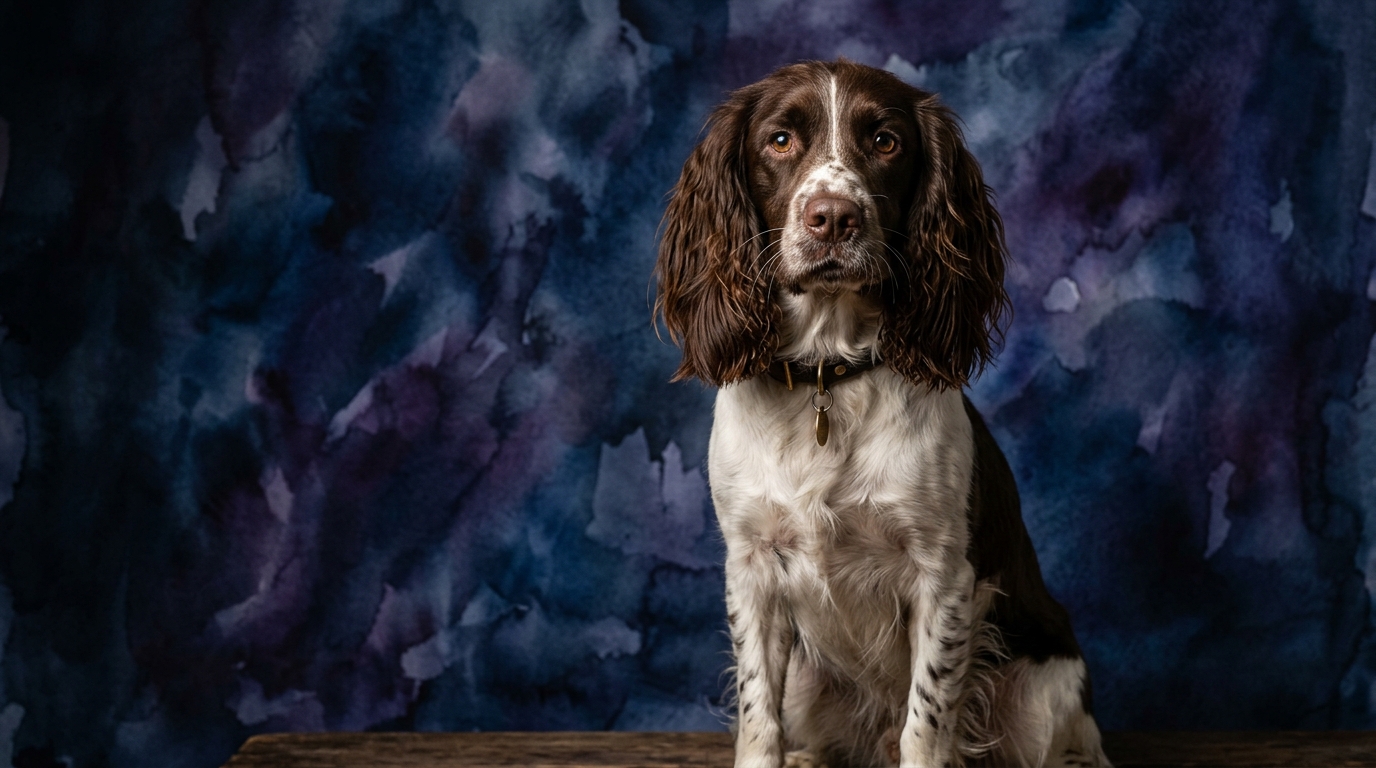
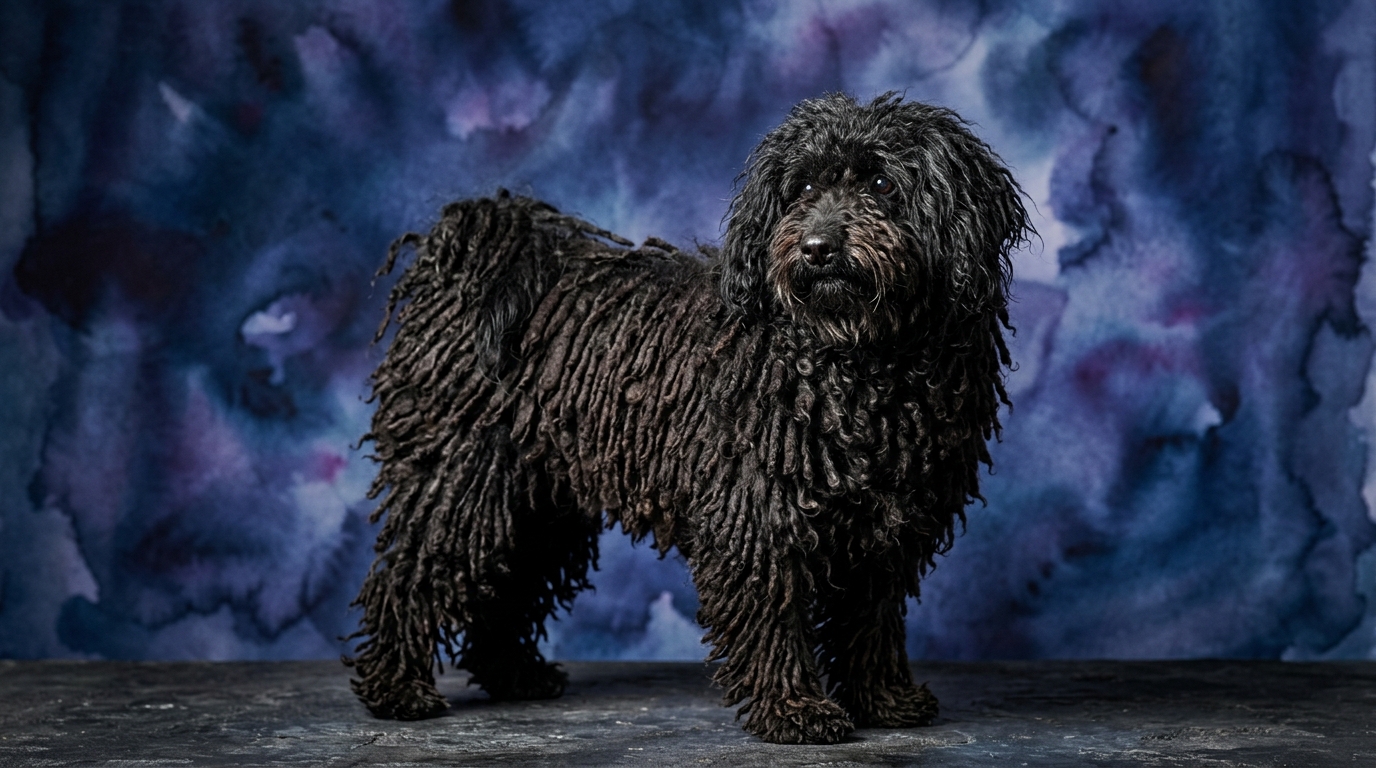
Side-by-Side IQ Profile: English Springer Spaniel vs. Puli
The Cosmic Pet Pet IQ Lab employs five key dimensions to evaluate canine intelligence, offering a nuanced perspective beyond simple obedience. For the English Springer Spaniel, a Sporting group member with a Coren ranking of #13, its profile reflects a breed crafted for collaborative field work. Its Problem Solving is rated at 4/5, indicating a strong capacity to navigate complex environments and situations, particularly those involving scent and retrieval. The Training Speed is an exceptional 5/5, highlighting their remarkable eagerness and ability to quickly grasp and execute new commands. Social Intelligence stands at 4/5, showcasing a deep desire to work alongside and please their human partners. An Instinctive Drive of 5/5 underscores their powerful, focused prey drive, essential for their original purpose. Finally, their Memory is solid at 4/5, allowing them to retain learned tasks and spatial information effectively.
In contrast, the Puli, a Herding breed with a Coren ranking of #25, presents a different cognitive blueprint, reflecting its role as an independent livestock guardian and herder. Its Problem Solving is also 4/5, but this manifests as a strong capacity for autonomous decision-making in dynamic herding scenarios, often requiring quick, on-the-spot judgments without constant human direction. The Training Speed is 4/5, signifying efficient learning, though their independent streak means they may require more consistent and varied motivational strategies. Social Intelligence is rated 3/5, suggesting a more reserved nature, often forming strong bonds within a smaller, trusted circle rather than displaying the overt collaborative eagerness of a Sporting breed. Its Instinctive Drive is 3/5, representing a strong herding instinct, but less generalized and intense than the Springer Spaniel's prey drive. Like the Springer, the Puli's Memory is 4/5, crucial for recalling complex flock management strategies and learned boundaries.
Where the English Springer Spaniel Wins Cognitively
The English Springer Spaniel's cognitive strengths distinctly align with its historical role as a flushing and retrieving gun dog. Its unparalleled 5/5 Training Speed is a standout, reflecting an inherent willingness to engage with human instruction and a rapid acquisition of new behaviors. This isn't merely about learning basic commands; it encompasses absorbing complex sequences required for field work, such as quartering a field systematically and executing precise retrieves. This swift learning curve makes them highly adaptable to various directed tasks and competitive dog sports.
Furthermore, their 5/5 Instinctive Drive provides a potent, focused motivation crucial for their work. This powerful drive to hunt, flush, and retrieve fuels their relentless work ethic and makes them exceptionally driven in tasks involving scent discrimination or pursuit. This deep-seated instinct, when channeled appropriately, becomes a significant cognitive asset, allowing them to perform intricate tasks with sustained enthusiasm. Their 4/5 Social Intelligence also contributes to their cognitive wins; their strong desire to work *with* a handler, seeking approval and direction, makes them highly responsive and cooperative partners, translating into a seamless working relationship.
Where the Puli Wins Cognitively
The Puli's cognitive architecture shines in areas demanding independent judgment and self-sufficiency, a direct reflection of its herding lineage. Its 4/5 Problem Solving score, while numerically identical to the Springer, represents a different kind of cognitive superiority: the ability to assess and react to dynamic situations without constant human input. A Puli must make quick decisions to turn a flock, prevent stragglers, or manage livestock movements autonomously, demonstrating a profound capacity for situational analysis and adaptive strategy. This independent problem-solving sets them apart, requiring less micro-management than breeds bred for closer human collaboration.
Moreover, the Puli's robust 4/5 Memory is vital for executing these complex, self-directed tasks effectively. This memory allows them to retain intricate details about flock boundaries, individual animal behaviors, and nuanced herding patterns over extended periods. This cognitive skill enables them to refine and execute sophisticated strategies, ensuring the efficient and safe management of livestock. While its 3/5 Social Intelligence might seem lower, it underscores a capacity for self-reliance; the Puli is often confident in its own judgment, a necessary trait for a guardian and herder operating with minimal direct oversight.
Which is Easier to Train and Why?
When considering ease of training, the English Springer Spaniel generally holds an advantage due to its exceptional 5/5 Training Speed and 4/5 Social Intelligence. Springers are inherently eager to please, respond quickly to positive reinforcement, and thrive on collaborative tasks with their human companions. Their strong instinctive drives for scent work and retrieval can be readily channeled into specific, desired behaviors, making them highly receptive to learning complex routines like precise heeling patterns or multi-stage retrieves. Their desire to work in partnership means they are often looking to their handler for guidance and approval, which streamlines the training process significantly.
The Puli, while possessing a commendable 4/5 Training Speed, often presents a different training dynamic. Their 3/5 Social Intelligence and more independent nature mean they might learn efficiently but may require more patience, consistency, and creative motivation to ensure compliance. A Puli is capable of understanding commands quickly but might choose not to execute them if they perceive a better alternative or if their motivation isn't sufficiently engaged. Their herding drive, while powerful, can sometimes be more challenging to redirect into non-herding tasks without dedicated effort. This means that while a Puli learns, they might also challenge or 'think around' commands, requiring a trainer who appreciates their cognitive autonomy and can make training a compelling, collaborative puzzle rather than a series of rote instructions.
Which Suits Active Owners vs. Relaxed Owners?
The English Springer Spaniel is unequivocally suited for active owners. Their profound 5/5 Instinctive Drive demands significant physical and mental exercise to remain balanced and content. They require consistent outlets for their scenting, flushing, and retrieving instincts, making them ideal companions for individuals or families who enjoy hiking, hunting, agility, competitive obedience, or extensive outdoor adventures. A relaxed owner who cannot provide at least 60-90 minutes of vigorous, engaging activity daily would likely find a Springer becoming bored, restless, and potentially developing undesirable behaviors stemming from unfulfilled mental and physical needs.
The Puli also leans towards owners who can provide consistent activity and mental engagement, though with a distinct emphasis on purposeful work. While perhaps not as relentlessly driven for continuous motion as a Springer, their herding background and independent problem-solving minds (4/5) mean they thrive on tasks that occupy their intellect. They excel in herding trials, agility, or long, varied walks that allow them to observe and 'manage' their surroundings. A 'relaxed' owner who doesn't provide consistent mental stimulation might find a Puli inventing its own, often less desirable, activities to satisfy its cognitive needs. While they might enjoy a cuddle on the couch, their fulfillment comes from purposeful engagement and having a 'job' to do, making them best suited for owners who understand and can provide for this intrinsic drive for activity and mental challenge.
The Verdict: When to Choose Each Breed
The Verdict
Choose an English Springer Spaniel if you seek an exceptionally eager, cooperative partner for active pursuits like field sports, agility, or extensive outdoor adventures, and thrive on a strong human-canine bond built on shared tasks.
Opt for a Puli if you appreciate a clever, independent thinker with a unique problem-solving approach, are prepared for consistent, engaging training that respects their autonomy, and enjoy a companion who is observant and purposeful in their actions.
🧠 Find Your Pet's IQ Score
Our Pet IQ Lab assessment covers 25+ tests across 5 cognitive dimensions — personalized to your breed.
Take the Full IQ Test →Frequently Asked Questions
Do English Springer Spaniels make good family pets?
Yes, their strong social intelligence and desire for companionship often make them excellent family dogs, especially in active households where their energy and need for interaction can be met. They typically bond closely with their human family members and are generally good with children.
How much exercise does a Puli need daily?
Pulis require a good amount of daily exercise and mental stimulation, typically 60-90 minutes of varied activity like brisk walks, play, or training sessions, to keep their problem-solving minds and agile bodies engaged. Without adequate outlets, they can become restless and invent their own amusement.
Are there significant differences in grooming between the two breeds?
Yes, grooming is vastly different; English Springer Spaniels require regular brushing and occasional trimming to manage their feathered coats and prevent matting, while Pulis are known for their unique corded coats that require specific, less frequent but more intensive care to maintain their characteristic dreadlock appearance.