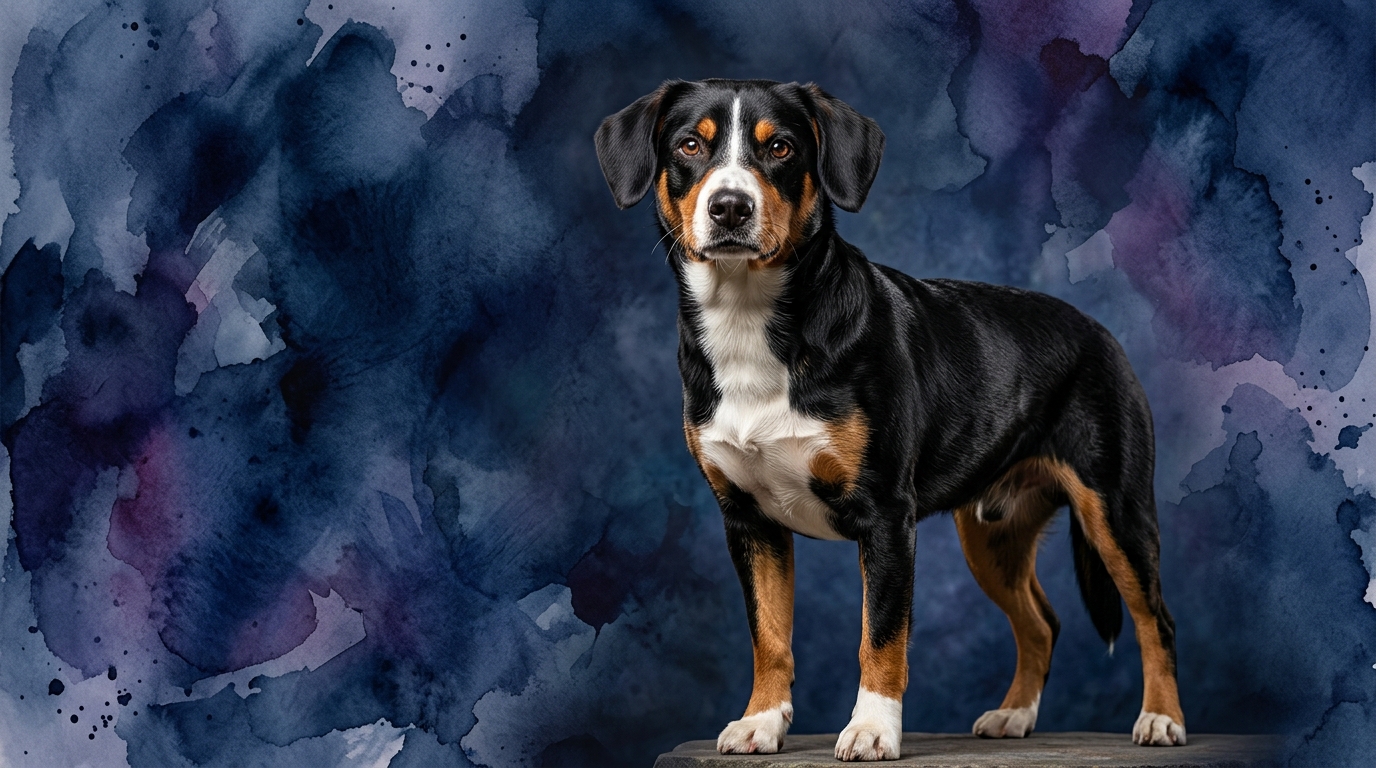
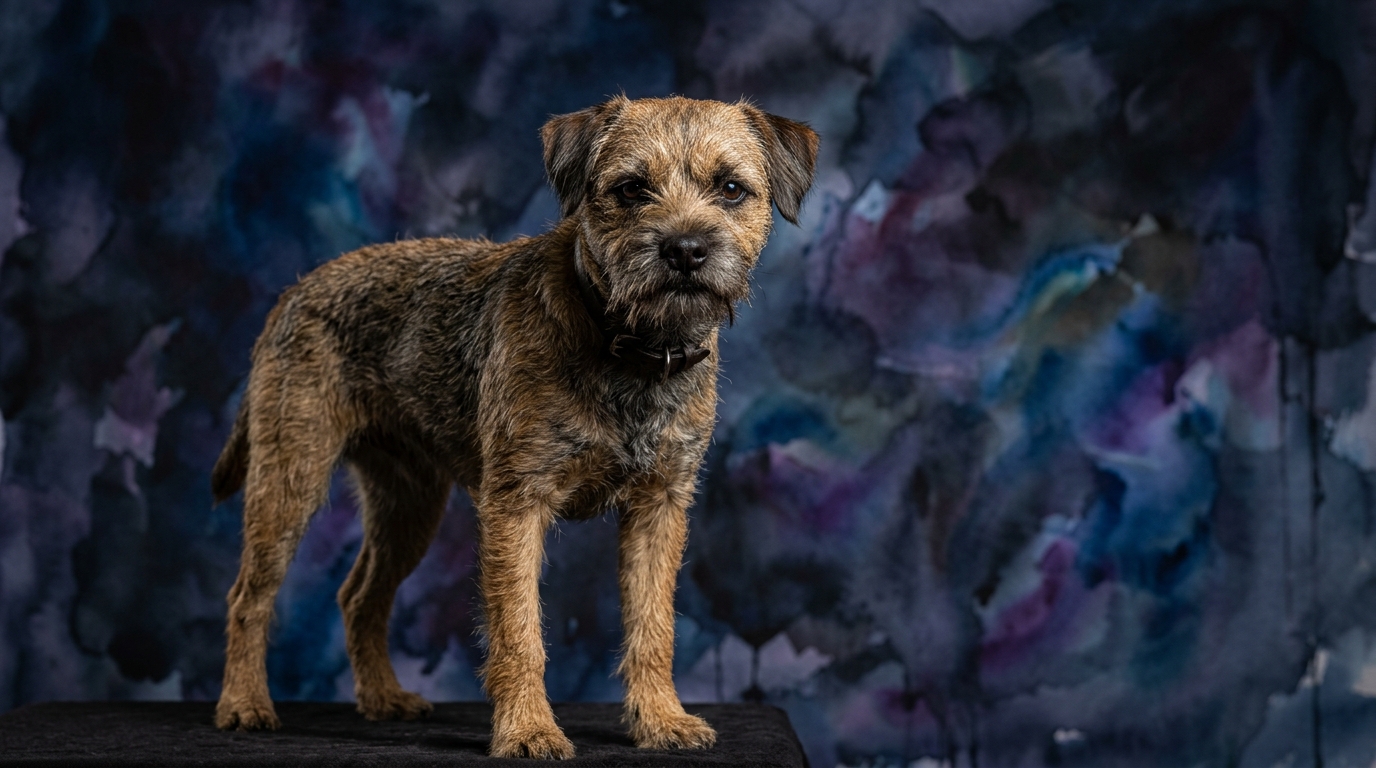
Side-by-Side Cognitive Profile: Entlebucher Mountain Dog vs. Border Terrier
The Entlebucher Mountain Dog, originating from the Swiss Alps, presents a cognitive profile marked by consistent capabilities across key dimensions. Its Problem Solving is rated at 3/5, indicating a moderate ability to navigate novel situations and figure out solutions, perhaps relying more on established patterns than spontaneous innovation. Training Speed also stands at 3/5, suggesting a steady learning pace where repetition and clear communication yield gradual but firm retention. Social Intelligence, at 3/5, points to a decent aptitude for interpreting human emotions and social cues, allowing for harmonious interaction within a family unit. An Instinctive Drive of 3/5 reflects a moderate innate motivation, likely tied to its herding heritage but generally manageable. Finally, its Memory at 3/5 implies a reliable capacity to recall learned commands and experiences, though perhaps not with the instantaneous recall of some breeds.
The Border Terrier, a tenacious hunting dog from the Anglo-Scottish border, showcases a sharper cognitive edge in several areas. Its Problem Solving is rated 4/5, indicating a strong capability to independently strategize and overcome obstacles, a vital trait for a dog tasked with flushing quarry from dens. Training Speed also reaches 4/5, signifying a quicker grasp of new commands and concepts, often requiring fewer repetitions to achieve proficiency. Social Intelligence, at 3/5, matches the Entlebucher, suggesting an equitable ability to understand and respond to social dynamics. Its Instinctive Drive at 3/5 points to a moderate, but persistent, inherent motivation, particularly concerning its prey drive. A Memory score of 4/5 rounds out its profile, suggesting an excellent capacity for retaining complex information and experiences over time, aiding in recall and learned behaviors.
Where the Entlebucher Mountain Dog Wins Cognitively
While the Border Terrier generally scores higher, the Entlebucher's balanced cognitive profile offers distinct advantages in specific contexts. Its consistent 3/5 across Problem Solving, Training Speed, Social Intelligence, Instinctive Drive, and Memory suggests a predictable and stable cognitive temperament. This equilibrium means less likelihood of extreme behavioral quirks stemming from an overly high drive or a propensity for independent, sometimes mischievous, problem-solving. For instance, an Entlebucher's 3/5 instinctive drive, compared to a potentially more intense 3/5 in a terrier focused on prey, might manifest as a more controllable herding instinct rather than a relentless pursuit of small animals. Its moderate problem-solving at 3/5 means it’s less likely to creatively outwit its owner or find ingenious ways to escape or access forbidden items, fostering a more straightforward relationship. The Entlebucher’s steady learning curve, indicated by its 3/5 training speed, ensures that once a concept is learned, it is usually deeply ingrained, leading to dependable performance without the need for constant novelty or challenge that some faster learners require. This breed's strength lies in its reliable, even-keeled cognitive processing, making it a robust companion for owners who value consistency over lightning-fast, sometimes unpredictable, brilliance.
Where the Border Terrier Wins Cognitively
The Border Terrier truly shines in areas demanding quicker mental processing and independent thought, a direct reflection of its historical role. Its 4/5 rating in Problem Solving indicates a superior ability to adapt to new situations and independently devise solutions, whether it's navigating complex terrain or figuring out how to open a gate. This resourcefulness makes them adept at overcoming challenges without constant human guidance. Coupled with a 4/5 Training Speed, the Border Terrier absorbs new commands and routines with impressive alacrity. They often pick up complex sequences quickly, making them excellent candidates for advanced obedience, agility, or competitive dog sports where rapid learning is paramount. This breed's enhanced memory, also rated at 4/5, ensures that these rapidly acquired skills and experiences are retained effectively, allowing for consistent performance over time. Their higher cognitive agility means they can process information and react more swiftly, making them responsive companions in dynamic environments. The Border Terrier's Coren rank of #30 further underscores its capacity for understanding and executing commands with fewer repetitions, highlighting its significant cognitive advantage in traditional obedience and task learning.
Which is Easier to Train and Why
Considering their respective IQ profiles, the Border Terrier is generally easier to train in terms of raw speed and initial acquisition of commands. Its 4/5 Training Speed means it grasps new concepts more quickly than the Entlebucher's 3/5, often requiring fewer repetitions to achieve proficiency. This efficiency is further bolstered by its 4/5 Problem Solving, allowing the Border Terrier to understand the 'why' behind a command or task more readily, making them less likely to require rote memorization. For instance, teaching a Border Terrier a multi-step retrieve might involve fewer demonstrations and more rapid understanding of the sequence. However, 'easier' also depends on the type of training. The Border Terrier's 3/5 Instinctive Drive, often manifesting as a strong prey drive, can present specific challenges, requiring consistent effort to manage impulses like chasing small animals. In contrast, the Entlebucher's 3/5 Training Speed means a more patient approach is needed, but its equally balanced 3/5 Instinctive Drive may translate into a more predictable and less intensely distracting natural drive compared to a terrier's single-minded focus. While the Entlebucher might take longer to learn a new command, its consistent cognitive profile suggests a more predictable and perhaps less 'clever' resistance to training, often responding well to clear, consistent methods without attempting to outsmart its handler. Therefore, the Border Terrier offers faster learning but might require more nuanced management of its independent streak and prey drive, while the Entlebucher requires more patience but offers a more straightforward, reliable training journey.
Which Suits Active Owners vs. Relaxed Owners
The cognitive profiles of these two breeds offer clear distinctions for different owner lifestyles. The Border Terrier, with its 4/5 Problem Solving and Training Speed, coupled with a 3/5 Instinctive Drive, thrives with active owners who can provide consistent mental and physical stimulation. They excel in environments where their quick wit and desire to learn are channeled into activities like agility, earthdog trials, or advanced obedience. Owners who enjoy teaching complex tricks, engaging in puzzle toys, or embarking on varied outdoor adventures will find a highly responsive and capable partner in the Border Terrier. Their independent problem-solving needs an outlet; without it, they might invent their own, potentially destructive, 'puzzles.' Conversely, the Entlebucher Mountain Dog, with its consistent 3/5 across all cognitive dimensions, is a better fit for active owners who appreciate a steady, reliable companion rather than one constantly pushing cognitive boundaries. They enjoy activities like hiking, herding games, or sustained walks, where their stamina and loyalty are paramount. While they are not suited for truly relaxed, sedentary owners due to their herding background, they don't demand the same intensity of novel mental challenges as the Border Terrier. An Entlebucher owner needs to be active and consistent, but perhaps less focused on competitive dog sports or outsmarting their clever companion. They thrive on routine and purposeful activity, fitting well into a household that values a predictable, engaged canine partner.
The Verdict
If you seek a dog that learns rapidly, excels at complex tasks, and thrives on independent problem-solving challenges, the Border Terrier is likely your match. Its quicker cognitive processing and higher Coren rank make it an engaging partner for active, experienced owners who enjoy advanced training and diverse activities.
For those who value a consistent, predictable, and steadily learning companion, the Entlebucher Mountain Dog offers a steadfast presence. Its balanced cognitive profile means it will learn reliably with patience and consistency, making it an excellent choice for active families seeking a devoted and dependable partner for outdoor adventures and routine engagement.
🧠 Find Your Pet's IQ Score
Our Pet IQ Lab assessment covers 25+ tests across 5 cognitive dimensions — personalized to your breed.
Take the Full IQ Test →Frequently Asked Questions
Is the Entlebucher Mountain Dog difficult to train?
The Entlebucher's 3/5 Training Speed means it learns at a moderate pace, requiring consistent and patient methods rather than quick repetitions. While not difficult, it benefits from clear communication and a predictable training routine to solidify new behaviors.
How much mental stimulation does a Border Terrier need?
With 4/5 Problem Solving and Training Speed, Border Terriers require substantial mental stimulation to prevent boredom and destructive behaviors. Daily puzzle toys, training sessions, and varied activities are essential to engage their quick minds.
Can both breeds live in an apartment?
Both breeds are active and benefit from space, but a Border Terrier could adapt to apartment living if given sufficient daily exercise and mental engagement. The larger Entlebucher, while adaptable, typically prefers more room and a yard to expend its energy.