Side-by-Side Cognitive Profile
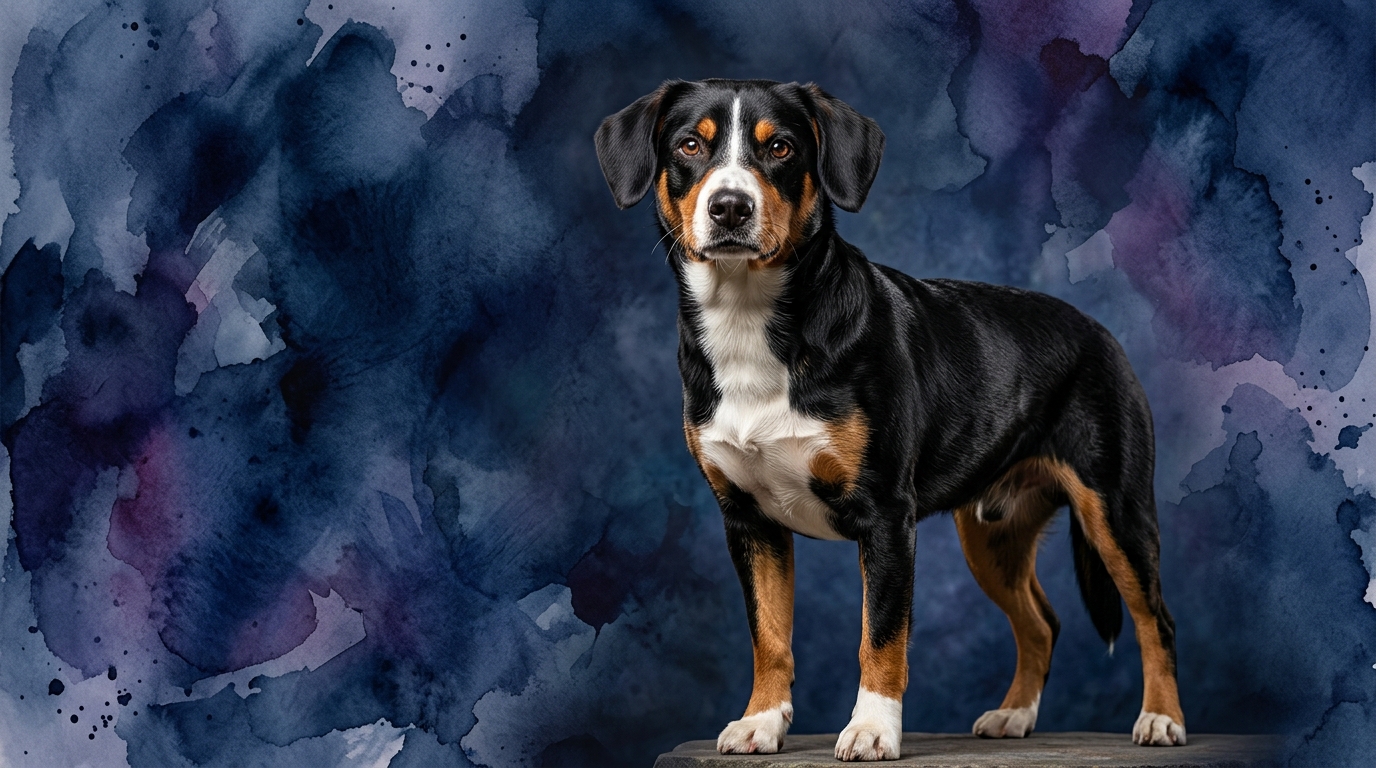
The Entlebucher Mountain Dog, originating from the Swiss Alps, presents a balanced yet distinct cognitive profile. Its problem-solving capacity is rated at 3/5, indicating a dog capable of independent thought and navigating challenges, though perhaps not always with the most direct or innovative solutions. Training speed also sits at 3/5, suggesting a moderate learning curve where consistency and clear methods yield steady progress. Social intelligence, at 3/5, points to a good understanding of human communication and social cues, but without the extreme sensitivity or manipulative tendencies seen in some companion breeds. Its instinctive drive, also 3/5, is rooted in its herding heritage, manifesting as a moderate inclination to work and control. Finally, memory at 3/5 means the Entlebucher retains information adequately, forming reliable associations over time with sufficient reinforcement.
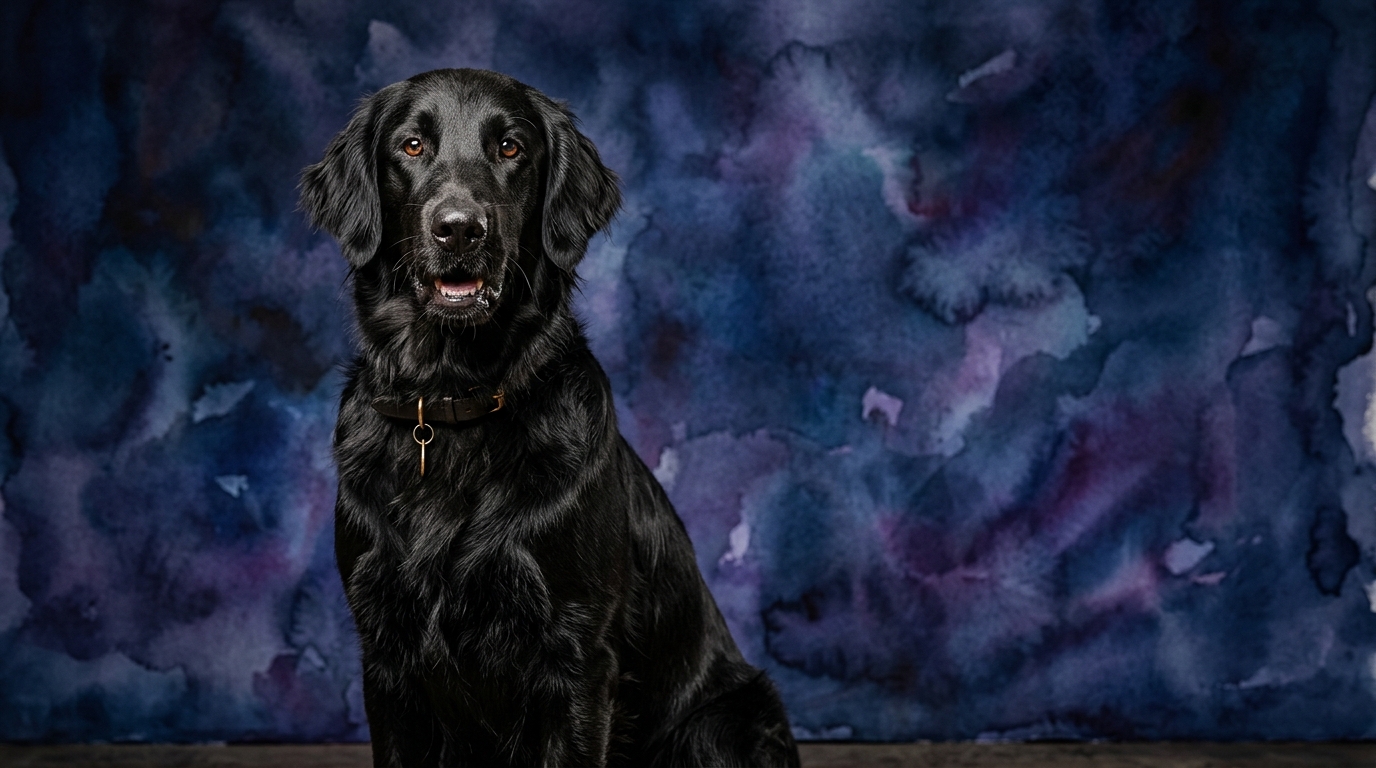
In contrast, the Flat-Coated Retriever, a British sporting breed, demonstrates a cognitive profile geared towards its role as a versatile gun dog. Its problem-solving ability is a strong 4/5, signifying a dog that can quickly assess situations, adapt to new environments, and devise effective strategies, particularly in retrieving scenarios. Training speed is similarly robust at 4/5, indicating a breed that absorbs new commands and behaviors with impressive rapidity, often requiring fewer repetitions than average. Social intelligence, matching the Entlebucher at 3/5, suggests an affable nature with a solid grasp of human interaction but not an overly complex emotional radar. The Flat-Coat's instinctive drive is also 3/5, channeling its energy into retrieving, flushing, and working alongside humans. However, its standout cognitive dimension is memory, rated at an exceptional 5/5, which allows it to recall complex sequences, locations, and learned behaviors with remarkable accuracy and over extended periods.
Where Entlebucher Mountain Dog Excels Cognitively
While the Entlebucher’s individual scores might not reach the peaks of the Flat-Coat’s in certain areas, its strengths lie in the cohesive blend of its capabilities, particularly in contexts requiring independent decision-making within a structured framework. Its 3/5 problem-solving, combined with a moderate instinctive drive, allows it to make sound judgments in situations relevant to its herding background without constant human intervention. For instance, an Entlebucher might effectively manage a small flock of animals, adapting to their movements and maintaining boundaries using its inherent understanding of pressure and space, rather than waiting for specific commands for every micro-adjustment. This nuanced independence in a working capacity showcases a different kind of operational intellect.
The Entlebucher's balanced social intelligence and moderate memory also foster a relationship built on mutual respect and clear communication. They remember routines and expectations reliably, and their social understanding allows them to interpret handler cues without becoming overly dependent or prone to anxiety from perceived disapproval. This combination creates a dog that can be a highly reliable partner in tasks that benefit from a degree of self-reliance, where an overly eager or overly sensitive dog might misinterpret signals or become frustrated. Their cognitive strengths lean towards steadfast, practical application of learned and innate behaviors.
Where Flat-Coated Retriever Excels Cognitively
The Flat-Coated Retriever's cognitive strengths are particularly evident in its exceptional memory and rapid learning ability. A 5/5 memory means a Flat-Coat can recall not just a single command, but intricate sequences of tasks, multiple retrieve locations, and specific scent profiles over long periods, which is invaluable in field work. This allows them to master advanced obedience, complex agility courses, or multi-stage retrieving tests with a level of precision and consistency that few breeds can match. They can execute a 'blind retrieve' where they are sent to an unseen fall based on memory of handler directions, a testament to their spatial and sequential recall.
Furthermore, their 4/5 problem-solving and training speed enable them to quickly generalize learned concepts to new situations. If taught to retrieve a specific item, they can often apply that understanding to retrieving a novel object in a different environment with minimal additional instruction. This adaptability makes them highly versatile for various canine sports and working roles. Their ability to process information rapidly and retain it perfectly allows them to achieve a high level of polish in performance tasks, making them appear almost effortless in their execution once a skill is acquired.
Which is Easier to Train and Why
Based on their cognitive profiles, the Flat-Coated Retriever generally proves easier to train for a wider range of tasks, primarily due to its superior training speed (4/5) and exceptional memory (5/5). A Flat-Coat will typically grasp new commands and concepts in fewer repetitions, translating to faster progress in obedience, trick training, or specialized working roles. For instance, teaching a 'stay' command might take significantly less time and fewer reinforcement sessions with a Flat-Coat, and they will likely retain the command's reliability over longer durations and in more distracting environments due to their strong recall.
The Entlebucher Mountain Dog, with its 3/5 training speed and memory, requires a more consistent and patient approach. While certainly trainable, they may need more repetitions to solidify a new behavior and might not generalize it as quickly to different contexts. An Entlebucher might initially struggle more with complex multi-step commands or remembering a series of specific actions, whereas the Flat-Coat's cognitive architecture is built for absorbing and recalling such detail. Training an Entlebucher effectively often involves breaking tasks down into smaller steps and providing clear, predictable cues, relying on their moderate social intelligence and steady problem-solving to build reliable habits over time.
Which Suits Active Owners vs Relaxed Owners
Neither the Entlebucher Mountain Dog nor the Flat-Coated Retriever are suitable for truly relaxed owners; both require significant daily engagement. However, the *type* of activity and engagement differs. The Entlebucher, with its herding background and moderate instinctive drive, thrives with owners who can provide a 'job' and consistent mental stimulation. This might involve structured walks with opportunities to explore, participation in dog sports like agility or herding trials, or even complex puzzle toys that engage their problem-solving skills. They are best suited for active owners who appreciate a dog with a sturdy, independent streak and are willing to invest in consistent, purpose-driven activities that satisfy their breed-specific needs.
The Flat-Coated Retriever, with its sporting heritage, high energy levels, and exceptional memory, demands an owner who is not just active but often intensely involved in their dog's physical and mental development. They excel in activities like competitive obedience, field trials, dock diving, or extensive retrieving games that tap into their strong desire to work alongside their human partner. A Flat-Coat needs regular, vigorous exercise – think long runs, swimming sessions, or hours of fetch – combined with challenging training that utilizes their quick learning and recall. They are ideal for highly active owners who want a dedicated partner for outdoor adventures and structured canine sports.
The Verdict
Choose an Entlebucher Mountain Dog if you appreciate a steady, independent working companion who thrives on consistent routine and purpose-driven activities, and you are prepared for a moderate, patient training journey.
Opt for a Flat-Coated Retriever if you seek a highly trainable, exceptionally memorable partner for intense physical activities and canine sports, and you can provide daily challenges for their quick wit and boundless energy.
🧠 Find Your Pet's IQ Score
Our Pet IQ Lab assessment covers 25+ tests across 5 cognitive dimensions — personalized to your breed.
Take the Full IQ Test →Frequently Asked Questions
Are Entlebucher Mountain Dogs good family pets?
Entlebucher Mountain Dogs can be devoted family pets, especially with early socialization and consistent training. Their herding instincts mean they might try to 'herd' children, so supervision is important, and they generally bond closely with their immediate family.
Do Flat-Coated Retrievers shed a lot?
Yes, Flat-Coated Retrievers do shed, particularly seasonally. Regular brushing, at least a few times a week, is necessary to manage their shedding and keep their coat healthy and free of mats.
Which breed is better for a first-time dog owner?
Neither breed is ideal for a truly novice owner due to their significant exercise and training needs. However, the Flat-Coated Retriever's higher trainability and eagerness to please might make the learning curve slightly less steep for a committed first-time owner willing to dedicate substantial time to training and activity.