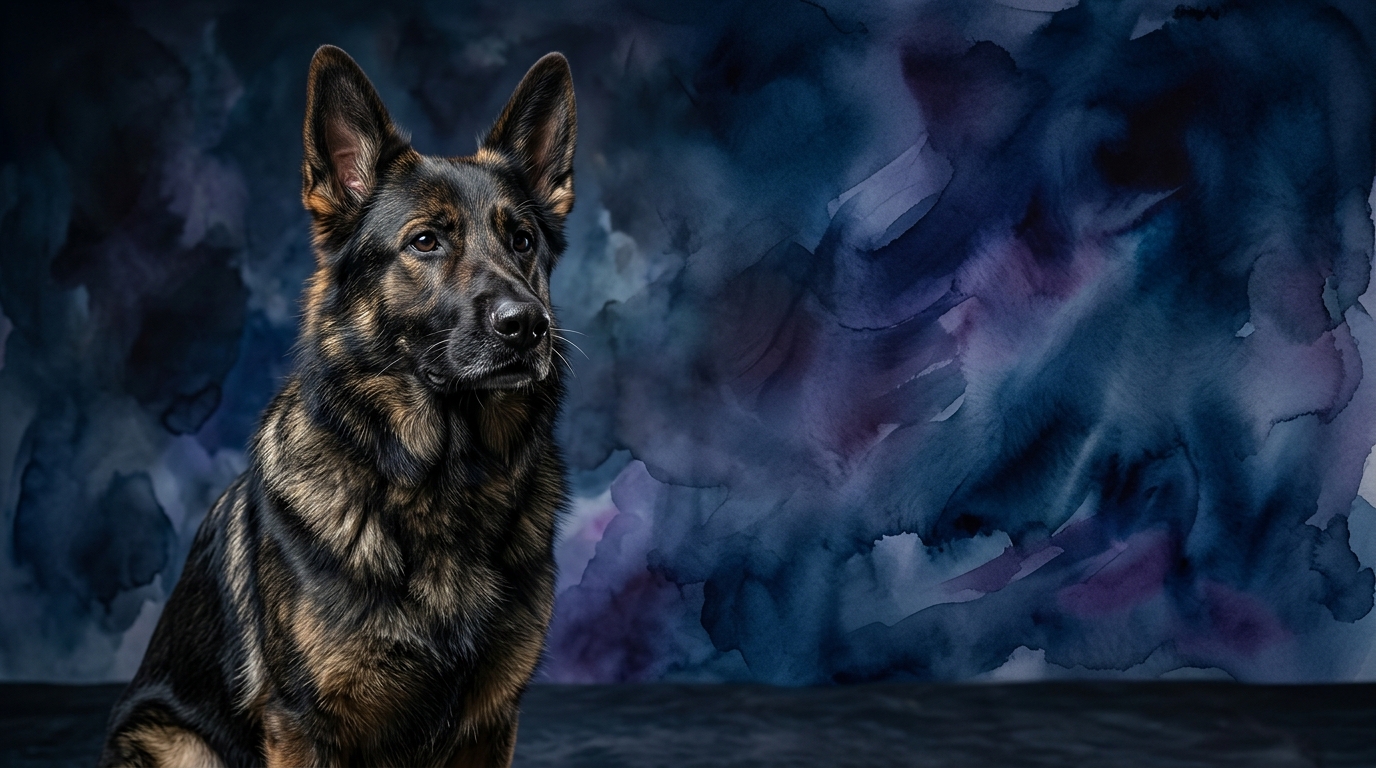
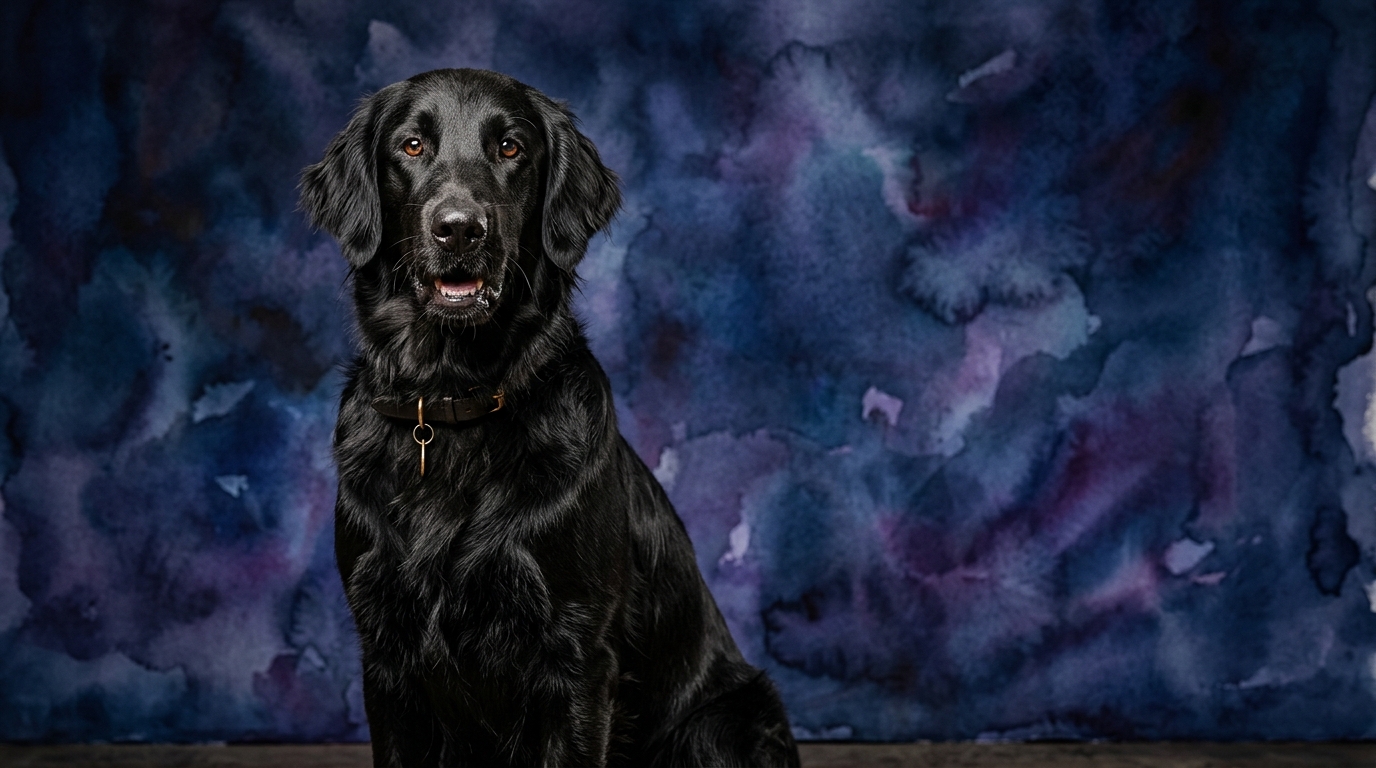
Side-by-Side Cognitive Profiles: German Shepherd vs. Flat-Coated Retriever
The Cosmic Pet Pet IQ Lab employs five key dimensions to evaluate canine intelligence, offering a nuanced understanding beyond simple obedience. For the German Shepherd, a Herding group member ranked #3 by Coren, their profile is marked by exceptional scores across the board: Problem Solving 5/5, Training Speed 5/5, Social Intelligence 5/5, Instinctive Drive 5/5, and Memory 5/5. This indicates a breed with profound cognitive depth and an innate drive for purpose.
In contrast, the Flat-Coated Retriever, a Sporting group member ranked #17 by Coren, presents a profile reflecting their cheerful and companionable nature: Problem Solving 4/5, Training Speed 4/5, Social Intelligence 3/5, Instinctive Drive 3/5, and Memory 5/5. While still possessing significant cognitive abilities, their scores suggest a different approach to learning and interaction compared to the German Shepherd.
Delving into the specifics, the German Shepherd’s 5/5 Problem Solving denotes an outstanding capacity to analyze complex situations, strategize, and execute solutions, often with remarkable independence. Their 5/5 Training Speed means they grasp new commands and complex routines with minimal repetition and exceptional precision. A 5/5 in Social Intelligence highlights their acute awareness of human emotions, social hierarchies, and subtle cues, enabling them to adapt their behavior with remarkable sensitivity. Their 5/5 Instinctive Drive signifies a powerful, inherent motivation to work, protect, or herd, fueling their dedication to tasks. Finally, a 5/5 in Memory ensures they retain learned behaviors, routines, and experiences with exceptional long-term fidelity.
For the Flat-Coated Retriever, their 4/5 Problem Solving indicates a capable ability to navigate puzzles and challenges, often employing a cheerful trial-and-error approach, though perhaps taking slightly longer or requiring more guidance than a German Shepherd. Their 4/5 Training Speed means they absorb new commands efficiently, particularly when training is engaging and positive, though they might not achieve the same lightning-fast acquisition. A 3/5 in Social Intelligence suggests they are friendly and outgoing, but their interpretation of subtle human social cues is generally less complex or analytical than a German Shepherd's, leading to more direct and less nuanced interactions. Their 3/5 Instinctive Drive reflects a moderate motivation for retrieving and companionship, expressing itself as enthusiastic play rather than an intense, persistent working drive. Crucially, their 5/5 Memory matches the German Shepherd, meaning they retain positive associations, commands, and experiences over long periods with excellent recall.
Where the German Shepherd Excels Cognitively
The German Shepherd's cognitive architecture presents distinct advantages in several areas. Their 5/5 Problem Solving score means they are adept at tasks requiring high-level strategic thinking, such as navigating intricate obstacle courses, performing multi-stage search and rescue operations, or discerning patterns in complex environments. This capacity for analytical thought allows them to not just react, but to plan and execute.
Their superior 5/5 Training Speed allows for the rapid acquisition of extensive repertoires of commands and behaviors, making them exceptional candidates for advanced obedience, protection work, or specialized assistance roles. This speed, combined with their 5/5 Instinctive Drive, means they approach learning with an intense focus and a profound desire to perform, often generalizing concepts quickly and applying them in novel situations.
Furthermore, the German Shepherd’s 5/5 Social Intelligence provides a significant edge in understanding and responding to human intentions and emotional states. They can discern subtle shifts in body language or tone, anticipating needs or potential threats, which is invaluable in roles requiring close partnership and vigilance, such as service work or personal protection. This deep social acumen allows for a highly synchronized working relationship with their handler.
Where the Flat-Coated Retriever Offers Distinct Cognitive Benefits
While not always reflected in numerically higher scores, the Flat-Coated Retriever's cognitive strengths lie in the *style* and *application* of their abilities within a distinctly optimistic and adaptable framework. Their 4/5 problem-solving often manifests as a cheerful persistence rather than intense strategic planning, making them less prone to frustration in novel situations and more willing to try different approaches with a buoyant attitude.
This breed’s 3/5 social intelligence, while less complex in its interpretation of subtle cues, contributes significantly to their renowned optimism and straightforward interactions. They are less likely to overanalyze social dynamics, fostering a consistently happy and approachable demeanor that thrives on positive engagement rather than intricate emotional navigation. This simpler social processing can make them exceptionally easygoing companions.
Their moderate instinctive drive (3/5) means they are content with a wider range of activities and do not constantly seek an intense 'job' to fulfill their cognitive needs. This adaptability makes them wonderfully versatile companions, equally happy with a vigorous game of fetch as they are with a relaxed evening. Coupled with their 5/5 memory, this positive outlook ensures they retain joyful experiences and learned behaviors with remarkable fidelity, making training a positive reinforcement-driven delight focused on fun and engagement.
Ease of Training: Behavioral Differences Unpacked
When considering ease of training, both breeds are capable learners, but their behavioral predispositions create distinct training experiences. The German Shepherd's 5/5 Training Speed, coupled with their 5/5 Instinctive Drive and Social Intelligence, means they often grasp commands with remarkable rapidity and precision. They possess an inherent desire to work and a deep focus, making them highly receptive to structured training and eager to please their handler. However, this intensity also means they require a confident, consistent, and experienced trainer who can channel their powerful drive and prevent the development of unwanted behaviors through insufficient mental and physical engagement.
The Flat-Coated Retriever, with 4/5 in Training Speed, is also a quick learner, but their approach is often characterized by an exuberant, playful spirit. They respond exceptionally well to positive reinforcement and game-based training methods, thriving on fun and interaction. Their 3/5 Instinctive Drive means they are motivated by retrieving and companionship, but their focus might be more easily diverted by environmental stimuli or their own joyful antics. Training a Flat-Coat requires patience, humor, and an understanding that while they are willing, their enthusiasm can sometimes override their precision. They typically thrive with owners who can make learning a consistently enjoyable experience, rather than a rigorous task.
Suitability for Active vs. Relaxed Owners
For active owners seeking a dedicated partner for strenuous activities, competitive dog sports, or demanding working roles, the German Shepherd is an ideal match. Their 5/5 problem-solving, instinctive drive, and social intelligence mean they require consistent mental stimulation, structured tasks, and significant physical challenges to remain balanced and content. An owner who can provide daily purpose, whether through advanced obedience, agility, protection training, or extensive outdoor adventures, will find a deeply fulfilled and responsive companion in a German Shepherd. Their cognitive profile demands an owner who is equally committed to harnessing their profound capabilities.
Conversely, for owners who appreciate an active lifestyle but prefer a companion whose needs are less intensely structured, the Flat-Coated Retriever offers a delightful balance. While energetic and playful, their 3/5 instinctive drive means they are typically content with regular walks, games of fetch, and family activities, rather than requiring a constant 'job.' They thrive on companionship and positive interactions, making them excellent family dogs who enjoy being involved in daily life without the intense demands of a high-drive working breed. Their adaptable nature and cheerful disposition make them suitable for owners who enjoy an active but relaxed routine, prioritizing joyful engagement over rigorous purpose.
The Verdict
Choose a German Shepherd if you are an experienced owner seeking a dedicated, highly trainable working partner capable of complex tasks and committed to providing consistent mental and physical engagement.
Opt for a Flat-Coated Retriever if you desire a joyful, adaptable, and affectionate companion who thrives on positive interactions, active play, and family involvement, without the intense working demands of a high-drive breed.
🧠 Find Your Pet's IQ Score
Our Pet IQ Lab assessment covers 25+ tests across 5 cognitive dimensions — personalized to your breed.
Take the Full IQ Test →Frequently Asked Questions
Do German Shepherds require more mental stimulation than Flat-Coated Retrievers?
Yes, German Shepherds, with their 5/5 problem-solving and instinctive drive, demand extensive mental challenges and structured tasks to prevent boredom and destructive behaviors. Flat-Coats, while needing engagement, are generally satisfied with less intense cognitive work and thrive on playful interaction.
How do their social intelligence differences impact their family life?
A German Shepherd's 5/5 social intelligence makes them highly perceptive of family dynamics, often leading to a protective yet sensitive presence attuned to subtle cues. A Flat-Coated Retriever's 3/5 social intelligence results in a more straightforward, universally friendly demeanor, less prone to complex social analysis and more focused on positive, direct interactions.
Is one breed more prone to separation anxiety due to their IQ profile?
While both can experience anxiety, the German Shepherd's deep social intelligence and strong instinctive drive for companionship might make them more susceptible to distress if their need for purpose and connection isn't consistently met. The Flat-Coat's generally optimistic disposition can sometimes make them more resilient, though they also thrive on presence and can develop anxiety if left alone excessively.