Side-by-Side IQ Profile
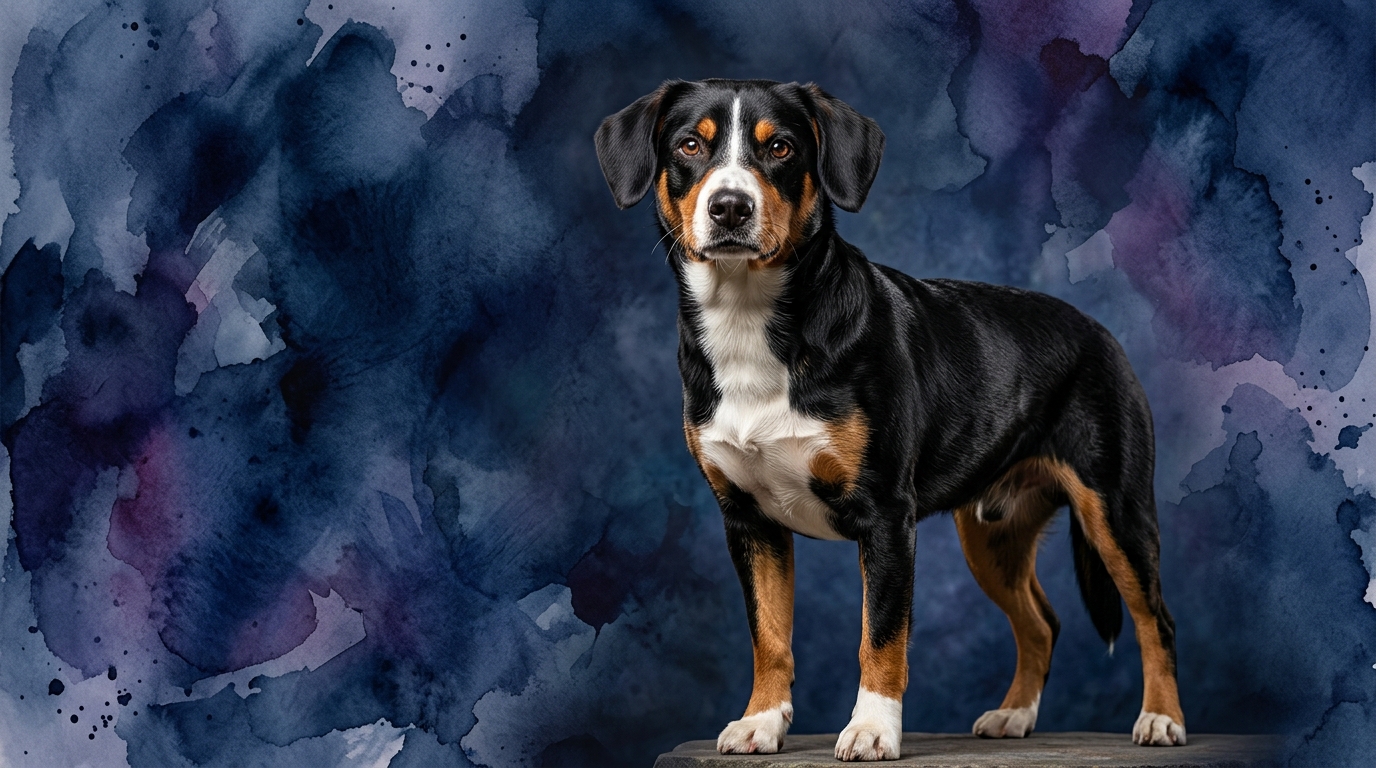
Originating from the Swiss Alps, the Entlebucher Mountain Dog was bred for herding and droving cattle, a role demanding a specific blend of attentiveness and independent decision-making within a structured environment. Their Problem Solving capability, rated 3/5, often manifests in their ability to manage livestock efficiently, understand spatial boundaries, and learn complex herding patterns. This isn't about abstract puzzles, but practical, goal-oriented problem-solving within a defined, often agricultural, context. Their Training Speed, also 3/5, indicates a breed that is receptive to instruction and capable of learning new commands at a steady pace, particularly when taught by a consistent and trusted handler. They respond well to clear guidance and structure, often demonstrating a strong desire to please their primary human companion.
The Entlebucher's Social Intelligence, rated 3/5, is characterized by a deep bond with their family, often expressing an acute awareness of their owner's moods and intentions. However, they can be reserved or watchful around strangers, preferring to observe before engaging. This wariness is a valuable trait for a guardian and herding dog, enabling them to discern potential threats within their territory. Their Instinctive Drive, at 3/5, is strongly rooted in their herding heritage, often displaying tendencies to gather, control movement, and protect their territory or family. This drive requires appropriate outlets to prevent misdirection. Finally, their Memory, also 3/5, ensures they retain learned commands, routines, and experiences well, contributing to their reliability in established tasks and their ability to navigate familiar environments effectively.
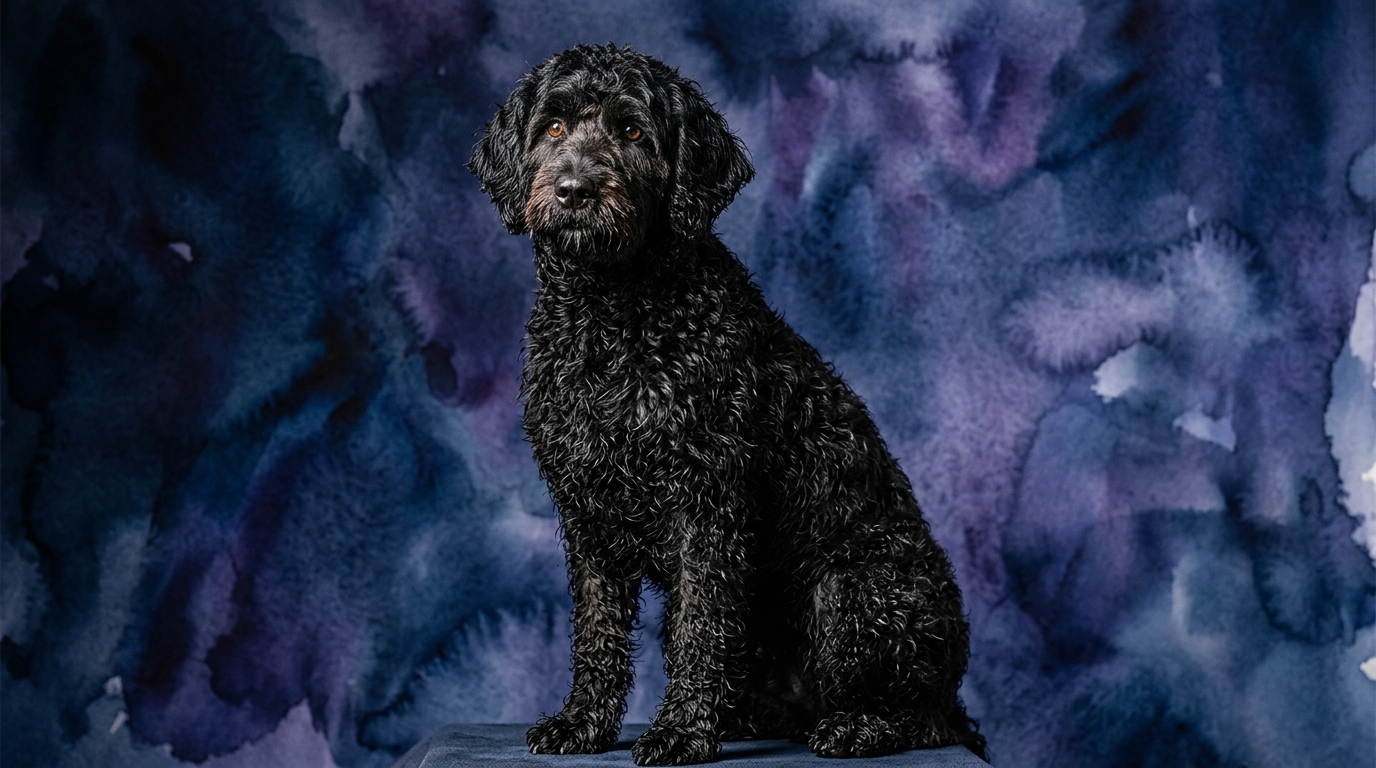
The Portuguese Water Dog, conversely, hails from the coasts of Portugal, where it served as an invaluable assistant to fishermen, retrieving lost tackle, herding fish into nets, and carrying messages between boats and shore. Their Problem Solving ability, rated 3/5, is often demonstrated in their adaptability to diverse aquatic tasks and their capacity to figure out how to retrieve objects from challenging environments, like turbulent waters. They are resourceful and can approach new situations with a degree of independent thought, characteristic of a working dog accustomed to making decisions in dynamic, often unpredictable, settings. Their Training Speed, 3/5, reflects a breed that is eager to learn and highly motivated by engaging activities and positive reinforcement. They pick up new skills readily, often with an enthusiastic and playful approach, making them responsive partners in training.
The Portuguese Water Dog's Social Intelligence, rated 3/5, is generally outgoing and collaborative, reflecting their history of working closely alongside humans. They are typically adept at reading human cues and intentions, fostering a strong partnership dynamic that enables effective teamwork. This social acumen allows them to integrate well into family life and interact positively with a wider circle of people than the more reserved Entlebucher. Their Instinctive Drive, at 3/5, is powerfully geared towards water activities, retrieving, and performing tasks alongside their human companions. This drive for purposeful activity is a defining characteristic and demands regular engagement. Their Memory, also 3/5, is robust, enabling them to recall complex sequences of tasks, learned routes, and an extensive vocabulary of commands, which was vital for their diverse duties on fishing boats.
Where Entlebucher Mountain Dog Wins Cognitively
The Entlebucher Mountain Dog's cognitive strengths shine particularly in structured environments where precision and adherence to established protocols are paramount. Their herding background cultivates a mindset geared towards understanding and maintaining order, making them particularly adept at tasks requiring sequential execution and spatial awareness. For instance, in advanced obedience or rally work, an Entlebucher's capacity to internalize specific patterns and respond to subtle handler cues with consistent accuracy might give them a slight edge over the more independently thinking PWD. Their focused attention on their primary handler, a facet of their social intelligence, allows for a tight communication loop in such disciplined activities.
Furthermore, their territorial and watchful nature, stemming from their instinctive drive, means they are often more naturally attuned to changes in their immediate environment and capable of discerning unusual occurrences. This vigilance, while not directly an IQ dimension, influences their practical problem-solving in a home protection context. An Entlebucher might be quicker to alert to an unfamiliar sound or presence, processing it as a potential deviation from their understood 'normal' state, a cognitive advantage in roles requiring alertness and discernment within their familiar domain.
Where Portuguese Water Dog Wins Cognitively
The Portuguese Water Dog's cognitive edge often emerges in dynamic, less predictable scenarios, especially those involving water or novel challenges. Their history of independent work alongside fishermen required them to think on their feet, adapt to changing conditions, and problem-solve creatively to retrieve items or herd fish. This adaptability makes them particularly strong in tasks that require improvisation or navigating complex, evolving environments. For example, in competitive dock diving or scent work where the 'problem' changes with each retrieve or search, a PWD's resourcefulness and drive to figure things out independently might allow them to innovate solutions more readily.
Their robust instinctive drive for retrieving and swimming, combined with their social intelligence, makes them highly collaborative partners in active, engaging tasks. A PWD might demonstrate a greater willingness to experiment with different approaches to a new puzzle or retrieve, rather than strictly adhering to a previously taught method. This willingness to explore and adapt, driven by their deep-seated desire for purposeful activity, often translates into a superior capacity for handling novelty and complexity in an unstructured, 'real-world' context, giving them an advantage when the rules aren't always clear.
Which is Easier to Train and Why
While both breeds share a 3/5 rating for training speed, their approaches to learning and what motivates them differ, influencing the perceived 'ease' of training. The Entlebucher Mountain Dog, with its herding heritage, generally responds well to a structured, consistent training regimen led by a single, trusted individual. They thrive on clear expectations and routine, and their desire to please their primary handler makes them eager students once a bond is established. However, their reserved social intelligence means they can be more sensitive to harsh corrections and may not respond as readily to multiple trainers or in highly distracting environments, requiring patience and a gentle, firm hand. Training an Entlebucher is often about building trust and establishing a predictable routine where they understand their role.
The Portuguese Water Dog, on the other hand, approaches training with a more effervescent and collaborative spirit, valuing engagement and variety. Their working dog background means they are often highly food-motivated and thrive on positive reinforcement, making them enthusiastic participants in training sessions. They are generally more adaptable to different trainers and environments, and their problem-solving aptitude means they can sometimes 'figure out' what's expected even with less explicit instruction. However, their independent streak and high energy can sometimes translate into a shorter attention span for repetitive drills, requiring trainers to keep sessions fun, varied, and challenging to maintain their focus. For a PWD, training is often about a partnership in an engaging activity, rather than strict adherence to a command structure.
Which Suits Active Owners vs. Relaxed Owners
Both breeds demand significant mental and physical engagement, meaning neither is ideally suited for genuinely 'relaxed' owners who prefer minimal interaction. However, the *type* of activity they thrive on differs. The Entlebucher Mountain Dog is a diligent worker with a strong herding drive and a need for purpose. They suit active owners who can provide consistent structure, regular exercise like long hikes, agility, or herding trials, and consistent mental challenges. Owners who enjoy a predictable routine and appreciate a dog that is devoted to their family but reserved with outsiders will find a compatible companion in the Entlebucher. Their need for a clear leader and consistent guidance means they are not a 'set it and forget it' breed.
The Portuguese Water Dog is an exuberant and tireless working companion, demanding even more varied and intense activity. They excel with highly active owners who enjoy water sports, advanced obedience, dog sports like dock diving or flyball, and frequent outdoor adventures. Their adaptable social intelligence and independent problem-solving make them fantastic partners for owners who want a dog to actively participate in all aspects of their adventurous lifestyle, often without needing constant, explicit direction once a task is understood. A PWD owner must be prepared for a dog that needs constant engagement, both physical and mental, to channel their strong working drives constructively.
The Verdict
Choose the Entlebucher Mountain Dog if you seek a devoted, watchful companion who thrives on structured tasks, clear guidance, and a predictable routine, and you appreciate a dog with a reserved but deeply loyal nature.
Choose the Portuguese Water Dog if you are a highly active owner seeking an enthusiastic, adaptable, and collaborative partner for diverse adventures, especially those involving water and novel problem-solving challenges.
🧠 Find Your Pet's IQ Score
Our Pet IQ Lab assessment covers 25+ tests across 5 cognitive dimensions — personalized to your breed.
Take the Full IQ Test →Frequently Asked Questions
Do Entlebucher Mountain Dogs and Portuguese Water Dogs truly have the same intelligence?
While both breeds are rated 3/5 across our IQ dimensions, this indicates competence rather than identical expression. Their historical roles mean they excel in different types of tasks and express their problem-solving, social intelligence, and drives in distinct ways, making them unique in their cognitive strengths.
Which breed is better for a first-time dog owner?
Neither breed is typically recommended for first-time owners due to their strong working drives and need for consistent training and socialization. However, if a first-time owner is committed to intensive training and providing ample mental and physical stimulation, the PWD's more outgoing nature might be slightly more forgiving than the Entlebucher's reserved temperament.
Are there significant differences in their memory capabilities despite the 3/5 rating?
Both breeds possess good memory (3/5), but the *context* of their memory differs. The Entlebucher might excel at remembering routines and specific herding patterns, while the PWD's memory might be more attuned to recalling complex sequences for retrieving objects or navigating varied environments, reflecting their specialized historical tasks.