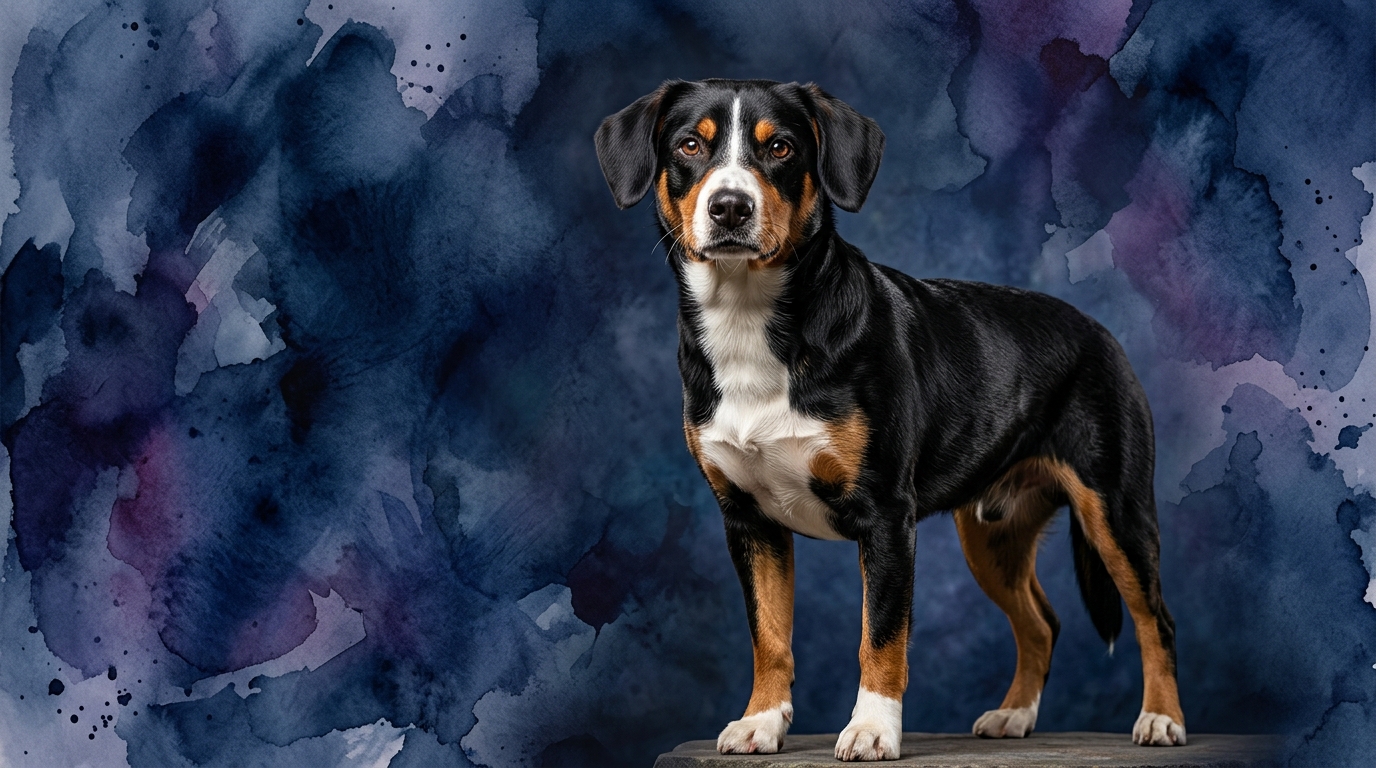
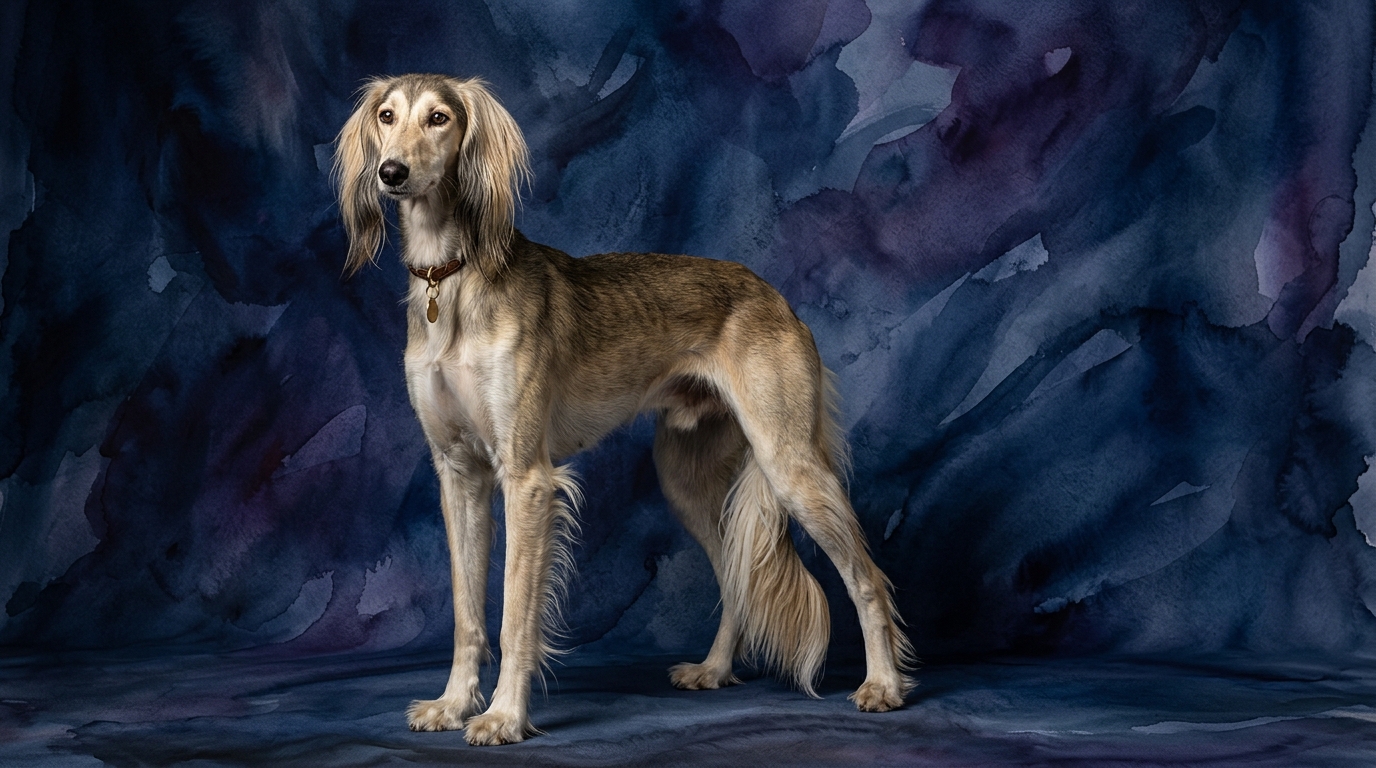
Side-by-Side IQ Profile: Entlebucher Mountain Dog vs. Saluki
The Cosmic Pet Pet IQ Lab assesses canine intelligence across five key dimensions, and both the Entlebucher Mountain Dog and the Saluki share a remarkably consistent '3/5' rating in each. This parity suggests a moderate, capable level of cognitive function for both, but the *flavor* of that intelligence is deeply rooted in their ancestral vocations.
For **Problem Solving (3/5)**, both breeds demonstrate an ability to navigate moderately complex challenges. The Entlebucher, a herding dog, might apply this by figuring out how to re-route a stray sheep or anticipate a handler's next move in a task, often relying on observation and learned patterns within a structured environment. The Saluki, a sighthound, might use this capacity to strategize a chase, calculating the best path to intercept fast-moving prey over varied terrain, or finding the quickest route across an open field.
**Training Speed (3/5)** indicates that both breeds learn new commands at a moderate pace, responding well to consistent, clear instruction. Neither is a 'one-and-done' learner, nor are they exceptionally slow to grasp concepts. Success hinges on the handler's ability to maintain engagement and provide motivation tailored to each breed's inherent drives.
Regarding **Social Intelligence (3/5)**, both breeds show a reasonable aptitude for understanding and responding to social cues, whether from humans or other canines. The Entlebucher's social intelligence often leans towards cooperative interaction and understanding hierarchy within a 'pack' or family unit, crucial for working closely with a handler. The Saluki’s social awareness might manifest as a discerning understanding of their human companions, often reserved but deeply bonded, and an ability to navigate social situations with quiet dignity, less focused on active collaboration.
**Instinctive Drive (3/5)** is where the identical score truly diverges in practical application. For the Entlebucher, this 3/5 drive is deeply rooted in herding behaviors—gathering, moving, and controlling. They possess a strong impulse to organize and manage, often extending to their human family or other pets. For the Saluki, the 3/5 instinctive drive is overwhelmingly geared towards pursuit—chasing, spotting movement, and running. This ancient hunting instinct is a powerful motivator and shapes much of their engagement with the world.
Finally, **Memory (3/5)** suggests both breeds possess a solid capacity for recalling learned behaviors, routines, and past experiences. They will remember commands, where the treat jar is kept, or the layout of their favorite walking paths. Neither breed is prone to forgetting well-established lessons, but they also aren't noted for recalling intricate, multi-step sequences after long periods without reinforcement.
Where the Entlebucher Mountain Dog Wins Cognitively
Despite identical raw scores, the Entlebucher Mountain Dog often presents a cognitive advantage in scenarios requiring focused, cooperative work and structured problem-solving. Their herding lineage means their 3/5 problem-solving ability is frequently channeled into tasks that involve anticipation, planning, and executing sequences to achieve a goal, often in collaboration with a human. They excel at understanding patterns and predicting outcomes within a defined framework, making them adept at activities like agility, obedience, or even complex chore-based tasks around the home.
Their social intelligence, also a 3/5, is typically expressed as a strong desire to engage with and please their primary handler in a working context. This translates to a more handler-centric approach to learning and problem-solving. When faced with a novel situation, an Entlebucher is more likely to look to their human for guidance or to try and 'figure out' what the human *wants* them to do, rather than acting purely on independent impulse. Their instinctive drive, focused on gathering and controlling, gives them an inherent motivation for order and responsiveness, which can make them seem more 'tuned in' to human directives during structured activities.
Where the Saluki Wins Cognitively
The Saluki's cognitive strengths, while also rated 3/5, shine in areas demanding independent decision-making, spatial awareness, and the execution of high-speed, instinct-driven actions. Their problem-solving ability is finely tuned for navigation and pursuit; they are masters at assessing distances, anticipating prey movements, and choosing the most efficient path during a chase. This isn't about solving a puzzle box, but rather solving the 'puzzle' of catching something fast moving in an open environment.
Their 3/5 memory is exceptional for remembering routes, effective hunting strategies, and the layout of large, open spaces. While their social intelligence is also 3/5, it manifests as a deep, sensitive bond with their chosen family, but without the strong drive for cooperative 'work' seen in herding breeds. A Saluki's independent nature means their cognitive prowess is often applied to self-directed activities, making them adept at assessing their environment for potential 'prey' or interesting visual stimuli, and making swift, autonomous decisions based on these observations. They possess a unique blend of grace and sharp perception that makes them formidable in their traditional role.
Which Is Easier to Train and Why?
Given their identical '3/5' training speed, neither breed is inherently 'easier' to train in terms of raw learning capacity, but their *trainability* differs significantly due to their instinctive drives and social intelligence. The Entlebucher Mountain Dog, with its herding background, often presents as more amenable to training. Their instinctive drive to work cooperatively with a handler, coupled with their desire to organize and control, means they are typically eager to engage in structured training sessions. They respond well to positive reinforcement and clear boundaries, often enjoying the mental stimulation of learning new commands and tasks, as it aligns with their natural inclination to be useful and involved.
The Saluki, conversely, can be more challenging to train, not because they are less capable of learning (their training speed is 3/5), but because their strong instinctive drive is geared towards independent pursuit, not cooperative tasks. Their social intelligence, while present, doesn't translate into the same 'eagerness to please' a handler in a working capacity. Training a Saluki often requires immense patience, understanding of their sighthound nature, and finding motivation that appeals to their chase drive or desire for comfort and companionship rather than compliance. They learn quickly if the task is clear and rewarding, but might choose not to perform if they don't see the immediate benefit or if a squirrel suddenly appears in their line of sight. Their independent spirit means training must be engaging and consistent, recognizing that their primary motivation is not handler-centric work.
Which Suits Active Owners vs. Relaxed Owners?
Both the Entlebucher Mountain Dog and the Saluki require active owners, but the *type* of activity they thrive on varies. The Entlebucher is best suited for active owners who enjoy structured activities and mental engagement. They need consistent physical exercise to burn off energy, but also thrive on tasks that challenge their problem-solving and social intelligence, such as obedience training, agility, herding trials, or even long, varied hikes. A relaxed owner who cannot provide consistent mental and physical outlets for an Entlebucher might find them becoming bored, potentially leading to undesirable behaviors as they try to 'herd' their family or find their own challenges.
The Saluki also demands active owners, but those who appreciate independent exercise and have secure spaces for them to run. Their instinctive drive for pursuit means they need regular opportunities for full-speed sprints in a safe, enclosed area. While they enjoy walks and companionship, the true fulfillment for a Saluki comes from stretching their legs and chasing. At home, Salukis are often more relaxed and quiet than Entlebuchers, enjoying comfortable lounging. However, a relaxed owner who neglects their need for intense, albeit independent, physical activity will have a frustrated Saluki whose suppressed chase drive might manifest in other ways. They are not suited for owners who expect a highly biddable companion for all activities, as their independence is a core part of their nature.
The Verdict
Choose an Entlebucher Mountain Dog if you seek a highly engaged, cooperative companion for structured activities and enjoy channeling their inherent herding intelligence into tasks and training. They thrive with owners who provide consistent mental and physical challenges.
Opt for a Saluki if you appreciate an independent, elegant companion whose intelligence shines in autonomous decision-making and high-speed pursuits, and you can provide ample, secure space for them to run freely. They are best for owners who respect their reserved nature and strong chase drive.
🧠 Find Your Pet's IQ Score
Our Pet IQ Lab assessment covers 25+ tests across 5 cognitive dimensions — personalized to your breed.
Take the Full IQ Test →Frequently Asked Questions
Do Entlebucher Mountain Dogs or Salukis shed a lot?
Entlebucher Mountain Dogs have a double coat and do shed moderately year-round, with heavier shedding seasons. Salukis have a fine, silky coat, and while they are not heavy shedders, they do shed lightly and require regular grooming to prevent tangles, especially in their feathering.
Are Entlebucher Mountain Dogs good with children?
Entlebucher Mountain Dogs can be good with children, especially if raised with them from a young age and properly socialized. Their herding instinct might lead them to 'herd' children, so supervision and training are essential to ensure gentle interactions.
Can Salukis live in apartments?
Salukis can adapt to apartment living if their significant exercise needs are met with daily opportunities for off-leash running in a secure area. They are generally quiet and calm indoors, but their need for speed is non-negotiable for their well-being.