
Side-by-Side IQ Profile
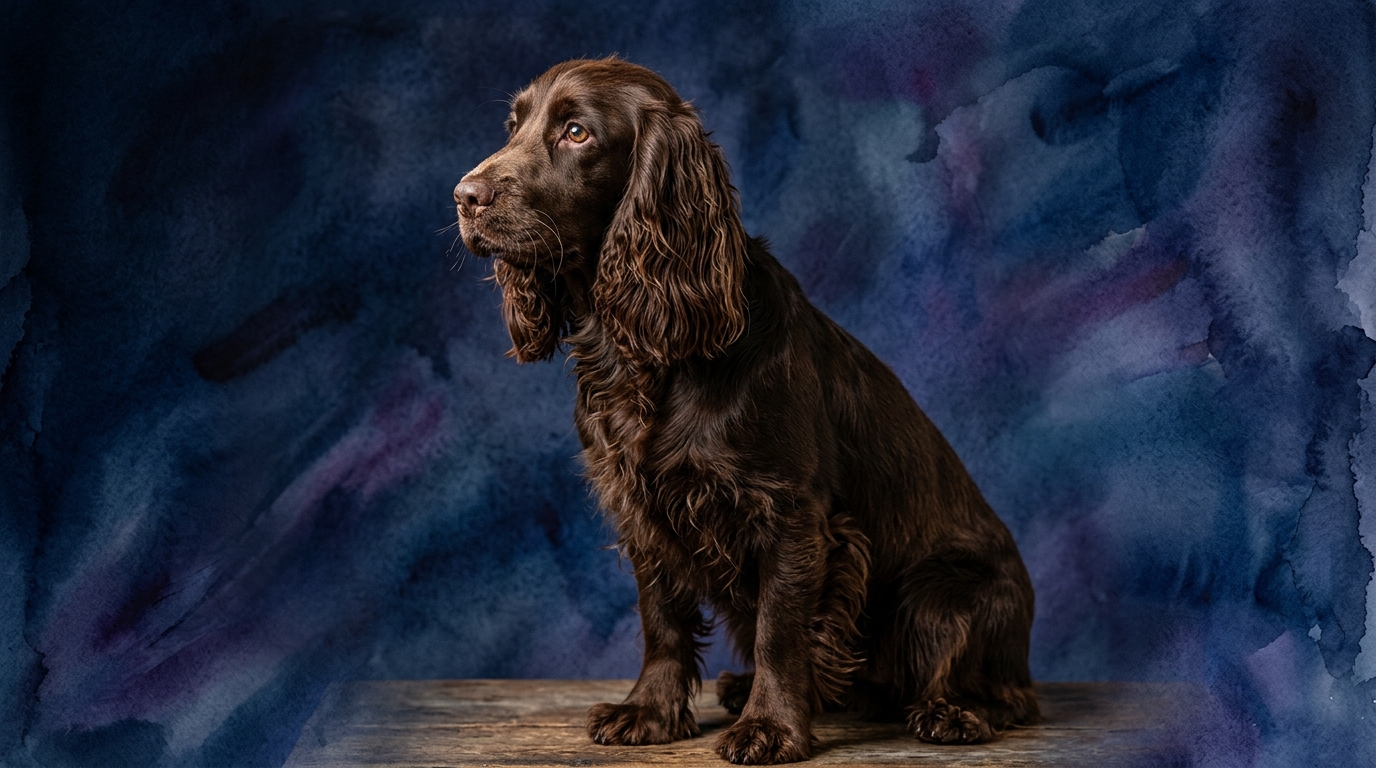
**Field Spaniel:** Possessing a balanced cognitive profile, the Field Spaniel consistently scores 3/5 across all five dimensions of intelligence, indicating a steady and capable intellect.
**Problem Solving (3/5):** This breed exhibits a moderate ability to navigate novel situations or overcome obstacles. They can learn to figure out simple mechanisms or retrieve toys from moderately complex hiding spots, but might require more repetition or guidance for intricate tasks, often approaching challenges with a pragmatic rather than highly inventive method.
**Training Speed (3/5):** Field Spaniels absorb new commands at a steady, average pace. They are willing learners, but may not grasp concepts with the immediate precision seen in some other breeds, meaning consistency and positive reinforcement are key to effectively building their repertoire of behaviors.
**Social Intelligence (3/5):** These dogs exhibit an average understanding of human cues and emotional states. They are generally responsive to their family's moods and can form strong bonds, yet they might not always anticipate complex social dynamics or subtle non-verbal signals without explicit teaching.
**Instinctive Drive (3/5):** Their natural working instincts, such as scent tracking or retrieving, are present but typically at a moderate level. They enjoy engaging in activities that tap into these drives, like a good game of fetch or a sniff-walk, yet they are not overwhelmingly driven to perform these tasks to the exclusion of all else.
**Memory (3/5):** Field Spaniels possess a solid, average memory for learned commands, routines, and familiar people or places. Once a behavior is ingrained, it tends to stick, though disuse might lead to some fading, requiring a refresher, and they remember both pleasant and negative experiences, influencing future interactions.
**Irish Water Spaniel:** Ranking #24 in Coren's intelligence list, the Irish Water Spaniel demonstrates a cognitive advantage in specific areas, particularly in learning and retention.
**Problem Solving (4/5):** This breed demonstrates a notable capacity for solving problems, often figuring out how to bypass barriers or achieve desired outcomes with less trial and error than average. They can be quite resourceful, using their environment and prior experiences to adapt to new challenges effectively.
**Training Speed (4/5):** Irish Water Spaniels typically pick up new commands and routines with impressive swiftness. Their attentiveness and desire to engage make them quick studies, often requiring fewer repetitions to master a new skill, provided the training is engaging and consistent.
**Social Intelligence (3/5):** Similar to the Field Spaniel, their social acumen is solid. They are attuned to their owner's presence and generally understand basic social dynamics within their family unit, responding well to clear communication and positive social interactions.
**Instinctive Drive (3/5):** Their natural drives, particularly for water work and retrieving, are present and moderate. They enjoy activities that allow them to exercise these instincts, such as swimming or retrieving toys, but these drives are typically manageable and channelable, not overwhelming.
**Memory (4/5):** Irish Water Spaniels exhibit a robust memory, retaining learned behaviors, commands, and experiences over longer periods. This strong recall contributes significantly to their training efficiency, as they are less likely to forget what they've learned, even after a break.
Where Field Spaniel Wins Cognitively
While the Irish Water Spaniel shows higher scores in certain areas, the Field Spaniel's cognitive profile, particularly its balanced nature across all dimensions (3/5), offers unique advantages. Their moderate instinctive drive means they are often less intensely focused on single-minded tasks compared to some sporting breeds. This can translate to a dog that is more adaptable to a wider variety of home environments and less prone to becoming frustrated if their specific working instincts aren't constantly engaged. For an owner seeking a companion whose natural drives are present but not overwhelming, the Field Spaniel's 3/5 score here can be a benefit, as they enjoy participating in activities but are equally content with a relaxed evening, making them versatile companions.
Furthermore, their 3/5 in social intelligence suggests they are generally amenable to human interaction and capable of forming strong bonds without necessarily needing to "read" their owner's every nuanced emotion with intense scrutiny. This can make for a straightforward and affectionate relationship, where expectations regarding subtle communication are clear and consistent. Their moderate problem-solving and training speed mean they are certainly capable of learning complex tasks, but they might approach them with a more measured, thoughtful pace, which can be less overwhelming for a novice trainer. The learning journey with a Field Spaniel is often a steady, rewarding progression rather than a rapid sprint, fostering patience and deeper understanding between dog and owner.
Where Irish Water Spaniel Wins Cognitively
The Irish Water Spaniel clearly stands out with higher scores in Problem Solving (4/5), Training Speed (4/5), and Memory (4/5), making them particularly adept learners and thinkers. Their superior problem-solving skills mean they can often independently figure out solutions to environmental challenges, such as opening gates or navigating complex obstacles to reach a desired item. This cognitive flexibility makes them engaging partners for advanced training, puzzle toys, and dog sports where creative thinking is rewarded, as they aren't just following commands but actively processing and strategizing.
Their faster training speed is a significant advantage for owners who enjoy teaching new tricks, participating in obedience trials, or engaging in complex tasks. They grasp new concepts quickly, requiring fewer repetitions to solidify a command, which can make training sessions highly efficient and rewarding. This cognitive nimbleness, coupled with their strong memory, ensures that once a behavior is learned, it is retained for a considerable duration. This robust recall reduces the need for frequent refreshers and allows for a broader repertoire of commands and behaviors to be maintained over time, making them excellent candidates for service work or competitive dog sports where consistency is paramount. While their social intelligence and instinctive drive are on par with the Field Spaniel, it's their enhanced capacity for learning and retention that truly distinguishes their cognitive strengths.
Which Is Easier to Train and Why
Based on The Cosmic Pet Pet IQ Lab scores, the Irish Water Spaniel is generally easier to train than the Field Spaniel, primarily due to its higher scores in Training Speed (4/5) and Memory (4/5). An Irish Water Spaniel will typically absorb new commands and routines with greater swiftness, requiring fewer repetitions to achieve mastery. For instance, teaching a "stay" command might take an Irish Water Spaniel only a handful of dedicated sessions to solidify, whereas a Field Spaniel, with its 3/5 training speed, might need more consistent practice over a slightly longer period. This efficiency means trainers can progress through a curriculum more quickly, introducing more complex behaviors sooner.
Furthermore, the Irish Water Spaniel's stronger memory (4/5) ensures that once a behavior is learned, it is retained more reliably over time. This reduces the need for constant refreshers and allows for greater consistency in performance, even after periods of inactivity. A Field Spaniel, with its 3/5 memory, might require more frequent practice to keep less-used commands sharp. While both breeds are willing to learn, the Irish Water Spaniel's cognitive architecture simply processes and stores information more effectively for training purposes. This isn't to say the Field Spaniel is difficult; rather, it suggests that patience and consistency are even more crucial for their learning journey, and progress might feel more gradual.
Which Suits Active Owners vs Relaxed Owners
Considering their cognitive and instinctive profiles, both breeds suit active owners, but with subtle differences in the type of activity. The Irish Water Spaniel, with its 4/5 problem-solving and training speed, thrives with owners who enjoy structured activities that challenge their intellect and physical abilities. These dogs excel in dog sports like agility, obedience, dock diving, or even advanced trick training, where their quick learning and robust memory can be fully utilized. They benefit from consistent mental engagement and varied physical exercise that taps into their problem-solving nature, making them ideal for owners who are dedicated to ongoing training and competitive pursuits. Their moderate instinctive drive means they are keen to participate but not so overwhelmingly driven that they become difficult to manage without a "job."
The Field Spaniel, while also enjoying activity, might be a better fit for owners who appreciate a slightly more relaxed pace but are still committed to regular exercise and positive reinforcement. Their 3/5 scores across the board indicate a dog that enjoys activities like long walks, hiking, or retrieving games, but might not demand the same intensity of mental challenge or rapid-fire training sessions as an Irish Water Spaniel. They are adaptable companions who can transition smoothly from an invigorating outdoor adventure to a cozy evening at home. For owners who are active but prefer a more laid-back approach to training and engagement, valuing companionship and a steady learning curve, the Field Spaniel's balanced cognitive profile offers a wonderful match.
The Verdict
Opt for a Field Spaniel if you appreciate a steady, amiable companion with a balanced cognitive profile, offering a rewarding learning journey that values consistency over speed, and a moderate drive that integrates well into various lifestyles.
Select an Irish Water Spaniel if you are an active owner eager to engage in advanced training, dog sports, or complex problem-solving activities, appreciating a quick learner with an excellent memory and a keen intellect.
🧠 Find Your Pet's IQ Score
Our Pet IQ Lab assessment covers 25+ tests across 5 cognitive dimensions — personalized to your breed.
Take the Full IQ Test →Frequently Asked Questions
Are Field Spaniels and Irish Water Spaniels good for first-time dog owners?
Both breeds can be suitable, but their training differences are key. A first-time owner willing to dedicate consistent time to training and patient with a steady learning curve might find the Field Spaniel rewarding, while an Irish Water Spaniel could be a great fit for a novice who is eager to learn and apply modern, engaging training methods to harness their quick wit.
How do their social intelligence scores impact their interactions with strangers or other pets?
Both breeds score 3/5 in social intelligence, suggesting they are generally receptive to social cues but may not proactively seek out or deeply analyze complex social interactions. Early and consistent socialization is crucial for both to ensure they are comfortable and well-mannered around new people and other animals, fostering polite rather than overly effusive or reserved interactions.
Do their instinctive drives make them prone to certain behaviors?
With a 3/5 instinctive drive, both breeds possess natural sporting instincts like retrieving or scenting, but these are typically manageable rather than overwhelming. They enjoy activities that engage these drives, such as fetch or nose work, but are generally not prone to incessant hunting or destructive behaviors if these drives are not constantly satisfied, provided they receive adequate exercise and mental stimulation.