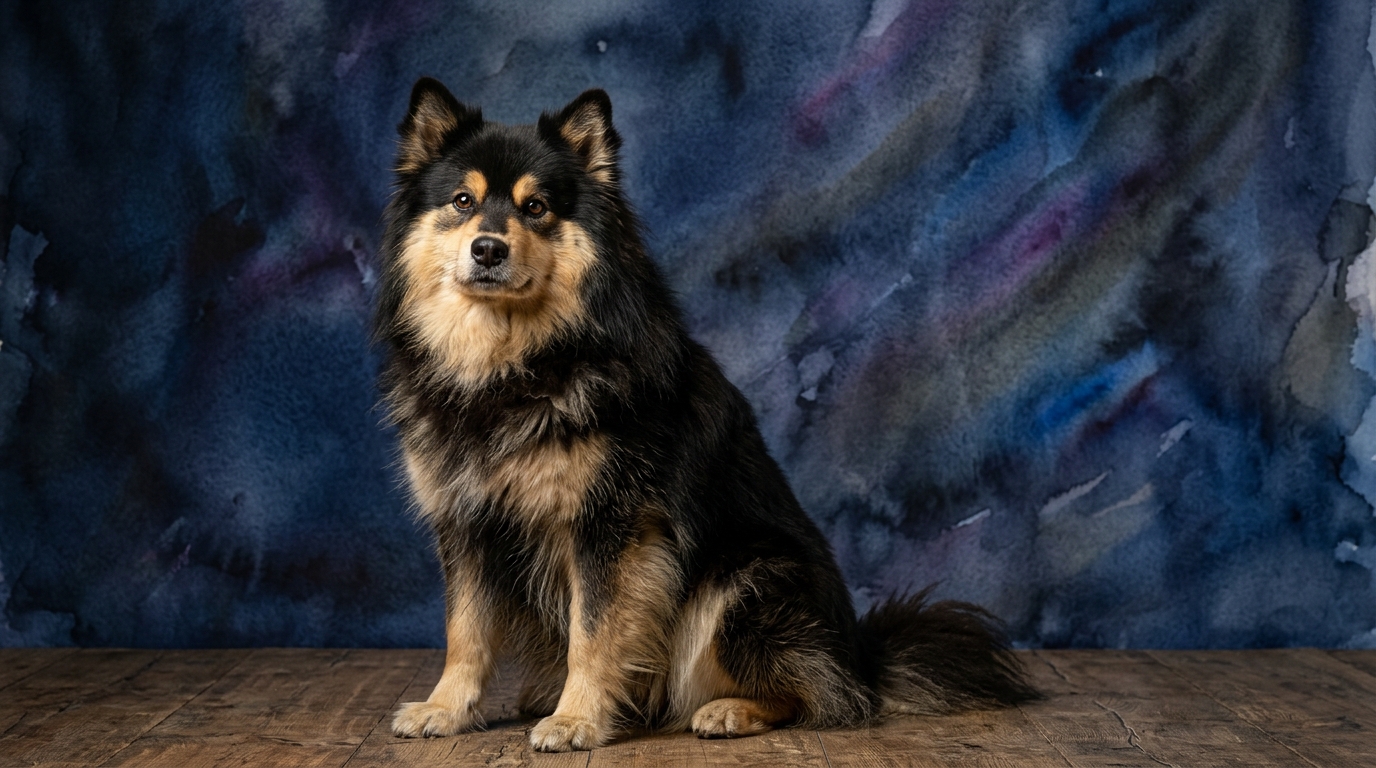

Side-by-Side Cognitive Profile
At The Cosmic Pet Pet IQ Lab, we evaluate canine intelligence across five critical dimensions, assigning a score from 1 to 5. Interestingly, both the Finnish Lapphund and the Neapolitan Mastiff achieve a consistent 3/5 across the board, yet the nature of this 'average' capability varies significantly due to their inherent breed purposes and predispositions.
For the **Finnish Lapphund**, a traditional reindeer herder, a Problem Solving score of 3/5 reflects their practical aptitude for navigating complex terrain, locating scattered animals, and making independent decisions in dynamic outdoor environments. Their problem-solving isn't about abstract puzzles, but rather about real-world, often urgent, environmental challenges. Training Speed at 3/5 indicates they are receptive learners, quick to pick up new commands and routines, especially when engaged in interactive activities. However, their independent spirit means consistency and motivation are key to maintaining focus. Social Intelligence, also 3/5, manifests as a strong ability to read and respond to human and animal cues within their working 'flock,' fostering cooperative bonds. They understand social hierarchies and respond appropriately to leadership. An Instinctive Drive of 3/5 highlights their moderate but persistent herding urge, a natural inclination to gather and manage, coupled with a vigilant awareness of their surroundings. Finally, their Memory at 3/5 is robust, allowing them to recall complex routes, the location of resources, and past interactions, which is crucial for efficient herding over vast areas.
The **Neapolitan Mastiff**, a historical guardian breed, applies its 3/5 cognitive scores in a fundamentally different manner. Their Problem Solving at 3/5 is focused on assessing potential threats and determining appropriate, often measured, responses to protect their territory and family. This isn't about rapid physical maneuvering, but rather strategic evaluation and imposing presence. Training Speed, also 3/5, means they can learn commands effectively, but often at their own deliberate pace; they are not inherently eager to please in the same way a herding dog might be, requiring patient, consistent reinforcement and clear leadership. Their Social Intelligence of 3/5 is profound within their family unit, allowing them to discern nuances in human emotion and intent, and to differentiate between welcome guests and potential intruders. They are deeply attuned to their pack's dynamics. An Instinctive Drive of 3/5 reflects their powerful protective and territorial instincts, a calm, unwavering vigilance rather than a high-energy chase drive. Their Memory, also 3/5, is excellent for retaining knowledge of their territory's boundaries, established routines, and the identities of those considered 'family' versus 'outsiders', contributing to their steadfast guarding capabilities.
Where the Finnish Lapphund Excels Cognitively
The Finnish Lapphund's cognitive strengths lean towards adaptability and cooperative engagement. Their herding heritage imbues them with a superior capacity for dynamic, real-time problem-solving, particularly in changing environments. They can quickly process new information and adjust their behavior, whether it's navigating uneven terrain or responding to shifting flock movements. This agility of thought makes them highly effective in tasks requiring fluid decision-making and rapid communication with a human partner. Their social intelligence is geared towards active collaboration, allowing them to interpret subtle verbal and non-verbal cues from their handler, fostering a highly responsive working relationship. They tend to be more motivated by interactive games and shared tasks, demonstrating a keenness for cooperative learning that can make training feel like a partnership.
Where the Neapolitan Mastiff Excels Cognitively
In contrast, the Neapolitan Mastiff's cognitive advantages are rooted in discernment, patience, and steadfastness. Their problem-solving prowess is less about speed and more about strategic assessment and measured response, particularly concerning territorial defense. They exhibit a remarkable ability to 'read' situations, differentiating between a casual passerby and a genuine threat, often choosing to observe and deter rather than react impulsively. This requires a high degree of self-control and a sophisticated understanding of subtle human behaviors. Their memory for established routines and boundaries is exceptionally strong, meaning once a rule or territory is understood, it is deeply ingrained. This breed's social intelligence shines in its unwavering loyalty and protective instincts towards its immediate family, demonstrating a profound understanding of its role as a calm, imposing guardian.
Training Dynamics: Lapphund Agility vs. Mastiff Deliberation
When it comes to ease of training, the Finnish Lapphund generally presents a more straightforward experience for most owners. Their background as cooperative herders means they are often eager to engage with their human companions and respond well to positive reinforcement. They tend to pick up new commands with relative speed, particularly when training is framed as an interactive game or a shared activity. While they possess an independent streak, their inherent desire to work alongside humans makes them receptive to consistent guidance. Their moderate energy levels also mean that training sessions can serve as an excellent outlet for both mental and physical stimulation, reinforcing good behavior through engagement. However, their intelligence also means they can become bored if training is repetitive or lacks novelty, requiring a varied approach.
The Neapolitan Mastiff, while capable of learning, requires a different approach to training, often perceived as more challenging due to their independent and deliberate nature. They are not typically driven by an intense desire to 'please' but rather by understanding the logic and purpose behind a command. Training a Mastiff demands immense patience, unwavering consistency, and a confident, calm leader who can establish clear expectations. Repetition might be necessary for initial learning, but once a concept is grasped, their memory ensures strong retention. Their sheer size and strength necessitate early and thorough socialization and obedience training to ensure they are manageable and well-behaved adults. Without consistent, firm, and positive leadership, their natural protective instincts can become misdirected, emphasizing the need for comprehensive and thoughtful training from a young age.
Lifestyle Suitability: Active Companions vs. Steadfast Guardians
For owners seeking an active, engaged companion, the Finnish Lapphund is often the preferred choice. Their moderate energy levels and historical role demand regular physical activity and mental stimulation. They thrive in environments where they can participate in family adventures, explore outdoors, or engage in dog sports like agility or obedience. An owner who enjoys hiking, long walks, or interactive play will find a highly compatible partner in a Lapphund, as their cognitive abilities are best utilized when actively participating in a shared lifestyle. They are adaptable to various settings as long as their needs for stimulation and companionship are met.
Conversely, the Neapolitan Mastiff is better suited for owners who appreciate a more relaxed, yet deeply committed, presence. While they require daily walks and some structured exercise, their energy demands are significantly lower than a herding breed. Their ideal environment is often a calm, consistent home where they can fulfill their role as a watchful guardian. Owners of Neapolitan Mastiffs should be prepared for a dog that requires mental stimulation primarily through observing their territory, engaging in calm scent work, and upholding established routines. Their 'relaxed' demeanor should not be mistaken for a lack of need for engagement; rather, their engagement is focused on their family and territory, requiring a dedicated owner who understands and respects their unique protective instincts and deliberate pace.
The Verdict
Choose the Finnish Lapphund if you seek an adaptable, interactive companion eager for shared activities and cooperative learning.
Opt for the Neapolitan Mastiff if you desire a steadfast, discerning guardian who thrives on calm consistency and dedicated, patient leadership.
🧠 Find Your Pet's IQ Score
Our Pet IQ Lab assessment covers 25+ tests across 5 cognitive dimensions — personalized to your breed.
Take the Full IQ Test →Frequently Asked Questions
Are Finnish Lapphunds good family dogs?
Finnish Lapphunds are generally excellent family dogs, known for their friendly and gentle nature. They bond closely with their families and are typically good with children and other pets, especially with proper socialization, making them wonderful companions.
Are Neapolitan Mastiffs good for first-time dog owners?
Neapolitan Mastiffs are generally not recommended for first-time dog owners due to their immense size, strength, and strong protective instincts. They require an experienced, confident owner who can provide consistent training, firm leadership, and extensive socialization from puppyhood.
What kind of mental stimulation do these breeds need?
Finnish Lapphunds thrive on interactive games, puzzle toys, and learning new tricks, benefiting from activities that engage their problem-solving and cooperative nature. Neapolitan Mastiffs benefit from scent work, observing their territory, and consistent routines, which engage their discernment and memory without requiring high physical exertion.