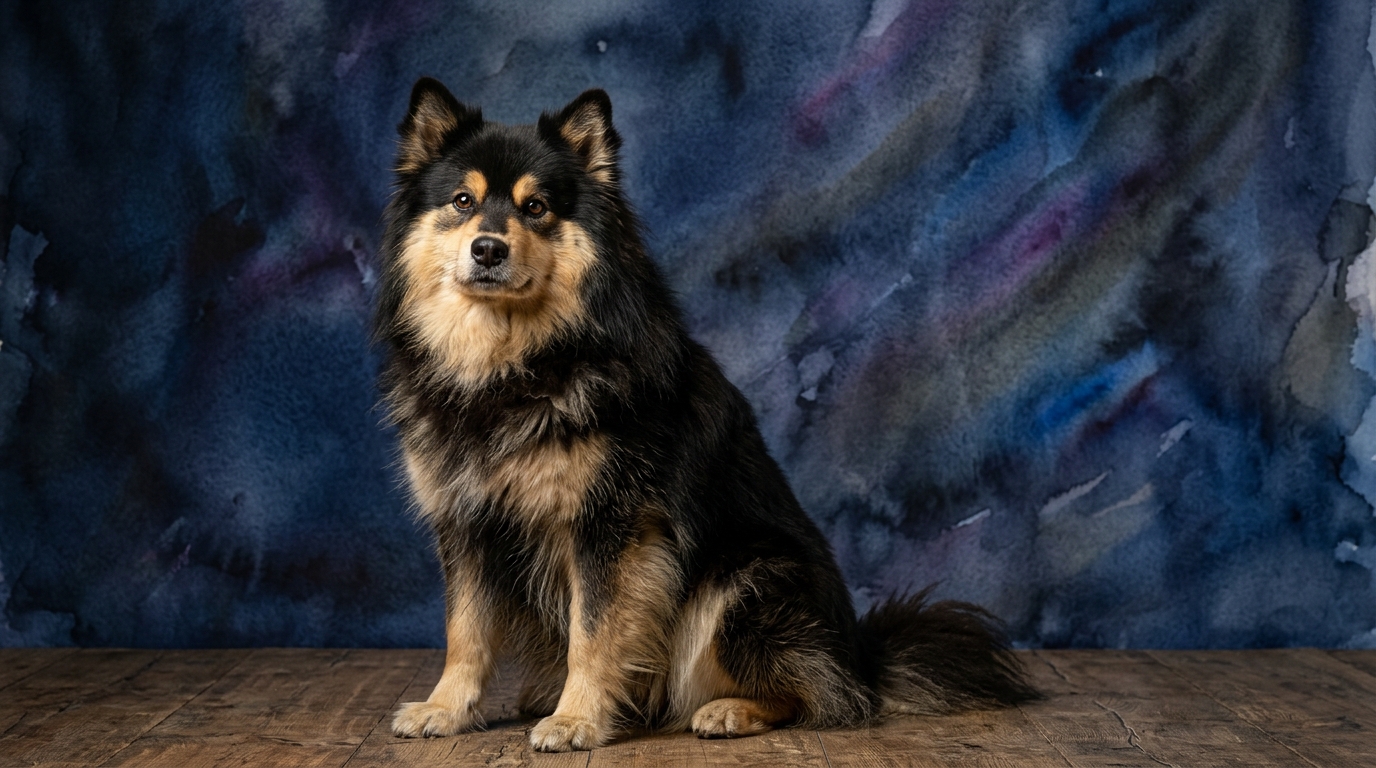

Side-by-Side IQ Profile: Finnish Lapphund vs. Rhodesian Ridgeback
Originating from Arctic regions to herd reindeer, the Finnish Lapphund's Problem Solving at 3/5 manifests in adapting to harsh, changing environments and managing livestock movement, often requiring nuanced decision-making to guide a flock without causing panic or losing individuals. This involves assessing terrain, anticipating animal reactions, and finding efficient ways to control the herd, demonstrating a practical, adaptive intellect. Their Training Speed, also 3/5, reflects their capacity to quickly grasp commands essential for cooperative herding work, responding to subtle cues and hand signals from their human partners. They generally enjoy the process of learning and performing tasks alongside their people, which aids in their rapid acquisition of new skills.
Social Intelligence, rated 3/5, is evident in their ability to work harmoniously within a pack structure, whether with other dogs or their human family, reading social cues to maintain order and cooperation. They are often observant of their environment and the moods of those around them. An Instinctive Drive of 3/5 points to their inherent motivation for herding, protecting, and monitoring, channeling these urges into productive tasks. This drive is often expressed as a watchful nature and a desire to keep their 'flock' (family) together. Finally, their Memory at 3/5 allows them to recall complex routes, individual flock members, and learned commands over time, crucial for effective long-term herding and navigating familiar territories.
Bred in Southern Africa to track and hold large game, the Rhodesian Ridgeback's Problem Solving at 3/5 shines in navigating challenging terrain and independently strategizing during a pursuit, often requiring quick, self-reliant decisions. This involves evaluating risks, finding the most efficient path, and making choices without constant human instruction, showcasing an independent and resourceful mind. Their Training Speed, also 3/5, indicates they learn effectively when properly motivated, though their independence and strong focus on scent or prey can sometimes present a different training dynamic compared to more biddable breeds. They are capable of mastering complex commands but often require a clear understanding of the 'why' behind the action.
Social Intelligence at 3/5 is shown in their strong familial bonds and their discerning nature with strangers; they are often reserved, observing before interacting and forming deep, loyal connections within their trusted circle. This wariness is a key part of their historical protective role. An Instinctive Drive of 3/5 highlights their pronounced prey drive and protective instincts, geared towards tracking and guarding their territory and family. This drive is a powerful motivator for their actions and can be a significant factor in their behavior. Their Memory, also 3/5, is particularly strong for scent trails, territorial boundaries, and remembering specific individuals or experiences, aiding in their historical role as guardians and trackers who need to recall vast amounts of environmental information.
Where the Finnish Lapphund Wins Cognitively
While both breeds exhibit a 3/5 rating in Problem Solving, the Finnish Lapphund often demonstrates a particular acuity in dynamic, real-time puzzle-solving involving living entities. Their historical role demanded continuous assessment of a moving flock, predicting reindeer behavior, and adapting strategies on the fly amidst unpredictable weather and terrain. This isn't just about following a pre-set path but involves subtle, fluid adjustments to maintain control and safety, suggesting a cognitive flexibility tailored to organic, ever-changing challenges. Their capacity to quickly process and respond to multiple variables within a complex, living system is a distinct cognitive strength.
Furthermore, their social intelligence, also 3/5, might subtly edge out the Ridgeback's in scenarios requiring highly cooperative and communicative teamwork. Lapphunds are adept at reading nuanced signals from both humans and other animals, translating these into actions that benefit the group. This collaborative problem-solving, where success hinges on mutual understanding and shared objectives, showcases a particular strength in their social cognition. Their memory, while rated 3/5, is specifically geared towards remembering individual flock members and complex social dynamics within a group, aiding their herding tasks.
Where the Rhodesian Ridgeback Wins Cognitively
Conversely, the Rhodesian Ridgeback's 3/5 in Problem Solving often manifests as a powerful, independent strategic capacity, particularly in tasks requiring sustained focus and self-reliance over vast distances. Their heritage demanded tracking dangerous game, a pursuit where quick, solitary decisions were critical for survival, often without direct human instruction for extended periods. This involves complex spatial reasoning, the ability to maintain a mental map of their environment while on a scent trail, and making calculated judgments about potential threats or opportunities. Their cognitive strength lies in their ability to operate autonomously and make high-stakes decisions.
The Ridgeback's 3/5 Instinctive Drive, deeply rooted in their tracking and protective origins, gives them an edge in tasks requiring immense endurance and singular focus on a goal. Whether it's following a faint scent for miles or vigilantly guarding their territory, this drive is coupled with a tenacity and unyielding determination that fewer breeds possess. Their memory, while rated 3/5, is exceptionally strong for environmental details, specific scents, and recalling the location of resources or potential dangers, which is crucial for their independent tracking and guarding roles. This long-term spatial and olfactory memory is a hallmark of their breed's cognitive specialization.
Training Dynamics: Which is Easier and Why?
Determining which breed is 'easier' to train is nuanced, given both score 3/5 in Training Speed, but their behavioral predispositions create different experiences. The Finnish Lapphund, as a herding breed, generally possesses a stronger innate desire to work *with* their human handler. They are typically more attuned to human direction and find satisfaction in cooperative tasks, making them responsive to positive reinforcement methods that build on this partnership. Their social intelligence and eagerness to please their 'pack' leader can make the learning process feel more fluid and less resistant, especially in activities like obedience, agility, or rally. They thrive on clear communication and consistent guidance, often showing a keen interest in understanding what is expected of them.
In contrast, the Rhodesian Ridgeback, a hound, carries a strong independent streak. While capable of learning quickly (3/5 Training Speed), their motivation often stems from their own drives – a compelling scent, a perceived threat, or a desire to explore. Training a Ridgeback often requires more patience, consistency, and finding ways to make the desired behavior align with their intrinsic motivations, rather than relying solely on a desire to please. They might question commands or choose to follow their nose over a recall, requiring a handler who understands their hound mentality and can make training exceptionally rewarding and engaging from their perspective. For instance, a Ridgeback might excel in scent work or lure coursing due to their instinctive drive, but require more deliberate and high-value reinforcement for general obedience in distracting environments. Therefore, for an owner seeking a more naturally biddable and handler-focused partner, the Lapphund might present a less challenging initial training journey, while the Ridgeback benefits from a more experienced or dedicated trainer who appreciates their independent mind.
Lifestyle Match: Active Owners vs. Relaxed Owners
When considering lifestyle compatibility, the distinctions between these breeds, even with similar cognitive scores, become clearer. The Finnish Lapphund thrives with active owners who can provide consistent mental and physical engagement. Their herding background means they possess a sustained need for a 'job' – whether it's advanced obedience, agility, herding games, or extensive outdoor adventures that challenge their problem-solving and memory. A Lapphund without sufficient outlets for their instinctive drives and cooperative intelligence can become restless, vocal, or develop undesirable behaviors born from boredom. They need an owner who is an active participant in their daily mental and physical life, engaging them in activities that simulate their historical working roles and provide plenty of interaction. They are not suited for truly relaxed owners who prefer minimal interaction beyond basic care; they need a partner in their daily endeavors.
The Rhodesian Ridgeback also requires significant physical activity to satisfy their powerful, athletic build and innate drives. Long walks, runs, and opportunities for scent work or secure off-leash play are crucial. However, once their physical and mental needs are met, Ridgebacks can be surprisingly content to relax with their family, often displaying a calm, watchful demeanor indoors. They are less inclined to demand constant interactive tasks than a Lapphund, being more comfortable with periods of independent quiet, observing their surroundings. This makes them a better fit for active owners who also appreciate a dog that can 'switch off' and settle down after exercise, rather than constantly seeking continuous engagement. Their protective nature also means they are often content to simply be near their family, acting as a quiet guardian.
The Verdict
Choose the Finnish Lapphund if you seek a highly cooperative partner eager for interactive mental challenges and consistent engagement in a family-oriented lifestyle.
Opt for the Rhodesian Ridgeback if you are an active individual who values an independent, watchful companion capable of intense physical activity balanced with periods of calm repose.
🧠 Find Your Pet's IQ Score
Our Pet IQ Lab assessment covers 25+ tests across 5 cognitive dimensions — personalized to your breed.
Take the Full IQ Test →Frequently Asked Questions
Do Finnish Lapphunds bark a lot?
Finnish Lapphunds can be vocal, using barks to communicate and alert, a trait stemming from their herding roots where they needed to signal to their handlers. Consistent training can help manage excessive barking, but they will likely remain expressive.
Are Rhodesian Ridgebacks good with children?
Rhodesian Ridgebacks can be excellent family dogs and are often very protective and patient with children they are raised with. Their size and strength mean supervision is always wise, but their loyal nature typically extends to all family members.
How much exercise do these breeds need daily?
Both breeds require substantial daily exercise. A Finnish Lapphund needs at least an hour or two of vigorous activity, often combined with mental stimulation, while a Rhodesian Ridgeback benefits from one to two hours of intense physical exercise like running or long walks, often with scent work opportunities.