
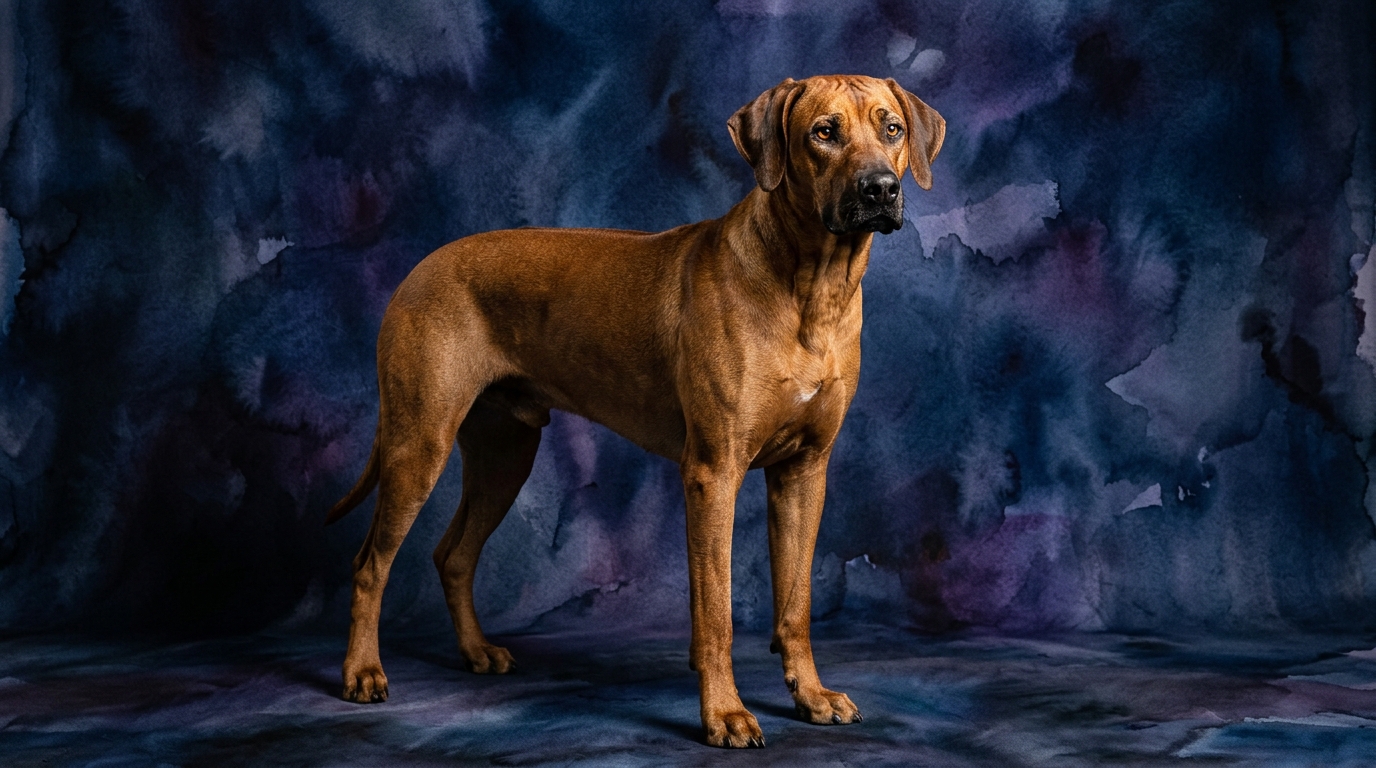
Side-by-Side Cognitive Profiles: German Shepherd vs. Rhodesian Ridgeback
The Cosmic Pet Pet IQ Lab employs a five-dimensional framework to assess canine intelligence, offering a granular view beyond a single score. For the German Shepherd, a breed rooted deeply in herding and protection, their profile reflects a formidable cognitive toolkit. Their Problem Solving is rated 5/5, indicating an exceptional capacity to navigate complex scenarios, devise multi-step solutions, and adapt strategies. Training Speed also scores 5/5, signifying rapid acquisition of new commands and behaviors, coupled with remarkable retention. Social Intelligence, at 5/5, highlights their profound ability to interpret human cues, understand group dynamics, and form strong, responsive partnerships. Their Instinctive Drive, also 5/5, is channeled into purposeful work, whether herding livestock, assisting law enforcement, or protecting their family. Finally, Memory, a perfect 5/5, underpins their consistent performance, allowing for long-term recall of intricate routines and past experiences. This comprehensive profile places them at Coren rank #3, a testament to their operational cognitive prowess.
The Rhodesian Ridgeback, originating as a tenacious hunter of large game, presents a distinct cognitive blueprint, shaped by demands for independence and resilience. Their Problem Solving is rated 3/5. While capable, they often require more repetition or specific, high-value motivation to engage fully with novel challenges. Training Speed, at 3/5, reflects a steady learning curve that is less rapid than the German Shepherd's, often demanding more consistent engagement and patience from their human partners. Social Intelligence, also 3/5, points to a more discerning approach; they form deep bonds with their immediate family but can be aloof or reserved with strangers, prioritizing a select few rather than broad social engagement. Their Instinctive Drive, 3/5, is potent, primarily expressed through a strong prey drive and a self-reliant hunting instinct, rather than a strong inclination for human-directed work. Memory, at 3/5, suggests they retain information effectively, though perhaps with a more selective focus based on personal relevance or strong initial imprinting. This unique blend places them at Coren rank #52, reflecting a different, though equally valid, form of canine intelligence.
Where the German Shepherd Excels Cognitively
The German Shepherd's cognitive strengths lie primarily in their collaborative nature and their drive to execute human directives with precision. Their superior Problem Solving (5/5) allows them to not just follow commands, but to proactively analyze situations and even anticipate human needs, making them invaluable in roles requiring initiative. For instance, in search and rescue, a German Shepherd doesn't just track; they might assess environmental hazards or prioritize areas based on subtle cues. Their 5/5 Training Speed means they absorb complex sequences of commands with fewer repetitions, enabling them to master intricate tasks like agility courses or protection work at an accelerated pace. This rapid learning, combined with their 5/5 Social Intelligence, allows for a nuanced understanding of human communication—they pick up on subtle body language and vocal inflections, fostering an almost telepathic working relationship. Their 5/5 Memory ensures these skills are retained over the long term, making them consistent performers even after periods of inactivity.
Where the Rhodesian Ridgeback's Cognition Shines
The Rhodesian Ridgeback's cognitive prowess shines in areas demanding independence, resourcefulness, and keen sensory perception—qualities honed by their history of tracking and cornering dangerous game without immediate human oversight. Their 3/5 Problem Solving, while not as driven by human collaboration, manifests as a powerful ability to make autonomous decisions in the field. For example, when tracking a scent, a Ridgeback will rely on its own judgment to navigate terrain and follow a trail, rather than constantly seeking human input. Their Instinctive Drive (3/5) is less about pleasing a handler and more about pursuing their self-identified goals, whether that's a captivating scent or a distant horizon. This independence translates into a unique resilience and a capacity for self-entertainment, which can be a cognitive advantage in less structured environments. Furthermore, their Social Intelligence, while rated 3/5 for broad engagement, fosters incredibly deep, discerning bonds with their chosen family members, demonstrating a profound, albeit selective, emotional intelligence and loyalty. They possess a patient endurance, coupled with explosive action when needed, requiring a specific, highly controlled cognitive process for effective hunting.
Training Ease: German Shepherd vs. Rhodesian Ridgeback
From a practical standpoint, the German Shepherd is unequivocally easier to train for most owners. Their 5/5 Training Speed and 5/5 Memory mean they grasp new commands and concepts with remarkable swiftness, often requiring only a few repetitions to solidify a behavior. They possess an inherent desire to work alongside their human partners, driven by a strong impulse to please and a clear understanding of hierarchy, which aligns perfectly with structured training. A German Shepherd thrives on clear commands, consistent reinforcement, and the mental engagement that training provides, viewing it as a collaborative puzzle. This makes them highly responsive and adaptable to various training methodologies, from basic obedience to advanced specialized tasks.
The Rhodesian Ridgeback, by contrast, presents a greater training challenge due to their inherent independence and selective motivation. Their 3/5 Training Speed means they learn steadily, but often at a slower pace and with a need for more compelling incentives. Their Instinctive Drive (3/5), deeply rooted in their hunting heritage, means they might prioritize an intriguing scent or visual stimulus over a human command if the motivation isn't strong enough. They are not naturally inclined to "people-please" in the same way a German Shepherd is; instead, they need to understand the value of complying. Training a Ridgeback requires immense patience, consistency, and a deep understanding of their motivations, often leveraging positive reinforcement with high-value rewards. Owners must establish clear leadership and build a relationship based on trust and mutual respect, rather than expecting immediate, unquestioning obedience.
Matching Canine Cognition to Owner Lifestyles
The German Shepherd is ideally suited for active, highly engaged owners who are prepared to integrate their dog into a demanding lifestyle that includes extensive physical activity and consistent mental stimulation. These dogs thrive when given a job, whether it's competitive dog sports like agility, protection work, advanced obedience, or regular, vigorous exercise coupled with ongoing training. Their high cognitive demands (5/5 Problem Solving, 5/5 Instinctive Drive) mean that without sufficient mental outlets, they can become bored, anxious, or destructive. They are not a match for relaxed owners who cannot commit to daily, structured engagement and exercise.
The Rhodesian Ridgeback also requires active owners, but their activity profile differs. They need regular, vigorous exercise to satisfy their powerful physique and independent spirit, making them excellent companions for long hikes, runs, or off-leash exploration in secure areas. However, once their physical and mental needs are met for the day, Ridgebacks are often content to relax quietly indoors, displaying a calm and dignified demeanor. This makes them potentially more adaptable to owners who enjoy significant periods of downtime after intense activity, as long as that activity is consistently provided. They are less suited for truly "relaxed" owners who cannot provide the necessary outlets for their physical energy and independent cognitive drive, but their ability to switch off once exercised can be a benefit for those who appreciate both adventure and tranquility.
The Verdict
Choose a German Shepherd if you seek a highly trainable, versatile partner for advanced obedience, dog sports, or a working role, thriving on constant engagement and clear direction. They excel when their cognitive abilities are consistently challenged and channeled by a dedicated owner.
Choose a Rhodesian Ridgeback if you appreciate an independent, discerning companion with a robust spirit and a unique problem-solving style, ideal for active owners who value a dog capable of making its own decisions in outdoor pursuits. They thrive with patient, consistent guidance that respects their intrinsic motivations.
🧠 Find Your Pet's IQ Score
Our Pet IQ Lab assessment covers 25+ tests across 5 cognitive dimensions — personalized to your breed.
Take the Full IQ Test →Frequently Asked Questions
Are Rhodesian Ridgebacks stubborn?
Rather than stubbornness, Ridgebacks exhibit a strong independent streak, a cognitive trait valued in their hunting past. They often need to understand the purpose behind a command to comply, making them less prone to blind obedience and more to discerning cooperation.
Do German Shepherds need a lot of mental stimulation?
Absolutely. With 5/5 ratings in Problem Solving, Training Speed, and Instinctive Drive, German Shepherds possess a powerful intellect that requires consistent engagement. Without mental challenges, they can develop behavioral issues stemming from boredom and under-stimulation.
Can a Rhodesian Ridgeback be a good family dog?
Yes, Ridgebacks can be excellent family dogs, forming deep, protective bonds with their immediate household members due to their 3/5 Social Intelligence being selective. They are generally patient and tolerant with children they are raised with, though their size and strength necessitate supervision.