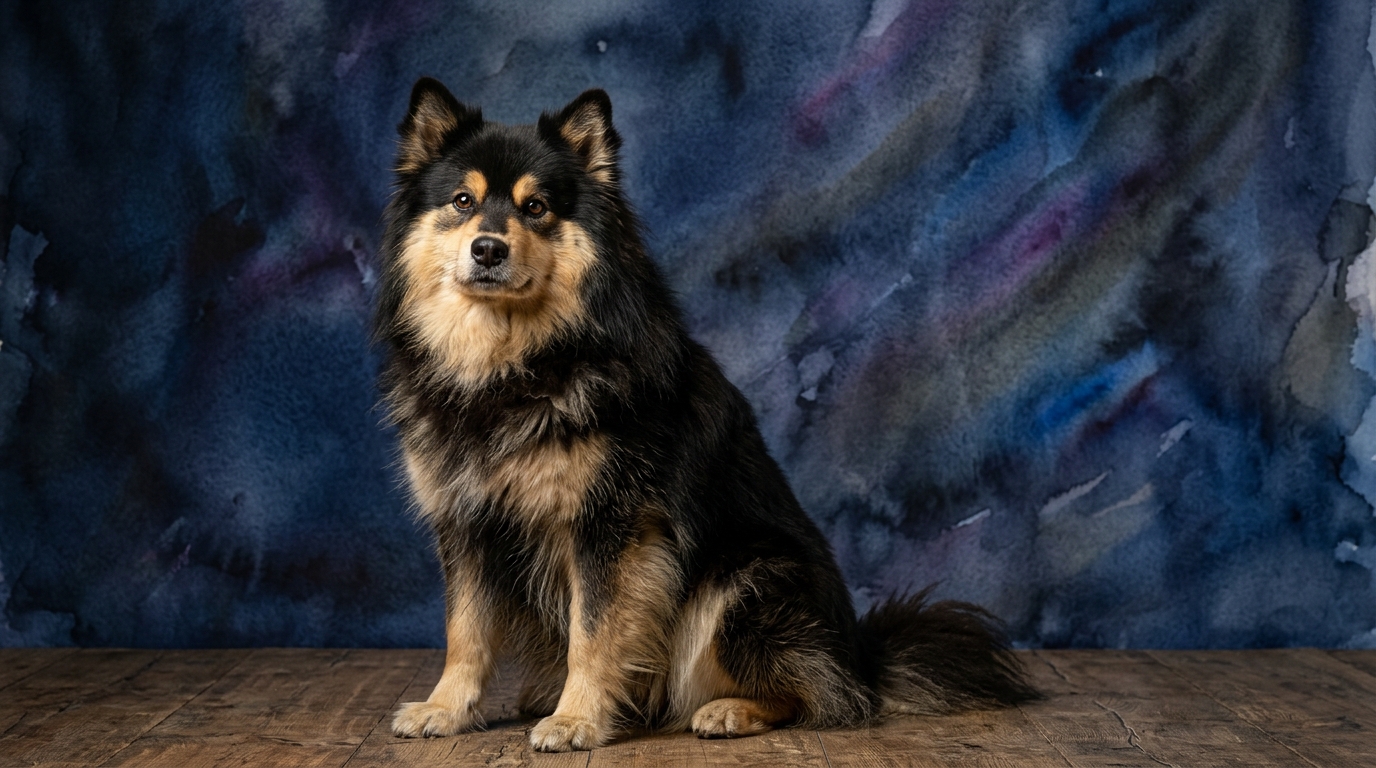

Side-by-Side Cognitive Profiles: Lapphund vs. Russian Toy
The Cosmic Pet Pet IQ Lab assesses canine intelligence across five key dimensions: Problem Solving, Training Speed, Social Intelligence, Instinctive Drive, and Memory. While both the Finnish Lapphund and the Russian Toy register a consistent 3/5 across all these categories, the *manifestation* of these cognitive strengths is profoundly influenced by their distinct breed histories and purposes.
For the **Finnish Lapphund**, a dog rooted in herding reindeer in the Arctic Circle, their 3/5 in Problem Solving often translates into practical, physical solutions. These dogs excel at navigating complex outdoor environments, figuring out how to bypass obstacles, or strategically moving a group of animals. Their solutions are typically robust and grounded in their physical surroundings, reflecting their need for independent judgment in demanding situations. Their Training Speed of 3/5 indicates a moderate pace for learning new commands; they are cooperative but possess an independent streak, meaning they learn best with consistent, positive reinforcement that acknowledges their initiative. Social Intelligence at 3/5 for a Lapphund means they are adept at understanding group dynamics, both among dogs and within their human family, reading subtle intentions and responding appropriately to maintain harmony. Their Instinctive Drive, also 3/5, is a manageable herding impulse, an inclination to gather and guide, which can be channeled into constructive activities. Finally, their Memory at 3/5 ensures they retain commands, routines, and environmental layouts reliably, learning effectively from past experiences.
The **Russian Toy**, a breed developed as a charming companion for Russian nobility, approaches its 3/5 cognitive scores with a focus on its immediate social and domestic world. Their Problem Solving (3/5) is often directed towards achieving comfort or attention; they might cleverly manipulate their environment to reach a favorite toy or strategically solicit affection from their owner. This involves persistence and ingenuity within a home setting. Their Training Speed (3/5) is steady, responding well to engaging, reward-based methods, particularly from their cherished human. While they may not generalize commands instantly, their desire to please their primary caregiver fosters consistent effort. Social Intelligence at 3/5 for a Russian Toy is highly refined, centered on understanding human emotions and intentions; they are masters at deciphering subtle cues to elicit desired responses or offer comfort. Their Instinctive Drive, also 3/5, manifests as a powerful companion drive and a keen sense of self-preservation, motivating them to seek closeness, warmth, and security. Their Memory at 3/5 is strong for routines, preferred people, and locations of valued resources, allowing them to recall past interactions and leverage them in daily life.
Where the Finnish Lapphund Exhibits Cognitive Advantages
Finnish Lapphunds demonstrate a distinct cognitive advantage in their capacity for environmental adaptation and practical application of intellect in dynamic, often unpredictable, outdoor settings. Their herding legacy has endowed them with superior cognitive flexibility when faced with varied terrains, changing weather, and live, moving subjects. A Lapphund's problem-solving often involves independent judgment to manage a flock or navigate complex natural obstacles, requiring a blend of observation, physical prowess, and strategic thinking that is less common in breeds not bred for such demanding work. This robust, physically integrated form of problem-solving and their moderate but purposeful instinctive drive position them to excel in tasks requiring sustained focus and independent action within a larger, more open environment, making them particularly adept at real-world problem-solving beyond the confines of a home.
Where the Russian Toy Exhibits Cognitive Advantages
The Russian Toy's cognitive strengths shine brightest in the realm of nuanced social observation and emotional intelligence, particularly within the intimate human-canine bond. Their small stature and primary role as devoted companions have honed an exceptional ability to decipher subtle human cues, emotional shifts, and household routines with remarkable precision. This acute social intelligence allows them to anticipate their owner's needs, moods, or desires, often reacting with comforting presence or playful solicitation at precisely the right moment. Their problem-solving, while less about physical challenges, is often more socially intricate, such as strategically positioning themselves for attention or figuring out which family member is most likely to yield to their charms, showcasing a sophisticated understanding of interpersonal dynamics and leveraging their companionship drive effectively.
Trainability: Unpacking Behavioral Differences
While both breeds score 3/5 in Training Speed, the *nature* of their trainability and the approach required differ significantly due to their inherent behavioral traits. The Finnish Lapphund's herding background instills a desire for purpose and collaboration, making them receptive to training that offers clear tasks and a sense of 'job satisfaction.' They learn best through consistent positive reinforcement that acknowledges their effort and initiative, thriving when given a role to play. However, their independent thinking, a valuable asset for a herding dog, can sometimes manifest as a 'what's in it for me?' attitude, requiring trainers to be engaging, patient, and consistent to maintain their focus and prevent them from deciding their own priorities.
The Russian Toy, conversely, is driven intensely by its bond with its human companion. Their eagerness to please and strong desire for constant interaction makes them highly motivated by praise, attention, and gentle rewards from their primary caregiver. They respond particularly well to positive reinforcement delivered with warmth and enthusiasm, and their smaller size makes them physically easy to manage during training sessions. Their dedication to their owner often translates into a more eager and consistent effort in a familiar setting, making them feel 'easier' to train for those seeking a highly compliant and affectionate companion. Their sensitivity means that harsh corrections are counterproductive, whereas positive encouragement yields excellent results, fostering a trusting and cooperative training relationship centered on mutual affection.
Matching Canine Companions to Owner Lifestyles
The Finnish Lapphund, with its heritage rooted in herding reindeer across vast, challenging landscapes, naturally suits active owners. Their moderate instinctive drive and robust physical capabilities mean they thrive on regular, vigorous exercise, extensive mental stimulation, and consistent opportunities to engage their problem-solving skills in varied outdoor environments. Owners who enjoy activities like hiking, canine sports such as agility or obedience, or simply long, exploratory walks will find a willing, capable, and enthusiastic partner in the Lapphund. Their cognitive profile benefits immensely from varied experiences and consistent engagement, which effectively channels their natural energies and prevents boredom, allowing them to utilize their practical intelligence.
The Russian Toy, while certainly enjoying walks and engaging playtime, is generally a better fit for more relaxed owners who prioritize companionship and indoor comfort. Their primary need is for consistent social interaction and a secure, comfortable home environment. Their smaller size and intense focus on social interaction mean they are typically content with shorter bursts of activity, indoor games, and ample lap time. Owners who prefer a less demanding exercise routine, enjoy quiet evenings at home, and can provide consistent affection and attention will find the Russian Toy to be an incredibly devoted, perceptive, and charming companion. Their cognitive strengths are best nurtured through intimate social interactions, gentle, engaging play, and a stable, loving home environment.
The Verdict
Opt for a Finnish Lapphund if you are an active individual or family seeking a resilient, intelligent partner for outdoor adventures, canine sports, and a dog that thrives on having a purpose, offering independent thinking balanced with loyalty.
Select a Russian Toy if you desire a devoted, perceptive companion for a more relaxed lifestyle, valuing intense social bonding, a dog that excels at reading human cues, and enjoys comfort and close proximity within the home.
🧠 Find Your Pet's IQ Score
Our Pet IQ Lab assessment covers 25+ tests across 5 cognitive dimensions — personalized to your breed.
Take the Full IQ Test →Frequently Asked Questions
Are Finnish Lapphunds good for first-time dog owners?
Finnish Lapphunds can be suitable for first-time owners who are committed to consistent training, socialization, and meeting their moderate exercise and mental stimulation needs. Their cooperative nature and adaptability make them manageable, but their independent streak requires a patient and dedicated approach to guidance.
Do Russian Toys bark a lot?
Russian Toys can be prone to barking, particularly as a way to alert their owners to perceived threats or to express excitement or demand attention. Early training focusing on appropriate barking behavior and consistent management of their environment can help mitigate excessive vocalization.
How much grooming do these breeds require?
The Finnish Lapphund has a thick double coat that requires regular brushing, typically 2-3 times a week, to prevent matting and manage shedding, especially during seasonal changes. The Russian Toy, depending on its coat variety (smooth or long-haired), requires less intensive grooming; smooth coats need occasional wiping, while long-haired varieties benefit from weekly brushing to prevent tangles and maintain their delicate fringes.