
Side-by-Side IQ Profile
The Flat-Coated Retriever, Coren-ranked #17, demonstrates a high aptitude for cooperative learning. Its Problem Solving at 4/5 indicates a strong ability to navigate novel situations and find solutions, often with handler input. Training Speed, also 4/5, means it grasps new concepts and cues efficiently, eager to please. Social Intelligence, at 3/5, suggests it can read human cues adequately, focusing on task execution rather than complex social nuance. Instinctive Drive, 3/5, points to a moderate but focused natural inclination for retrieving and working. The standout is Memory at 5/5, reflecting an exceptional capacity to recall learned behaviors, locations, and sequences over extended periods.
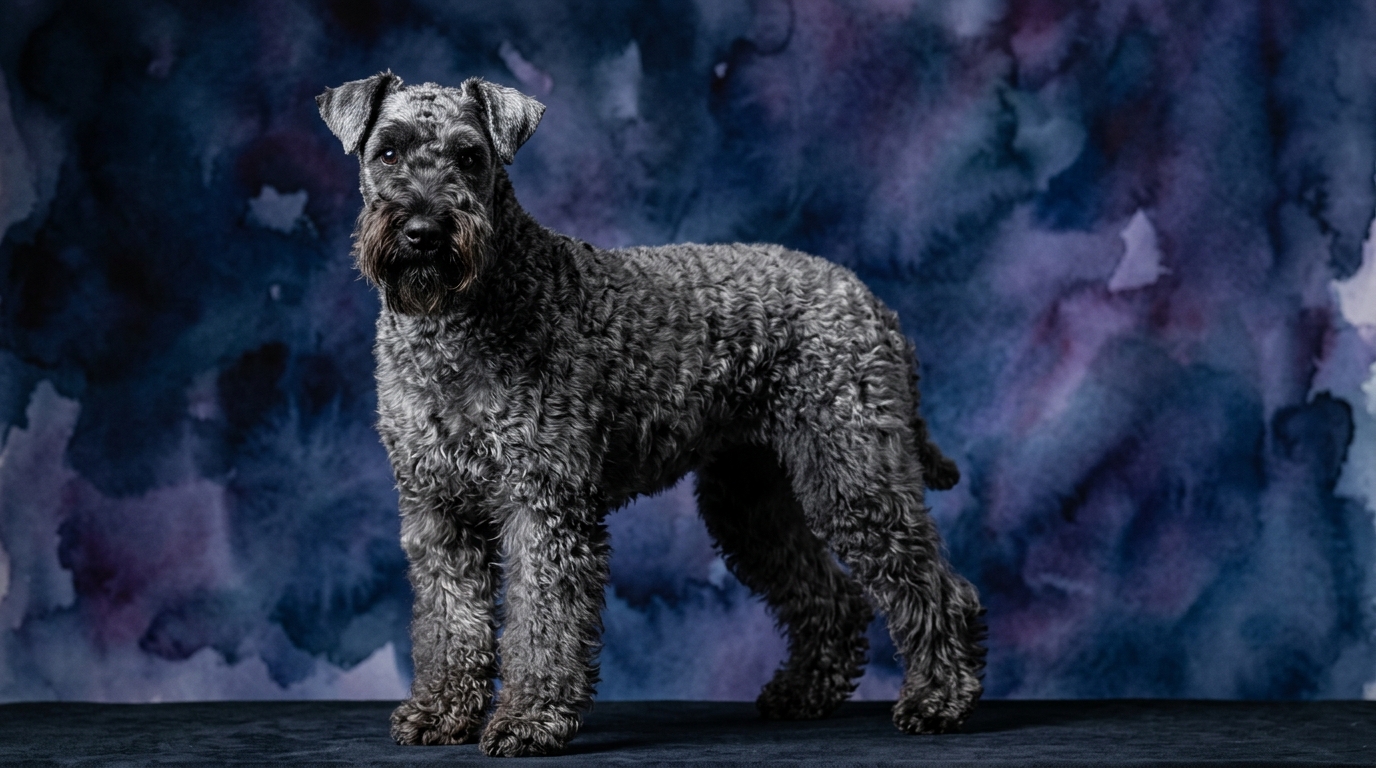
The Kerry Blue Terrier, not Coren-ranked, presents a different cognitive landscape. Its Problem Solving at 3/5 suggests it tackles challenges through persistence and independent thought rather than seeking immediate human direction. Training Speed, also 3/5, means it learns, but may require more repetition and motivation due to its independent streak. Social Intelligence, matching the Flat-Coat at 3/5, indicates understanding of basic human interactions, but often with a more self-reliant interpretation. Instinctive Drive, 3/5, reflects its strong prey drive and tenacity, particularly for its terrier heritage. Memory, at 3/5, means it retains information, but potentially requiring more consistent reinforcement for complex, multi-step tasks.
Where Flat-Coated Retriever Wins Cognitively
The Flat-Coated Retriever truly excels in areas demanding recall, sequential learning, and collaborative problem-solving. Its perfect 5/5 Memory score is a significant advantage, allowing it to remember intricate retrieve patterns, specific item locations, and complex multi-step commands over long durations. This robust memory underpins its effectiveness as a working retriever, where remembering a fallen bird's exact spot amidst distractions is paramount. Coupled with a 4/5 in Problem Solving, the Flat-Coat isn't just remembering; it's also applying that memory to adapt to new obstacles or changing environments. For instance, if a familiar retrieve path is blocked, a Flat-Coat can readily devise an alternative route, recalling past successes. Its Training Speed of 4/5 further solidifies its advantage in learning new skills rapidly. This combination makes the Flat-Coat a formidable partner in activities requiring sustained mental engagement and precise execution.
Where Kerry Blue Terrier Wins Cognitively
While the Kerry Blue Terrier's scores are generally lower or equal, its cognitive strengths lie in independent, tenacious problem-solving driven by its terrier instincts. Its 3/5 in Problem Solving, though numerically lower, manifests as a distinct advantage when challenges require self-reliance and persistence rather than human-directed cooperation. A Kerry Blue might "win" by independently figuring out how to access a hidden toy or navigate a complex scent trail purely by its own initiative, driven by its 3/5 Instinctive Drive. This cognitive profile benefits owners who appreciate a dog with a strong sense of purpose and the ability to work without constant human oversight. Its problem-solving, while perhaps slower for complex obedience, shines in scenarios where natural curiosity and a relentless drive to investigate and overcome obstacles independently are valued. This self-sufficient thinking, combined with its robust physical capabilities, makes the Kerry Blue an exceptional choice for tasks demanding tenacity.
Which is Easier to Train and Why
The Flat-Coated Retriever generally presents a much smoother training experience, primarily due to inherent differences in their cognitive profiles and historical roles. The Flat-Coat's 4/5 Training Speed and exceptional 5/5 Memory mean it absorbs new commands quickly and retains them reliably. Developed to work closely with humans, often off-leash, retrieving game, they possess a strong desire to cooperate and a natural inclination to pay attention to their handler. Their 3/5 Social Intelligence is sufficient to understand and respond to human cues in a training context. A Flat-Coat is often eager to please, finding reinforcement in successful collaboration and praise. For example, teaching a Flat-Coat a multi-step retrieve command is facilitated by its superior memory for the sequence and its willingness to engage.
In contrast, the Kerry Blue Terrier's 3/5 Training Speed and 3/5 Memory, combined with its independent terrier nature, can make training more challenging. Kerry Blues were bred to hunt vermin independently, making their own decisions without constant human direction. This translates into a dog that can be more opinionated and less inherently inclined to defer to human instruction. While capable of learning, their progress might be slower, requiring more patience, consistency, and creative motivation. A Kerry Blue might understand a command but choose not to execute it if it perceives a more interesting independent pursuit. Their 3/5 Instinctive Drive, focused on prey, can also be a significant distraction, demanding extra effort to maintain focus.
Which Suits Active Owners vs Relaxed Owners
Neither the Flat-Coated Retriever nor the Kerry Blue Terrier are suitable for genuinely "relaxed" owners; both demand consistent mental and physical engagement. However, the type of activity and owner interaction they thrive on differs significantly.
The Flat-Coated Retriever is ideal for active owners seeking a highly interactive and cooperative partner. With its 4/5 Problem Solving and 4/5 Training Speed, it excels in structured activities like obedience, agility, flyball, and field work. Owners who enjoy teaching complex tricks, participating in dog sports, or spending hours on hiking trails where their dog can retrieve and explore alongside them will find the Flat-Coat a joyful companion. Its strong memory and desire to work with people mean it thrives on having a "job" to do. These dogs need more than just a walk; they need to use their brains and bodies in tandem with their human partners.
The Kerry Blue Terrier also demands an active owner, but one who appreciates a dog with a more independent and tenacious spirit. While equally energetic, the Kerry Blue's activities might lean more towards vigorous play, earthdog trials, or long, exploratory walks where they can engage their keen senses and strong prey drive. An owner who enjoys channeling a terrier's natural instincts into sports like agility or who has the patience for consistent training to manage their independent streak will find the Kerry Blue rewarding. They thrive on mental challenges that engage their problem-solving skills, even if it's outwitting a toy. A relaxed owner would quickly be overwhelmed by a bored Kerry Blue, whose untapped energy and sharp mind could lead to destructive behaviors. Owners must provide consistent boundaries and varied activities that respect its independent nature.
The Verdict
Opt for a Flat-Coated Retriever if you desire a highly cooperative, trainable companion for a wide range of activities, valuing exceptional memory and a strong desire to work collaboratively. This breed thrives with owners who enjoy structured training, dog sports, and a deeply interactive partnership.
Select a Kerry Blue Terrier if you appreciate a spirited, independent, and tenacious companion with a strong will and a drive for self-directed problem-solving, provided you are prepared for consistent, patient training to channel its unique terrier energy.
🧠 Find Your Pet's IQ Score
Our Pet IQ Lab assessment covers 25+ tests across 5 cognitive dimensions — personalized to your breed.
Take the Full IQ Test →Frequently Asked Questions
Does Coren ranking directly indicate overall intelligence?
Coren ranking primarily measures "working and obedience intelligence," focusing on a dog's ability to learn and obey human commands. It doesn't fully encompass other aspects of cognition like independent problem-solving or social nuance, which can be strong in breeds not highly ranked.
Can a Kerry Blue Terrier be trained for complex tasks despite its lower training speed score?
Yes, a Kerry Blue Terrier can certainly learn complex tasks, but it typically requires more patience, consistency, and motivational creativity from the handler. Their independent nature means training might take longer and require more engaging methods to maintain their focus and cooperation.
How do the social intelligence scores of 3/5 for both breeds compare in real-world scenarios?
A 3/5 social intelligence score for both suggests they are generally capable of understanding basic human cues and interacting appropriately. However, the Flat-Coat's cooperative drive often makes its social interactions more geared towards pleasing its handler, while the Kerry Blue's independence means its social responses might be more self-serving or less outwardly demonstrative of a desire to comply.