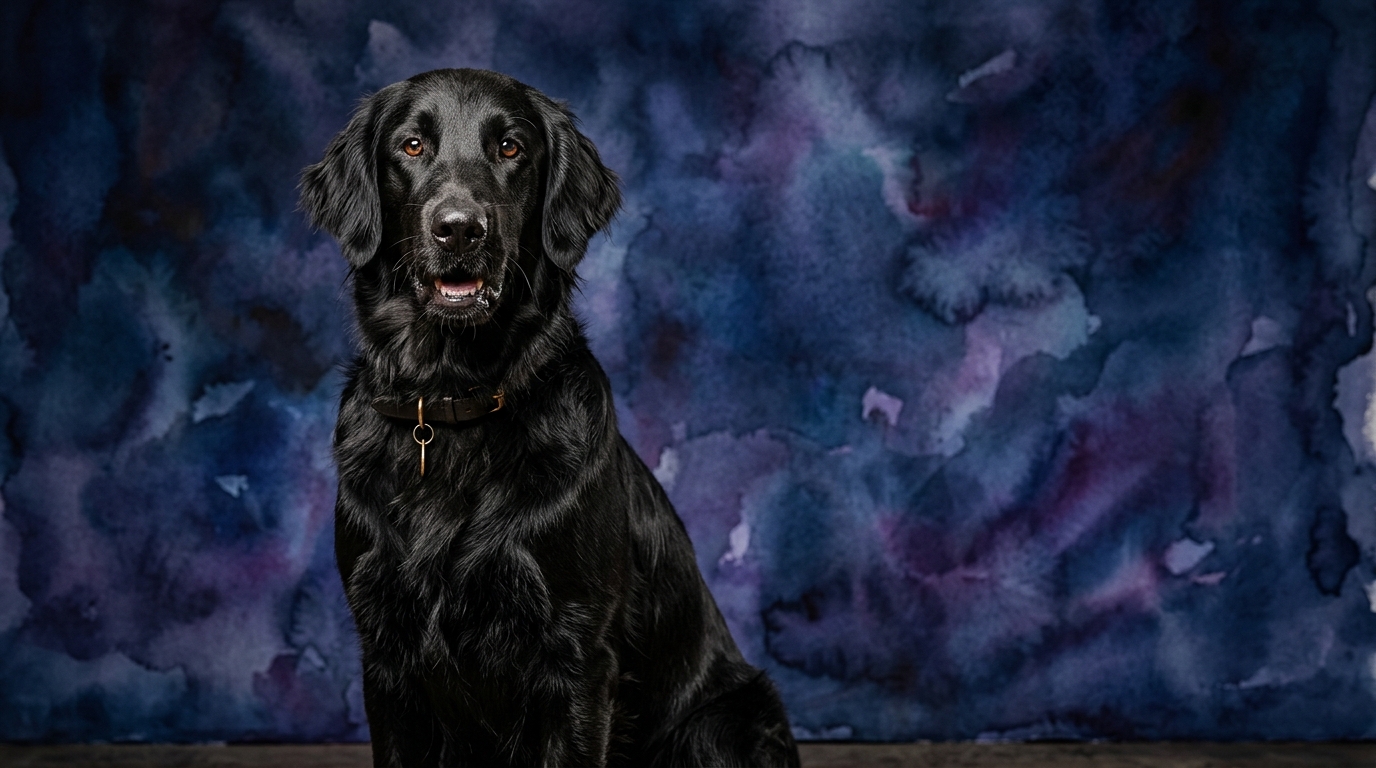
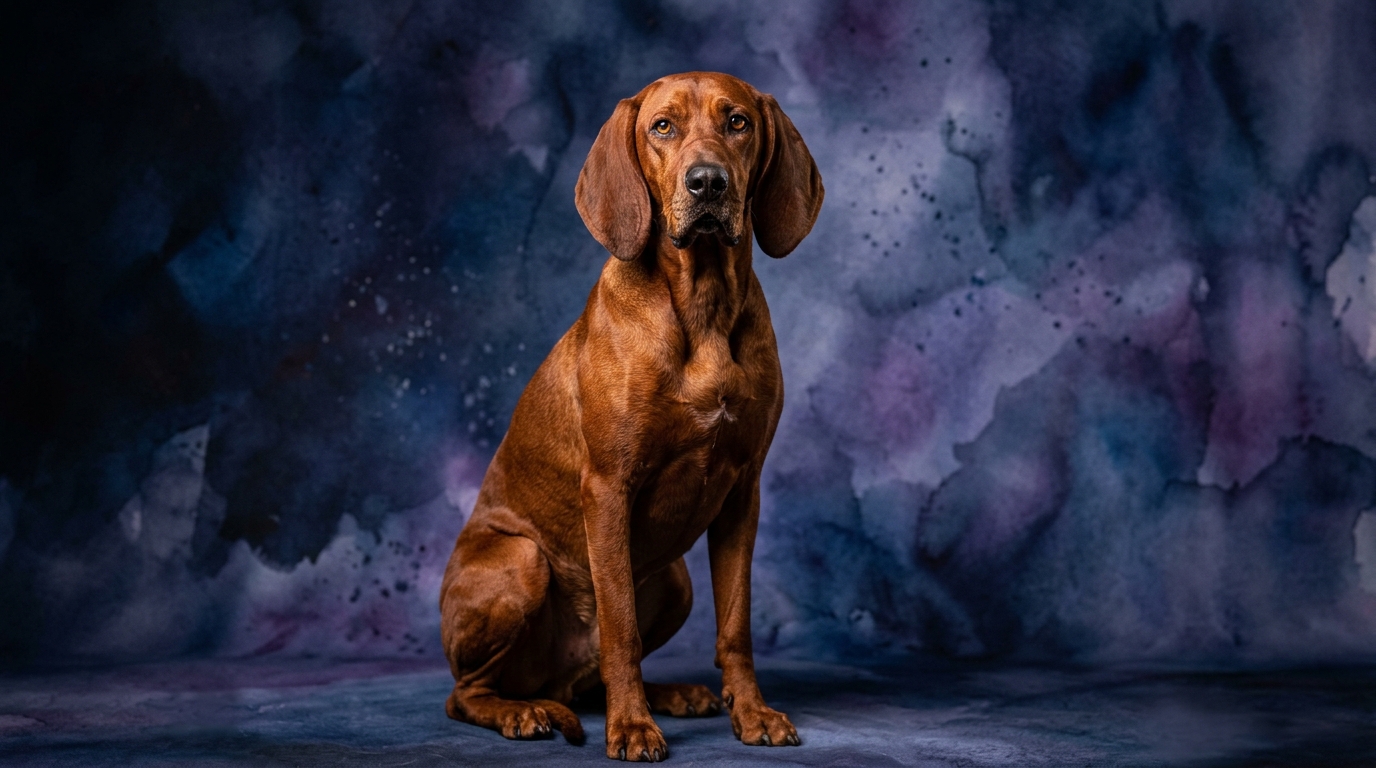
Side-by-Side IQ Profile: Sporting Dog vs. Scent Hound
The Cosmic Pet Pet IQ Lab employs five key dimensions to evaluate canine intelligence, offering a nuanced view beyond simple rankings. For the Flat-Coated Retriever, a Coren-ranked Sporting dog, we observe a robust cognitive profile. Their Problem Solving is rated at 4/5, indicating a strong capacity to navigate novel situations and figure out solutions. Training Speed also scores 4/5, suggesting they grasp new commands and routines with relative ease. Social Intelligence stands at 3/5, signifying an average ability to interpret human cues and social dynamics. Their Instinctive Drive, rated 3/5, reflects a moderate propensity for innate behaviors like retrieving or hunting, which can be channeled. A standout feature is their Memory at 5/5, pointing to an exceptional ability to retain information over time, whether it's learned commands or past experiences.
In contrast, the Redbone Coonhound, a dedicated Hound breed not listed in Coren's rankings, presents a different cognitive blueprint. Their Problem Solving is rated 3/5, suggesting a practical, task-oriented approach to challenges rather than broad abstract reasoning. Training Speed also sits at 3/5, indicating they learn at a steady pace, though perhaps with more repetition than some breeds. Social Intelligence matches the Flat-Coat at 3/5, implying similar understanding of human interactions. Their Instinctive Drive is likewise 3/5, but for the Redbone, this score specifically reflects their powerful, inherent urge to track and follow scent trails. Their Memory is rated 3/5, indicating an adequate ability to recall information, though not as pronounced as the Flat-Coat's exceptional retention.
Where the Flat-Coated Retriever Wins Cognitively
The Flat-Coated Retriever clearly demonstrates cognitive advantages in areas emphasizing rapid learning, adaptability, and retention. Their Problem Solving score of 4/5 means they are often quicker to adapt to new environments or figure out how to retrieve a toy from a complex setup, showcasing a flexible approach to challenges. This translates into a dog that can more readily understand cause and effect in varied scenarios, whether it's manipulating a puzzle toy or understanding a sequence of actions required for a task. This higher problem-solving capacity makes them adept at navigating the intricacies of family life and diverse training exercises.
Furthermore, their superior Training Speed (4/5) combined with an outstanding Memory (5/5) creates a highly trainable and reliable companion. A Flat-Coat learns new commands efficiently and, crucially, remembers them over the long term, even with periods of inactivity. This exceptional memory means they often require fewer refreshers for previously learned skills and can build a vast repertoire of behaviors. This cognitive strength makes them excellent candidates for advanced obedience, dog sports, or service work where precision and consistent recall of complex sequences are paramount. Their ability to quickly associate actions with consequences and retain those associations is a distinct cognitive advantage.
Where the Redbone Coonhound Wins Cognitively
While the Redbone Coonhound's overall IQ scores may not reach the Flat-Coat's peaks, their cognitive strengths lie in a highly specialized and deeply ingrained form of intelligence crucial for their purpose. Their Instinctive Drive, rated 3/5, is a testament to an unwavering, single-minded focus on scent. This isn't just a moderate drive; it's an all-consuming cognitive process that allows them to meticulously follow a trail, often ignoring all other environmental distractions. This intense focus on a specific sensory input, sustained over long periods and challenging terrains, represents a unique cognitive triumph. It's a form of problem-solving (3/5) deeply intertwined with their instinct, where the 'problem' is deciphering a complex olfactory puzzle.
The Redbone's specialized Problem Solving (3/5) manifests in their ability to work independently, making critical decisions on the trail without constant human direction. This autonomy, born from centuries of selective breeding, requires a different kind of cognitive processing: assessing environmental cues, evaluating scent strength, and choosing the most probable path. Their resilience and endurance, while physical attributes, also reflect a mental tenacity—the cognitive fortitude to persist in a task for hours, demonstrating a deep commitment to their primary drive. This enduring focus and self-reliance in their work are distinct cognitive advantages within their specialized domain, showcasing a robust and unwavering mental stamina.
Which is Easier to Train and Why
Based on their IQ profiles, the Flat-Coated Retriever is generally easier to train compared to the Redbone Coonhound. The Flat-Coat's Training Speed of 4/5 means they pick up new commands and routines quickly, often with fewer repetitions. This is bolstered by their Problem Solving (4/5), which helps them understand the context and purpose of commands, and their exceptional Memory (5/5), ensuring that once a behavior is learned, it's retained. They are eager to please and highly motivated by positive reinforcement, making training sessions productive and rewarding. Their instinctive drive (3/5) is also more broadly applicable and easily channeled into activities like retrieving, which aligns well with typical obedience training.
The Redbone Coonhound, with a Training Speed of 3/5 and Problem Solving of 3/5, requires more patience and consistency in training. Their strong, specialized Instinctive Drive (3/5 for scent work) can be a double-edged sword; while powerful for tracking, it often means they are far more interested in following a compelling scent than in performing a 'sit' command. Their independent nature, a cognitive trait developed for working away from the handler, means they are less inherently inclined to look to humans for direction and more inclined to trust their nose. This independence, coupled with a moderate memory (3/5), means that while they can learn, it may take longer, and proofing commands in distracting environments will be a significant challenge, requiring dedicated effort to overcome their powerful innate urges.
Which Suits Active Owners vs. Relaxed Owners
The Flat-Coated Retriever is an ideal match for active owners who relish engaging with their dog both physically and mentally. Their high Problem Solving (4/5) and Training Speed (4/5) mean they thrive on varied activities like fetch, agility, obedience, and puzzle toys. They require consistent mental stimulation to prevent boredom, which can manifest as unwanted behaviors. Owners who enjoy long walks, runs, hiking, or participating in dog sports will find the Flat-Coat an enthusiastic and capable partner. Their moderate Instinctive Drive (3/5) means they enjoy working alongside their human, making them excellent companions for outdoor adventures where partnership is key. A relaxed owner might find their need for engagement overwhelming.
The Redbone Coonhound, while possessing a moderate Instinctive Drive (3/5), channels this into highly focused, often solitary, scent-driven activities. This breed is best suited for active owners who understand and can cater to their profound need for mental and physical engagement through scent work. This could mean participation in tracking trials, coonhunting, or simply providing ample opportunities for long, supervised 'sniff walks' in secure areas. Their endurance and tenacity mean they can go for hours when on a trail. For a truly relaxed owner, the Redbone's insistent need to follow its nose, combined with its independent problem-solving (3/5) and vocal nature, could prove frustrating. They need an owner who appreciates their specialized drive and can provide outlets for it, rather than expecting a sedentary companion.
The Verdict
Choose the Flat-Coated Retriever if you seek a highly trainable, mentally adaptable companion with exceptional memory, eager to participate in diverse activities and bond closely with an active family.
Opt for the Redbone Coonhound if you are an owner who appreciates profound independence and can provide dedicated outlets for their unparalleled scent-tracking drive, valuing tenacity over general obedience.
🧠 Find Your Pet's IQ Score
Our Pet IQ Lab assessment covers 25+ tests across 5 cognitive dimensions — personalized to your breed.
Take the Full IQ Test →Frequently Asked Questions
Are Flat-Coated Retrievers good for first-time dog owners?
Yes, Flat-Coated Retrievers can be suitable for first-time owners due to their high trainability (Training Speed 4/5) and eagerness to please. However, their need for consistent mental and physical engagement means owners must be prepared for an active, involved commitment.
Do Redbone Coonhounds make good family pets?
Redbone Coonhounds can be devoted family pets, known for their amiable nature, but they require owners who understand their strong instinctive drive (3/5) for scent work. They need secure environments and consistent training to manage their independent nature and ensure they don't follow a scent off-property.
How much exercise do these breeds need daily?
Flat-Coated Retrievers require at least 60-90 minutes of vigorous daily exercise, including mental stimulation, to satisfy their energetic nature. Redbone Coonhounds also need substantial exercise, ideally incorporating scent-tracking activities or long, leashed walks in varied terrain for similar durations to fulfill their instinctive drives.