
Side-by-Side Cognitive Profiles
At The Cosmic Pet Pet IQ Lab, we assess canine intelligence across five key dimensions, providing a granular view of each breed's mental aptitudes. Understanding these specific scores helps us appreciate the nuanced ways different dogs approach learning, problem-solving, and social interaction.
The French Bulldog, a member of the Non-Sporting Group, presents a cognitive profile indicating a strong emphasis on social connection. Their Problem Solving is rated at 3/5, suggesting they can navigate familiar routines and figure out simple challenges, particularly those related to comfort or desired attention. Training Speed is also 3/5, meaning they are capable learners with consistent, engaging methods, though they might exhibit a charming stubbornness. Where they truly shine is in Social Intelligence, scoring an exceptional 5/5, indicating a profound ability to read human emotions and cues. Their Instinctive Drive is low at 2/5, reflecting a diminished inclination for traditional working or hunting behaviors, and their Memory stands at 3/5, sufficient for retaining commands, routines, and familiar faces.
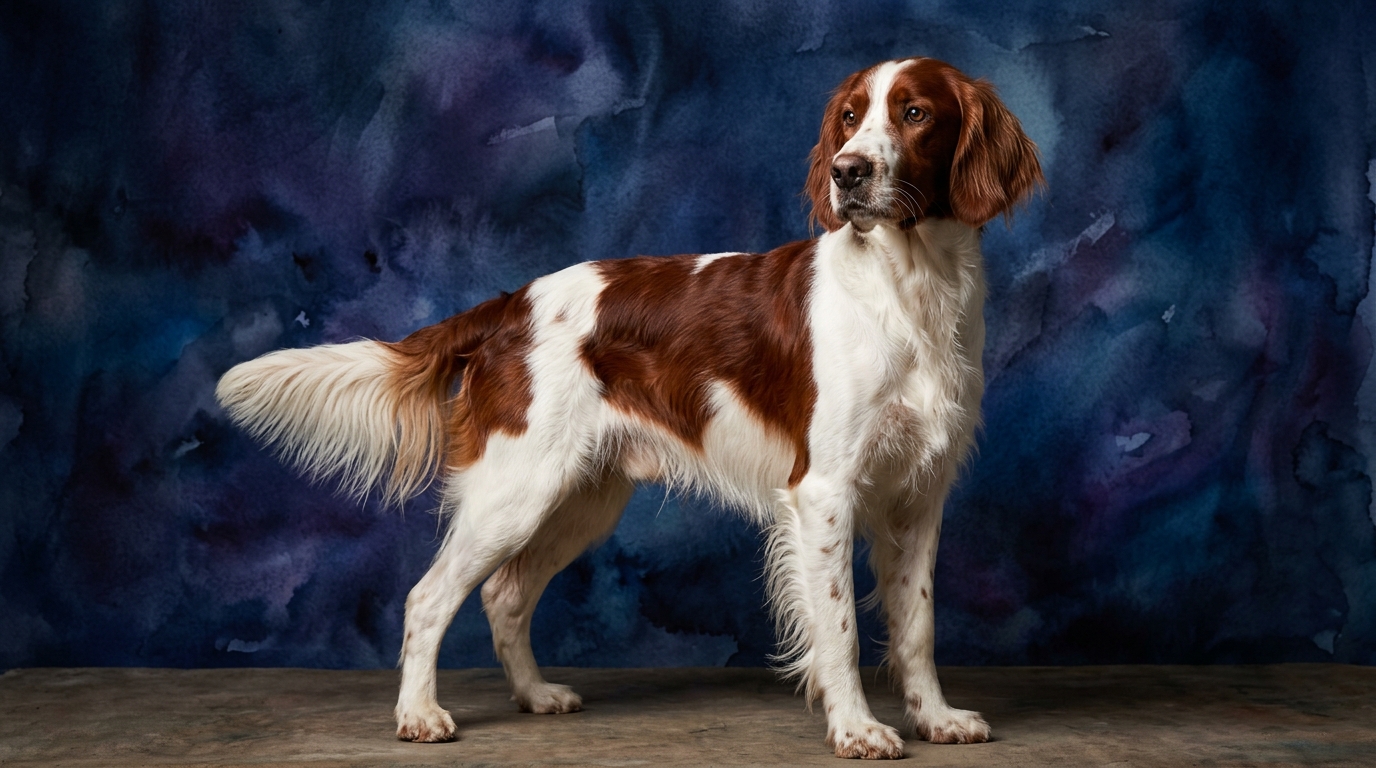
In contrast, the Irish Red and White Setter, from the Sporting Group, displays a more balanced cognitive spread, geared towards engagement with their environment and a moderate drive for activity. Their Problem Solving matches the French Bulldog at 3/5, allowing them to adapt to new situations and learn tasks without necessarily excelling in complex abstract thought. Training Speed is also 3/5, suggesting responsiveness to instruction, though their environmental awareness might sometimes compete for their focus. Their Social Intelligence is rated 3/5, indicating a strong bond with their family and good understanding of social structures, but perhaps not the same subtle emotional attunement as the Frenchie. Their Instinctive Drive is 3/5, reflecting a moderate, inherent desire for scenting, flushing, and retrieving activities. Lastly, their Memory is 3/5, supporting the retention of training sequences and field commands.
Where the French Bulldog Excels Cognitively
The French Bulldog's standout cognitive strength lies unequivocally in their Social Intelligence, scoring a remarkable 5 out of 5. This isn't merely about being friendly; it signifies an acute sensitivity to human emotional states and social dynamics. A Frenchie can often pick up on subtle shifts in tone of voice, facial expressions, or body language, adjusting their behavior to provide comfort or solicit interaction. This exceptional capacity allows them to integrate into family life with a profound understanding of their human companions' moods and needs, often anticipating a cuddle when stress is high or initiating play when spirits are bright. Their motivation is frequently rooted in maintaining this deep social connection.
This high social intelligence also influences their Problem Solving and Training Speed. While rated 3/5 in these areas, their desire to engage with their human family means they are often motivated to 'solve' the problem of getting attention or 'learn' a command that leads to positive social reinforcement. They are adept at using their charm and understanding of human interaction to achieve their goals, whether that's securing a prime spot on the sofa or convincing you it's time for a treat. Their cognitive efforts are largely directed towards optimizing their social environment and maximizing companionship, making them unparalleled companions in this specific cognitive domain.
Where the Irish Red and White Setter Shines Cognitively
The Irish Red and White Setter's cognitive strengths are rooted in their Sporting Group heritage, particularly evident in their Instinctive Drive, rated 3/5. While not as intensely driven as some specialized working breeds, this moderate drive provides a robust foundation for engaging with their environment in a purposeful way. This means they possess a natural inclination for activities involving scent, tracking, and retrieving, which requires a specific type of sustained cognitive focus and environmental awareness. Their minds are naturally wired to process sensory information from their surroundings, making them adept at tasks that leverage these inherent abilities.
This moderate instinctive drive, combined with their 3/5 Problem Solving and Training Speed, means the Setter often thrives in structured activities that allow them to utilize their natural predispositions. They can methodically work through scent trails, remember the locations of retrieved items, and learn multi-step commands related to field work or dog sports. Their cognitive engagement is often externally focused, driven by the stimulation of a task or the exploration of their environment. This contrasts with the French Bulldog's more internally and socially focused cognitive efforts, highlighting the Setter's capacity for sustained mental engagement in physically active and exploratory pursuits.
Training Dynamics: French Bulldog vs. Irish Red and White Setter
Both breeds share a 3/5 rating for Training Speed, yet the practicalities of training them diverge significantly due to their differing core motivations and cognitive leanings. Training a French Bulldog often requires a blend of patience, consistency, and high-value rewards, as their strong-willed nature can sometimes manifest as stubbornness. Their social intelligence can be a double-edged sword: they want to please their people, but they also quickly learn how to manipulate social cues to their advantage, sometimes choosing comfort over compliance. Successful training with a Frenchie often involves making the learning process feel like a fun game and leveraging their desire for companionship, ensuring they view cooperation as a path to more positive interaction.
The Irish Red and White Setter, while also rated 3/5 for Training Speed, presents a different set of considerations. Their moderate instinctive drive means they can be easily distracted by compelling environmental stimuli, such as interesting scents or moving objects. Training them effectively requires engaging their attention and harnessing their energy, often through task-oriented exercises and positive reinforcement that rewards focus and sustained effort. While they are generally eager to learn and respond well to clear instruction, an owner must be prepared to compete with the allure of the outdoors. Neither breed is inherently 'easier' to train; rather, they demand different approaches that cater to their specific cognitive tendencies and primary motivators.
Lifestyle Match: Active vs. Relaxed Owners
The distinct cognitive profiles of the French Bulldog and the Irish Red and White Setter naturally align with different owner lifestyles. For those seeking a more relaxed, home-centric companion, the French Bulldog is often an excellent match. Their low instinctive drive (2/5) means they are not typically driven by an intense need for extensive outdoor activity; instead, they are generally content with shorter walks and indoor play. Their exceptional social intelligence (5/5) means their primary fulfillment comes from close companionship and emotional connection with their human family. They thrive in environments where they receive ample attention, cuddles, and social interaction, making them ideal for individuals or families who prefer a calm pace of life.
Conversely, the Irish Red and White Setter is better suited for active owners who enjoy engaging in outdoor pursuits. Their moderate instinctive drive (3/5) and inherent desire for exploration mean they benefit significantly from regular exercise and mental stimulation that taps into their natural abilities. Activities like long hikes, scent work, retrieving games, or even dog sports provide the necessary outlets for their cognitive and physical energy. While they are affectionate family members (Social Intelligence 3/5), their well-being is deeply tied to having opportunities to utilize their senses and engage in purposeful activity, making them a joyful partner for adventurers and those with an active lifestyle.
The Verdict
Choose the French Bulldog if your priority is a deeply connected, emotionally attuned companion who thrives on close social interaction and a more relaxed daily routine.
Opt for the Irish Red and White Setter if you desire an engaged, moderately driven partner for outdoor adventures, who appreciates task-oriented activities alongside family life.
🧠 Find Your Pet's IQ Score
Our Pet IQ Lab assessment covers 25+ tests across 5 cognitive dimensions — personalized to your breed.
Take the Full IQ Test →Frequently Asked Questions
Can French Bulldogs participate in dog sports?
While their Problem Solving and Training Speed are 3/5, and their physical structure limits some activities, French Bulldogs can enjoy certain dog sports. Activities like obedience, rally, or even novice agility (with modifications) can engage their minds and leverage their desire for social interaction, as long as physical limitations are respected.
Are Irish Red and White Setters good with children?
With a Social Intelligence of 3/5, Irish Red and White Setters generally form strong bonds with their families, including children. Their playful nature and moderate energy levels can make them fun companions, though supervision is always advised, especially given their potential for exuberance during play.
Do either of these breeds require significant mental stimulation?
Both breeds benefit from mental engagement, though the type differs. French Bulldogs thrive on social interaction and puzzle toys that reward their problem-solving for comfort, while Irish Red and White Setters benefit from activities that engage their instinctive drive, such as scent games, training sessions, or exploring new environments.