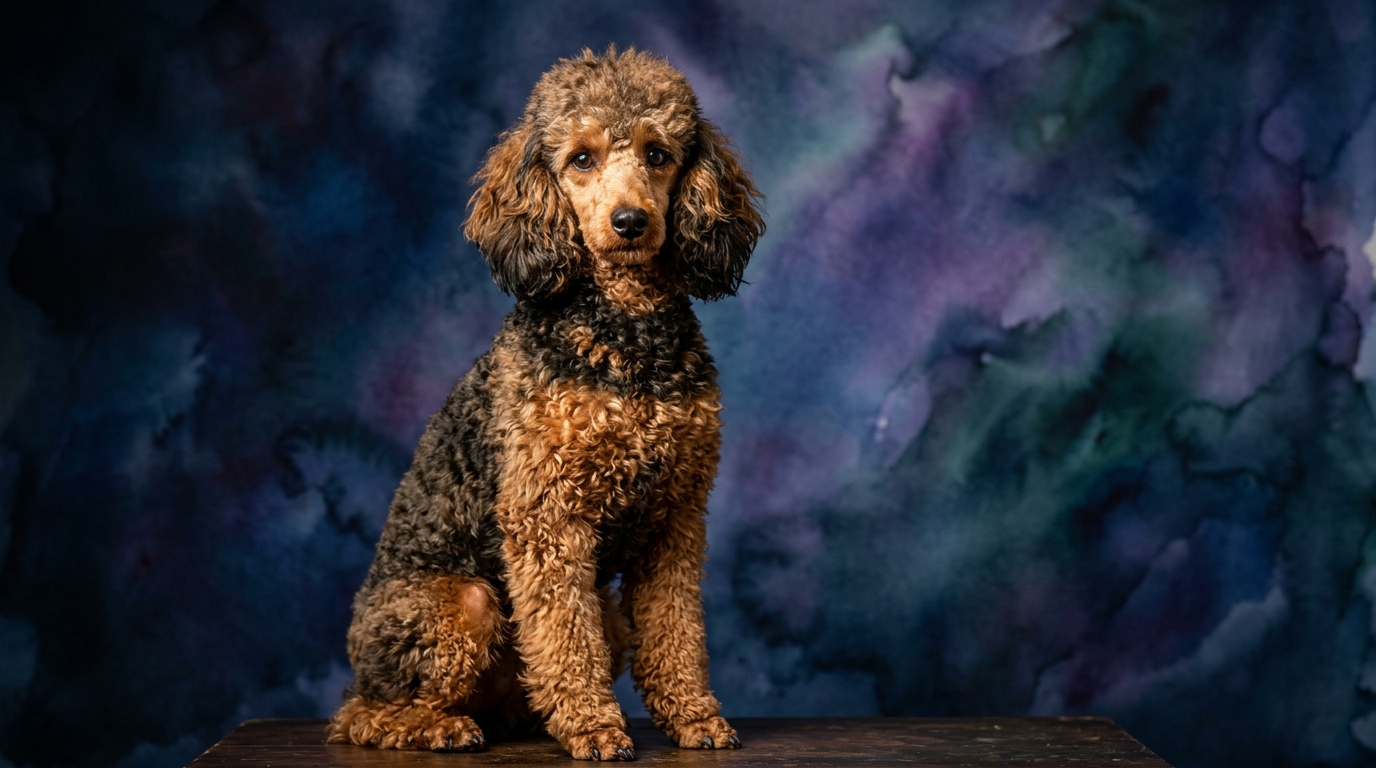
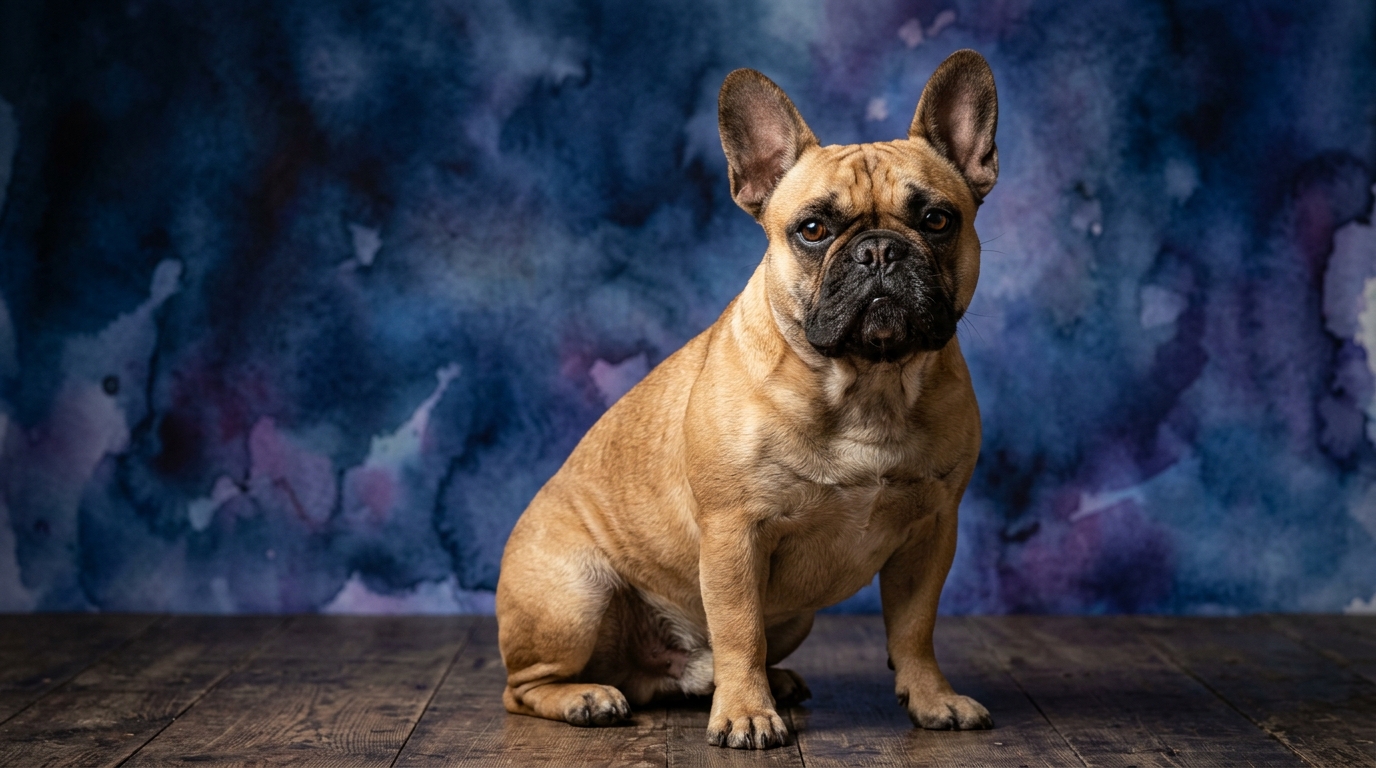
Side-by-Side IQ Profile: Poodle (Standard) vs. French Bulldog
The Cosmic Pet Pet IQ Lab employs five key dimensions to evaluate canine intelligence, offering a granular view of each breed's cognitive architecture. Understanding these specific scores illuminates the intrinsic capabilities and inclinations that define a dog's mental landscape.
For the Poodle (Standard), the scores paint a picture of versatile cognitive prowess. Its Problem Solving is rated 5/5, indicating an exceptional capacity to analyze novel situations, understand complex mechanisms, and independently devise solutions. Training Speed also achieves a perfect 5/5, signifying a remarkable aptitude for rapidly acquiring and executing new commands and multi-step sequences. Social Intelligence stands at 5/5, reflecting an acute awareness of human emotions, intentions, and social cues, fostering deep empathetic connections. Its Instinctive Drive is a robust 4/5, indicative of a strong, purposeful desire to engage in tasks like retrieving and working alongside a handler, stemming from its historical role as a water retriever. Finally, Memory is a solid 5/5, allowing for long-term retention of intricate behaviors, routines, and specific associations.
In contrast, the French Bulldog presents a cognitive profile optimized for companionship. Its Problem Solving is rated 3/5, suggesting competence with straightforward puzzles and familiar challenges but less inclination towards abstract or multi-layered problem-solving. Training Speed registers at 3/5, meaning they are capable of learning, but typically require more repetition and patience compared to breeds with higher scores. French Bulldogs share the Poodle's perfect 5/5 in Social Intelligence, highlighting their profound ability to connect emotionally with humans, read subtle cues, and thrive on interpersonal bonding. Their Instinctive Drive is a low 2/5, reflecting minimal natural urges for hunting, retrieving, or guarding, aligning with their development as lap companions. Memory is a moderate 3/5, enabling them to retain basic commands and daily routines, though less frequently reinforced lessons may fade without consistent practice.
Where the Poodle (Standard) Excels Cognitively
The Poodle (Standard)'s cognitive strengths are particularly evident in its capacity for complex thought and rapid learning. Their 5/5 Problem Solving score means they are adept at tasks requiring sequential logic, such as figuring out how to manipulate latches on a crate, unlocking puzzle feeders, or navigating elaborate agility courses by anticipating obstacles. This isn't just about trial and error; it's often about genuine understanding of cause and effect.
Their unparalleled 5/5 Training Speed allows them to grasp new commands with minimal repetitions, often generalizing a concept from one context to another. This efficiency makes them exceptionally receptive to advanced obedience, competitive dog sports, and even complex service dog tasks. Coupled with a 5/5 Memory, they not only learn quickly but also retain that information over extended periods, making their training durable and reliable. The 4/5 Instinctive Drive, while not a perfect score, provides a strong foundation for biddability and a desire to work collaboratively, channeling their mental energy into productive activities rather than undirected impulses.
Where the French Bulldog Shines Cognitively
While the French Bulldog's cognitive profile differs significantly from the Poodle's in terms of raw problem-solving or training speed, its 5/5 Social Intelligence represents a profound cognitive strength that defines its primary purpose. French Bulldogs possess an extraordinary ability to attune themselves to human emotions, offering comfort and companionship with remarkable precision. They excel at reading subtle shifts in tone of voice, body language, and facial expressions, allowing them to anticipate their owner's needs and moods.
This deep social understanding is arguably their most valuable cognitive asset, making them exceptional emotional support animals and devoted family companions. Their lower Instinctive Drive (2/5) further enhances this trait; with fewer innate predispositions for independent tasks like hunting or herding, their focus remains almost entirely on their human counterparts. This means less distraction from external stimuli and a greater dedication to the bond they share, creating a highly present and emotionally responsive companion. Their cognitive fulfillment comes less from solving complex puzzles and more from intimate human interaction and shared comfort.
Ease of Training: Behavioral Differences Unpacked
When considering ease of training, the Poodle (Standard) generally presents a more straightforward and rapid experience. Their 5/5 Training Speed means they absorb commands quickly, often requiring only a few repetitions before demonstrating proficiency. This is bolstered by their 5/5 Problem Solving, which helps them understand the *intent* behind a command, not just the action, allowing for better generalization across different environments. Their 5/5 Memory ensures that once a behavior is learned, it is retained effectively, reducing the need for constant re-teaching. Furthermore, their 4/5 Instinctive Drive often manifests as a strong desire to engage with their handler and perform tasks, making them naturally eager students who respond well to positive reinforcement and structured learning.
The French Bulldog, with a 3/5 Training Speed and 3/5 Problem Solving, typically requires a more patient and consistent approach. They are capable of learning, but new commands may take more repetitions to solidify, and they might not generalize lessons as readily as a Poodle. Their lower Instinctive Drive (2/5) means they might not be as inherently motivated by traditional work or task-oriented training. They can exhibit a certain independence or "stubbornness" if they don't perceive immediate value or enjoyment in the task at hand. However, their 5/5 Social Intelligence can be a powerful training asset; they respond exceptionally well to praise, affection, and food rewards, leveraging their desire for human connection to motivate learning. Owners must be creative in making training fun and rewarding, understanding that a French Bulldog's cognitive process prioritizes comfort and companionship over complex task mastery.
Matching Breeds to Lifestyles: Active vs. Relaxed Owners
For active owners seeking a canine partner for diverse pursuits, the Poodle (Standard) is an ideal match. Their high scores across Problem Solving, Training Speed, and Memory, combined with a significant Instinctive Drive, mean they thrive on consistent mental and physical engagement. Owners who enjoy activities like agility, competitive obedience, scent work, retrieving games, or even complex trick training will find the Standard Poodle an eager and capable participant. They require substantial daily stimulation to prevent boredom, which can manifest as undesirable behaviors if their cognitive needs are not met. Their mental acuity makes them excellent candidates for advanced training and continuous learning throughout their lives.
Conversely, the French Bulldog is exceptionally well-suited for relaxed owners who prioritize companionship and a more leisurely pace of life. Their lower Problem Solving and Instinctive Drive scores indicate less of a need for constant mental challenges or strenuous physical activity for fulfillment. While they still require regular, moderate exercise, their cognitive satisfaction primarily stems from close human interaction, cuddling, and being an integral part of the family's daily routine. Their paramount 5/5 Social Intelligence means they are content to simply 'be' with their owners, offering unwavering affection and emotional presence, without demanding complex tasks or prolonged periods of intense engagement. They are generally less prone to anxiety or destructive behaviors stemming from cognitive under-stimulation in the same way a Poodle might be.
The Verdict: When to Choose Each Breed
The Verdict
Choose the Poodle (Standard) if you are an owner seeking a highly engaged, intellectually driven canine partner eager to excel in advanced training, dog sports, and consistently participate in complex mental challenges.
Opt for the French Bulldog if you prioritize a deeply affectionate, low-maintenance companion whose primary joy and cognitive fulfillment come from close human connection and a relaxed daily routine.
🧠 Find Your Pet's IQ Score
Our Pet IQ Lab assessment covers 25+ tests across 5 cognitive dimensions — personalized to your breed.
Take the Full IQ Test →Frequently Asked Questions
Do French Bulldogs learn tricks?
Yes, French Bulldogs can certainly learn tricks, especially those that are fun and rewarding. While their training speed is a 3/5, consistent positive reinforcement and patience can help them master a variety of basic and intermediate commands, leveraging their social intelligence for motivation.
Are Poodles good service dogs?
Poodles, particularly Standard Poodles, are frequently chosen as service dogs due to their exceptional problem-solving abilities, rapid training speed, strong memory, and high social intelligence. They can learn complex tasks and remain focused in various environments, making them suitable for diverse assistance roles.
How does a dog's instinctive drive impact its daily life?
Instinctive drive dictates a dog's inherent motivation for behaviors like hunting, retrieving, herding, or guarding. A higher drive, like the Poodle's 4/5, means they benefit from outlets for these natural urges, while a lower drive, seen in French Bulldogs at 2/5, often translates to a more placid demeanor and less need for task-oriented engagement.