
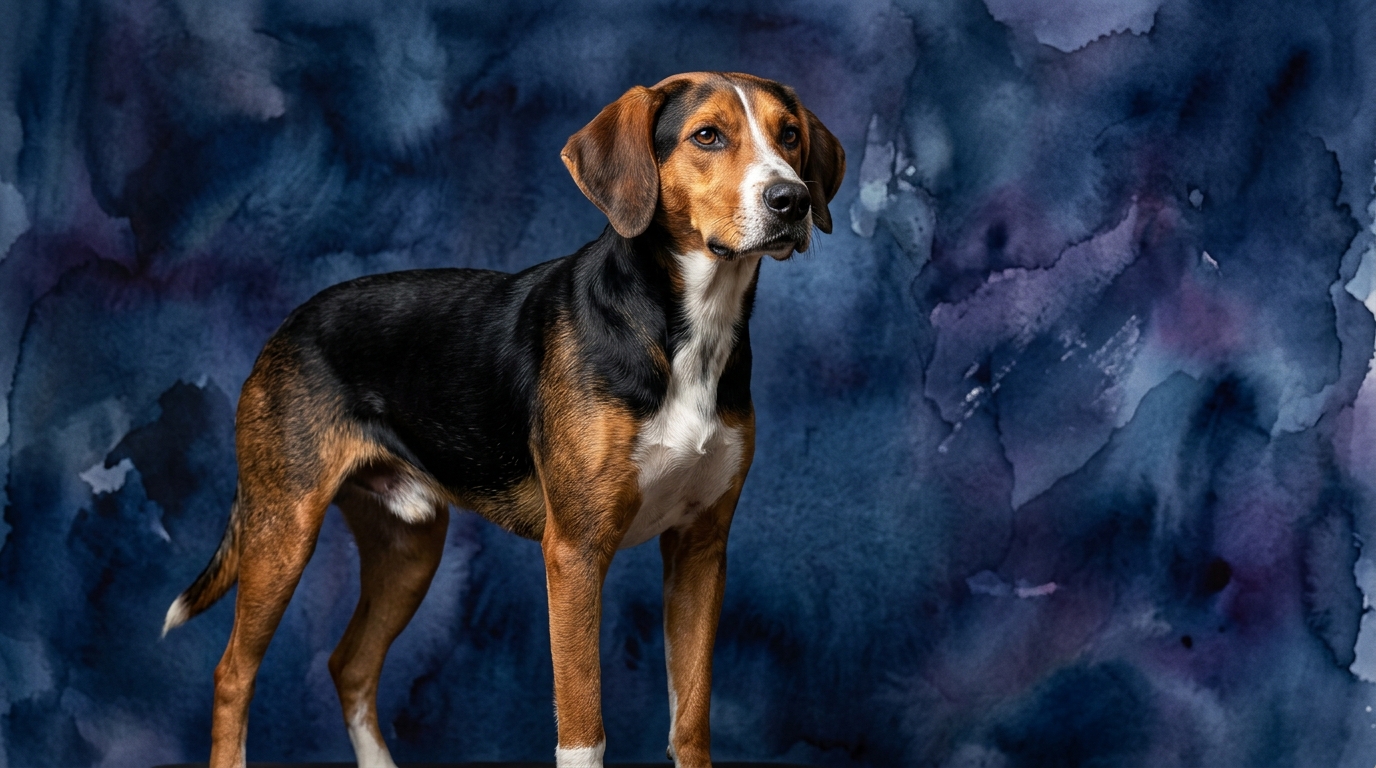
Side-by-Side Cognitive Profiles
The German Shorthaired Pointer (GSP), a Sporting group marvel, exhibits a cognitive profile that underscores its versatility and partnership potential. Its problem-solving ability scores a perfect 5/5, indicating a keen capacity to navigate novel situations and devise solutions quickly. Training speed registers 4/5, suggesting a rapid grasp of new commands and procedures, while social intelligence also stands at 4/5, reflecting a strong understanding of human cues and social dynamics. An instinctive drive of 5/5 highlights their profound natural hunting aptitudes, and memory, at 4/5, points to excellent retention of learned behaviors and experiences.
In contrast, the American Foxhound, a member of the Hound group, presents a different set of cognitive strengths, tailored more for independent, persistent pursuit. Their problem-solving ability is rated 3/5, indicating they can resolve challenges but might rely more on established methods than innovative approaches. Training speed, at 3/5, suggests they require more repetition and patience to master new commands. Social intelligence also scores 3/5, implying a somewhat more independent nature with less emphasis on human-centric interaction compared to the GSP. Their instinctive drive, at 3/5, is geared specifically towards scent trailing and endurance, and their memory, also 3/5, is sufficient for their task-oriented focus.
Where the German Shorthaired Pointer Excels Cognitively
The German Shorthaired Pointer's cognitive strengths manifest in its remarkable adaptability and eagerness to engage in complex tasks. Their 5/5 problem-solving ability means they are adept at figuring out puzzles, navigating complex environments, or understanding multi-step commands, often surprising owners with their ingenuity. This translates into a dog that can quickly learn to open latches, retrieve specific items, or navigate agility courses with minimal guidance after initial training.
Their 4/5 training speed and social intelligence allow them to absorb new information rapidly and respond consistently to human direction. A GSP often picks up new tricks or obedience commands in just a few repetitions, showing a strong desire to cooperate and understand what is expected of them. This makes them highly trainable for advanced obedience, field trials, or even service work, where precise and responsive behavior is paramount. Furthermore, their superior memory ensures that once a lesson is learned, it is retained effectively over time, reducing the need for constant reteaching.
Where the American Foxhound's Cognition Shines
While the American Foxhound's scores might appear lower across the board, their cognitive profile is exquisitely specialized for their original purpose: relentless pursuit of scent. Their 3/5 instinctive drive, though not 5/5 like a GSP's broader hunting drive, is exceptionally focused and enduring when it comes to following a trail. This cognitive tunnel vision allows them to ignore distractions that would deter other breeds, demonstrating an unparalleled single-mindedness in their chosen task.
Their 3/5 problem-solving and memory, while not geared towards complex human-centric tasks, are perfectly adequate for their pursuit. They excel at remembering specific scent lines and applying learned trailing techniques repeatedly and consistently. This consistency, rather than innovation, is a cognitive strength in their context. Their more independent social intelligence (3/5) means they are less prone to separation anxiety or constant demands for human attention, allowing them to work effectively alone or in packs with minimal human oversight once on a scent.
Trainability: A Tale of Two Approaches
Training a German Shorthaired Pointer is generally a more straightforward and rewarding experience for most owners due to their higher scores in training speed, social intelligence, and problem-solving. A GSP typically approaches training as a collaborative effort, eager to please and quick to grasp new concepts. Their strong memory means commands are retained well, and their problem-solving ability allows them to generalize learned behaviors to new situations. This results in a dog that is highly responsive to positive reinforcement and capable of mastering a wide range of commands and tricks relatively quickly, making them suitable for competitive obedience, agility, and complex field work.
Conversely, training an American Foxhound demands significant patience, consistency, and an understanding of their independent, scent-driven nature. Their 3/5 training speed means they require more repetitions to solidify commands, and their lower social intelligence suggests they are less inherently motivated by human approval alone. They possess a strong independent streak, often prioritizing an interesting scent over a handler's command. This means owners must employ highly motivating rewards and be prepared for a longer, more persistent training journey, often focusing on recall and leash manners to counteract their natural inclination to follow a trail.
Matching Breeds to Lifestyles: Active vs. Relaxed Owners
For active owners seeking a highly engaged and mentally stimulating canine partner, the German Shorthaired Pointer is an exceptional choice. Their 5/5 problem-solving and instinctive drive, coupled with their high training speed and social intelligence, mean they thrive on consistent mental challenges alongside vigorous physical activity. Owners who enjoy dog sports, hunting, hiking, or simply engaging in daily training sessions and puzzle toys will find the GSP to be an eager and capable participant, requiring significant daily interaction and purposeful activity to prevent boredom and destructive behaviors. They are not suited for owners seeking a purely relaxed companion.
The American Foxhound, while physically robust and requiring ample exercise, presents a different kind of challenge for active owners. Their active lifestyle needs revolve around long, consistent walks or runs, ideally with opportunities for scent exploration. Owners who appreciate a dog with an independent spirit and are prepared for a dog that might be less overtly collaborative in daily tasks, but who enjoys long periods of physical exertion, could find a good match. They are not ideal for relaxed owners due to their stamina and need for outdoor activity, but their cognitive demands are less about complex problem-solving with humans and more about providing outlets for their focused, instinctive drive.
The Verdict: Choosing Your Canine Companion
When considering a German Shorthaired Pointer, you are choosing a highly adaptable, intelligent, and partnership-oriented dog that thrives on mental engagement and physical activity. They are best suited for owners who can provide consistent training, varied challenges, and ample opportunities for problem-solving and collaborative work.
Opting for an American Foxhound means embracing a dog with a specialized, independent intelligence, driven by scent and endurance, requiring patient and understanding owners. They are ideal for those who appreciate a more self-reliant companion and can provide extensive outdoor exercise, particularly focused on scent work, without expecting constant human-directed mental gymnastics.
The Verdict
Choose a German Shorthaired Pointer if you desire a highly trainable, versatile partner eager for complex tasks, consistent mental stimulation, and collaborative activities like dog sports or field work. Their cognitive profile makes them highly adaptable and responsive to a wide range of training.
Choose an American Foxhound if you appreciate a dog with independent drive and focused scenting ability, requiring extensive physical exercise and an understanding of their less human-centric cognitive approach. They are best for owners who can provide consistent outdoor activity and are patient with training.
🧠 Find Your Pet's IQ Score
Our Pet IQ Lab assessment covers 25+ tests across 5 cognitive dimensions — personalized to your breed.
Take the Full IQ Test →Frequently Asked Questions
Is the German Shorthaired Pointer good for first-time dog owners?
With their high trainability and social intelligence, a GSP can be a good fit for dedicated first-time owners willing to commit to consistent training and ample exercise. Their cognitive needs require an owner prepared to actively engage them.
Do American Foxhounds get along with other pets?
American Foxhounds, bred to work in packs, generally get along well with other dogs, but their strong prey drive (3/5 instinctive drive) means careful introductions and supervision are necessary with smaller pets. Their social intelligence is more focused on canine pack dynamics than human-directed interactions.
What kind of exercise do German Shorthaired Pointers need?
German Shorthaired Pointers require significant daily exercise, combining vigorous physical activity like running or swimming with mental challenges such as training sessions, puzzle toys, or scent work. Their high instinctive drive and problem-solving ability mean they thrive on purposeful activity.