
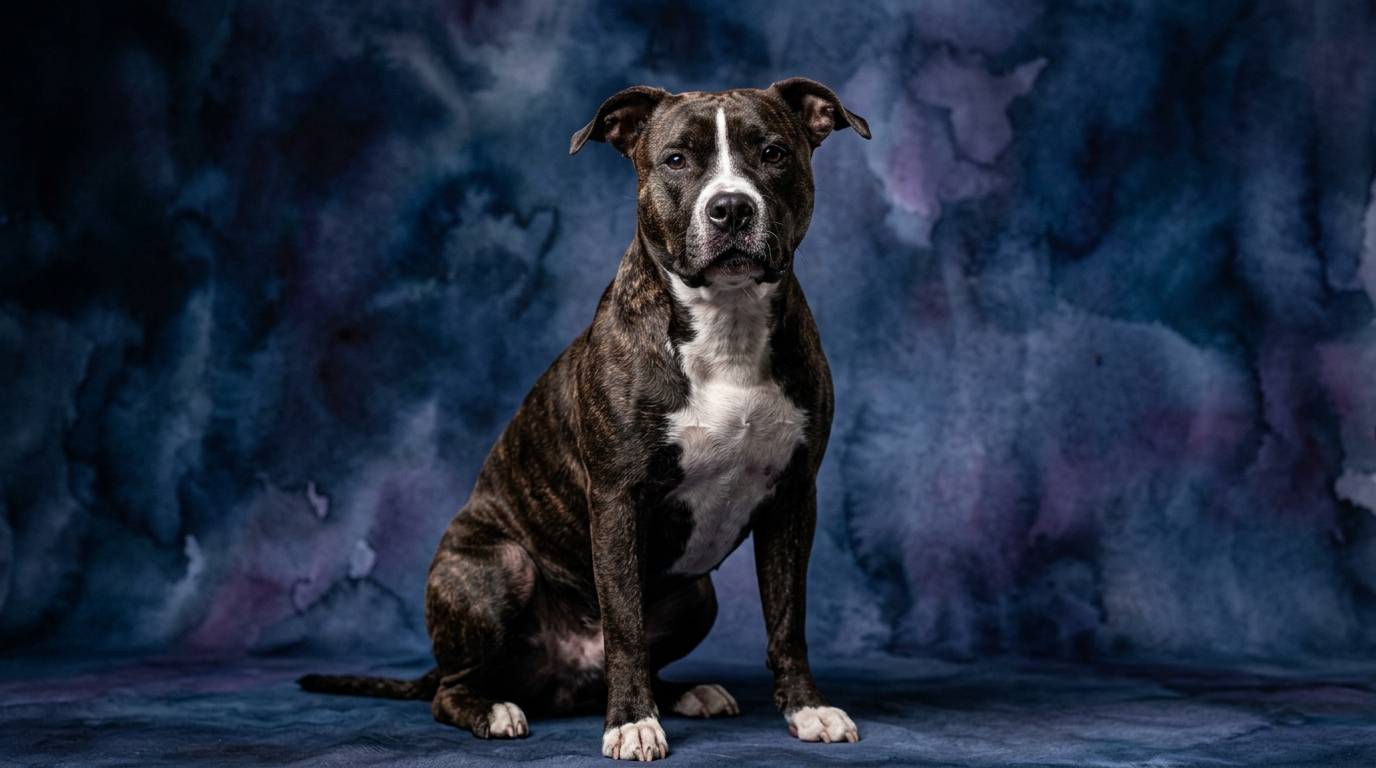
Side-by-Side Cognitive Profiles
The Cosmic Pet Pet IQ Lab employs a five-dimensional framework to assess canine intelligence, offering a nuanced understanding beyond simple obedience. Let's delve into how the German Shorthaired Pointer and the American Staffordshire Terrier stack up in each cognitive area.
For the German Shorthaired Pointer, their Problem Solving is rated an impressive 5/5. This reflects their exceptional ability to independently navigate complex hunting scenarios, adapt to new environmental challenges, and figure out solutions to achieve a goal, often without direct human intervention. Their Training Speed is 4/5, indicating a quick grasp of new commands and a strong willingness to learn, making them highly receptive to instruction. Social Intelligence also scores 4/5, highlighting their capacity to read human cues, understand social dynamics within a family unit, and form deep, cooperative bonds. Instinctive Drive, crucial for their sporting heritage, is a robust 5/5, manifesting as an intense focus on scent, prey drive, and an innate desire to point and retrieve. Finally, their Memory is 4/5, allowing them to recall complex sequences, commands, and learned experiences effectively over time.
In contrast, the American Staffordshire Terrier presents a different cognitive blueprint. Their Problem Solving is rated 3/5, suggesting they can learn to solve problems but might require more structured guidance and repetition, and may not independently devise solutions as readily as a GSP. Training Speed is also 3/5, meaning they are steady learners who benefit from consistent, positive reinforcement, though they may not pick up new commands with the same alacrity as some breeds. Social Intelligence stands at 3/5, indicating strong loyalty and affection towards their immediate family, but potentially less natural adaptability or nuance in broader social interactions compared to a GSP. Their Instinctive Drive is 3/5, reflecting a determined and tenacious nature, often channeled into activities requiring focus and strength, though not necessarily the complex, multi-faceted drive seen in a pointer. Their Memory, however, matches the GSP at 4/5, showing that once an AmStaff learns something, they retain that knowledge remarkably well, be it commands, routines, or familiar faces.
Where the German Shorthaired Pointer Excels Cognitively
The GSP's cognitive strengths are deeply rooted in their purpose as versatile hunting companions. Their top-tier Problem Solving (5/5) allows them to analyze dynamic field situations—like tracking a bird through varied terrain or figuring out how to retrieve game from a challenging spot—and execute effective strategies. This isn't just about following commands; it's about independent thought and adaptation in real-time. Paired with their unparalleled Instinctive Drive (5/5), which fuels a relentless pursuit and an unwavering focus on their task, they demonstrate a cognitive synergy for complex, self-directed work. This means a GSP can be trusted to make intelligent decisions in the field, often anticipating needs or challenges before their human companion does, showcasing a proactive rather than purely reactive intelligence.
Where the American Staffordshire Terrier Offers Unique Cognitive Strengths
While the AmStaff's scores might appear lower in some areas, their cognitive profile offers distinct advantages, particularly in areas of steadfastness and retention. Their Memory rating of 4/5, equal to the GSP, is a significant cognitive asset. Once an AmStaff has learned a command, a routine, or a boundary, they are excellent at recalling and adhering to it over the long term. This strong memory contributes to their reliability and consistency in established behaviors. Furthermore, their Instinctive Drive at 3/5, while not as broad as a GSP's, signifies a profound determination and focus when motivated. When an AmStaff is engaged in a task they understand and enjoy, their tenacity can be a powerful cognitive tool, allowing them to persevere and excel in activities requiring sustained effort and concentration rather than rapid improvisation. This translates to a cognitive makeup that prioritizes depth of learning and unwavering commitment within a familiar framework.
Which Breed is Easier to Train and Why?
When considering ease of training, the German Shorthaired Pointer generally presents a more straightforward path for many owners. Their Training Speed of 4/5 signifies that they typically grasp new commands and concepts quickly, often requiring fewer repetitions to achieve proficiency. This rapid acquisition of skills, combined with their 5/5 Problem Solving, means they can often generalize learned behaviors to new situations without extensive re-teaching. GSPs possess a strong desire to cooperate and please their handlers, which further accelerates the training process, making them highly responsive to positive reinforcement and clear directives.
The American Staffordshire Terrier, with a Training Speed of 3/5, requires a different approach. They are not necessarily difficult to train, but they demand more patience, consistency, and a highly positive reinforcement-based methodology. Their Problem Solving at 3/5 means complex tasks may need to be broken down into smaller, more manageable steps. AmStaffs can sometimes exhibit a stubborn streak, a characteristic often associated with terrier breeds, which means trainers must be engaging and persistent. However, their 4/5 Memory ensures that once a lesson is thoroughly learned and understood, it is retained exceptionally well. The key with an AmStaff is establishing clear expectations and building a strong, trust-based relationship, which then allows their excellent memory to solidify their training.
Matching Breeds to Owner Lifestyles
The cognitive profiles of these two breeds offer clear guidance for potential owners regarding lifestyle compatibility. The German Shorthaired Pointer, with its 5/5 Problem Solving and 5/5 Instinctive Drive, is unequivocally suited for active owners. These are individuals or families who thrive on outdoor adventures, dog sports like agility or dock diving, or actual hunting activities. A GSP needs outlets for their immense physical energy and, crucially, their sharp mental faculties. An owner who can provide consistent mental stimulation through training, puzzle toys, and varied experiences will see a GSP flourish, channeling their natural drive into productive engagement rather than restless behavior. They are not content with short walks; they require a partnership in activity and exploration.
The American Staffordshire Terrier, while also requiring regular exercise and mental engagement, suits owners who may prioritize a different kind of active lifestyle. Their 3/5 Instinctive Drive suggests they need structured activities, but perhaps not the relentless, wide-ranging pursuits of a GSP. Owners who appreciate a devoted, steadfast companion and are prepared to invest consistent time in training and socialization will find an AmStaff rewarding. They thrive with clear routines and benefit from consistent mental challenges, like obedience work, trick training, or engaging chew toys, which tap into their 4/5 Memory and focused determination. They are well-suited for owners who can provide consistent leadership and channel their drive into positive, structured interactions, making them excellent companions for those who might enjoy urban agility or focused training sessions rather than extensive field work. They are not for 'relaxed' owners in the sense of minimal engagement, but rather owners who prioritize consistent, quality interaction over high-octane, continuous physical output.
The Verdict: When to Choose Each Breed
The Verdict
Choose a German Shorthaired Pointer if you are an active individual or family seeking a highly engaged, adaptable partner for outdoor adventures, dog sports, or hunting, who thrives on mental challenges and quick learning.
Opt for an American Staffordshire Terrier if you desire a loyal, devoted companion and are prepared to commit to consistent, positive training to channel their determination and excellent memory into a well-behaved, stable family member.
🧠 Find Your Pet's IQ Score
Our Pet IQ Lab assessment covers 25+ tests across 5 cognitive dimensions — personalized to your breed.
Take the Full IQ Test →Frequently Asked Questions
Do German Shorthaired Pointers need a lot of mental stimulation?
Absolutely. With a Problem Solving score of 5/5 and high instinctive drive, GSPs require significant mental engagement to prevent boredom. Puzzle toys, advanced obedience training, and varied activities are crucial for their well-being.
Are American Staffordshire Terriers difficult to train due to their lower training speed score?
Not necessarily difficult, but they require a consistent and patient approach. Their 3/5 Training Speed means repetition and positive reinforcement are key, but their 4/5 Memory ensures they retain what they learn effectively over time.
Which breed is better for first-time dog owners?
Neither breed is typically recommended for entirely novice owners due to their energy and specific training needs. However, a GSP might be more forgiving in terms of training speed if the owner is committed to an active lifestyle, while an AmStaff requires an owner dedicated to consistent, firm-but-fair guidance.