
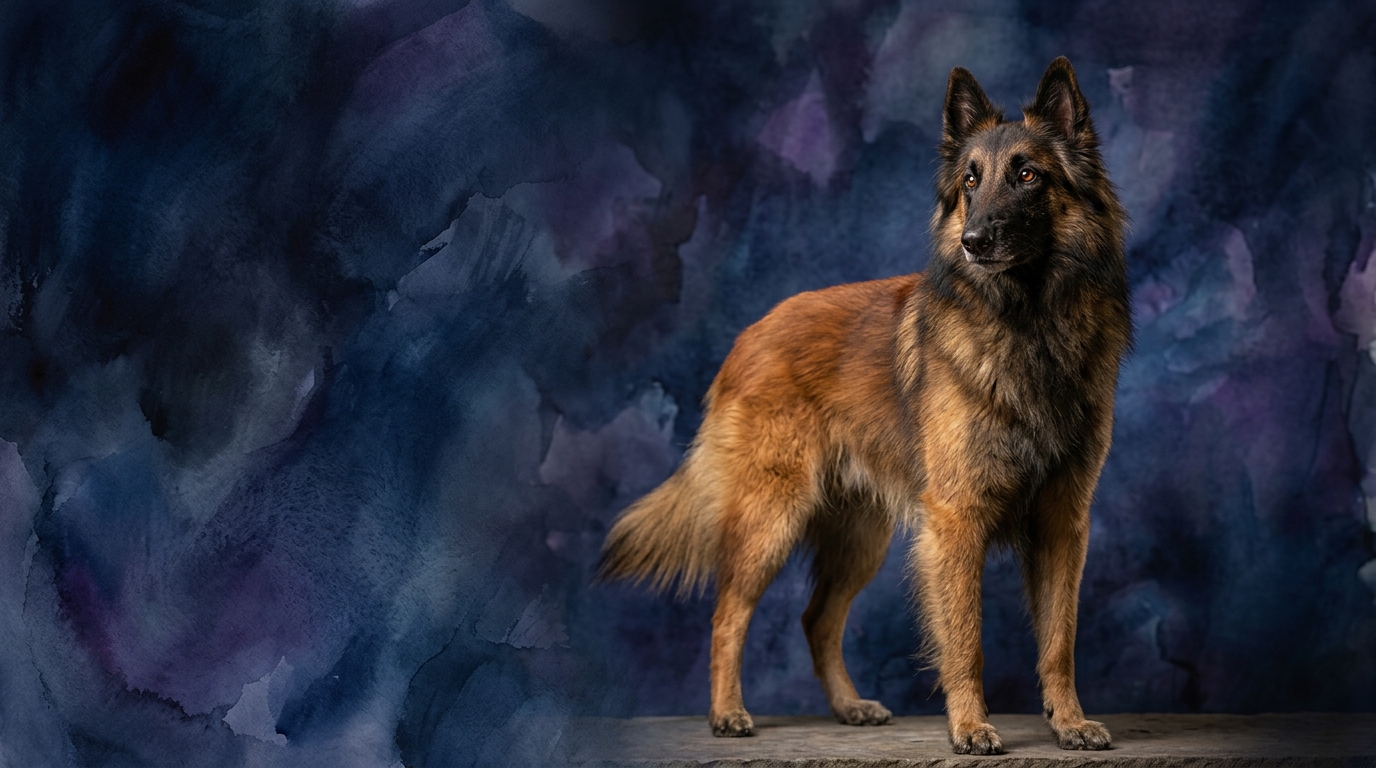
Side-by-Side IQ Profile: GSP vs. Belgian Tervuren
When we examine the five core dimensions of intelligence at The Cosmic Pet Lab, both the German Shorthaired Pointer (GSP) and the Belgian Tervuren display remarkable cognitive capabilities, yet their strengths manifest in distinct ways. Starting with Problem Solving, both breeds achieve a perfect 5/5 score. For the GSP, this translates to an innate ability to navigate complex scent trails, strategize retrieves, and adapt quickly to changing hunting conditions, often figuring out the most efficient path to its quarry. The Belgian Tervuren's 5/5 in Problem Solving is evident in its capacity to understand intricate multi-step commands, solve puzzle toys with tenacity, and devise solutions in herding scenarios or advanced obedience courses.
Moving to Training Speed, the Belgian Tervuren holds a slight advantage with a 5/5, compared to the GSP's 4/5. A Tervuren can grasp new commands and concepts with remarkable rapidity, often requiring fewer repetitions to solidify a behavior. This makes them exceptionally quick studies in structured training environments. The GSP, while also a quick learner, might need a bit more consistent reinforcement, particularly if the command conflicts with its powerful hunting instincts.
Social Intelligence reveals a notable difference, with the GSP scoring 4/5 and the Belgian Tervuren 3/5. The GSP's higher score indicates a more nuanced understanding of human cues, body language, and emotional states, fostering a deeply intuitive partnership in the field and a more openly communicative presence in a family setting. The Tervuren's 3/5 suggests a more reserved or independent approach to social interactions; while capable of forming strong bonds, they may be less inclined to interpret subtle human social signals, often prioritizing the task at hand over overt emotional connection.
Instinctive Drive is a dimension where the GSP truly shines with a 5/5, while the Belgian Tervuren registers a 3/5. The GSP's drive is a powerful, almost ceaseless engine geared towards scenting, pointing, and retrieving, showcasing an intense focus on its ancestral purpose. This drive is a core part of its being, demanding significant outlets. The Tervuren's 3/5 drive is more channeled towards its herding heritage and protection instincts, manifesting as a strong desire to work and control, but perhaps with less of the raw, expansive predatory focus seen in the GSP.
Finally, Memory also distinguishes these two breeds. The Belgian Tervuren scores a perfect 5/5, indicating an exceptional capacity to recall learned behaviors, commands, and complex routines over extended periods, making refresher training often swift and efficient. The GSP, with a strong 4/5, certainly possesses excellent memory for commands and experiences, especially those related to its hunting tasks. However, the Tervuren's superior retention means it might hold onto intricate sequences or less frequently practiced skills with greater tenacity.
Where the German Shorthaired Pointer Wins Cognitively
The German Shorthaired Pointer’s cognitive strengths are particularly evident in its seamless integration of high Instinctive Drive and robust Social Intelligence. Its 5/5 Instinctive Drive isn't just about raw energy; it reflects a specialized cognitive architecture for scent detection, intricate trail following, and precise pointing. This translates into a dog that can process complex environmental stimuli with unparalleled focus when engaged in its purpose, making intricate scent puzzles or tracking exercises a natural fit. Its 4/5 Social Intelligence allows it to interpret a handler's subtle signals and intentions even amidst the high-stimulus environment of a hunt, fostering an almost telepathic working relationship.
This combination means a GSP excels at tasks requiring independent, yet responsive, decision-making in dynamic outdoor settings. They are adept at 'reading' their environment for game and simultaneously 'reading' their handler for direction, often making split-second choices that align with the handler's goals. This sophisticated blend of self-directed drive and social attunement gives the GSP a unique advantage in collaborative field work, where anticipation and instinctive action are paramount.
Where the Belgian Tervuren Wins Cognitively
The Belgian Tervuren’s cognitive prowess truly shines in its exceptional Training Speed (5/5) and superior Memory (5/5), making it a formidable learner of complex sequences and advanced tasks. This pairing allows a Tervuren to absorb new information and commands with remarkable efficiency, often requiring minimal repetition before a behavior is ingrained. Their problem-solving ability, also rated 5/5, is amplified by this rapid acquisition and retention, enabling them to construct and recall elaborate solutions to intricate challenges, whether in competitive obedience, protection sports, or herding trials.
This breed's strength lies in its capacity for structured, methodical learning and its ability to execute long chains of commands with precision and consistency. Their cognitive architecture is geared towards mastering and retaining detailed instructions, making them exceptionally reliable in scenarios demanding a high degree of accuracy and a vast repertoire of learned behaviors. A Tervuren can process, internalize, and recall complex information sets, allowing for sophisticated multi-stage problem solving that builds upon past experiences.
Which Is Easier to Train and Why
Based on their IQ profiles, the Belgian Tervuren generally presents as the easier breed to train, primarily due to its perfect 5/5 scores in both Training Speed and Memory. This means a Tervuren will typically learn new commands and behaviors faster, requiring fewer repetitions to achieve proficiency. Furthermore, once learned, these skills are retained over longer periods, making refresher training quick and reinforcing complex routines more robust. Their cognitive focus during training sessions is often intense, allowing them to concentrate on the task without as much distraction from external stimuli, which aids in rapid skill acquisition.
In contrast, the German Shorthaired Pointer, while also a capable learner with a 4/5 Training Speed and 4/5 Memory, might require slightly more consistent reinforcement to embed complex sequences, especially those that might conflict with its powerful 5/5 Instinctive Drive. For instance, teaching a GSP to ignore a fleeing squirrel during a heel command might require more dedicated effort than with a Tervuren, whose instinctive drive is rated lower and often more channeled. The GSP's eagerness to please is high, but its inherent drive can sometimes be a captivating force that needs careful management in training contexts, potentially adding a layer of complexity not always present with the Tervuren's more task-oriented focus.
Which Suits Active Owners vs. Relaxed Owners
Neither the German Shorthaired Pointer nor the Belgian Tervuren could be accurately described as suitable for truly 'relaxed' owners; both are working breeds with substantial physical and mental needs. However, their specific cognitive profiles suggest different types of active engagement. The German Shorthaired Pointer, with its overwhelming 5/5 Instinctive Drive, thrives with owners who are active outdoors and can channel this drive into its intended purpose. This means extensive daily exercise, often involving running, swimming, and especially scent work, field trials, or hunting. An owner who enjoys long hikes, retrieves, or even competitive dock diving will find a GSP to be an exceptionally fulfilled and cooperative companion. Their cognitive engagement is often tied to expansive exploration and the pursuit of stimuli in their environment.
The Belgian Tervuren, while also requiring significant physical activity, particularly benefits from owners who relish structured mental challenges and advanced training. Its 5/5 Training Speed, 5/5 Memory, and 5/5 Problem Solving make it an ideal candidate for dog sports like competitive obedience, agility, protection work, or herding. These activities provide the complex cognitive stimulation a Tervuren craves, engaging their mind in intricate problem-solving and precise execution of learned behaviors. A Tervuren owner might spend more time on elaborate training routines, puzzle solving, or working through complex sequences, rather than purely free-form outdoor exploration. While both breeds demand active lifestyles, the GSP leans towards instinctive, physical outdoor engagement, whereas the Tervuren excels with structured, mentally demanding tasks that require precision and recall.
The Verdict
Choose the German Shorthaired Pointer if you are an active, outdoors-oriented individual seeking a partner for hunting, field trials, or extensive trail adventures, who values an intuitive, deeply connected working relationship.
Opt for the Belgian Tervuren if you are an owner dedicated to structured training, advanced dog sports, and engaging a dog with exceptional learning speed, memory, and a drive for mastering complex, precise tasks.
🧠 Find Your Pet's IQ Score
Our Pet IQ Lab assessment covers 25+ tests across 5 cognitive dimensions — personalized to your breed.
Take the Full IQ Test →Frequently Asked Questions
Which breed is better for competitive obedience?
The Belgian Tervuren's perfect 5/5 scores in Training Speed and Memory give it a distinct edge in competitive obedience. Their rapid learning and retention of complex sequences make them exceptionally proficient at mastering the intricate routines required for high-level competition.
How do their social intelligence scores impact family life?
The GSP's 4/5 Social Intelligence suggests a more openly expressive and adaptable family member, often more attuned to human emotions and able to integrate smoothly into various social settings. The Tervuren's 3/5 indicates a more reserved nature; while loyal, they might be less overtly affectionate or require more careful socialization to be comfortable with strangers and novel situations.
What kind of mental stimulation do these breeds need?
German Shorthaired Pointers thrive on mental stimulation that engages their powerful scenting and retrieving instincts, such as scent work, tracking, or extensive retrieve games. Belgian Tervurens require complex problem-solving tasks, advanced obedience training, puzzle toys, and activities that challenge their exceptional memory and learning capabilities, like agility or protection sports.