
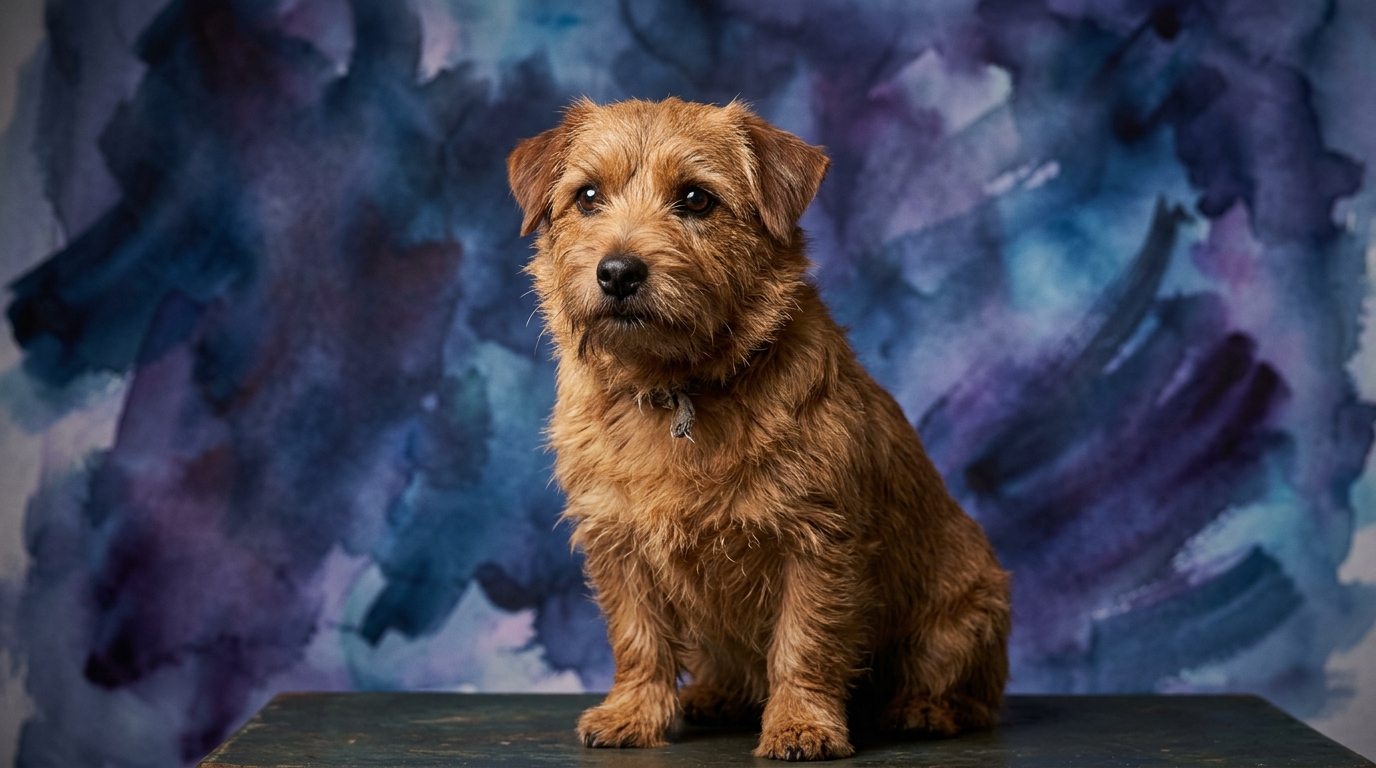
Side-by-Side IQ Profile: GSP vs. Norfolk Terrier
The Cosmic Pet Pet IQ Lab employs a five-dimensional framework to assess canine intelligence, offering a nuanced view beyond simple obedience. This allows us to dissect the specific cognitive aptitudes that define each breed.
The German Shorthaired Pointer, a Sporting Group stalwart, exhibits a cognitive profile sculpted for cooperative hunting. Its Problem Solving score of 5/5 reflects an exceptional capacity for navigating complex scenarios, such as tracking elusive game over varied terrain or executing multi-step retrieving tasks. This breed's Training Speed, rated 4/5, indicates a quick grasp of new commands and a strong desire to learn, making them highly receptive to instruction. Social Intelligence, also 4/5, underpins their remarkable ability to interpret human cues and work in tandem with their handlers, forming a deep partnership. An Instinctive Drive of 5/5 speaks to their powerful, innate desire to point, flush, and retrieve, channeled into productive work. Finally, their Memory, at 4/5, allows them to retain intricate sequences of commands and recall specific locations with impressive accuracy.
In contrast, the Norfolk Terrier, a robust member of the Terrier Group, presents a different set of cognitive strengths, tailored for independent vermin control. Its Problem Solving score of 3/5 suggests competence in practical, immediate challenges, like figuring out how to access a tight space or outmaneuver small prey, rather than complex, human-directed puzzles. The breed's Training Speed, rated 3/5, means they can certainly learn, but often require more patience, consistency, and creative motivation due to their independent nature. Their Social Intelligence, also 3/5, manifests as a strong, discerning bond with their family, though they may be less universally eager to please than a GSP, often prioritizing their own agenda. An Instinctive Drive of 3/5 reflects a tenacious prey drive focused on digging and chasing small animals, a drive that can be intense but differs from the cooperative drive of a GSP. Their Memory, at 3/5, is sufficient for retaining routines and learned behaviors, albeit perhaps not for the same depth of complex information as their sporting counterpart.
Where the German Shorthaired Pointer Excels Cognitively
The German Shorthaired Pointer's cognitive architecture is optimized for partnership and precision in demanding environments. Its superior Problem Solving (5/5) means it can seamlessly adapt to changing field conditions, strategizing how to best approach a scent or retrieve from challenging cover. This isn't just about raw intellect, but about applying cognitive flexibility in real-time, often under pressure. Their high instinctive drive (5/5) is not simply a strong urge, but a deeply ingrained, almost innate understanding of the hunting process, allowing them to anticipate and respond to game behavior with minimal human intervention once trained. This drive, combined with their training speed and memory, makes them exceptional at executing complex, multi-stage tasks with remarkable consistency.
Furthermore, the GSP's social intelligence (4/5) is geared towards understanding subtle human communication, enabling them to read body language and vocal tones to adjust their actions accordingly. This facilitates not just obedience, but a true working rapport where dog and handler operate as a cohesive unit. Their memory (4/5) allows them to internalize extensive command sets and recall specific locations of game or retrieved items, which is critical for efficiency in the field. For tasks requiring sustained focus, intricate navigation, and a deep understanding of human directives, the GSP consistently demonstrates a cognitive edge.
Where the Norfolk Terrier Shines Cognitively
While the Norfolk Terrier's IQ scores might appear lower, their cognitive strengths are uniquely tailored to their original purpose: independent vermin control. Their Problem Solving (3/5) is not about grand strategy, but about immediate, practical solutions for self-preservation and target acquisition in confined spaces. This means quickly assessing a situation, finding a way into a burrow, or outsmarting a small rodent, often relying on instinct and quick wit rather than complex learned sequences. This form of problem-solving is robust and self-reliant, requiring less human direction in the moment.
The Norfolk's instinctive drive (3/5) is characterized by an unwavering tenacity and single-minded focus on a task, particularly when it involves prey. Once they've latched onto a scent or a goal, their persistence is remarkable. Their social intelligence (3/5), while not broadly cooperative like a GSP's, fosters a deep, personal connection with their immediate family. They are astute observers of their human companions, understanding routines and emotional states, and often communicate their own desires with charming clarity. This independent spirit, coupled with their specific problem-solving and focused drive, makes them exceptionally self-sufficient and resourceful in their niche.
Training Dynamics: GSP vs. Norfolk Terrier
When it comes to ease of training, the German Shorthaired Pointer generally presents a more straightforward experience. Their 4/5 Training Speed and 4/5 Social Intelligence mean they are inherently eager to please, quick to grasp new concepts, and highly responsive to positive reinforcement. They thrive on having a job to do and genuinely enjoy the process of learning and working alongside their human. Their strong memory helps them retain commands over long periods, making refresher sessions efficient. This results in a dog that typically picks up basic obedience, advanced commands, and even complex sport skills with relative ease and enthusiasm.
The Norfolk Terrier, with a 3/5 in both Training Speed and Social Intelligence, requires a different approach. They are capable learners, but their independent terrier spirit means they may not always see the immediate benefit in complying with a command if it clashes with their own inclinations. Training a Norfolk often requires more patience, creativity in motivation, and a deep understanding of their sometimes stubborn nature. Consistency is paramount, and handlers must be prepared to make training engaging and rewarding to overcome their innate desire to follow their nose or their own agenda. While they form strong bonds, their social intelligence is less about broad cooperation and more about a selective partnership, meaning they might require more convincing to perform tasks they perceive as less interesting.
Suitability for Active vs. Relaxed Owners
For owners with an active lifestyle, the German Shorthaired Pointer is an exceptional match. Their 5/5 instinctive drive translates into boundless energy and a profound need for regular, vigorous physical and mental exercise. These dogs excel in activities like running, hiking, swimming, and various dog sports, including obedience, agility, and field trials. An owner who can provide daily outlets for their GSP's physical prowess and engage their problem-solving mind with training and tasks will find a highly fulfilled and cooperative companion. Their cognitive makeup demands engagement; without it, their impressive intelligence and drive can lead to boredom and destructive behaviors.
The Norfolk Terrier, while certainly not a couch potato, is better suited for owners who are active but perhaps not seeking a canine endurance athlete. Their 3/5 instinctive drive means they enjoy walks, playtime, and exploring, but typically don't require the same intensity or duration of exercise as a GSP. They thrive on consistent interaction and mental stimulation through puzzle toys, short training sessions, and opportunities to engage their natural curiosity. Owners who appreciate a dog with a lively personality, a keen interest in their surroundings, and a moderate need for activity will find the Norfolk Terrier a delightful companion. Their independence means they can entertain themselves for periods, but they still cherish companionship and engaging activities with their people.
The Verdict
Choose the German Shorthaired Pointer if you are an active, experienced owner seeking a highly trainable, cooperative partner for demanding physical activities and intricate cognitive challenges.
Opt for the Norfolk Terrier if you appreciate an independent, tenacious companion with a charming personality, capable of moderate activity and thriving on engaging, consistent training.
🧠 Find Your Pet's IQ Score
Our Pet IQ Lab assessment covers 25+ tests across 5 cognitive dimensions — personalized to your breed.
Take the Full IQ Test →Frequently Asked Questions
Do German Shorthaired Pointers make good family pets?
Yes, German Shorthaired Pointers can be excellent family pets, particularly for active families. Their social intelligence helps them bond well, but they require significant exercise and mental stimulation to prevent boredom, making them best suited for homes that can meet these needs.
Are Norfolk Terriers difficult to train due to their independence?
Norfolk Terriers are not inherently difficult to train, but their independent nature and focused drive mean they require consistent, positive reinforcement and engaging methods. Patience and creativity are key to harnessing their intelligence and teaching them desired behaviors effectively.
Which breed is better for a first-time dog owner?
For a first-time dog owner, the Norfolk Terrier might be a more manageable choice due to its slightly lower exercise demands compared to the GSP. However, both breeds require dedicated training and socialization, so a first-time owner should be committed to learning and consistent effort.