
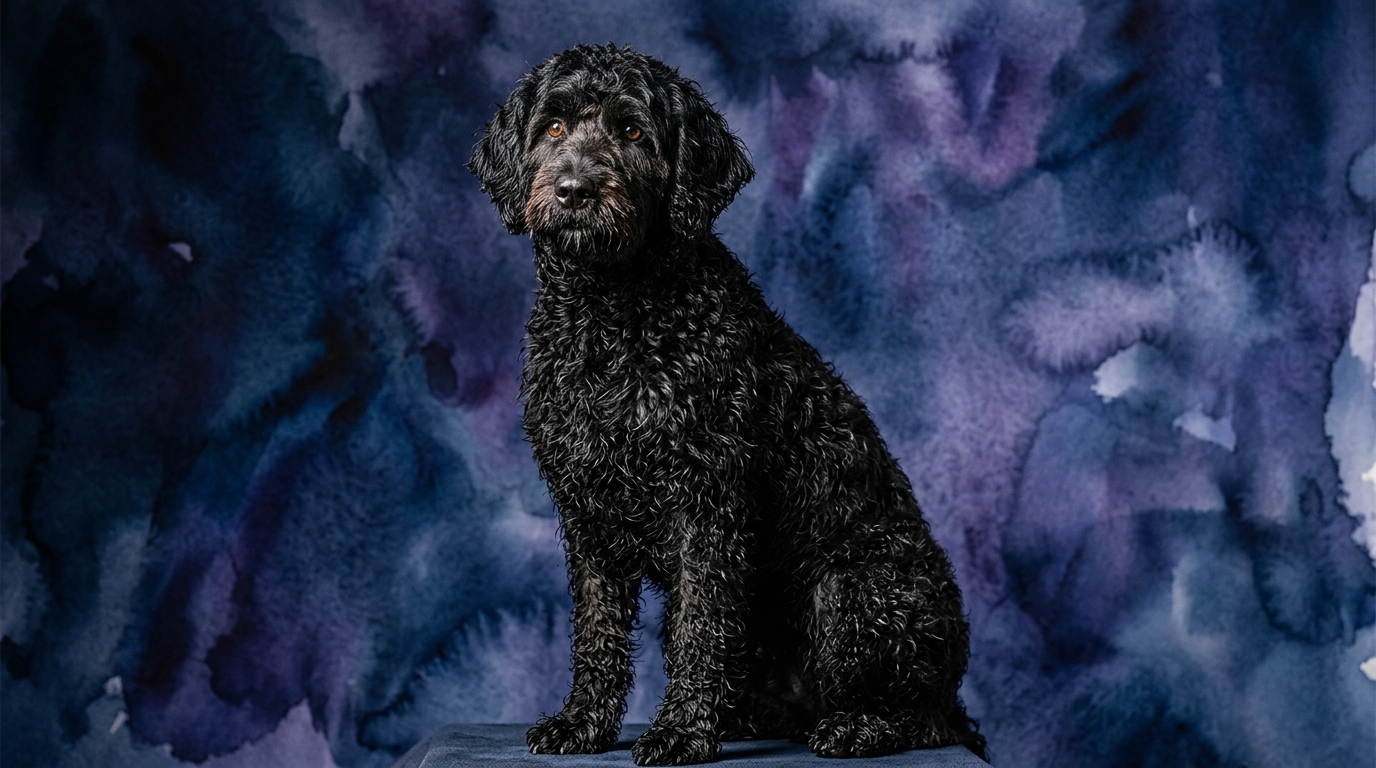
Side-by-Side Cognitive Profiles
The Cosmic Pet Pet IQ Lab employs five key dimensions to evaluate canine cognition, offering a granular view of each breed's intellectual landscape. For the German Shorthaired Pointer (GSP), a Sporting group member with a Coren ranking of #17, its profile showcases pronounced strengths: Problem Solving at 5/5, Training Speed at 4/5, Social Intelligence at 4/5, Instinctive Drive at 5/5, and Memory at 4/5. This paints a picture of a dog that is not only quick to grasp complex concepts but also possesses a formidable inherent drive.
In contrast, the Portuguese Water Dog (PWD), a Working group member without a specific Coren ranking, presents a more balanced, yet generally lower, cognitive profile: Problem Solving at 3/5, Training Speed at 3/5, Social Intelligence at 3/5, Instinctive Drive at 3/5, and Memory at 3/5. These scores suggest a capable learner and companion, but one that approaches challenges and learning with a different pace and intensity compared to the GSP.
Where the German Shorthaired Pointer Excels Cognitively
The GSP's cognitive advantages are evident across several metrics, particularly in Problem Solving (5/5) and Instinctive Drive (5/5). Their superior problem-solving ability allows GSPs to quickly strategize and adapt to novel situations, whether it's navigating complex terrain during a hunt or figuring out how to open a gate. This means they often require less repetition to understand new concepts and can independently devise solutions to obstacles they encounter.
Their high instinctive drive translates into an unparalleled focus and determination, especially in tasks related to scent work, tracking, and retrieving. This isn't just about physical energy; it's a cognitive drive that allows them to maintain intense concentration on a specific goal for extended periods. Coupled with a 4/5 Training Speed and 4/5 Memory, GSPs acquire multi-step commands rapidly and retain complex sequences of behaviors, making them exceptionally proficient in advanced training and field work where precision and recall are paramount. Their social intelligence (4/5) also means they are adept at reading human cues, allowing for highly synchronized partnerships in working scenarios.
Unique Cognitive Strengths of the Portuguese Water Dog
While the Portuguese Water Dog's scores are generally lower than the GSP's, their cognitive profile provides unique advantages, particularly for specific roles and lifestyles. The PWD's Problem Solving at 3/5 indicates a capacity for learning and adapting, especially to practical, physical tasks, but with a more direct, less abstract approach than the GSP. They excel at figuring out how to retrieve objects from water or master physical agility courses, often through persistent effort rather than immediate strategic insight. This cognitive style can be advantageous for owners who appreciate a dog that learns steadily and reliably without constantly seeking to outsmart its environment.
The PWD's Instinctive Drive at 3/5 is a key differentiator. While still a working dog with energy and purpose, their drive is more balanced and less intensely focused on prey than the GSP. This means they are less likely to be relentlessly distracted by external stimuli like scent trails, making them more adaptable to varied environments and family life where intense hunting focus might be disruptive. Their 3/5 Social Intelligence ensures they are responsive and bond well with their owners, fostering a reliable connection built on clear communication rather than subtle, nuanced interpretations, which can be a strength for owners who prefer straightforward interaction. Additionally, their 3/5 Memory means they reliably retain learned behaviors and routines, providing a consistent and predictable companion once trained.
Trainability: GSP vs. PWD
When considering ease of training, the German Shorthaired Pointer generally presents a faster learning curve due to its 4/5 Training Speed and 5/5 Problem Solving. GSPs absorb new commands and complex sequences with remarkable alacrity, especially when tasks align with their powerful 5/5 Instinctive Drive. For instance, teaching a GSP to perform a multi-stage retrieve or complex scent discrimination can be a quicker process because they inherently understand the 'why' behind such activities and can creatively apply learned behaviors. However, this high drive and problem-solving ability also means they require consistent, engaging, and purposeful training to channel their mental and physical energy; an under-stimulated GSP might creatively solve problems in ways an owner doesn't appreciate, such as escaping fences or opening cabinets.
The Portuguese Water Dog, with its 3/5 Training Speed and 3/5 Problem Solving, requires a more patient and consistent approach. They learn effectively, but typically need more repetition to solidify new behaviors compared to a GSP. Their moderate 3/5 Instinctive Drive means they might not have the same inherent motivation for certain tasks unless clearly linked to positive reinforcement and reward. Real behavioral differences include a PWD possibly taking longer to master a complex agility course, needing more consistent practice to remember the sequence of obstacles, whereas a GSP might pick it up faster but then get bored if not challenged further. The PWD's 3/5 Social Intelligence means they respond well to clear, positive instruction but may not anticipate an owner's next move as readily, necessitating explicit cues.
Owner Suitability: Active vs. Engaged Lifestyles
The German Shorthaired Pointer is unequivocally suited for highly active and driven owners. Their profound 5/5 Instinctive Drive, coupled with high Problem Solving and Memory, demands significant daily physical exertion and consistent mental engagement. Owners who are involved in activities like hunting, competitive field trials, agility, or extensive hiking will find a GSP to be an unparalleled partner. A GSP thrives when given a 'job' and requires an owner capable of channeling its relentless energy and sharp intellect; a relaxed owner would likely find themselves overwhelmed by a GSP's unmet needs, potentially leading to destructive behaviors or excessive vocalization born of boredom.
The Portuguese Water Dog also requires an active and engaged owner, but perhaps one seeking a slightly different balance. While still a working breed that needs consistent exercise and mental stimulation, their 3/5 Instinctive Drive and overall cognitive profile suggest they might be more adaptable to a broader range of active family activities beyond intense hunting. PWDs excel in water sports, dock diving, obedience, and hiking, and integrate well into family life provided their exercise needs are met. They are not suited for truly 'relaxed' owners, but their energy levels, while substantial, might be less relentlessly demanding than a GSP's, making them a good fit for active families who appreciate a dedicated companion without the extreme intensity of a specialized hunting dog.
The Verdict
Choose a German Shorthaired Pointer if you are a highly active, experienced dog owner seeking a driven, quick-thinking partner for demanding field work, competitive sports, or extensive outdoor adventures.
Opt for a Portuguese Water Dog if you are an active, engaged owner who values a dedicated companion for water sports, obedience, and varied family activities, and are prepared for consistent training with a moderately driven, reliable learner.
🧠 Find Your Pet's IQ Score
Our Pet IQ Lab assessment covers 25+ tests across 5 cognitive dimensions — personalized to your breed.
Take the Full IQ Test →Frequently Asked Questions
Do GSPs need a lot of mental stimulation?
Yes, GSPs require substantial mental stimulation due to their 5/5 Problem Solving and 4/5 Memory. Activities like puzzle toys, advanced obedience training, scent work, and learning complex tricks are crucial to keep their minds engaged and prevent boredom-related issues.
Are Portuguese Water Dogs good for first-time dog owners?
Portuguese Water Dogs can be suitable for first-time owners who are committed to consistent training and providing ample exercise. Their 3/5 Training Speed means they learn steadily, but owners must be patient and dedicated to positive reinforcement methods.
Which breed is more prone to independent thinking?
The German Shorthaired Pointer, with its 5/5 Problem Solving and 5/5 Instinctive Drive, is more prone to independent thinking, especially when driven by scent or prey. They are capable of making decisions in the field, which can be a strength but also requires an owner who can consistently guide and manage their independent nature.