
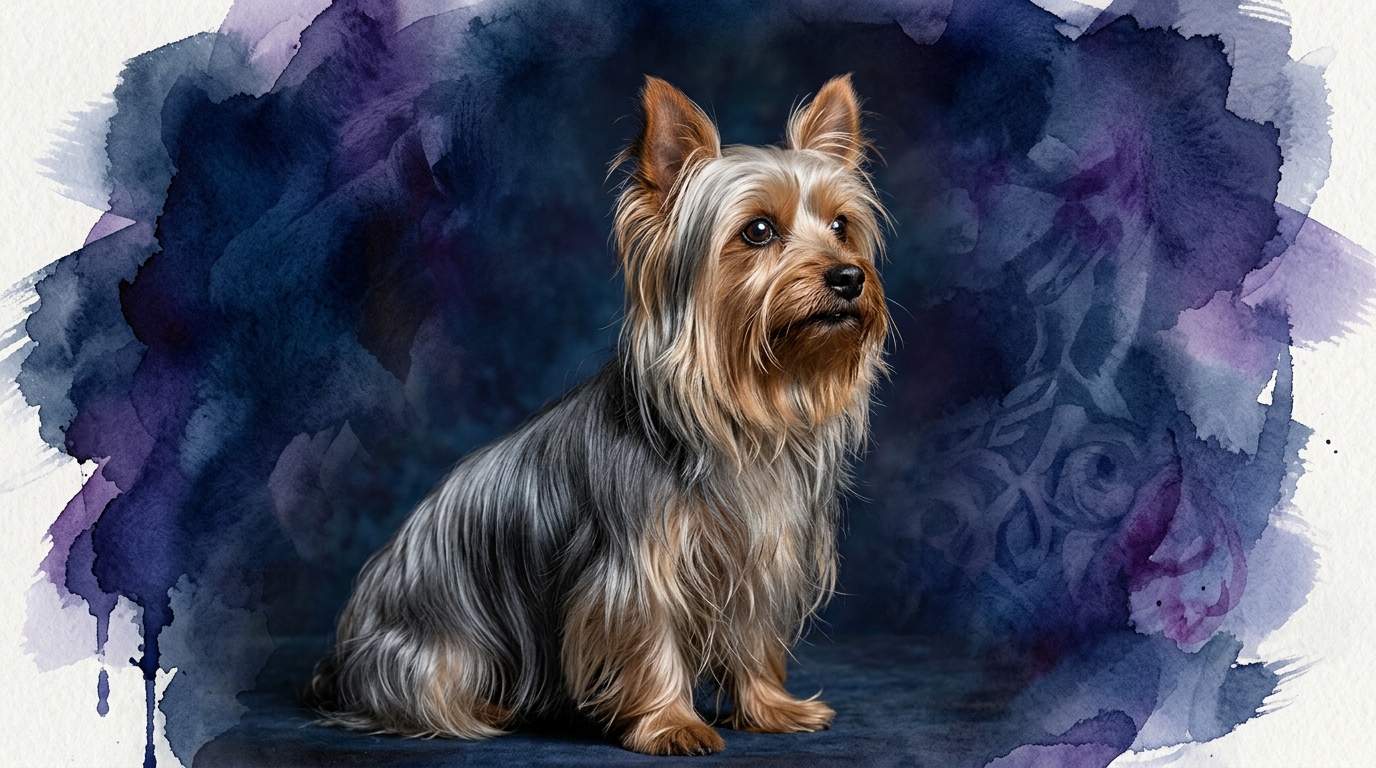
Side-by-Side IQ Profile: GSP vs. Silky Terrier
The German Shorthaired Pointer (GSP), a Sporting group member, holds a respectable Coren rank of #17, indicating a strong capacity for learning and obedience. Our Cosmic Pet Pet IQ Lab assessment gives them a Problem Solving score of 5/5, reflecting their exceptional ability to navigate complex environments and strategize during tasks like scent tracking and retrieval. Their Training Speed is rated 4/5, demonstrating a quick grasp of new commands and a willingness to cooperate, often driven by a desire to work alongside their human partners. Social Intelligence is also strong at 4/5, allowing them to form deep bonds and accurately interpret human cues, making them highly attuned companions. An Instinctive Drive of 5/5 highlights their profound genetic programming for hunting, pointing, and retrieving, showcasing an innate focus and perseverance in pursuit of a 'job.' Finally, their Memory is rated 4/5, enabling them to recall extensive training sequences and spatial information with precision.
The Silky Terrier, a member of the Toy group and not Coren-ranked, presents a different cognitive blueprint. Their Problem Solving is rated 3/5, indicating an ability to learn routine tasks and simple puzzles, though they may not consistently pursue complex intellectual challenges with the same intensity as a GSP. Training Speed for the Silky Terrier is 3/5; they can certainly learn, but often require more repetition and consistent motivation, sometimes displaying a more independent or 'terrier' approach to instruction. Social Intelligence is also 3/5; while they bond deeply with their chosen family, they can be more discerning or reserved with strangers, and their communication style might be more subtle or demanding. An Instinctive Drive of 3/5 reflects their foundational terrier tenacity and alert nature, but without the specialized, intense focus on a specific working task seen in sporting breeds. Their Memory is rated 3/5, sufficient for remembering routines, favorite people, and learned commands, though perhaps not for the vast array of complex instructions a GSP might master.
Where German Shorthaired Pointers Win Cognitively
The German Shorthaired Pointer truly shines in areas demanding focused application of cognitive resources towards a specific goal, a direct result of their selective breeding for field work. Their 5/5 Problem Solving score translates into a superior capacity for understanding and executing multi-stage commands, such as tracking a scent through varied terrain, locating game, and then waiting for a signal before retrieving. This involves sophisticated spatial reasoning, an ability to filter distractions, and a remarkable persistence. Their high Instinctive Drive (5/5) means they are not just capable of these tasks, but inherently motivated by them, often finding deep satisfaction in successful completion. This drive fuels a relentless curiosity and a desire to engage with their environment in a productive, goal-oriented manner. Furthermore, their 4/5 Training Speed, coupled with a strong memory, means they can quickly acquire and retain a broad vocabulary of commands and hand signals, making them exceptionally adaptable to various training disciplines, from advanced obedience to agility and scent work. They exhibit a profound understanding of cause and effect in their environment, learning from successes and failures with remarkable efficiency when engaged in a task that aligns with their natural inclinations.
Where Silky Terriers Win Cognitively
While the Silky Terrier’s cognitive profile differs significantly from the GSP's, it possesses distinct strengths that cater to its role as an adaptable companion. Their 3/5 Problem Solving, though not geared towards complex field scenarios, manifests in a practical cleverness within their domestic world; they might adeptly figure out how to access a coveted toy or manipulate a blanket to create the perfect sleeping spot. Their 3/5 Social Intelligence, while perhaps more selective than a GSP's, often translates into a keen awareness of their primary human's moods and routines, allowing them to offer comfort or demand attention with precise timing. This isn't about broad social engagement, but deep, targeted connection. The Silky Terrier's Instinctive Drive (3/5) is expressed as a spirited alertness and a confident assertiveness that can be advantageous in a small package, making them excellent, vocal guardians against perceived threats, often compensating for their size with a robust personality. They exhibit a tenacious spirit when pursuing something they desire, whether it's a game of fetch or a specific treat, demonstrating a focused determination within their sphere of interest. Their memory, while rated 3/5, is perfectly adequate for remembering the essential routines and social cues that foster a stable, happy home life, making them reliable and predictable companions for those who appreciate their particular brand of spirited loyalty.
Which is Easier to Train and Why
When considering ease of training, the German Shorthaired Pointer generally presents a more straightforward experience for owners seeking a responsive, task-oriented learner. Their 4/5 Training Speed, coupled with a 5/5 Problem Solving ability and a strong desire to please, means GSPs tend to grasp new concepts and commands quickly and consistently. They thrive on structured training sessions that challenge their intellect and channel their substantial physical and instinctive energy. A GSP's strong retrieve drive and inherent focus on working with a handler makes them highly receptive to positive reinforcement, eager to perform tasks for praise, toys, or treats. Their high Social Intelligence (4/5) also means they are often attuned to their trainer's intentions and body language, facilitating smoother communication. In contrast, the Silky Terrier, with a 3/5 Training Speed and an independent streak characteristic of many terrier breeds, can be more challenging to train for complex obedience. While they are capable of learning, they may require more patience, creativity, and repetition. Silky Terriers often need a trainer who understands their spirited nature and can make training feel like a game rather than a chore. They might decide that a command isn't worth their effort unless the reward is enticing or the activity genuinely engaging for them. Their lower scores in Problem Solving and Instinctive Drive, relative to a working breed, mean they may not find the same inherent satisfaction in rote obedience or complex, multi-step tasks, requiring owners to find different motivators to maintain engagement and consistency.
Active Owners vs. Relaxed Owners: A Cognitive Match
The choice between these two breeds hinges significantly on an owner's lifestyle and their capacity to meet a dog's specific physical and cognitive needs. The German Shorthaired Pointer is an ideal match for highly active owners who embrace outdoor pursuits and are prepared to integrate their dog into a demanding, engaging routine. GSPs thrive with extensive daily exercise, such as long runs, hikes, or swimming, combined with mentally stimulating activities like advanced obedience, scent work, or agility. Their high instinctive drive and problem-solving abilities mean they require a 'job' to feel fulfilled, and a bored GSP can quickly become a destructive one. They excel when given opportunities to use their natural talents, making them superb partners for hunters, athletes, or anyone dedicated to consistent, challenging training. Conversely, the Silky Terrier is better suited for owners seeking a lively, affectionate companion that can adapt to a more relaxed, though still active, indoor lifestyle. While they certainly enjoy walks, playtime, and mental enrichment with toys and puzzles, they do not possess the same overwhelming need for intense physical exertion or complex working tasks as a GSP. Their smaller size and more moderate energy levels make them suitable for apartment living or homes with smaller yards, provided they receive regular walks and interactive play. Relaxed owners who appreciate a spirited, watchful companion eager for cuddles and short bursts of activity will find a Silky Terrier to be a delightful fit, offering companionship without the rigorous demands of a true working breed.
The Verdict
Choose a German Shorthaired Pointer if you are an active individual or family seeking an exceptionally capable, energetic partner for outdoor adventures, complex training, and a dog that thrives on having a significant 'job.'
Choose a Silky Terrier if you desire a spirited, affectionate companion adaptable to smaller living spaces, who offers lively interaction and requires consistent, patient guidance rather than intense working demands.
🧠 Find Your Pet's IQ Score
Our Pet IQ Lab assessment covers 25+ tests across 5 cognitive dimensions — personalized to your breed.
Take the Full IQ Test →Frequently Asked Questions
Can a Silky Terrier excel in agility or obedience training despite its lower training speed?
Yes, a Silky Terrier can certainly excel in agility and obedience, particularly with consistent, positive reinforcement and a creative trainer who understands their terrier spirit. While their training speed is rated lower than a GSP's, their tenacity and desire to engage with their owner can be channeled into impressive performances, often fueled by making training feel like a fun game.
How does the GSP's high instinctive drive impact its behavior in a non-hunting home?
In a non-hunting home, a GSP's intense instinctive drive requires redirection into other forms of physical and mental stimulation to prevent boredom or destructive behaviors. This might involve activities like advanced obedience, scent work, agility, long-distance running, or even competitive dock diving, all of which leverage their natural talents and energy.
Are Silky Terriers generally good with children, given their social intelligence rating?
Silky Terriers can be good with older, respectful children who understand how to interact gently with a small dog, but their 3/5 social intelligence means they might not tolerate rough play or unfamiliar handling as readily as some breeds. Early socialization and supervision are crucial to foster positive interactions, and they often bond most closely with one or two primary family members.