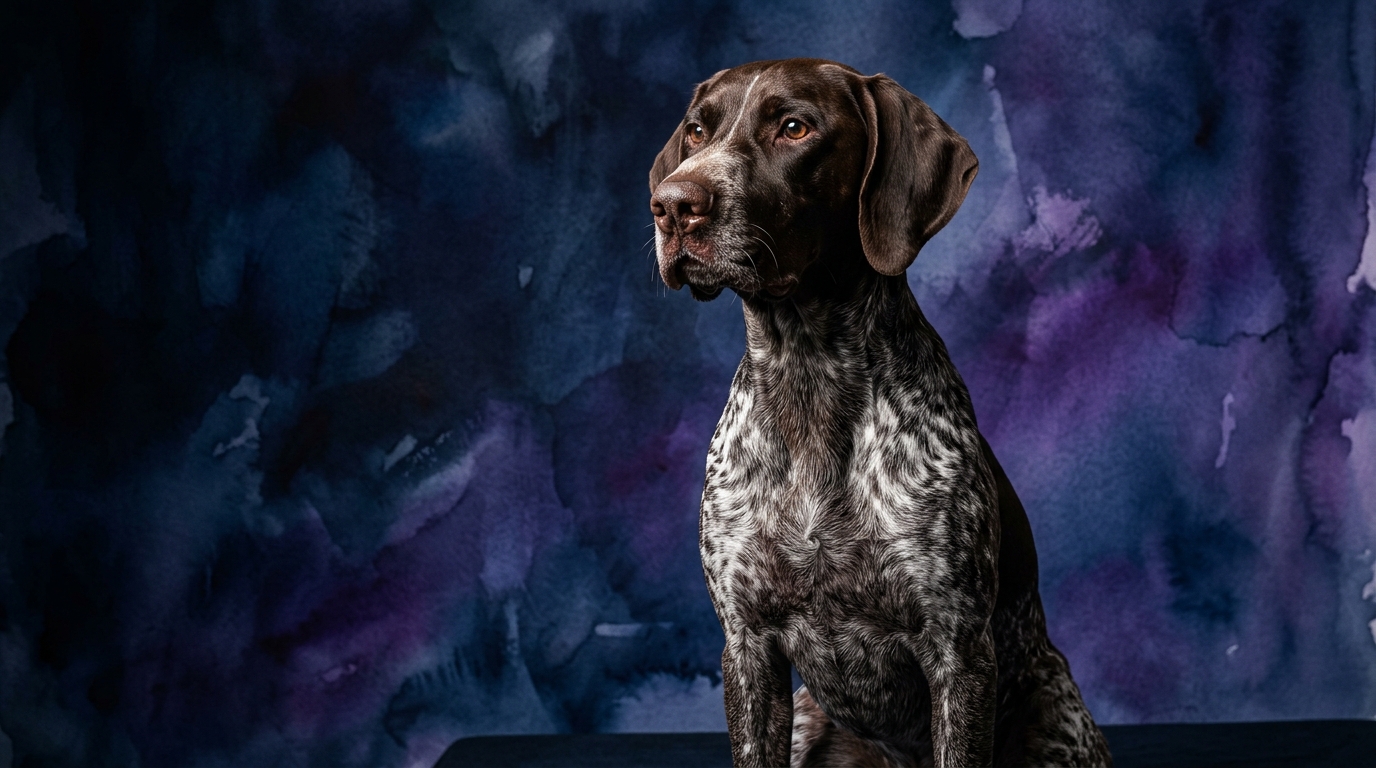
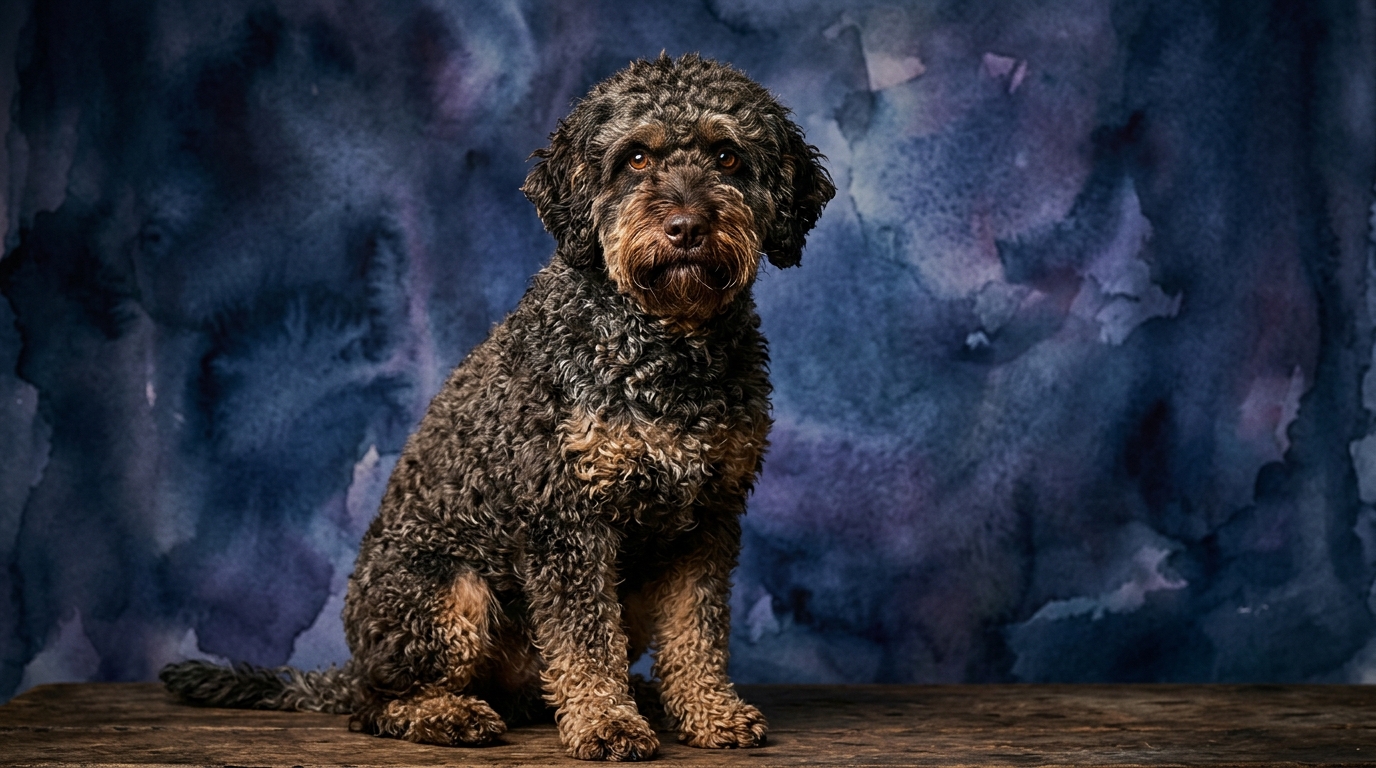
Side-by-Side Cognitive Profiles: GSP vs. SWD
The German Shorthaired Pointer (GSP), a Sporting group member, holds a notable Coren rank of #17, indicating its prominent position among working breeds. Its cognitive profile is marked by exceptional Problem Solving at 5/5, suggesting a dog capable of complex reasoning and strategic thinking when faced with novel challenges. Training Speed is rated 4/5, reflecting its rapid assimilation of new commands and routines. Social Intelligence, at 4/5, points to a strong capacity for understanding human cues and integrating into social structures. A powerful Instinctive Drive of 5/5 highlights its profound urge to perform its inherent breed tasks, particularly hunting and retrieving. Finally, its Memory score of 4/5 indicates a reliable retention of learned information and experiences.
In contrast, the Spanish Water Dog (SWD), a Herding group member without a specific Coren ranking, presents a more uniformly moderate cognitive profile. Its Problem Solving ability stands at 3/5, meaning it can navigate challenges effectively, though perhaps with less spontaneous innovation than a GSP. Training Speed also registers at 3/5, suggesting a steady learning pace that requires consistent reinforcement rather than quick uptake. Social Intelligence at 3/5 implies a capacity for forming bonds and understanding social signals, though potentially with a more independent streak. Its Instinctive Drive, at 3/5, denotes a functional but less intense urge to herd or perform other working tasks compared to the GSP's fervent drive. Memory, likewise at 3/5, indicates a solid ability to recall information, albeit not with the same immediate recall as a higher-scoring breed.
Where the German Shorthaired Pointer Excels Cognitively
The German Shorthaired Pointer truly shines in areas demanding high-level cognitive application and relentless motivation. Its 5/5 Problem Solving ability means a GSP can quickly assess complex situations, such as figuring out how to retrieve a bird from challenging terrain or navigating an intricate agility course with minimal guidance. This isn't just about following commands; it's about making independent decisions to achieve a goal, which is a hallmark of its hunting heritage.
Coupled with its 5/5 Instinctive Drive, the GSP exhibits an almost unparalleled dedication to tasks. This drive isn't merely physical energy; it's a cognitive engine that fuels focus and persistence. A GSP's mind is constantly engaged in understanding its environment for potential 'work,' whether that's scenting, pointing, or retrieving. This makes them exceptional partners for activities requiring sustained mental effort and initiative, like field trials, advanced scent work, or search and rescue operations, where their ability to process information and act decisively under pressure is paramount. Their 4/5 Training Speed and Memory also mean that once a solution or command is learned, it's deeply ingrained and readily accessible, allowing for rapid progression through complex training protocols and dependable performance in varied scenarios.
Cognitive Strengths of the Spanish Water Dog
While the Spanish Water Dog's individual cognitive scores are generally lower than the GSP's, its strengths lie in the cohesive blend of its moderate attributes, making it exceptionally suited for specific roles and lifestyles. Its 3/5 Problem Solving ability, combined with a 3/5 Instinctive Drive, creates a dog that is resourceful and capable of independent thought without the overwhelming intensity that can sometimes accompany a 5/5 drive. This means an SWD can assess and resolve issues on its own, such as figuring out how to manage a flock or navigate obstacles, but it does so with a more measured and self-contained approach, rather than with explosive, high-octane energy.
The SWD's 3/5 Social Intelligence, while not as outwardly demonstrative as some breeds, often translates into a discerning and observant nature. They are attentive to their core family unit and can understand subtle cues, but they might not seek constant external validation or interaction, which can be a cognitive advantage for owners who appreciate a dog with a degree of self-sufficiency. Their moderate Memory and Training Speed mean they are consistent learners, capable of retaining information reliably over time. This makes them less prone to impulsivity and more predictable in their responses once a behavior is established, fostering a steady, dependable working relationship rather than one built on lightning-fast reflexes.
Training Dynamics: Which Breed is Easier?
Based on their cognitive profiles, the German Shorthaired Pointer is generally easier and faster to train for a wide array of commands and complex tasks. Its 4/5 Training Speed means it grasps new concepts quickly, often requiring fewer repetitions to solidify a behavior. Its 5/5 Problem Solving ability allows it to generalize learned behaviors to new situations and even figure out solutions independently, making it a proactive participant in the training process. For owners seeking to delve into advanced obedience, competitive sports, or intricate working roles, the GSP's mental agility and drive make for a highly responsive and gratifying training experience.
The Spanish Water Dog, with its 3/5 Training Speed and Problem Solving, requires a more patient and consistent approach. While certainly capable of learning, an SWD will likely take longer to master new commands and may need more structured repetition to embed behaviors. Their moderate instinctive drive means that while they are willing to work, the motivation might need to be carefully cultivated and maintained through positive reinforcement. Owners training an SWD should be prepared for a steady progression rather than rapid leaps, focusing on clear communication and building a strong, trusting relationship to unlock their consistent, albeit slower, learning potential. Their herding background also means they can be independent thinkers, sometimes requiring more persuasion to comply than a GSP.
Matching Breeds to Lifestyles: Active vs. Relaxed Owners
The German Shorthaired Pointer's cognitive makeup firmly places it with active owners who can provide substantial mental and physical engagement. Their 5/5 Instinctive Drive demands an outlet; without it, their problem-solving mind might turn towards less desirable 'projects' around the home. They thrive on structured activities like hunting, agility, dock diving, or extensive hiking, which challenge both their physical endurance and their sharp minds. Owners who are committed to daily vigorous exercise and consistent mental stimulation, including advanced training or dog sports, will find the GSP a deeply fulfilling and engaged companion.
The Spanish Water Dog, with its moderate 3/5 Instinctive Drive and Problem Solving, suits active owners seeking a companion with a steady, enduring work ethic rather than explosive intensity. While they absolutely require regular exercise and mental tasks to remain balanced, their needs are typically less demanding than a GSP's. They enjoy activities like herding, swimming, long walks, and puzzle toys, but might be content with slightly less overall intensity or duration than their GSP counterparts. They are well-suited for owners who appreciate a dog that can be an active partner in outdoor pursuits but also settle calmly indoors, without the constant need for a 'job' that defines many high-drive breeds. Their moderate social intelligence also means they can be more reserved with strangers, a trait that some owners prefer.
The Verdict: Choosing Your Canine Companion
The choice between a German Shorthaired Pointer and a Spanish Water Dog hinges on the specific cognitive demands you plan to place on your companion and the lifestyle you offer. Both are capable, but their mental engines run on different fuels and at different RPMs.
The Verdict
Choose the German Shorthaired Pointer if you seek a highly driven, quick-thinking partner for intense activities like hunting, competitive dog sports, or demanding working roles, and you are prepared to meet its substantial needs for mental and physical stimulation daily.
Opt for the Spanish Water Dog if you desire a steady, resourceful companion for active but perhaps less intensely demanding lifestyles, appreciating a dog with a thoughtful approach to challenges and a more independent streak that requires consistent, patient guidance.
🧠 Find Your Pet's IQ Score
Our Pet IQ Lab assessment covers 25+ tests across 5 cognitive dimensions — personalized to your breed.
Take the Full IQ Test →Frequently Asked Questions
Does a higher Coren rank mean a dog is 'smarter' overall?
The Coren ranking primarily measures 'working and obedience intelligence,' which reflects a dog's ability to learn and obey commands quickly. It's one aspect of intelligence, but does not encompass all cognitive dimensions like problem-solving, social intelligence, or instinctive drives, which are crucial for a complete understanding of a breed's mental aptitude.
Can a Spanish Water Dog excel in dog sports despite its moderate scores?
Absolutely. While a Spanish Water Dog might not have the same lightning-fast training speed or problem-solving as a GSP, their moderate scores indicate a consistent and capable learner. With dedicated, positive training, and an understanding of their herding drive, SWDs can certainly achieve success in various dog sports, including agility and obedience, often demonstrating great endurance and focus.
How does 'instinctive drive' impact daily life for these breeds?
Instinctive drive profoundly shapes a dog's daily behavior; a GSP's high drive means a constant readiness to hunt and retrieve, requiring outlets like vigorous exercise and scent work to prevent frustration. An SWD's moderate drive means they possess a functional desire to work, often herding, but may be more content with varied activities and less intense daily demands than a GSP, making them adaptable companions.