
Side-by-Side Cognitive Profiles
The German Shorthaired Pointer (GSP), a distinguished Sporting breed, showcases a robust cognitive makeup, reflective of its heritage as an all-around hunting companion. Their Problem Solving is rated 5/5, indicating an exceptional capacity for independent thought and complex task navigation, often devising novel solutions in dynamic field scenarios. Training Speed for the GSP stands at 4/5, as they rapidly assimilate commands and routines, eager to please but possessing a strong independent streak that requires consistent and engaging methods. Social Intelligence is 4/5, meaning they are perceptive of human cues and emotional states, forming strong bonds and adapting well to family dynamics, though they can be reserved with strangers. Their Instinctive Drive is a profound 5/5, fueled by deep hunting instincts including pointing, retrieving, and tracking; they are tirelessly driven by scent and prey movement. Finally, their Memory is 4/5, demonstrating excellent recall for learned tasks, commands, and locations, crucial for complex hunting patterns and multi-stage retrieves.
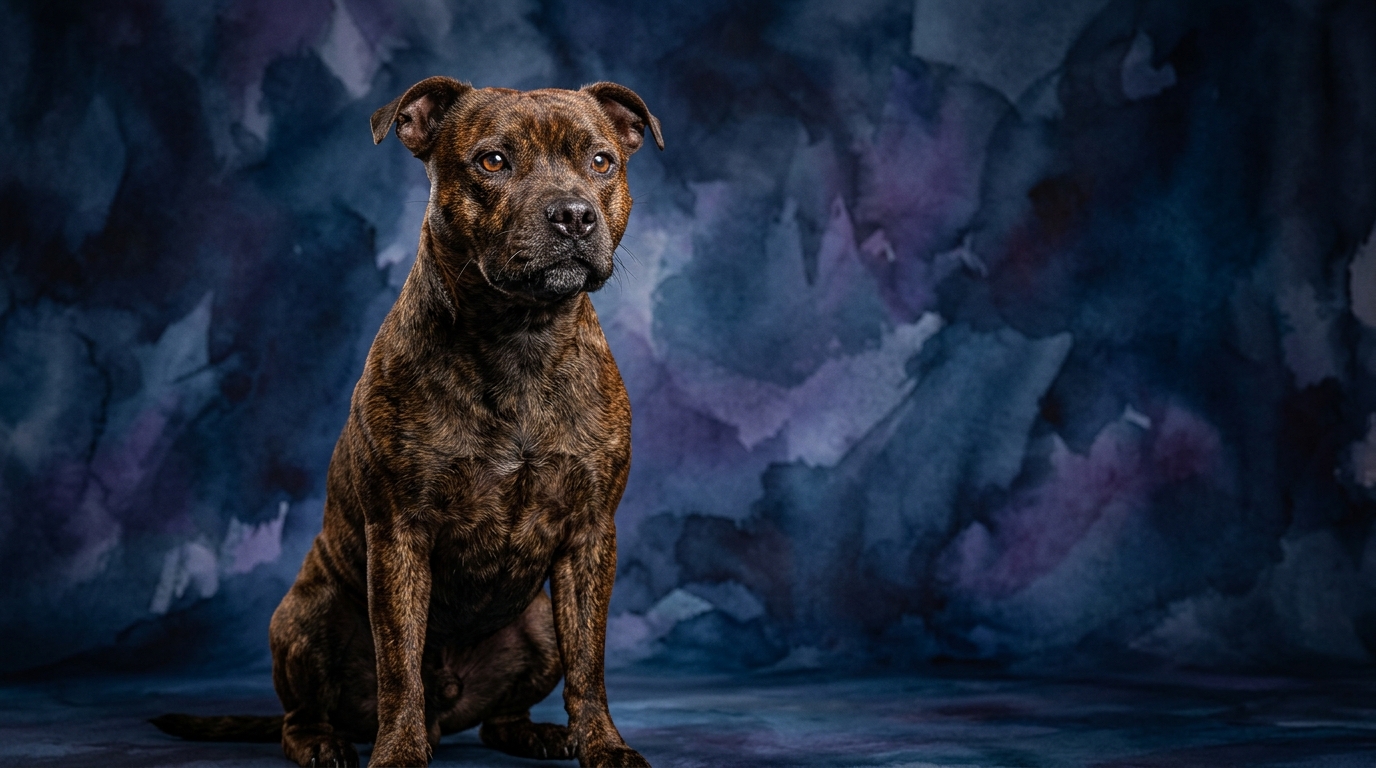
In contrast, the Staffordshire Bull Terrier (Staffy), a tenacious Terrier breed, presents a different, yet equally valuable, set of cognitive strengths, primarily focused on companionship and robust engagement rather than complex field work. Their Problem Solving is rated 3/5, indicating they are capable of solving practical, immediate challenges, but are less inclined towards abstract or multi-step problem-solving without direct incentive. Training Speed is 3/5; they learn at a steady pace with patient, positive reinforcement but can exhibit stubbornness, requiring engaging and consistent methods to maintain focus. Social Intelligence also registers at 3/5, as Staffies form deep bonds with their immediate family, sensitive to their owners' moods, but may be less inclined to generalize social understanding to new people or dogs without careful and ongoing socialization. Their Instinctive Drive is 3/5, possessing a strong prey drive typical of terriers and a tenacious grip, which manifests more in enthusiastic play, like tug-of-war, rather than directed hunting. Their Memory is 3/5, meaning they reliably retain familiar commands and routines but may require more repetition for complex sequences or infrequently performed tasks.
Where the German Shorthaired Pointer Excels Cognitively
The GSP's cognitive prowess truly shines in scenarios demanding independent decision-making and complex environmental navigation. Their 5/5 problem-solving ability allows them to strategize effectively in the field, whether it's figuring out the most efficient path through dense cover to retrieve game or adapting their approach when a scent trail becomes challenging. This isn't rote obedience; it's an active mental engagement with their surroundings, crucial for a versatile hunting partner.
Furthermore, their superior instinctive drive, also rated 5/5, is intrinsically linked to their cognitive strengths. This drive isn't just about raw energy; it's about the sophisticated processing of sensory information. A GSP can process multiple inputs—subtle changes in wind direction carrying a scent, visual cues of bird movement, and the sound of rustling leaves—and integrate them into a coherent strategy for locating and pointing game. This multi-sensory integration and rapid pattern recognition in dynamic environments sets them apart.
The GSP's cognitive advantages extend to their capacity for multi-stage tasks and sequential learning. Their excellent memory (4/5) combined with their problem-solving skills enables them to remember complex retrieve patterns, differentiate between multiple downed birds, and execute intricate commands in a specific order, even under distracting conditions. This makes them exceptional candidates for advanced dog sports like field trials, hunt tests, and competitive obedience, where precision and independent thought are paramount.
Where the Staffordshire Bull Terrier Shines Cognitively
While not bred for complex field work, the Staffordshire Bull Terrier exhibits a distinct form of practical intelligence and resilience that is highly valuable in a companion setting. Their 3/5 problem-solving manifests as a pragmatic approach to immediate, tangible challenges, particularly when there’s a clear reward involved. They are adept at figuring out how to get to a favorite toy or treat, often demonstrating a tenacious focus once motivated, a trait stemming from their terrier heritage.
The Staffy's social intelligence, rated 3/5, is deeply rooted in their profound devotion to their human family. They possess a remarkable capacity for empathy within their inner circle, often picking up on subtle emotional cues from their owners and responding with comforting presence. This sensitivity, though not broadly applied to strangers, makes them incredibly attuned and responsive to the needs of their familiar humans, fostering strong, reciprocal bonds.
Their instinctive drive (3/5), while not directed at hunting, translates into a robust enthusiasm for play and interaction. This tenacity, when channeled appropriately, makes them persistent learners in engaging, reward-based training. They may take more repetitions (3/5 training speed), but once a task is understood and associated with positive outcomes, their determination ensures consistent performance. This makes them excellent partners for playful obedience, agility, or even trick training, where the joy of interaction and a clear goal are present.
Training: Speed vs. Tenacity
When it comes to ease of training, the German Shorthaired Pointer typically boasts a faster learning curve, evidenced by their 4/5 training speed. Their eagerness to please, combined with their high drive and focus, means they often grasp new commands and complex sequences with fewer repetitions. However, their independent spirit and immense energy require a trainer who can consistently channel their working drives into productive activities. A GSP left without sufficient mental and physical stimulation can quickly become restless and find their own 'work,' which may not align with human expectations.
The Staffordshire Bull Terrier, with a 3/5 training speed, learns at a more moderate pace. They can sometimes exhibit a terrier-typical stubbornness, meaning that training success hinges on making the process highly engaging, positive, and reward-based. They respond best to methods that feel like a game and less like a chore. While they may not pick up abstract concepts as quickly as a GSP, their tenacity can be a significant asset; once a Staffy understands what is being asked and is motivated, they will apply themselves with admirable persistence.
Therefore, 'easier' is relative. For a seasoned trainer looking to push boundaries with complex tasks and high-level performance, the GSP's inherent drive and problem-solving ability make them a rewarding, albeit demanding, project. For a novice owner or someone seeking a devoted companion whose training needs are more about consistency and positive reinforcement in everyday life, the Staffy can be an incredibly rewarding student, provided patience and engaging methods are employed to navigate their occasional independent streak.
Suitability for Active vs. Relaxed Owners
The German Shorthaired Pointer is unequivocally suited for highly active owners. Their 5/5 instinctive drive and 5/5 problem-solving mean they require not just extensive physical exercise but also constant, engaging mental stimulation. Owners must be prepared for long runs, challenging hikes, extensive field work, or dedicated participation in dog sports like agility, dock diving, or competitive obedience. A GSP thrives when given a purpose and the opportunity to utilize their keen senses and independent thought, making them ideal for individuals or families with an adventurous, outdoor-oriented lifestyle.
The Staffordshire Bull Terrier, while certainly an active and playful breed, aligns better with owners who appreciate a more balanced approach to exercise and mental engagement. Their 3/5 problem-solving and instinctive drive are less demanding in terms of constant, specialized mental work. They enjoy daily walks, robust playtime in the yard, and interactive games, but don't typically require the same intensity or duration of activity as a GSP. They thrive on companionship and structured play, making them an excellent fit for owners who enjoy regular, moderate activity and prioritize affectionate interaction and family involvement over intense working demands.
The Verdict
Choose a German Shorthaired Pointer if you are an experienced, highly active owner seeking a canine partner for demanding outdoor activities, dog sports, or hunting, and are prepared to provide consistent, engaging mental and physical challenges.
Choose a Staffordshire Bull Terrier if you seek a devoted, robust companion for family life who enjoys playtime and daily walks, thriving on affection and structured, reward-based training without needing constant, highly specialized mental work.
🧠 Find Your Pet's IQ Score
Our Pet IQ Lab assessment covers 25+ tests across 5 cognitive dimensions — personalized to your breed.
Take the Full IQ Test →Frequently Asked Questions
Do German Shorthaired Pointers need a job to be content?
Yes, GSPs possess a powerful instinctive drive and problem-solving capacity that makes them thrive when given a purpose. Without adequate physical exercise and mental challenges, they can become restless or develop undesirable behaviors, as their minds are always seeking engagement.
Are Staffordshire Bull Terriers good for first-time dog owners?
Staffordshire Bull Terriers can be suitable for first-time owners who are committed to consistent, positive-reinforcement training and early socialization. Their devotion to family and manageable exercise needs make them adaptable, but their occasional stubbornness requires patience and a clear understanding of their needs.
Which breed is better with children?
Both breeds can be excellent with children when properly socialized and trained, but their approaches differ. GSPs are often playful and tolerant, but their high energy and size might overwhelm very young children. Staffies are renowned for their affectionate nature with their family, often referred to as 'nanny dogs' due to their gentle patience with children, though supervision is always essential.