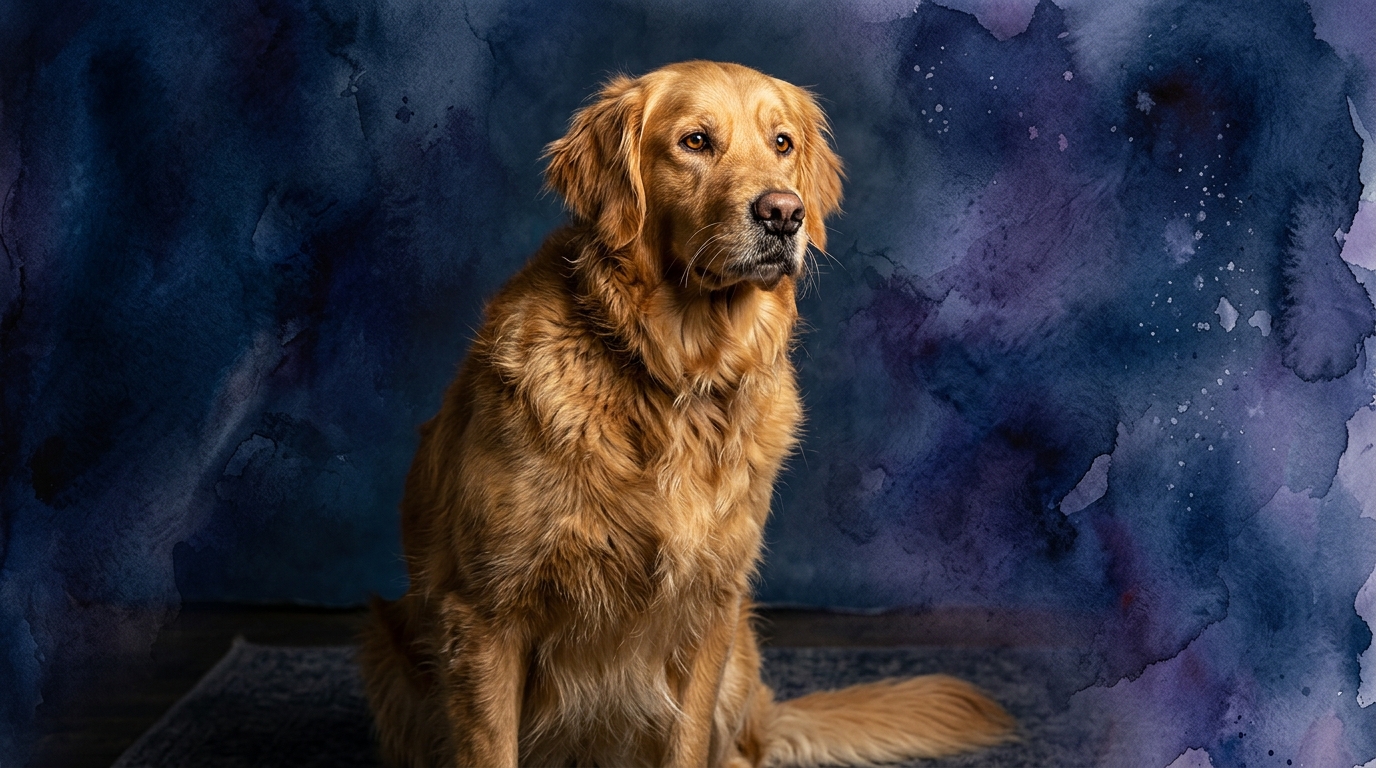

Golden Retriever: A Profile in Cooperative Cognition
The Golden Retriever, ranking #4 in Coren's intelligence scale, presents a cognitive profile geared towards partnership and rapid assimilation. Their Problem Solving ability is rated at 4/5, indicating an adeptness at navigating complex tasks, often with a collaborative mindset. Training Speed is exceptionally high at 5/5, reflecting their quick grasp of new commands. Social Intelligence also scores a perfect 5/5, showcasing their profound attunement to human emotions and social cues. Their Instinctive Drive, at 4/5, is channeled towards retrieving and working alongside humans, complemented by a robust Memory of 4/5 for retaining learned behaviors and social connections.
Canaan Dog: A Profile in Independent Acuity
In contrast, the Canaan Dog, with a Coren rank of #43, exhibits a cognitive makeup rooted in self-reliance and environmental awareness. Their Problem Solving is rated 3/5, often manifesting in independent solutions to challenges, particularly those related to self-preservation or resourcefulness. Training Speed is moderate at 3/5, requiring consistent effort due to their independent streak. Social Intelligence, also 3/5, means they are observant but can be reserved, primarily focusing their social engagement on their immediate family. Their Instinctive Drive, 3/5, leans towards vigilance and guarding, while their Memory, matching the Golden at 4/5, is strong for recalling territories, boundaries, and past experiences.
Where Golden Retrievers Excel Cognitively
The Golden Retriever's cognitive strengths are most evident in their capacity for collaborative learning and social attunement. Their rapid training speed (5/5) means they absorb new commands and complex sequences with remarkable efficiency, often anticipating handler cues. This isn't merely about rote memorization; it's about a deep understanding of human expectations and a strong desire to comply, making them highly receptive to various training methodologies.
Their superior social intelligence (5/5) allows them to navigate intricate human-dog interactions with ease, discerning subtle emotional shifts and responding with appropriate behaviors. This capacity for empathy and connection is particularly valuable in roles requiring close partnership, such as service or therapy work. Furthermore, their problem-solving ability (4/5) often manifests in persistence to achieve a goal set by their human, whether it's figuring out how to retrieve a dropped item from a challenging location or understanding multi-step tasks.
Where Canaan Dogs Show Unique Cognitive Prowess
While the Golden Retriever excels in cooperative tasks, the Canaan Dog's cognitive advantages stem from their ancestral role as free-roaming pariah dogs and herd guardians. Their problem-solving (3/5) is often geared towards survival and independent decision-making, such as identifying potential threats or finding innovative ways to secure resources without direct human instruction. This self-reliance translates into a unique form of street smarts, allowing them to make swift, autonomous judgments.
Crucially, their memory, matching the Golden Retriever at 4/5, is a significant asset, enabling them to vividly recall territorial boundaries, safe routes, and past encounters. This robust memory, combined with their instinctive drive (3/5) for vigilance, means they are adept at remembering who belongs and who doesn't, contributing to their effectiveness as natural watchdogs. They often make their own assessments based on accumulated experiences rather than requiring constant immediate human instruction.
Training Receptivity: A Tale of Two Approaches
The distinction in training ease between these two breeds is pronounced, largely due to their differing cognitive profiles and historical roles. The Golden Retriever, with its top-tier training speed (5/5) and exceptional social intelligence (5/5), approaches learning as a collaborative and rewarding experience. They are eager to please, keenly observe human cues, and process instructions quickly, often requiring minimal repetition. Their inherent desire to work alongside humans, combined with a capacity for understanding complex commands, means they are highly receptive to various training methodologies, from basic obedience to intricate dog sports.
In contrast, the Canaan Dog's training speed (3/5) and social intelligence (3/5) reflect a more independent and self-sufficient nature. While capable of learning, they require greater patience and consistency. Their problem-solving skills are often directed towards independent action rather than seeking human guidance, meaning they might question commands or find alternative, self-serving solutions if not properly motivated. Training a Canaan Dog demands understanding their independent spirit and leveraging their strong memory (4/5) and natural vigilance rather than expecting immediate, eager compliance. Positive reinforcement is crucial, building trust and demonstrating the value of cooperation on their terms.
Matching Minds: Owners and Breeds
For owners seeking a highly engaged and collaborative canine partner, the Golden Retriever is an ideal match. Their high training speed, social intelligence, and cooperative problem-solving mean they thrive with active owners who enjoy consistent training, participate in dog sports like agility or obedience, or require a dog for service work. They demand mental stimulation that involves human interaction and purpose-driven tasks, flourishing when given a job to do and ample opportunities for social connection.
The Canaan Dog offers a different kind of companionship, making them suitable for owners who appreciate an independent and observant companion. They require an owner who understands their need for mental stimulation that often involves patrolling, observing, and making independent decisions, rather than constant directed activity. Active owners who enjoy hiking or exploring with a dog that retains a degree of autonomy would find a good partner. However, a relaxed owner capable of providing clear boundaries, consistent training, and ample space for the Canaan Dog to survey its surroundings could also be a good fit, provided they respect the breed's self-sufficient nature and don't expect the same level of eager compliance as a Golden Retriever.
The Verdict
Choose the Golden Retriever when you seek a highly collaborative, adaptable, and socially attuned companion eager for joint activities and rapid learning.
Choose the Canaan Dog when you value an independent, observant, and self-reliant companion capable of making its own assessments and thriving with clear, consistent guidance.
🧠 Find Your Pet's IQ Score
Our Pet IQ Lab assessment covers 25+ tests across 5 cognitive dimensions — personalized to your breed.
Take the Full IQ Test →Frequently Asked Questions
Do Golden Retrievers need a lot of mental stimulation?
Yes, their high social intelligence and problem-solving abilities mean they thrive on mental challenges and interactive play that involves human participation. Without adequate engagement, they can become bored or develop undesirable behaviors.
Are Canaan Dogs difficult to train?
Canaan Dogs are not inherently difficult, but their independent nature and moderate training speed mean they require consistent, patient, and positive reinforcement-based training. They may not offer the immediate eagerness to please seen in some other breeds, preferring to assess the value of a command.
How do their memories compare?
Both breeds score 4/5 for memory, indicating strong recall. Golden Retrievers often apply this to learned commands, social contexts, and routines, while Canaan Dogs utilize theirs effectively for territorial awareness, recalling past experiences, and remembering boundaries.