
A Side-by-Side Look at Cognitive Profiles
The Cosmic Pet Pet IQ Lab employs a comprehensive framework to assess canine cognition across five crucial dimensions, offering a nuanced view beyond simple obedience. The Golden Retriever, holding a distinguished Coren rank of #4, exemplifies a breed developed for close partnership and directed work. Their Problem Solving is rated at 4/5, indicating a strong capacity to figure out complex tasks with assistance, while their Training Speed is exceptional at 5/5, reflecting their eagerness and rapid acquisition of new commands. Social Intelligence, also at 5/5, highlights their deep attunement to human cues and emotional states, making them highly responsive companions. Instinctive Drive, at 4/5, speaks to their inherent desire for retrieving and working alongside people, and their Memory, at 4/5, allows them to retain learned behaviors and associations effectively over time.
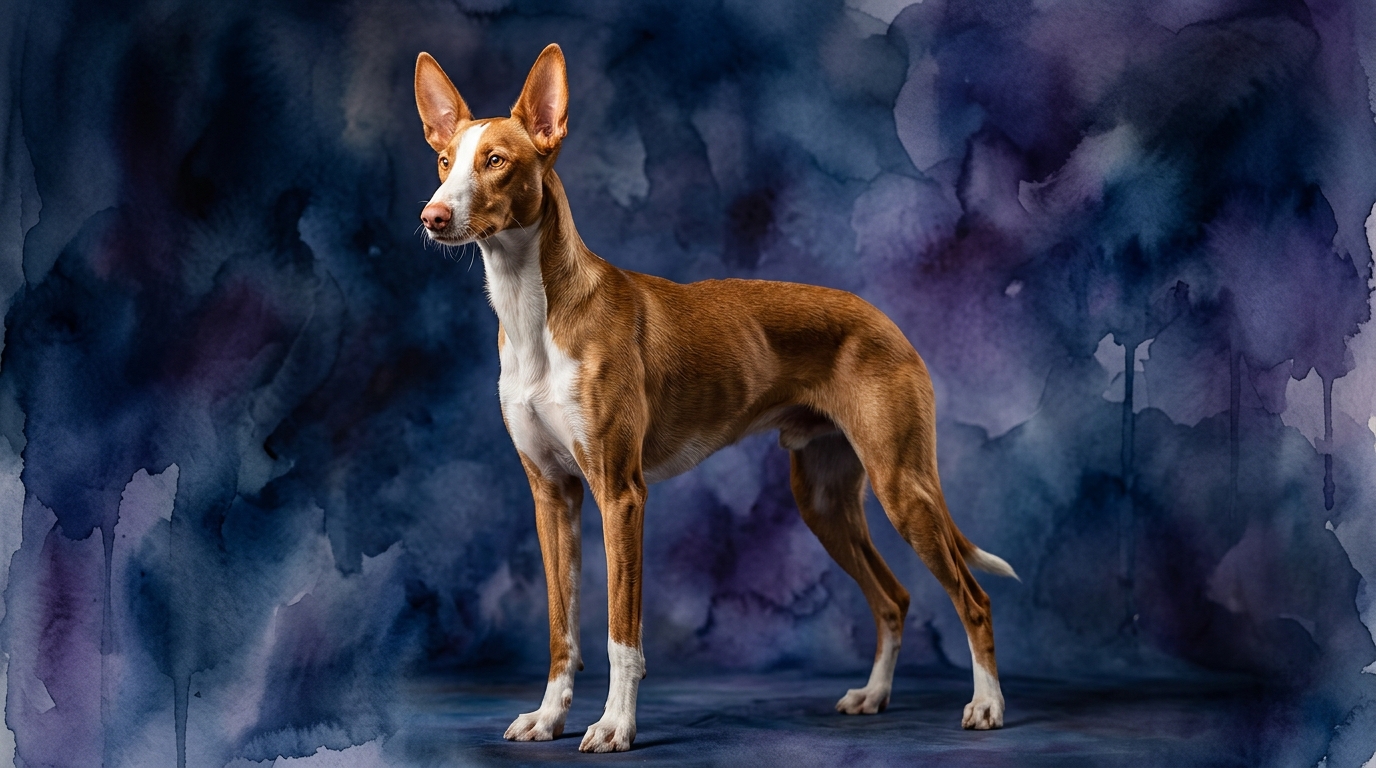
In contrast, the Ibizan Hound, with a Coren rank of #53, showcases a different cognitive blueprint, one honed for independent hunting over vast distances. Their Problem Solving stands at 3/5, suggesting they can navigate challenges but often prefer to do so on their own terms, relying less on direct human guidance. Training Speed is rated 3/5, indicating a moderate pace for learning, often requiring more repetition and motivational variety due to their independent streak. Social Intelligence, at 3/5, points to a more reserved and less overtly people-focused demeanor compared to the Golden, though they form strong bonds with their families. Their Instinctive Drive, also 3/5, is strongly geared towards sight hunting and pursuit, rather than collaborative tasks, and their Memory, at 3/5, is sufficient for their hunting and survival needs but may not prioritize human-centric commands with the same tenacity as a working retriever.
Where the Golden Retriever Excels Cognitively
The Golden Retriever’s cognitive strengths are profoundly tied to their history as a cooperative gundog, making them adept at tasks requiring human partnership. Their 5/5 Training Speed and Social Intelligence mean they don't just learn commands quickly; they actively seek to understand and comply, often anticipating their handler's wishes. This translates into rapid mastery of complex obedience routines, agility courses, and service tasks where precision and immediate responsiveness are paramount. Their 4/5 Problem Solving, when coupled with their high social intelligence, means they excel at figuring out puzzles or navigating novel situations when given clear direction or encouragement from a human. A Golden Retriever is more likely to persevere with a task if it means pleasing their person, making them exceptionally biddable and adaptable to diverse learning environments.
Furthermore, their 4/5 Instinctive Drive, channeled towards retrieving and working, means they possess an innate motivation for tasks that involve carrying objects or following a track set by a human. This isn't merely about physical ability, but a cognitive preference for engaging in activities that mimic their historical purpose, making training sessions feel like fulfilling work rather than forced exercises. Their robust 4/5 Memory supports this by allowing them to build an extensive repertoire of learned behaviors and social cues, ensuring consistency in their responses and interactions over time.
Unique Cognitive Strengths of the Ibizan Hound
While the Ibizan Hound’s scores reflect a different cognitive emphasis, they possess distinct strengths that are invaluable in their own right, particularly for owners who appreciate independence and self-reliance. Their 3/5 Problem Solving, though lower than the Golden's, often manifests as a resourceful and independent approach to challenges. An Ibizan Hound might not look to a human for immediate guidance when faced with an obstacle; instead, they are more likely to assess the situation and devise their own solution, a trait essential for a sighthound needing to make quick decisions during a hunt. This self-sufficiency can be a 'win' for owners who value a dog that isn't constantly seeking direction.
Their 3/5 Instinctive Drive, while not geared for human-directed tasks, is a powerful cognitive asset for their original purpose: hunting by sight. This drive means they possess exceptional visual acuity and an unparalleled focus when tracking movement, making them masters of their environment in a way a Golden Retriever, whose instincts are more human-centric, might not be. This keen observational intelligence and independence from human prompting for specific tasks allows them to thrive in environments where they can utilize these inherent abilities, such as lure coursing or free running in secure areas where they can explore and chase. Their moderate social intelligence also means they are often less prone to separation anxiety, finding contentment in their own company after their physical and mental stimulation needs are met, appealing to owners who need a dog that is comfortable being alone for periods.
Ease of Training: Golden Retriever vs. Ibizan Hound
When it comes to ease of training, the Golden Retriever clearly holds an advantage due to its intrinsic cognitive makeup. Their 5/5 Training Speed and 5/5 Social Intelligence mean they are not only quick to grasp new commands but are also highly motivated by human approval and interaction. Goldens typically exhibit a strong desire to please, making them eager participants in training sessions. Their natural biddability and focus on their handler translate into fewer repetitions needed and a greater willingness to perform tasks even without immediate reward, relying on the bond with their owner.
The Ibizan Hound, with 3/5 scores in both Training Speed and Social Intelligence, presents a different training challenge. Their sighthound heritage fosters independence and a focus on their environment rather than constant human direction. They can learn commands, but often require more patience, consistency, and highly motivating rewards. An Ibizan might understand what is asked but choose not to comply if a more interesting scent or visual stimulus presents itself. Their training often benefits from positive reinforcement methods that make learning a game, appealing to their independent and sometimes playful nature, rather than relying on strict obedience. Realistically, an Ibizan Hound will require a more dedicated and creative approach to training, acknowledging their inherent drive for self-direction.
Matching Canine Cognition to Lifestyle: Active vs. Relaxed Owners
The cognitive profiles of these two breeds offer clear guidance for owners considering their lifestyle preferences. The Golden Retriever's high social intelligence and strong instinctive drive for partnership make them ideal for active owners who desire a highly engaged and cooperative companion for activities like hiking, running, or participating in dog sports such as obedience, agility, or dock diving. Their cognitive need for mental stimulation often involves learning new tricks, puzzle toys, and consistent interaction, making them a perfect fit for individuals or families who want to integrate their dog deeply into their daily routines and shared experiences. A Golden thrives on being a 'team player' and will become restless if their cognitive and social needs for interaction are not met.
The Ibizan Hound, while still requiring significant physical activity due to their athletic nature, might appeal to active owners who appreciate a dog with a more independent spirit and different cognitive engagement needs. Owners who enjoy activities like lure coursing, long walks in securely fenced areas where the dog can utilize their sight-hunting instincts, or those who appreciate a dog that is less constantly 'in their face' after their exercise needs are met, may find an Ibizan a rewarding companion. While they form deep bonds, their lower social intelligence means they are often more content with periods of self-directed activity or quiet contemplation, making them suitable for owners who might be described as 'relaxed' in terms of constant human-dog interaction, but who are still committed to meeting a sighthound's substantial exercise requirements and understanding their independent cognitive approach to the world.
The Verdict
Choose a Golden Retriever if you seek a highly cooperative, eager-to-please companion deeply integrated into family life, thriving on shared activities and consistent interaction.
Opt for an Ibizan Hound if you appreciate a self-reliant, independent dog with a keen hunting instinct, requiring substantial exercise but content with less constant human direction.
🧠 Find Your Pet's IQ Score
Our Pet IQ Lab assessment covers 25+ tests across 5 cognitive dimensions — personalized to your breed.
Take the Full IQ Test →Frequently Asked Questions
Is a Golden Retriever better for first-time dog owners?
Generally, yes. Their high training speed and social intelligence make them more forgiving and easier to guide through the training process, providing a more straightforward experience for novices.
Do Ibizan Hounds require less mental stimulation than Golden Retrievers?
They require different kinds of mental stimulation. While Goldens thrive on directed tasks and problem-solving with humans, Ibizans benefit from activities that engage their keen visual senses and independent hunting instincts, such as lure coursing or exploring new, secure environments.
Which breed is more adaptable to apartment living?
Neither breed is ideally suited for small apartment living without significant owner commitment. However, a Golden Retriever might adapt better if its high social and exercise needs are met, whereas an Ibizan Hound's strong prey drive and need for secure running space could be a greater challenge in an urban apartment setting.