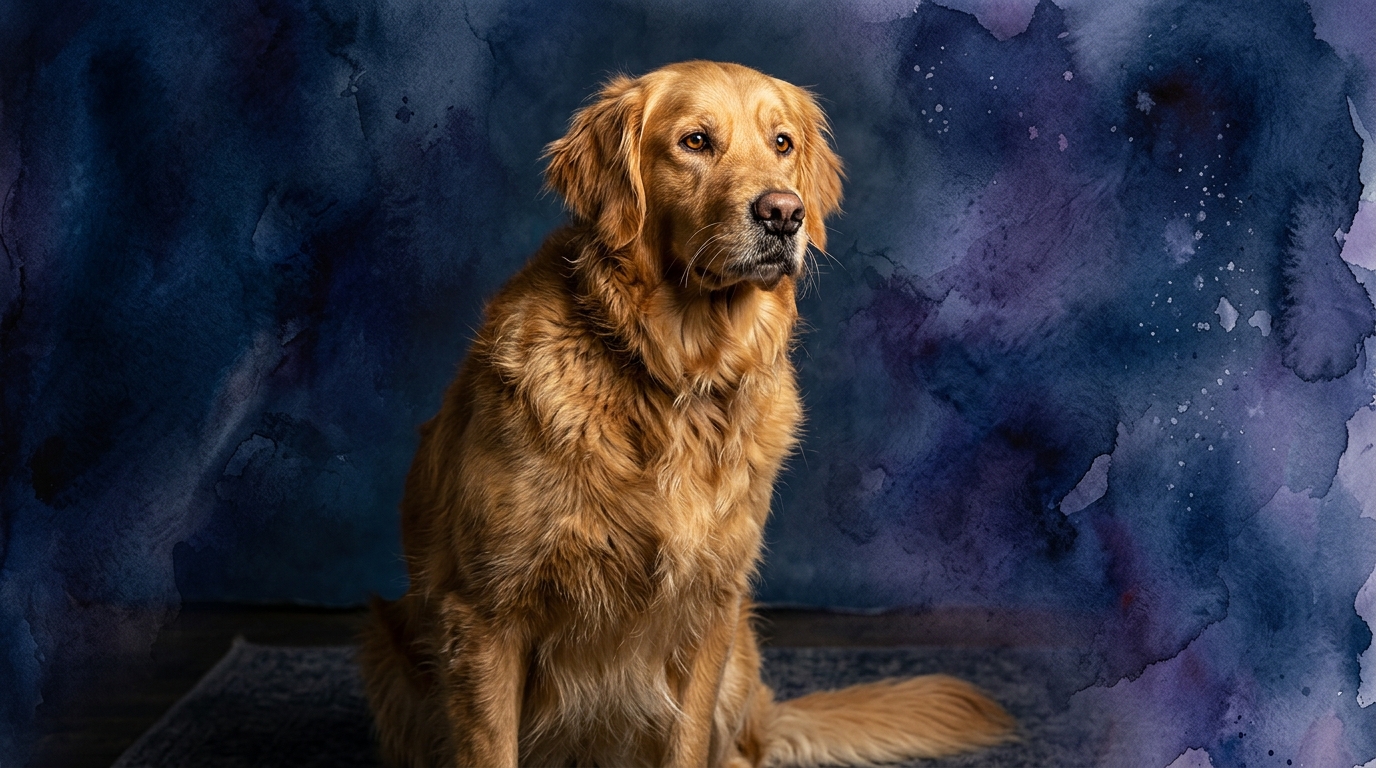
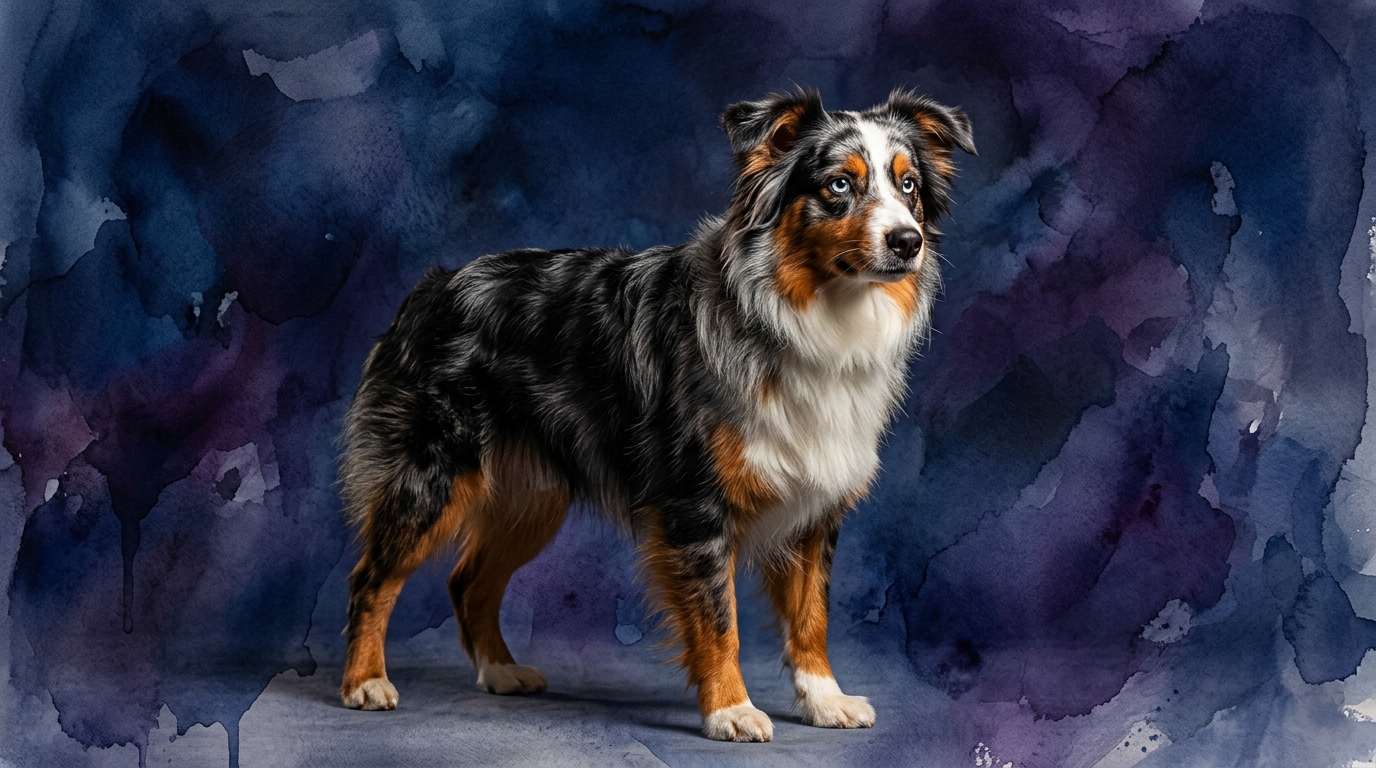
Side-by-Side IQ Profile: Golden Retriever vs. Miniature American Shepherd
The Cosmic Pet Pet IQ Lab provides a comprehensive framework for evaluating canine intelligence across five key dimensions, allowing us to meticulously compare the cognitive strengths of these two distinct breeds.
**Golden Retriever (Sporting Group, Coren Rank #4):** These popular companions consistently demonstrate a remarkable blend of cognitive abilities that contribute to their versatile roles.
**Problem Solving (4/5):** Golden Retrievers demonstrate a strong capacity for navigating novel situations and devising solutions, often employing sequential steps to achieve a goal. This manifests in their ability to figure out complex puzzle toys, open latches, or learn intricate multi-step commands, showcasing a flexible and adaptive mental approach.
**Training Speed (5/5):** Their remarkable eagerness to please combined with a rapid association of cues and consequences makes Golden Retrievers exceptionally quick learners. They absorb new commands and routines with impressive speed, often requiring fewer repetitions than many other breeds to solidify a behavior.
**Social Intelligence (5/5):** Golden Retrievers possess an acute understanding of human emotions and intentions, often mirroring moods and responding empathetically. This high social acumen allows them to form deep bonds, anticipate owner needs, and adapt seamlessly to various social dynamics, making them highly attuned companions.
**Instinctive Drive (4/5):** Their strong retrieving instinct is a core cognitive driver, leading them to persistently pursue and bring back objects. This drive is not merely physical; it involves a cognitive component of tracking, locating, and purposeful delivery, often paired with a desire to work collaboratively with their human handler.
**Memory (4/5):** Golden Retrievers exhibit excellent long-term memory for commands, routines, and even specific people and places, retaining complex learned behaviors over extended periods. Their ability to recall past experiences contributes to their consistent performance in training and their recognition of familiar faces after long absences.
**Miniature American Shepherd (Herding Group, Not Coren-Ranked):** Originating from a working background, the Miniature American Shepherd presents a different, yet equally compelling, cognitive blueprint.
**Problem Solving (3/5):** Miniature American Shepherds approach problem-solving with a practical, often instinct-driven mindset, particularly when tasks relate to their herding heritage. While capable of learning new solutions, their approach might be less abstract than some breeds, tending towards functional and efficient methods rather than elaborate ones.
**Training Speed (3/5):** Miniature American Shepherds are certainly trainable, but they typically require more consistent repetition and a clear, structured training approach compared to the rapid uptake of a Golden Retriever. Their focus can sometimes be more directed towards their environment or perceived 'work' than solely on the handler's cues in a new learning scenario.
**Social Intelligence (3/5):** Miniature American Shepherds are attentive to their family members and display loyalty, but their social intelligence often manifests differently than the Golden's broad empathy. They tend to be more reserved with strangers and may observe new social situations cautiously, relying on their handler for cues rather than instantly engaging.
**Instinctive Drive (3/5):** The Miniature American Shepherd's primary instinctive drive is rooted in herding, an innate desire to gather and control movement. This translates to an active, watchful nature and a propensity for tasks that involve guiding or managing, even if it's just their human family or toys, reflecting a cognitive focus on order and movement.
**Memory (3/5):** Miniature American Shepherds possess a solid memory for their established routines, learned commands, and the layout of their territory. While they retain information effectively, their recall might be more context-dependent than a Golden Retriever's, performing best when tasks are practiced regularly within familiar settings.
Where the Golden Retriever Wins Cognitively
The Golden Retriever truly shines in areas demanding broad adaptability and profound social understanding. Their superior problem-solving acumen means they often grasp complex sequences faster, making them exceptionally adept at tasks requiring multiple steps or abstract thought, like service dog work or advanced obedience routines, where they can quickly generalize learned concepts to new situations. Furthermore, their unparalleled social intelligence allows them to interpret subtle human cues with remarkable accuracy, fostering a deep, almost intuitive connection that few breeds can match, making them excellent therapy or emotional support animals who can anticipate and respond to human emotional states.
Where the Miniature American Shepherd Wins Cognitively
While not outscoring the Golden Retriever in overall metrics, the Miniature American Shepherd demonstrates distinct cognitive strengths rooted in their herding lineage. Their instinctive drive, even at a 3/5, translates into a laser-like focus and persistence in tasks that involve managing movement, spatial awareness, and anticipating actions within a dynamic environment. This makes them particularly adept at agility, flyball, or other dog sports where quick directional changes and precise body control are paramount, showcasing a specialized form of practical, applied intelligence for specific working roles that require intense, directed concentration over extended periods. Their cognitive strengths are less about broad application and more about targeted, efficient execution within their domain.
Which is Easier to Train and Why
Based on their respective IQ profiles, the Golden Retriever is demonstrably easier to train due to their 5/5 training speed and 5/5 social intelligence. Their inherent desire to please their human companions, combined with a rapid ability to form associations, means they often pick up new commands with minimal repetition and respond enthusiastically to positive reinforcement, eager to engage in collaborative learning sessions. In contrast, the Miniature American Shepherd, with a 3/5 in training speed and social intelligence, requires more patience, consistency, and a clear understanding of their herding-driven nature; while highly trainable, they might challenge a novice owner more with their independent thought and selective focus, needing more motivation to engage consistently in structured training sessions and often thriving best with a handler who understands their working breed tendencies.
Which Suits Active Owners vs. Relaxed Owners
For the more relaxed owner seeking a companion to share quiet evenings and gentle strolls, the Golden Retriever's adaptable nature and strong social intelligence make them an ideal fit. Their eagerness to please and moderate exercise needs, coupled with their calm demeanor indoors, means they integrate smoothly into a less demanding lifestyle, content with daily walks and plenty of human interaction, making them a harmonious presence in a calm home environment. Conversely, the Miniature American Shepherd is unequivocally suited for active owners who can provide consistent mental and physical stimulation. Their herding drive and keen intellect, even with lower general IQ scores, necessitate an outlet through dog sports, extensive daily exercise, or engaging training, making them a better match for individuals or families committed to an energetic, structured routine that channels their inherent working instincts.
The Verdict
When seeking a highly intuitive, broadly adaptable companion eager to please and excel in diverse roles, the Golden Retriever is the clear choice for a harmonious family life.
For owners who thrive on providing structured activity and appreciate a keen, focused partner for dog sports or active outdoor adventures, the Miniature American Shepherd will flourish.
🧠 Find Your Pet's IQ Score
Our Pet IQ Lab assessment covers 25+ tests across 5 cognitive dimensions — personalized to your breed.
Take the Full IQ Test →Frequently Asked Questions
Does a lower Coren rank mean a dog is less trainable?
Not necessarily; Coren's ranking primarily assesses "working and obedience intelligence," focusing on how quickly a dog learns and obeys new commands. A lower rank or absence from the list, as with the Miniature American Shepherd, indicates they might require more repetitions or a different training approach, but it doesn't mean they cannot be trained effectively for their specific tasks or as companions.
Can a Miniature American Shepherd be a good family dog despite being less socially intelligent than a Golden Retriever?
Absolutely; while they might be more reserved with strangers and less outwardly empathetic than a Golden, Miniature American Shepherds are fiercely loyal and protective of their family members. Their social intelligence is geared more towards understanding their immediate pack and their environment, making them attentive and devoted companions within their trusted circle, provided they receive proper socialization from a young age.
Are these IQ scores definitive for every individual dog within the breed?
No, these IQ scores represent general breed tendencies and averages, not definitive metrics for every single dog. Individual dogs within any breed can exhibit variations in intelligence, problem-solving, and social aptitude based on genetics, early experiences, training, and individual personality, so these are best used as guides rather than absolutes.