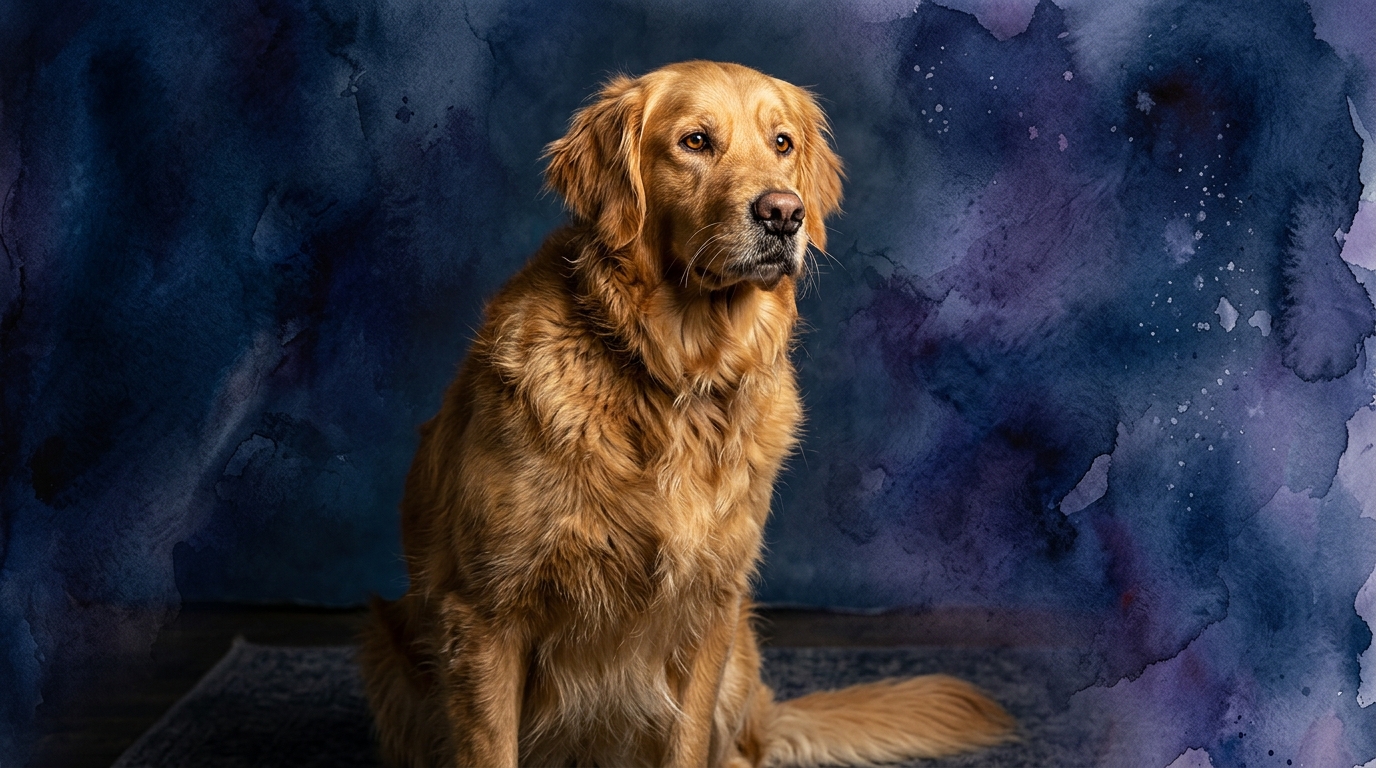

Side-by-Side Cognitive Profiles: Golden Retriever vs. Redbone Coonhound
The Golden Retriever, holding Coren rank #4, demonstrates a cognitive profile optimized for human partnership. Their Problem Solving is rated 4/5, indicating a strong capacity for navigating novel situations and learning complex tasks, often through observation and reasoning. Training Speed is a remarkable 5/5, reflecting their eager-to-please nature and quick grasp of new instructions, making them highly responsive. Social Intelligence, also 5/5, means they excel at reading human cues, adapting to various social dynamics, and forming deep emotional bonds. Their Instinctive Drive, 4/5, is geared towards collaborative retrieval and working alongside people, while Memory at 4/5 ensures they retain learned behaviors and routines effectively over time.
The Redbone Coonhound, not appearing on Coren's ranking, presents a different cognitive landscape shaped by their specialized hunting role. Their Problem Solving is 3/5, suggesting they can tackle challenges but might rely more on innate abilities and perseverance than abstract reasoning in unfamiliar contexts. Training Speed is 3/5, indicating a moderate pace for learning new commands, often requiring more repetition and patience due to their independent, scent-driven focus. Social Intelligence at 3/5 means they are generally friendly but may not possess the same nuanced understanding of human social cues or desire for constant interaction as their Golden counterpart. Their Instinctive Drive, also 3/5, is profoundly focused on scent work and tracking, a specialized form of intelligence, and their Memory at 3/5 primarily serves their purpose of remembering trails and complex scent patterns.
Where the Golden Retriever's Mind Shines Brightest
Golden Retrievers demonstrate a clear cognitive advantage in areas demanding collaboration and adaptability within a human household. Their 5/5 Training Speed and Social Intelligence mean they are exceptionally attuned to human communication, quickly processing and responding to verbal and non-verbal cues. This makes them outstanding candidates for complex obedience, service work, or therapy roles where understanding subtle human signals and performing intricate tasks are paramount. Their 4/5 Problem Solving allows them to generalize learned concepts to new situations, like figuring out how to manipulate a latch after observing it, rather than relying purely on trial and error. The combination of high social acumen and trainable nature allows them to seamlessly integrate into diverse family dynamics, often anticipating needs and reacting appropriately to emotional shifts within their human companions.
The Redbone Coonhound's Unique Cognitive Strengths
While not excelling in traditional obedience metrics, the Redbone Coonhound's cognitive strengths lie in their highly specialized sensory intelligence and unwavering tenacity. Their 3/5 Instinctive Drive, profoundly focused on olfactory tasks, represents a sophisticated form of problem-solving within their domain. This breed possesses an extraordinary ability to follow a scent trail for miles, distinguishing individual odors even in complex, distracting environments—a feat requiring immense focus, stamina, and a specific type of memory (3/5) for scent patterns and terrain. This isn't about solving a puzzle box for a treat; it's about interpreting a world of invisible information, tracking, and demonstrating relentless perseverance against environmental challenges. Their independence, often perceived as a training challenge due to their 3/5 Training Speed, is a cognitive advantage in their original role, allowing them to make autonomous decisions in the field without constant human direction.
Trainability: A Tale of Two Approaches
The Golden Retriever's 5/5 Training Speed and strong Social Intelligence make them remarkably receptive to instruction. They thrive on positive reinforcement, quickly associating commands with desired actions and understanding the social reward of pleasing their human. Their eagerness to engage and natural inclination towards cooperation means they often pick up new tricks, manners, and routines with minimal repetition, making initial training and ongoing education a relatively smooth and rewarding process for most owners. Their focus on their human's approval acts as a powerful motivator, facilitating rapid learning.
Conversely, the Redbone Coonhound's 3/5 Training Speed stems from their independent, scent-driven nature. While they are certainly capable of learning, their primary motivation isn't always human approval; it's often the irresistible allure of a captivating scent. Training a Redbone requires more patience, consistency, and a deep understanding of their innate drives. They might understand a command but choose to prioritize investigating a fascinating odor, requiring owners to compete with environmental stimuli. Their occasional 'selective hearing' isn't a lack of intelligence, but a cognitive preference for their olfactory world over human directives, necessitating creative, highly rewarding training methods that tap into their natural instincts.
Matching Minds to Lifestyles: Active vs. Engaged Owners
The Golden Retriever, with its balanced 4/5 Instinctive Drive and 5/5 Social Intelligence, is a versatile companion for owners who prioritize engagement and shared activities. They thrive on tasks that involve collaboration, whether it's retrieving, agility, or simply long walks and play sessions that involve their human. Their adaptable problem-solving (4/5) and strong memory (4/5) mean they can adjust to varied routines and enjoy diverse activities, from hiking to quiet evenings, as long as they receive sufficient mental and physical stimulation alongside their family. They are well-suited for owners who enjoy teaching new things and integrating their dog into daily social interactions, offering a highly responsive and adaptable partner.
The Redbone Coonhound, with its focused 3/5 Instinctive Drive (for scent work) and moderate social intelligence (3/5), aligns best with active owners who understand and can channel their hound's primary motivation. These dogs require significant, consistent outlets for their tracking abilities, whether through dedicated scent work games, long hikes where they can explore with their nose, or even participation in coonhound field trials. An owner who cannot provide consistent engagement for their hound's powerful nose will likely find themselves with a bored, potentially destructive, and vocal companion. Their cognitive profile demands an owner who is willing to actively engage with their specific form of 'work' rather than expecting a generalized companion.
The Verdict
Select a Golden Retriever if you seek a highly trainable, socially adept companion eager to collaborate on tasks, integrate seamlessly into family life, and excel in diverse obedience or service roles.
Opt for a Redbone Coonhound if you are an active individual passionate about providing consistent outlets for a powerful scent drive, willing to embrace their independent spirit, and value a dog whose unique cognitive strengths lie in tenacious tracking.
🧠 Find Your Pet's IQ Score
Our Pet IQ Lab assessment covers 25+ tests across 5 cognitive dimensions — personalized to your breed.
Take the Full IQ Test →Frequently Asked Questions
Do Golden Retrievers learn new commands faster than Redbone Coonhounds?
Yes, based on their 5/5 Training Speed compared to the Redbone's 3/5, Golden Retrievers typically grasp new commands and routines more quickly due to their strong desire to please and focus on human interaction. Redbones, while capable, often require more repetition and motivation tailored to their scent-driven interests.
Is a Redbone Coonhound's lower IQ score indicative of it being less "smart" overall?
Not necessarily. The IQ scores reflect specific cognitive dimensions relevant to human-centric tasks and general adaptability. A Redbone's lower scores in areas like Problem Solving (3/5) and Training Speed (3/5) don't mean a lack of intelligence, but rather a specialized cognitive profile heavily geared towards their instinctive tracking abilities, which represent a sophisticated form of problem-solving in their own right.
How does "social intelligence" differ between these two breeds?
Golden Retrievers (5/5) exhibit high social intelligence, meaning they are adept at reading human emotions, anticipating needs, and adapting their behavior to social cues within a family setting. Redbone Coonhounds (3/5), while generally friendly, are less focused on nuanced human interaction, often prioritizing their environment and scent world over subtle social signals from their owners.